Helicoprion
Helicoprion davisii
Image: Image sourced via web search (Fair use / Educational)
About Helicoprion
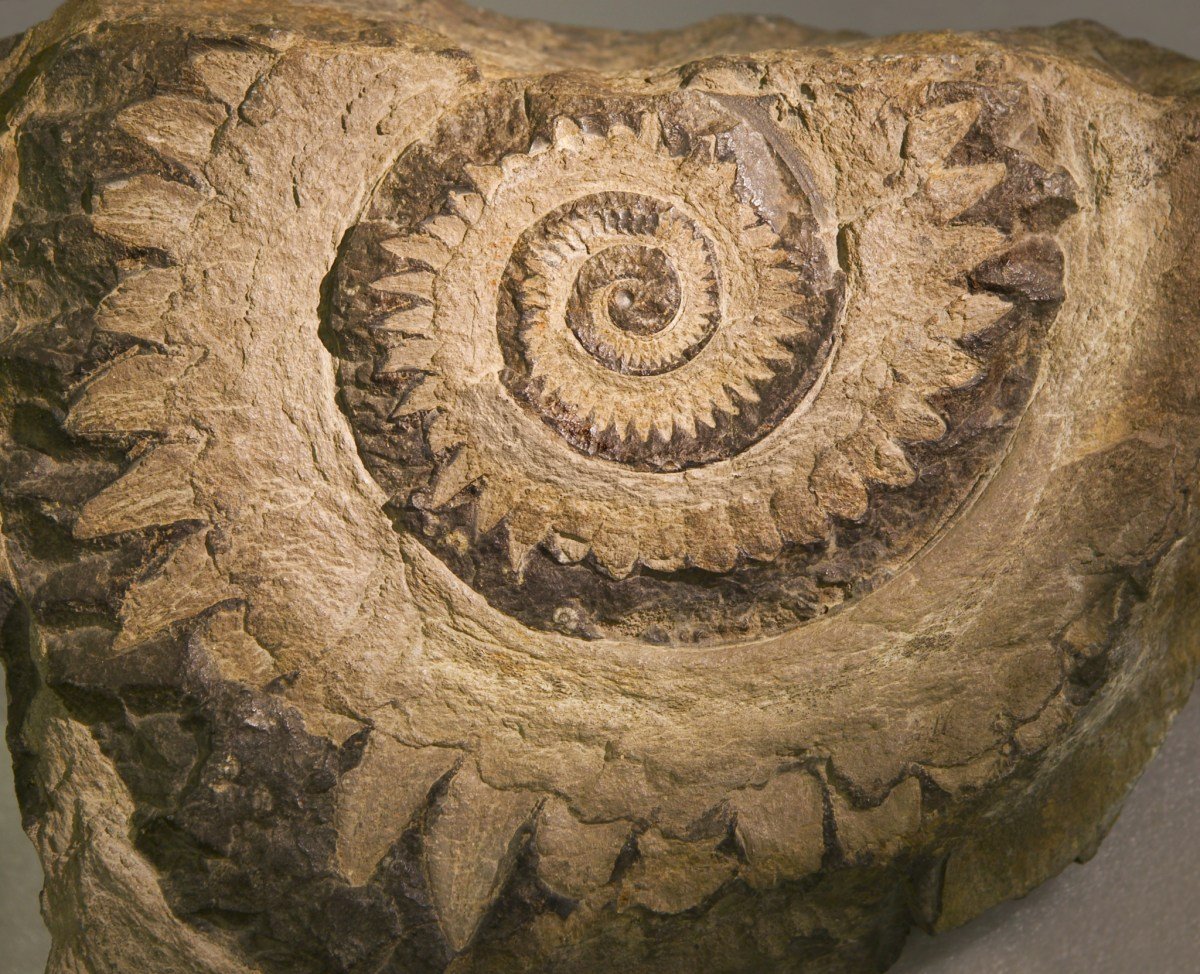
Helicoprion, commonly referred to as the buzzsaw shark, is one of the most enigmatic and visually striking marine organisms to have ever swum in the prehistoric oceans. Living during the Permian period of the Paleozoic era, approximately 290 to 270 million years ago, this remarkable cartilaginous fish has captivated paleontologists and the general public alike for over a century. It is most famous for its bizarre lower jaw, which featured a spiraling whorl of serrated teeth that resembled a circular saw blade. While it is often called a shark, modern phylogenetic analyses have revealed that Helicoprion belongs to the subclass Holocephali, making it more closely related to modern chimaeras or ratfish than to true sharks. Its fossils have been found across the globe, indicating that it was a highly successful and widely distributed apex predator in the ancient seas. The significance of Helicoprion in paleontology cannot be overstated, as it represents a unique evolutionary experiment in dental and cranial anatomy, providing crucial insights into the diversity and adaptability of early cartilaginous fishes before the catastrophic Permian-Triassic extinction event reshaped marine ecosystems forever.
The physical description of Helicoprion is dominated by its most defining and frequently preserved feature: the symphyseal tooth whorl. Because the skeleton of Helicoprion was composed entirely of cartilage, which rarely fossilizes due to its rapid decomposition, the hard, enameloid-covered teeth are usually the only parts of the animal that survive in the fossil record. This has historically made reconstructing the animal's overall appearance incredibly challenging. However, based on the size of the largest tooth whorls, which can reach up to forty centimeters in diameter, paleontologists estimate that Helicoprion davisii could grow to impressive lengths of five to eight meters (approximately sixteen to twenty-six feet), with some related species possibly reaching up to ten meters. This would make it one of the largest marine predators of its time, comparable in size to a modern great white shark. The tooth whorl itself was situated in the center of the lower jaw. Unlike modern sharks, which constantly shed and replace their teeth, Helicoprion retained all of its teeth throughout its life. As new teeth grew at the back of the jaw, the older, smaller teeth were pushed forward and curled downward into a spiral cavity within the lower jaw cartilage. This created a continuous, spiraling blade of teeth. Recent high-resolution CT scans of exceptionally preserved specimens have revealed that the upper jaw completely lacked teeth, functioning instead as a hard, cartilaginous palate against which the lower tooth whorl could slice. The body of Helicoprion is inferred to have been streamlined and highly hydrodynamic, similar to modern pelagic sharks, built for sustained cruising and rapid bursts of speed in the open ocean. It likely possessed a large, heterocercal tail fin for powerful propulsion, and large pectoral fins for steering and stability, though the exact shape of its fins remains speculative due to the lack of postcranial fossil evidence.
In terms of paleobiology, the unique dental anatomy of Helicoprion dictates a highly specialized feeding strategy. For decades, the exact function of the tooth whorl was a subject of intense debate, but modern biomechanical modeling has provided a clear picture of how this animal hunted and fed. The tooth whorl was not used for crushing hard-shelled prey, as the teeth lack the broad, flattened surfaces seen in durophagous predators. Instead, the teeth are highly compressed laterally, with sharp, serrated edges, indicating a diet consisting primarily of soft-bodied prey. It is widely believed that Helicoprion specialized in hunting ancient cephalopods, such as ammonites and nautiloids, which were abundant in the Permian oceans. When Helicoprion closed its jaws, the tooth whorl would rotate backward, effectively slicing through the soft tentacles and bodies of cephalopods in a continuous, saw-like motion. The toothless upper jaw would hold the prey in place while the lower whorl performed the cutting. This mechanism allowed Helicoprion to efficiently process large, slippery prey without the need to swallow it whole. In terms of locomotion, its inferred streamlined body suggests it was an active, pelagic swimmer, constantly on the move in search of prey. The metabolic rate of Helicoprion is difficult to determine precisely, but as a large, active predator, it likely possessed a relatively high metabolic rate for a cold-blooded animal, possibly exhibiting some degree of regional endothermy, similar to modern lamnid sharks, to maintain muscle efficiency in varying water temperatures. Social behavior is entirely speculative, but given its size and role as an apex predator, it was likely a solitary hunter, perhaps only congregating during mating seasons or in areas of exceptional prey abundance. Growth patterns inferred from the tooth whorls indicate continuous, lifelong growth, with the rate of tooth addition likely tied to the overall growth rate of the animal.
The ecological context of Helicoprion places it in the vast, dynamic oceans of the Permian period. During this time, the Earth's landmasses were merged into the supercontinent of Pangaea, surrounded by the massive global ocean known as Panthalassa. Helicoprion inhabited the warm, shallow continental shelf seas and the open pelagic zones of this ancient ocean. The climate of the Permian was characterized by significant fluctuations, transitioning from an ice age in the early Permian to a much warmer, more arid global climate by the end of the period. The marine ecosystems were incredibly diverse, featuring extensive reef systems built not by modern corals, but by sponges, bryozoans, and extinct rugose and tabulate corals. Helicoprion shared its habitat with a wide array of marine life. Its primary prey, the cephalopods, were highly diverse and abundant, filling the water column. The oceans also teemed with early bony fishes, other primitive cartilaginous fishes, and large marine amphibians near the coasts. As an apex predator, Helicoprion occupied the very top of the marine food web. It had few, if any, natural predators as an adult, though juveniles may have fallen prey to larger carnivorous fishes or even cannibalistic adults. The presence of Helicoprion across vastly different geographic locations—from the waters of what is now North America to Russia, Japan, and Australia—indicates that it was a highly adaptable and globally distributed species, capable of thriving in a variety of marine environments. Its success as a predator was a testament to the evolutionary ingenuity of its unique jaw structure, which allowed it to exploit a rich and abundant food source.
The discovery history of Helicoprion is a fascinating tale of scientific inquiry and gradual understanding. The first fossils of what would later be recognized as Helicoprion were discovered in Western Australia and described by the British paleontologist Henry Woodward in 1886. Woodward initially named the specimen Edestus davisii, believing it to be related to another genus of prehistoric shark known for its unusual, scissor-like teeth. However, the true nature of the animal began to come to light in 1899, when the Russian paleontologist Alexander Karpinsky described a spectacular, nearly complete tooth whorl found in the Ural Mountains of Russia. Karpinsky recognized that this specimen represented a distinct and entirely new genus, which he named Helicoprion, meaning 'spiral saw'. Karpinsky's description sparked a worldwide sensation, but it also ignited a fierce debate about where the tooth whorl actually belonged on the animal's body. Because no other skeletal material was found with the whorls, early reconstructions were wildly speculative. Some scientists suggested the whorl was attached to the upper jaw, curling upward like an elephant's trunk. Others proposed it was a defensive structure located on the dorsal fin, the tail, or even deep within the throat. It wasn't until the discovery of a remarkably well-preserved specimen in the Phosphoria Formation of Idaho, USA, in 1950 (specimen IMNH 37899) that the mystery began to be resolved. This specimen preserved not only the tooth whorl but also impressions of the surrounding cranial cartilage. Decades later, in 2013, a team led by Leif Tapanila utilized advanced CT scanning technology on this Idaho specimen to finally prove conclusively that the whorl was situated in the lower jaw, occupying the entire mandibular arch.
The evolutionary significance of Helicoprion lies in its position within the complex family tree of cartilaginous fishes. For many years, Helicoprion was classified as a primitive shark (Elasmobranchii) due to its general appearance and cartilaginous skeleton. However, the detailed anatomical information gleaned from the CT scans of the Idaho specimen fundamentally changed this classification. The structure of the jaw suspension, specifically the way the upper jaw was fused to the braincase (autostylic jaw suspension), is a hallmark characteristic of the subclass Holocephali. This means that Helicoprion and its relatives in the order Eugeneodontida are stem-holocephalans, making them ancient cousins of modern chimaeras, ratfish, and ghost sharks, rather than true sharks. This revelation was a major breakthrough in understanding the evolutionary history of Chondrichthyes. It demonstrated that the holocephalan lineage, which today consists mostly of deep-water, bottom-dwelling fishes with crushing tooth plates, once included massive, pelagic apex predators with highly specialized cutting dentition. Helicoprion represents an extreme evolutionary divergence, a unique morphological experiment that was highly successful for millions of years. It highlights the incredible plasticity of the cartilaginous fish body plan and the diverse ecological niches they have occupied throughout Earth's history. Furthermore, the survival of the Eugeneodontida lineage through the Carboniferous and Permian periods, before ultimately succumbing to the Permian-Triassic extinction event, provides valuable data on the dynamics of marine ecosystems leading up to the most devastating mass extinction in the history of the planet.
Scientific debates surrounding Helicoprion have been some of the most colorful and enduring in the field of paleontology. The most famous debate, concerning the anatomical placement of the tooth whorl, raged for over a century. As mentioned, early hypotheses placed the whorl on the snout, the dorsal fin, or the tail. Even after it was generally accepted that the whorl belonged in the mouth, debates continued about whether it was in the upper or lower jaw, and how it functioned. Some researchers argued it was used to root out prey from the seafloor, while others suggested it was a defensive weapon. The 2013 CT scanning study by Tapanila and colleagues effectively ended the placement debate, confirming its location in the lower jaw and its function as a slicing mechanism. However, other debates persist. The taxonomy of the genus Helicoprion is still a subject of ongoing research. Historically, many different species have been named based on minor variations in the shape and spacing of the teeth in the whorls. Modern paleontologists are currently working to determine how many of these represent true biological species and how many are simply variations due to age, sexual dimorphism, or individual differences. Additionally, while the cephalopod diet is widely accepted, some researchers debate whether Helicoprion might have also consumed other soft-bodied prey, such as primitive jawless fishes or even other small chondrichthyans.
The fossil record of Helicoprion is both extensive and frustratingly limited. Geographically, fossils have been found on almost every continent, with significant deposits in the Ural Mountains of Russia, the Phosphoria Formation in Idaho and Wyoming, USA, Western Australia, China, Japan, and Kazakhstan. This widespread distribution confirms its status as a cosmopolitan pelagic predator. The number of known specimens numbers in the hundreds, making it a relatively well-represented genus in terms of sheer volume. However, the preservation quality is typically categorized as fair, because the vast majority of these specimens consist solely of the isolated tooth whorls. The cartilaginous skeleton, lacking the mineral density of bone, almost never survives the fossilization process. The famous Idaho specimen (IMNH 37899) is a rare exception, preserving crucial cranial cartilage impressions that unlocked the animal's anatomy. The tooth whorls themselves are often beautifully preserved, with the hard enameloid retaining sharp serrations and detailed growth lines. The Phosphoria Formation is particularly famous for its Helicoprion fossils, yielding some of the largest and most complete whorls ever discovered, providing a vital window into the marine life of the Permian period.
The cultural impact of Helicoprion is significant, driven largely by its bizarre and terrifying appearance. It frequently appears in popular science books, documentaries, and paleontology-focused media as a prime example of prehistoric weirdness. The image of a massive shark-like creature with a circular saw in its mouth captures the public imagination, making it a popular subject for paleoart and educational outreach. Museums around the world, notably the Idaho Museum of Natural History, feature prominent displays of Helicoprion whorls and life-sized reconstructions, drawing significant visitor interest. Educationally, Helicoprion serves as an excellent tool for teaching concepts of evolutionary adaptation, the challenges of interpreting incomplete fossil evidence, and the dynamic nature of scientific discovery, illustrating how new technologies like CT scanning can solve century-old paleontological mysteries.
Classification
Time Period
Discovery
Location
Western Australia
Formation
Phosphoria Formation
Frequently Asked Questions
What is Helicoprion?
Helicoprion, commonly referred to as the buzzsaw shark, is one of the most enigmatic and visually striking marine organisms to have ever swum in the prehistoric oceans. Living during the Permian period of the Paleozoic era, approximately 290 to 270 million years ago, this remarkable cartilaginous fi...
When did Helicoprion live?
Helicoprion lived during the permian period of the paleozoic era approximately 290-270 million years ago.
Where was Helicoprion discovered?
Fossils of Helicoprion were discovered in Western Australia in the Phosphoria Formation.
What did Helicoprion eat?
Helicoprion was a carnivore. It lived in marine habitats.
What type of fossil is Helicoprion?
Helicoprion is preserved as a body fossil. The preservation quality is fair.
Related Specimens
From the paleozoic era · body fossils