Moeritherium
Moeritherium lyonsi
Image: Image sourced via web search (Fair use / Educational)
About Moeritherium
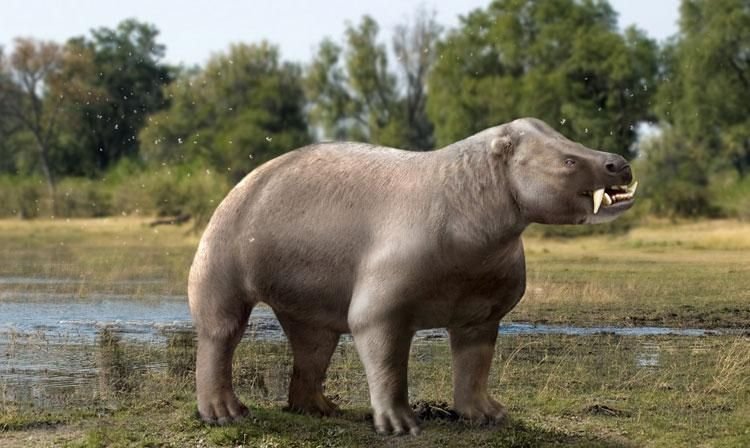
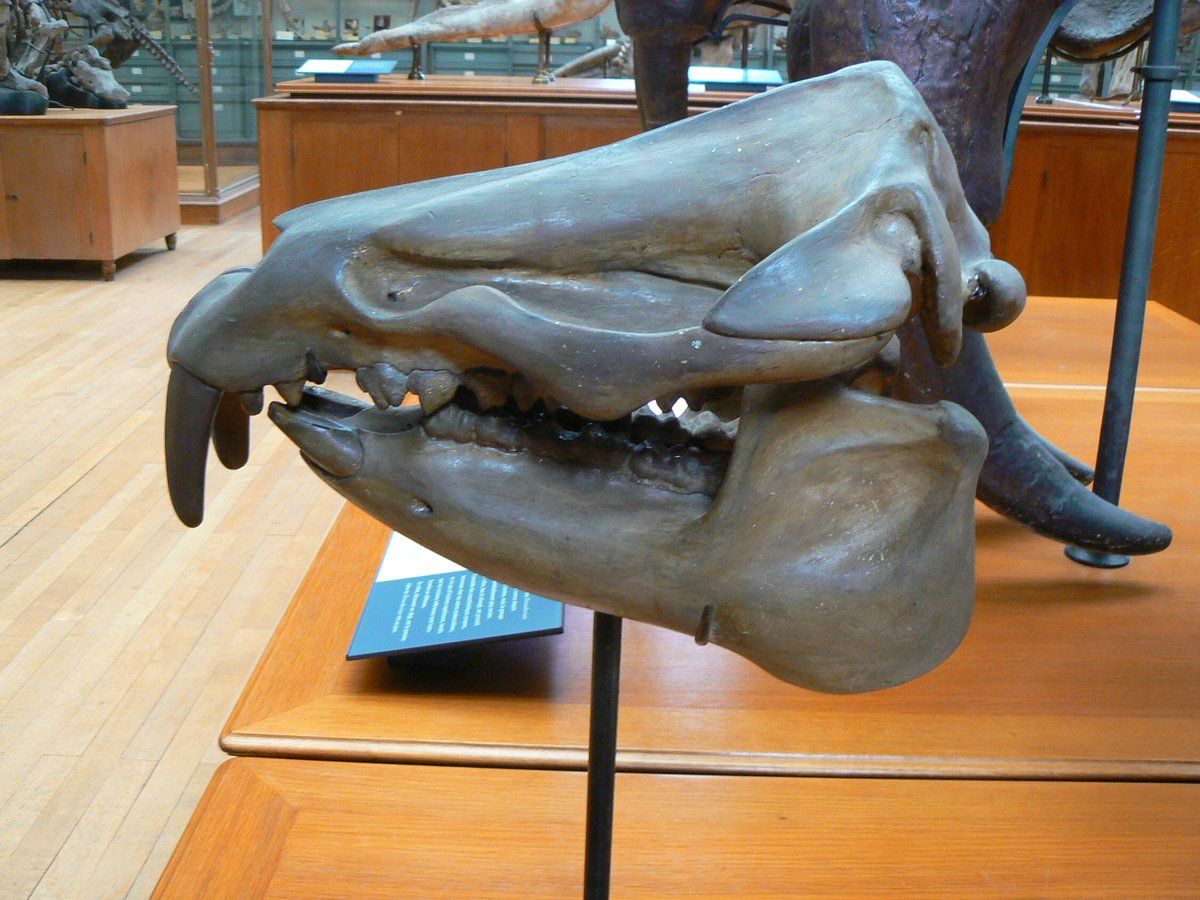
Moeritherium lyonsi represents one of the most fascinating and pivotal organisms in the early evolutionary history of mammals, specifically within the lineage that would eventually give rise to modern elephants. Living during the late Eocene epoch of the Paleogene period, approximately 37 to 33 million years ago, this remarkable creature inhabited the lush, swampy environments of what is now the arid Faiyum Depression in Egypt. As a basal proboscidean, Moeritherium holds immense significance in the field of paleontology because it provides a crucial window into the early morphological and ecological adaptations of the elephant family tree. Unlike the towering, majestic pachyderms that roam the African and Asian savannas and forests today, Moeritherium was a relatively small, semi-aquatic animal that occupied an ecological niche remarkably similar to that of the modern hippopotamus. Its discovery and subsequent study have fundamentally shaped our understanding of how the diverse group of mammals known as the Afrotheria, and more specifically the Paenungulata, radiated and adapted to various environments following the extinction of the non-avian dinosaurs. By examining the fossilized remains of Moeritherium, paleontologists have been able to trace the gradual evolution of distinctive proboscidean traits, such as the elongation of the skull, the modification of the incisors into tusks, and the early development of a flexible upper lip or rudimentary trunk, thereby bridging the anatomical gap between primitive, generalized ungulates and the highly specialized elephants of the Neogene and Quaternary periods. The physical description of Moeritherium reveals an animal that would look quite alien compared to its modern elephantine relatives, yet perfectly adapted to its ancient environment. In terms of overall body size, Moeritherium was relatively modest, standing only about 70 centimeters (approximately 2.3 feet) tall at the shoulder and reaching an estimated body length of roughly 300 centimeters (about 10 feet). Weight estimates suggest that a fully grown adult would have weighed between 200 and 235 kilograms (440 to 520 pounds), making it comparable in mass to a large modern tapir or a pygmy hippopotamus. Its skeletal anatomy was characterized by a long, barrel-shaped body supported by short, stout legs, a stark contrast to the pillar-like, elongated limbs of later proboscideans. The skull of Moeritherium was elongated and relatively flat, lacking the domed cranial structure seen in modern elephants. One of its most distinctive features was its dentition; it possessed enlarged upper and lower second incisors that protruded forward, representing the earliest evolutionary stages of the iconic elephant tusks. However, unlike the massive ivory tusks of mammoths or modern elephants, these incisors were relatively small and likely used for cropping vegetation rather than for defense or extensive digging. The nasal openings on the skull were positioned somewhat posteriorly, though not as far back as in later proboscideans, suggesting the presence of a highly flexible, muscular upper lip or a very short, tapir-like proboscis rather than a fully developed, prehensile trunk. Soft tissue inferences, based on the robust muscle attachment sites on the skull and the overall cranial architecture, indicate that this flexible snout would have been highly sensitive and adept at grasping aquatic plants. The postcranial skeleton, with its dense, heavy bones, further supports the inference of a semi-aquatic lifestyle, as this osteosclerosis would have provided necessary ballast to help the animal remain submerged while foraging in shallow waters, much like modern sirenians and hippopotamuses. The paleobiology of Moeritherium paints a picture of a specialized herbivore intimately tied to the water systems of the late Eocene. Its diet consisted primarily of soft, aquatic, and semi-aquatic vegetation, such as freshwater grasses, sedges, and submerged broad-leafed plants. The structure of its cheek teeth, which were bunodont (having rounded cusps) and relatively low-crowned, was perfectly suited for crushing and grinding this type of soft plant matter, rather than the tough, abrasive grasses that later, savanna-dwelling elephants would consume. In terms of feeding strategies, Moeritherium likely used its flexible upper lip and small, tusk-like incisors to root up and gather vegetation from the muddy bottoms of rivers and swamps. Its locomotion on land would have been somewhat cumbersome and waddling due to its short legs and elongated body, but in the water, it would have been highly capable, using its buoyant, barrel-like torso and strong limbs to paddle and navigate through the aquatic environment. Social behavior inferences are challenging to draw definitively from the fossil record, but given its ecological similarities to modern hippopotamuses, it is plausible that Moeritherium exhibited some degree of gregariousness, perhaps forming small herds or family groups that congregated in favorable aquatic habitats. Growth patterns and metabolism estimates suggest a relatively slow life history compared to smaller mammals, with a metabolism adapted to the stable, warm temperatures of its subtropical environment. The dense bones not only provided ballast but also indicate a steady, continuous growth pattern typical of large, semi-aquatic herbivores that do not face extreme seasonal resource deprivation. The ecological context in which Moeritherium thrived was vastly different from the harsh, hyper-arid desert that characterizes the Faiyum Depression today. During the late Eocene and early Oligocene, northern Africa was a lush, verdant region characterized by extensive river systems, coastal lagoons, mangrove swamps, and dense tropical forests. The climate was warm, humid, and relatively stable, providing an ideal environment for a diverse array of flora and fauna. Moeritherium shared its habitat with a spectacular menagerie of prehistoric creatures. It coexisted with other early proboscideans, such as the slightly larger Barytherium, as well as the bizarre, twin-horned Arsinoitherium, a massive herbivore that superficially resembled a rhinoceros but was actually more closely related to elephants and sea cows. The waterways were also home to early sirenians (sea cows), primitive crocodiles, and a variety of turtles and fish. In the nearby marine environments, early whales like the serpentine Basilosaurus and the smaller Dorudon hunted in the shallow Tethys Sea. Within this complex food web, Moeritherium occupied the niche of a primary consumer, processing large amounts of aquatic biomass and cycling nutrients through the ecosystem. As a relatively large herbivore, adult Moeritherium likely faced few terrestrial predators, though juveniles or sick individuals might have fallen prey to large crocodilians or the apex mammalian carnivores of the time, such as the hyaenodonts that prowled the forest edges. The relationship between Moeritherium and its environment was one of mutual influence; by grazing on aquatic vegetation, it likely helped maintain the open waterways and shaped the plant communities of its swampy habitat. The discovery history of Moeritherium is deeply intertwined with the early days of paleontological exploration in North Africa. The first fossils of this enigmatic creature were discovered in 1901 by the British paleontologist Charles William Andrews during an expedition to the Faiyum Depression in Egypt. The specific area of discovery was near the ancient Lake Moeris, a large, brackish lake that has since shrunk to the modern Lake Qarun. Andrews recognized the significance of the find and formally named the genus Moeritherium, which translates to 'Lake Moeris Beast,' in honor of the location where it was unearthed. The type species, Moeritherium lyonsi, was named in honor of Captain H.G. Lyons, the director of the Geological Survey of Egypt at the time, who had facilitated Andrews's fieldwork. The circumstances of the discovery were part of a broader effort to map the geology and paleontology of the region, which quickly revealed the Faiyum to be one of the most important Cenozoic fossil sites in the world. Over the subsequent decades, numerous expeditions by international teams, including notable work by the American Museum of Natural History led by Henry Fairfield Osborn and later by Elwyn Simons of Duke University, uncovered additional specimens of Moeritherium. These discoveries included well-preserved skulls, lower jaws, and significant portions of the postcranial skeleton, allowing for a comprehensive reconstruction of the animal's anatomy. While there is no single universally famous specimen like the Tyrannosaurus 'Sue' or the Australopithecus 'Lucy,' the composite skeletons and highly complete crania housed in institutions like the Cairo Geological Museum and the Natural History Museum in London serve as the foundational holotypes and paratypes that continue to inform proboscidean research today. The evolutionary significance of Moeritherium cannot be overstated, as it occupies a critical position near the base of the proboscidean family tree. While it is not considered a direct, linear ancestor to modern elephants (family Elephantidae), it represents an early, highly specialized side branch that diverged from the main proboscidean lineage during the Eocene. Its anatomy provides a wealth of transitional features that illustrate how the massive, terrestrial elephants of today evolved from much smaller, generalized ancestors. The presence of enlarged second incisors in Moeritherium clearly demonstrates the evolutionary origins of tusks, while the posterior shift of the nasal openings hints at the early stages of trunk development. Furthermore, Moeritherium is a key taxon in understanding the broader evolutionary radiation of the Paenungulata, a clade that includes proboscideans, sirenians (sea cows), and hyracoideans (hyraxes). The morphological similarities between Moeritherium and early sirenians, particularly in their dense limb bones and aquatic adaptations, highlight the close evolutionary relationship between these groups and suggest that the common ancestor of elephants and sea cows may have been a semi-aquatic animal. By studying Moeritherium, scientists can better map the complex, branching pathways of Afrotherian evolution, demonstrating how a single ancestral lineage could give rise to such wildly divergent modern forms as the massive African elephant, the fully aquatic manatee, and the small, rabbit-like rock hyrax. Scientific debates surrounding Moeritherium have historically focused on its exact taxonomic placement and the precise nature of its lifestyle. For many years, there was considerable discussion regarding just how aquatic Moeritherium actually was. While its skeletal anatomy strongly suggested a semi-aquatic existence, it wasn't until the advent of advanced isotopic analysis that this hypothesis was robustly confirmed. In recent years, researchers analyzing the stable oxygen and carbon isotopes preserved in the tooth enamel of Moeritherium fossils found signatures that closely match those of modern hippopotamuses and other semi-aquatic mammals, effectively putting to rest the debate over its primary habitat. Another ongoing area of scientific inquiry involves the precise phylogenetic relationships within the early Proboscidea. While Moeritherium is universally recognized as a basal proboscidean, its exact relationship to other early forms, such as the Anthracobunidae (a group of enigmatic, ungulate-like mammals from Asia), has been a subject of taxonomic dispute. Some researchers have argued that anthracobunids might be closely related to Moeritherium, suggesting an Asian origin for proboscideans, while the prevailing consensus, supported by more recent cladistic analyses, maintains that proboscideans originated in Africa and that anthracobunids belong to a different mammalian lineage altogether. These debates highlight the dynamic nature of paleontology, where new discoveries and advanced analytical techniques continually refine our understanding of ancient life. The fossil record of Moeritherium is geographically restricted but remarkably rich within its specific locale. The vast majority of Moeritherium fossils have been recovered from the Qasr el Sagha Formation and the lower sequences of the Jebel Qatrani Formation in the Faiyum Depression of Egypt. These geological formations consist of alternating layers of sandstones, mudstones, and shales, which were deposited in shallow marine, coastal, and fluvial environments. The quality of preservation in these deposits is generally good to excellent, allowing for the fossilization of delicate cranial structures and complete dentition. Hundreds of individual specimens, ranging from isolated teeth and bone fragments to nearly complete skulls and articulated postcranial elements, have been cataloged over the past century. The teeth and robust jaws are the most commonly preserved parts, owing to their dense, highly mineralized nature, which resists taphonomic degradation better than the more fragile elements of the skeleton. The Faiyum Depression remains the premier, and essentially the only, famous fossil site for this genus, serving as a critical global reference point for late Eocene mammalian paleontology. The cultural impact of Moeritherium, while perhaps not as pervasive as that of the woolly mammoth or the saber-toothed cat, is nonetheless significant within the realm of science communication and paleoart. It is frequently depicted in books, documentaries, and museum murals as a quintessential 'missing link'—a bizarre, hippo-elephant hybrid that vividly illustrates the concept of evolutionary change over deep time. Moeritherium gained broader public recognition through its appearance in popular media, most notably in the acclaimed BBC documentary series 'Walking with Beasts,' where it was accurately portrayed as a semi-aquatic herbivore navigating the dangerous mangrove swamps of prehistoric Egypt. Museums with notable displays, such as the American Museum of Natural History in New York and the Natural History Museum in London, use Moeritherium skeletons to educate the public about the deep, often surprising roots of modern animal lineages, fostering a sense of wonder and public fascination regarding the ancient history of our planet and the intricate, branching tree of life.
Classification
Time Period
Discovery
Location
Faiyum Depression, Egypt
Formation
Qasr el Sagha Formation
Frequently Asked Questions
What is Moeritherium?
Moeritherium lyonsi represents one of the most fascinating and pivotal organisms in the early evolutionary history of mammals, specifically within the lineage that would eventually give rise to modern elephants. Living during the late Eocene epoch of the Paleogene period, approximately 37 to 33 mill...
When did Moeritherium live?
Moeritherium lived during the paleogene period of the cenozoic era approximately 37-33 million years ago.
Where was Moeritherium discovered?
Fossils of Moeritherium were discovered in Faiyum Depression, Egypt in the Qasr el Sagha Formation.
What did Moeritherium eat?
Moeritherium was a herbivore. It lived in semi-aquatic habitats.
What type of fossil is Moeritherium?
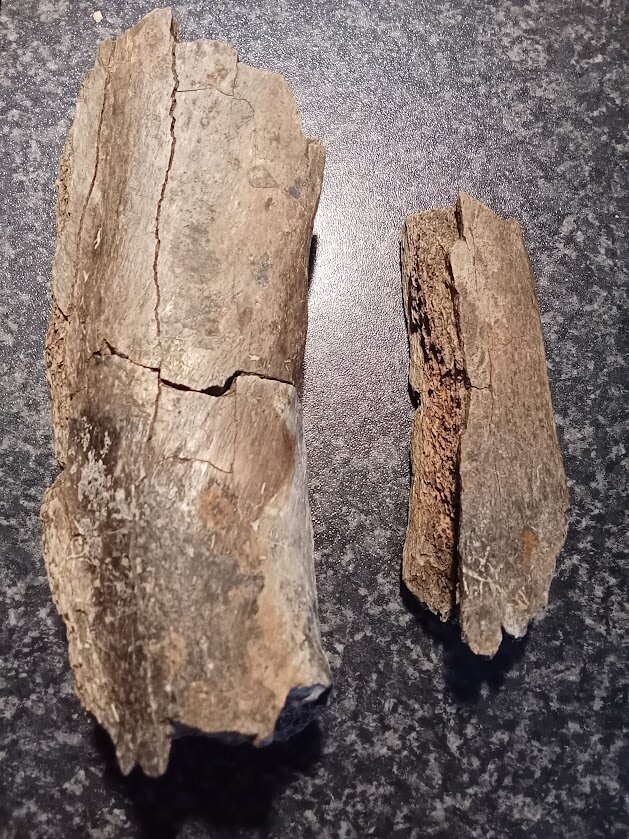
Moeritherium is preserved as a body fossil. The preservation quality is good.
Related Specimens
From the cenozoic era · body fossils