Tanystropheus longobardicus
About Tanystropheus longobardicus
Tanystropheus longobardicus is one of the most bizarre and instantly recognizable reptiles of the Mesozoic era, a highly specialized archosauromorph that lived during the Middle Triassic period, approximately 247.2 to 237 million years ago. Renowned for its extraordinarily elongated neck, which alone accounted for more than half of its total body length, this remarkable creature represents a unique evolutionary experiment in the aftermath of the Permian-Triassic extinction event. Primarily known from the exceptionally preserved fossil beds of Monte San Giorgio on the border of modern-day Italy and Switzerland, Tanystropheus longobardicus provides critical insights into the early diversification of reptiles and their adaptation to the shallow marine and brackish environments of the ancient Tethys Ocean.
The physical anatomy of Tanystropheus longobardicus is a subject of endless fascination and study among vertebrate paleontologists, primarily due to its extreme proportions. Adult specimens could reach lengths of up to six meters, though the majority of this length was concentrated in the neck and tail. The neck itself was constructed from just thirteen cervical vertebrae, but each individual vertebra was massively elongated, resembling the hollow, cylindrical bones found in the limbs of theropod dinosaurs or pterosaurs. These cervical vertebrae were supported by long, thread-like cervical ribs that ran parallel to the neck, effectively bundling the vertebrae together and rendering the entire neck structure incredibly stiff and rod-like, severely limiting lateral flexibility. The skull of Tanystropheus was relatively small, flattened, and triangular, positioned at the very end of this biological crane. Its jaws were lined with sharp, interlocking, conical teeth perfectly adapted for piercing and gripping slippery aquatic prey. The postcranial skeleton featured a relatively short, compact torso and sprawling, lizard-like limbs. The hind limbs were significantly longer and more robust than the forelimbs, suggesting a powerful swimming stroke or an awkward, sprawling gait if the animal ever ventured onto land. The tail was moderately long and likely aided in aquatic propulsion. In comparison to modern animals, Tanystropheus has no direct morphological analog; it possessed the sprawling posture of a monitor lizard, the elongated neck of a giraffe, and the aquatic lifestyle of a crocodilian, making it a truly unique chimera of evolutionary adaptations.
The paleobiology of Tanystropheus longobardicus has been deduced through a combination of functional morphology, fossilized stomach contents, and advanced biomechanical modeling. It was definitively a piscivore, relying on a diet of small fish and cephalopods. The prevailing theory regarding its feeding strategy suggests that Tanystropheus was a specialized ambush predator. Rather than actively pursuing fast-swimming fish, it likely utilized its incredibly long neck to approach prey stealthily. In the murky or highly structured environments of shallow coastal waters, the small head could dart forward to snatch prey before the massive, bulky body was even detected by the victim. Locomotion has been a subject of intense study; the stiff neck and sprawling limbs indicate that it was a poor walker on land, likely clumsy and vulnerable to terrestrial predators. Instead, it is now widely accepted that Tanystropheus was primarily aquatic or semi-aquatic. It probably swam using a combination of lateral undulations of its tail and paddling motions of its webbed hind feet, while the stiff neck was held straight forward to minimize hydrodynamic drag. Bone histology studies have revealed fascinating growth patterns; cross-sections of the long bones show that Tanystropheus grew rapidly during its early years, laying down highly vascularized bone tissue, before slowing down significantly as it reached sexual maturity. This rapid early growth may have been an evolutionary necessity to quickly reach a size where it was less vulnerable to the numerous marine predators of the Triassic seas.
The ecological context in which Tanystropheus longobardicus thrived was the vibrant, tropical environment of the western Tethys Ocean. During the Middle Triassic, the supercontinent of Pangea was fully assembled, and the Tethys formed a massive, warm, equatorial gulf indenting its eastern margin. The specific habitat of Tanystropheus, represented today by the Besano Formation and the Grenzbitumenzone of Monte San Giorgio, consisted of a complex network of shallow, sunlit lagoons, carbonate platforms, and intra-platform basins. The climate was generally hot and arid, with monsoonal influences driving seasonal variations in rainfall and nutrient runoff into the marine basins. Tanystropheus shared this rich ecosystem with a diverse array of marine life. It co-existed with early ichthyosaurs like Mixosaurus, the sauropterygian Ceresiosaurus, and the apex predatory fish Saurichthys. The terrestrial environments bordering the lagoons were inhabited by rauisuchians like Ticinosuchus, whose remains occasionally washed into the marine basins. In the food web of this Middle Triassic lagoonal system, Tanystropheus occupied a mid-level predatory niche. It fed on the abundant small actinopterygian fish and coleoid cephalopods that swarmed the reefs and shallow waters, while juvenile or smaller individuals of Tanystropheus likely fell prey to larger marine reptiles and giant predatory sharks like Asteracanthus. The anoxic conditions at the bottom of these basins prevented scavengers from destroying the carcasses, allowing for the preservation of this complex ecological web in stunning detail.
The discovery history of Tanystropheus is as convoluted and fascinating as the animal's anatomy, reflecting the evolving nature of paleontological science over the past two centuries. The genus Tanystropheus was first named in 1852 by the eminent German paleontologist Hermann von Meyer, based on isolated, extremely elongated vertebrae found in Germany. Because these bones were hollow and so unusually long, von Meyer originally misidentified them as the wing bones of a massive, unknown pterosaur. It was not until 1886 that the Italian paleontologist Francesco Bassani described the species Tanystropheus longobardicus based on more complete, articulated specimens discovered in the bituminous shales of the Besano Formation in northern Italy. Bassani recognized that the elongated bones were not pterosaur phalanges but the cervical vertebrae of a bizarre reptile. Throughout the early 20th century, extensive excavations at Monte San Giorgio, led by Swiss paleontologist Bernhard Peyer and later by Emil Kuhn-Schnyder, unearthed dozens of spectacularly preserved, fully articulated skeletons of Tanystropheus longobardicus. These discoveries definitively proved the animal's true proportions and sparked decades of research. The naming history reflects early taxonomic confusion, with various specimens initially assigned to different genera such as Tribelesodon, which was later recognized as the juvenile form of Tanystropheus. The wealth of specimens from Monte San Giorgio, ranging from tiny juveniles to massive adults, has made it one of the most well-documented fossil reptiles of the Triassic period.
In terms of evolutionary significance, Tanystropheus longobardicus occupies a crucial position in the understanding of early archosauromorph radiation. Archosauromorphs are the broad group of reptiles that eventually gave rise to crocodilians, pterosaurs, and dinosaurs, including modern birds. Following the devastating Permian-Triassic extinction event, which wiped out the majority of life on Earth, the surviving reptile lineages experienced an explosive adaptive radiation, filling newly vacant ecological niches. Tanystropheus represents one of the most extreme and specialized branches of this early radiation. It belongs to a specific clade known as the Tanystropheidae, a family characterized by varying degrees of neck elongation. By studying Tanystropheus, paleontologists can trace the evolutionary pathways that allowed early reptiles to transition from strictly terrestrial lifestyles to specialized aquatic and semi-aquatic niches. Furthermore, the extreme elongation of its neck provides a fascinating case study in evolutionary constraints and developmental biology. Unlike plesiosaurs, which elongated their necks by increasing the total number of cervical vertebrae, Tanystropheus achieved its bizarre proportions by hyper-elongating a fixed number of vertebrae. This demonstrates how different evolutionary lineages can arrive at similar functional morphologies through entirely different developmental mechanisms, highlighting the incredible plasticity of the reptilian body plan during the Triassic period.
Despite the abundance of fossil material, Tanystropheus longobardicus has been the subject of intense scientific debates that continue to this day. For decades, the primary controversy centered on its lifestyle: was it a terrestrial animal that fished from the shoreline, or a fully aquatic creature? Early reconstructions often depicted it standing on land, using its neck like a fishing rod. However, modern biomechanical studies and taphonomic evidence have largely shifted the consensus toward a predominantly aquatic or semi-aquatic lifestyle, as its sprawling limbs and heavy, stiff neck would have been biomechanically unfeasible to support on land for extended periods. A more recent and significant debate involves the taxonomy of the Monte San Giorgio specimens. For a long time, paleontologists believed that the small, delicate skeletons and the massive, robust skeletons found in the same fossil beds represented juveniles and adults of the single species Tanystropheus longobardicus. However, high-resolution CT scanning and detailed morphological analyses published in 2020 by Stephan Spiekman and colleagues revealed that the large specimens actually belong to a distinct, separate species, which they named Tanystropheus hydroides. This recent revision indicates that two separate species of Tanystropheus co-existed in the same environment, likely avoiding direct competition by partitioning food resources, with the smaller T. longobardicus feeding on small invertebrates and the larger T. hydroides hunting larger fish and cephalopods.
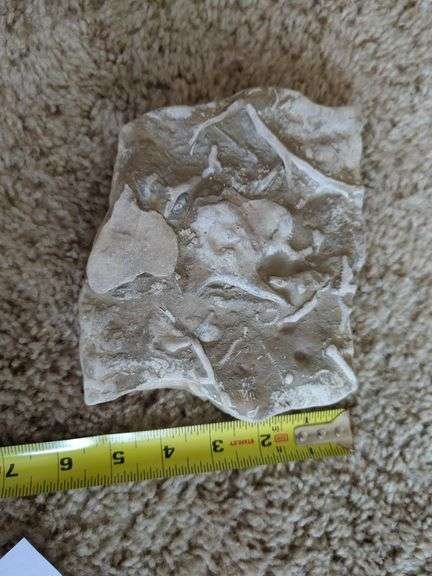
The fossil record of Tanystropheus longobardicus is exceptionally rich, though geographically restricted primarily to the Middle Triassic deposits of Europe, with the Middle East and China yielding related species. The absolute pinnacle of this fossil record is the Besano Formation and the overlying Meride Limestone of the Monte San Giorgio UNESCO World Heritage site, straddling the border of Italy and Switzerland. Here, paleontologists have recovered over a hundred specimens, ranging from isolated bones to perfectly articulated, complete skeletons. The preservation quality at this site is world-renowned; the fossils are often preserved flattened on slabs of black shale, a result of the animals dying and sinking into the stagnant, anoxic bottom waters of the ancient lagoon, where a lack of oxygen prevented scavenging and bacterial decay. In some extraordinary cases, soft tissue outlines, skin impressions, and even the fossilized remains of their last meals (bromalites) containing fish scales and cephalopod hooklets have been preserved. This pristine fossil record allows researchers to reconstruct the anatomy, ontogeny, and ecology of Tanystropheus with a level of detail that is rarely possible for animals that lived nearly a quarter of a billion years ago.
The cultural impact of Tanystropheus longobardicus is significant, particularly within the realms of paleontology education and popular science. Its incredibly bizarre, almost mythical appearance makes it a favorite subject for paleoartists and a staple in children's books about prehistoric life, where it is frequently used to illustrate the strange and experimental nature of Triassic ecosystems. Spectacularly mounted skeletons and high-quality casts of Tanystropheus are prominent centerpieces in major natural history museums across Europe, most notably the Paleontological Museum of Zurich and the Natural History Museum of Milan. These exhibits draw countless visitors and serve as vital educational tools, sparking public imagination and curiosity about the deep history of life on Earth, the reality of extinction, and the wondrous, sometimes bizarre pathways of vertebrate evolution.
Time Period
Discovery
Location
Monte San Giorgio, Italy/Switzerland
Formation
Besano Formation (Grenzbitumenzone)
Frequently Asked Questions
What is Tanystropheus longobardicus?
Tanystropheus longobardicus is one of the most bizarre and instantly recognizable reptiles of the Mesozoic era, a highly specialized archosauromorph that lived during the Middle Triassic period, approximately 247.2 to 237 million years ago. Renowned for its extraordinarily elongated neck, which alon...
When did Tanystropheus longobardicus live?
Tanystropheus longobardicus lived during the triassic period of the mesozoic era approximately 247.2 - 237 million years ago.
Where was Tanystropheus longobardicus discovered?
Fossils of Tanystropheus longobardicus were discovered in Monte San Giorgio, Italy/Switzerland in the Besano Formation (Grenzbitumenzone).
What did Tanystropheus longobardicus eat?
Tanystropheus longobardicus was a piscivore. It lived in aquatic/semi-aquatic (marine or brackish water) habitats.
What type of fossil is Tanystropheus longobardicus?
Tanystropheus longobardicus is preserved as a body fossil. The preservation quality is excellent.
Related Specimens
From the mesozoic era · body fossils