Hippurites
Hippurites radiosus
Image: Image sourced via web search (Fair use / Educational)
About Hippurites
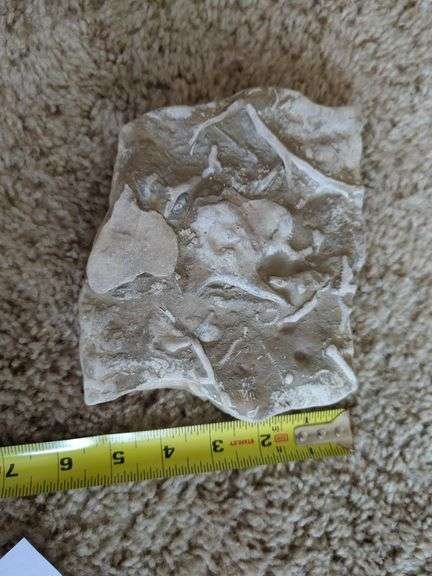
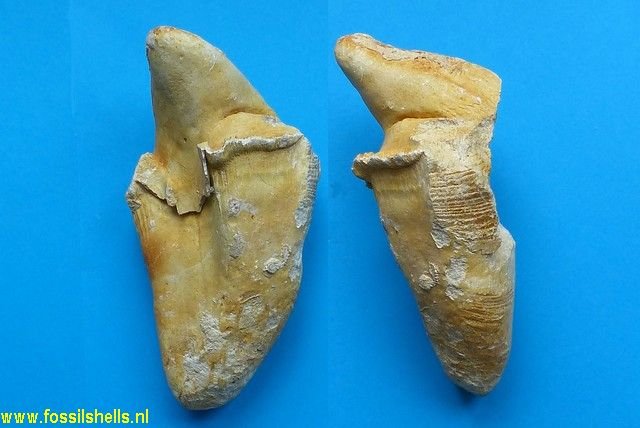
Hippurites radiosus is a highly specialized, extinct species of marine bivalve mollusk belonging to the enigmatic group known as rudists. Thriving during the Late Cretaceous period, approximately 84 to 66 million years ago, this organism was a dominant reef-building creature in the shallow, warm waters of the ancient Tethys Ocean. Unlike modern clams or oysters, Hippurites radiosus possessed a bizarre, asymmetrical shell that grew vertically from the sea floor, resembling a rugged horn or a small, calcified trash can with a porous lid. Its significance in paleontology is immense, as it represents one of the most extreme evolutionary divergences within the class Bivalvia and serves as a crucial paleoenvironmental indicator for the Mesozoic era. The widespread abundance of Hippurites fossils has not only helped geologists map the extent of the Tethys Ocean but has also played a vital role in the modern petroleum industry, as the highly porous fossilized reefs they left behind form excellent reservoir rocks for oil and natural gas in regions like the Middle East and the Gulf of Mexico.
The physical anatomy of Hippurites radiosus is a fascinating study in extreme evolutionary adaptation, diverging wildly from the standard bilateral symmetry expected of bivalve mollusks. The organism's shell was divided into two highly unequal valves. The right valve, which anchored the animal to the substrate or to neighboring rudists, was elongated, conical, and heavily calcified, often reaching lengths of 15 to 40 centimeters, though some related species could grow much larger. This lower valve featured deep longitudinal grooves and internal pillars that provided structural integrity against powerful ocean currents. The left valve, in stark contrast, acted as a flattened, opercular lid that capped the conical lower valve. This free valve was perforated with a complex network of pores and canals, a distinctive feature of the family Hippuritidae. These pores allowed water to enter the mantle cavity for respiration and feeding while protecting the soft tissues inside from predators. The shell itself was composed of two distinct mineral layers: a thick, outer layer of stable calcite, which is frequently well-preserved in the fossil record, and an inner layer of aragonite, which is typically dissolved or recrystallized during fossilization. In terms of soft tissue, while none has been preserved, paleontologists infer that the mantle was highly modified to secrete this complex shell structure and likely extended into the pore network of the upper valve. Compared to modern bivalves, Hippurites radiosus would have looked more like a solitary coral or a strange, ribbed vase than a traditional clam, highlighting a remarkable instance of convergent evolution where a mollusk adopted a coral-like morphology to dominate a specific ecological niche.
The paleobiology of Hippurites radiosus reveals a highly specialized lifestyle tailored to the extreme greenhouse conditions of the Late Cretaceous. As a benthic, sessile organism, it spent its adult life permanently cemented to the sea floor or to the shells of other rudists, forming dense, gregarious aggregations known as rudist bouquets or biostromes. Its primary mode of feeding was filter-feeding; water was drawn in through the intricate pore system of the upper valve, passing over the gills where suspended organic particles and phytoplankton were trapped before the filtered water was expelled. However, one of the most compelling aspects of Hippurites paleobiology is the strong likelihood that it harbored photosymbiotic zooxanthellae—single-celled dinoflagellates—within its mantle tissues, much like modern reef-building corals and giant clams (Tridacna). The complex canal system and the thin, porous nature of the upper valve would have allowed sunlight to penetrate the shell, providing the necessary energy for these symbiotic algae to photosynthesize. In return, the algae would have supplied the rudist with supplementary nutrients and enhanced its ability to calcify rapidly, a crucial advantage in the competitive reef environment. This dual feeding strategy—combining traditional filter-feeding with photosymbiosis—would explain the massive size and rapid growth rates of Hippurites radiosus, allowing it to construct extensive reef frameworks. The metabolism of these creatures was likely highly efficient, adapted to the warm, saline, and occasionally nutrient-poor waters of the Tethyan carbonate platforms. Growth patterns, visible as daily and seasonal banding in the calcitic outer shell layer, indicate that these organisms grew rapidly in their early stages to establish a foothold before shifting energy toward thickening their shells and reproducing.
During the Late Cretaceous, the world inhabited by Hippurites radiosus was vastly different from today, characterized by a global greenhouse climate with high atmospheric carbon dioxide levels, no permanent polar ice caps, and sea levels significantly higher than modern times. The organism thrived in the Tethys Ocean, a massive equatorial seaway that separated the northern supercontinent of Laurasia from the southern supercontinent of Gondwana. In this warm, shallow, and highly saline environment, Hippurites radiosus and other rudists achieved something extraordinary: they outcompeted scleractinian corals to become the primary reef-building organisms of their time. These rudist reefs, or more accurately, carbonate platforms, stretched across thousands of miles, covering areas that are now the Mediterranean, the Middle East, and the Caribbean. The ecological context of these platforms was complex and dynamic. Hippurites radiosus lived alongside a diverse array of marine life, including ammonites, belemnites, marine reptiles like mosasaurs and plesiosaurs, and early teleost fishes. Within the reef itself, the dense thickets of rudist shells provided habitat and shelter for countless smaller organisms, such as gastropods, echinoids, and crustaceans, forming a rich and intricate food web. Predators of Hippurites likely included shell-crushing fish, specialized carnivorous gastropods, and possibly some of the smaller marine reptiles, though the thick calcitic shell and the protected pore system of the upper valve offered substantial defense. The dominance of rudists in these environments was absolute, dictating the flow of ocean currents, the deposition of carbonate sediments, and the overall structure of the shallow marine ecosystem until the very end of the Mesozoic era.
The discovery and subsequent study of Hippurites radiosus and its kin represent a fascinating chapter in the history of paleontology. The genus Hippurites was first formally described by the renowned French naturalist Jean-Baptiste Lamarck in 1801, though strange, horn-like fossils had been noticed by quarrymen and scholars in the Mediterranean region for centuries prior. The specific epithet radiosus was later applied to specimens exhibiting distinct radial ribbing and specific internal pillar structures. During the 19th century, as the science of geology formalized, prolific paleontologists like Alcide d'Orbigny extensively studied the rudist formations of France, recognizing their importance as index fossils for dating Cretaceous strata. The initial classification of these bizarre fossils was fraught with confusion; early naturalists debated whether they were corals, barnacles, or even strange tube-dwelling worms, due to their profound lack of resemblance to typical bivalves. It was only through meticulous anatomical studies of the hinge teeth and the shell microstructure that their true identity as highly derived mollusks was confirmed. Key specimens of Hippurites radiosus have been primarily excavated from the Campanian and Maastrichtian deposits of the Charentes region in France, as well as the Gosau Group in the Austrian Alps. These historical discoveries laid the groundwork for modern paleobiogeography, as the mapping of Hippurites fossils allowed 20th-century geologists to reconstruct the ancient margins of the Tethys Ocean and understand the tectonic movements that eventually closed this massive seaway.
The evolutionary significance of Hippurites radiosus cannot be overstated, as it exemplifies one of the most dramatic morphological transformations in the history of the Mollusca. Fitting into the order Hippuritida, this organism demonstrates how intense environmental pressures and ecological opportunities can drive a lineage to completely abandon its ancestral body plan. The evolutionary journey of rudists began in the Late Jurassic with relatively normal, coiled bivalves that gradually became attached to the substrate. Over millions of years, the unattached valve became smaller and cap-like, while the attached valve elongated, culminating in the extreme conical forms seen in Hippurites. This transition is a textbook example of convergent evolution, where rudists independently evolved a coral-like, reef-building morphology to exploit the warm, shallow-water niches of the Cretaceous. Furthermore, Hippurites radiosus provides critical insights into the concept of evolutionary dead ends. Despite their massive success and global distribution, the highly specialized nature of rudists made them exceptionally vulnerable to environmental changes. They left no modern descendants; the entire order was wiped out during the Cretaceous-Paleogene (K-Pg) extinction event 66 million years ago. Studying the rise and fall of Hippurites helps evolutionary biologists understand the trade-offs between extreme specialization and long-term evolutionary resilience, illustrating how the very adaptations that made them the undisputed masters of the Cretaceous seas ultimately sealed their fate when the global environment collapsed.
Despite centuries of study, Hippurites radiosus remains the subject of several ongoing scientific debates. The most prominent controversy centers around the hypothesis of photosymbiosis. While the morphological evidence—such as the porous upper valve and the sheer volume of carbonate produced—strongly suggests a symbiotic relationship with zooxanthellae, direct geochemical or fossilized cellular evidence remains elusive. Some researchers argue that the complex pore system was strictly an adaptation for enhanced filter-feeding in turbid waters, pointing out that not all rudists exhibit features compatible with light penetration. Another area of active debate involves the precise timing and cause of their extinction. While the asteroid impact at the K-Pg boundary was the final blow, recent high-resolution stratigraphic studies suggest that rudist diversity, including populations of Hippurites, was already declining in the late Maastrichtian due to global cooling and massive volcanic activity from the Deccan Traps, which altered ocean chemistry and sea levels. Additionally, the exact taxonomic relationships within the family Hippuritidae are frequently revised as new 3D scanning technologies reveal previously hidden internal shell structures, leading to the reclassification of several sub-species and a better understanding of their evolutionary tree.
The fossil record of Hippurites radiosus is exceptionally rich, primarily concentrated in the limestone deposits of the ancient Tethyan realm. Geographically, fossils are abundantly found across southern Europe, North Africa, the Middle East, and parts of the Caribbean and Central America. Thousands of specimens have been collected, ranging from isolated, fragmented shells to massive, intact reef blocks containing hundreds of individuals preserved in their original life positions. The quality of preservation is generally good to excellent, particularly concerning the thick, calcitic right valve, which resists dissolution and diagenesis. However, the aragonitic inner layers and the delicate, porous left valves are often lost or preserved only as internal molds, requiring paleontologists to use specialized techniques like serial sectioning or micro-CT scanning to study their internal anatomy. Famous fossil sites include the spectacular rudist limestones of the Pyrenees, the Apennines in Italy, and the extensive Cretaceous outcrops of the Arabian Peninsula. These sites not only yield beautifully preserved specimens of Hippurites radiosus but also provide a comprehensive record of the entire reef ecosystem, capturing a snapshot of marine life just before the catastrophic end of the Mesozoic era.
While Hippurites radiosus may not enjoy the same pop-culture stardom as Tyrannosaurus rex or Triceratops, its cultural and economic impact is profoundly significant. In the realm of education and museum exhibitions, rudists are frequently showcased as prime examples of bizarre evolutionary adaptations and ancient marine ecology, with notable displays at the National Museum of Natural History in Paris and the Natural History Museum in London. More importantly, the public fascination with these creatures is dwarfed by their immense economic value. The highly porous, fossilized reefs built by Hippurites and its relatives are among the most productive hydrocarbon reservoirs on Earth. The oil wealth of the Middle East, particularly in countries like Saudi Arabia and the United Arab Emirates, is largely extracted from Cretaceous rudist formations. Consequently, Hippurites radiosus is a legendary figure in the field of petroleum geology, where understanding its growth patterns, reef architecture, and fossil distribution is essential for modern energy exploration, bridging the gap between ancient paleontology and contemporary global economics.
Classification
Time Period
Discovery
Location
France
Formation
Gosau Group
Frequently Asked Questions
What is Hippurites?
Hippurites radiosus is a highly specialized, extinct species of marine bivalve mollusk belonging to the enigmatic group known as rudists. Thriving during the Late Cretaceous period, approximately 84 to 66 million years ago, this organism was a dominant reef-building creature in the shallow, warm wat...
When did Hippurites live?
Hippurites lived during the cretaceous period of the mesozoic era approximately 84-66 million years ago.
Where was Hippurites discovered?
Fossils of Hippurites were discovered in France in the Gosau Group.
What did Hippurites eat?
Hippurites was a filter-feeder. It lived in marine reef habitats.
What type of fossil is Hippurites?
Hippurites is preserved as a body fossil. The preservation quality is good.
Related Specimens
From the mesozoic era · body fossils