Homo heidelbergensis
Image: Image sourced via web search (Fair use / Educational)
About Homo heidelbergensis
Homo heidelbergensis is an extinct species of archaic human that lived during the Middle Pleistocene, approximately 700,000 to 200,000 years ago. Occupying a vast geographical range across Africa, Europe, and possibly Asia, this hominid represents a crucial intermediate stage in human evolution, widely considered to be the last common ancestor of both Neanderthals (Homo neanderthalensis) and modern humans (Homo sapiens). Its significance lies in its advanced tool technology, evidence of sophisticated hunting behaviors, and potential for early symbolic thought, providing a window into the cognitive and cultural developments that paved the way for its famous descendants.
Homo heidelbergensis was a robust and powerfully built hominid, standing taller and more muscular than many earlier Homo species. Average height estimates for males are around 175 cm (5 ft 9 in) with a weight of approximately 62 kg (136 lbs), while females were slightly smaller at about 157 cm (5 ft 2 in) and 51 kg (112 lbs). Their physique was more robust than that of modern humans but less stocky than the later Neanderthals. The skull is a mosaic of primitive and derived features. It possessed a large cranial capacity, averaging around 1200 cubic centimeters, which falls within the lower range of modern humans but is significantly larger than that of Homo erectus. Key cranial features include a large, projecting face with a broad nasal opening, a prominent double-arched brow ridge (supraorbital torus), and a receding forehead. Unlike modern humans, they lacked a distinct chin. The postcranial skeleton indicates a strong build adapted for a physically demanding lifestyle in a variety of challenging environments. Their long bones were thick-walled, suggesting great strength, comparable to that of a modern athlete but as a baseline for their entire population.
The paleobiology of Homo heidelbergensis reveals a highly capable and adaptable omnivore. Isotopic analysis of their bones and the faunal assemblages found at their sites indicate a diet rich in meat, sourced from large game. They were formidable hunters, not just scavengers, as evidenced by wooden spears found at Schöningen, Germany, dating to around 300,000 years ago. These finely crafted, balanced throwing spears were found alongside the butchered remains of horses, demonstrating organized, cooperative hunting of large, fast-moving prey. This implies sophisticated planning, communication, and social cohesion. Their tool technology, known as the Acheulean industry, was a significant advance over earlier toolkits. They expertly crafted large, bifacial hand axes, cleavers, and flake tools, which were versatile instruments for butchering animals, processing plants, and working wood. Evidence from sites like Boxgrove in England shows systematic butchery of large mammals like rhinos and horses. While direct evidence of their social structure is scarce, the complexity of their hunting strategies and tool production suggests they lived in cooperative social groups, likely similar to modern hunter-gatherer bands.
Homo heidelbergensis thrived during the Middle Pleistocene, a period characterized by dramatic climate fluctuations with alternating glacial and interglacial periods. Their world was a dynamic mosaic of environments, ranging from temperate woodlands and grasslands in Europe during warmer interglacials to colder, more arid steppe-tundras during glacial advances. They shared these landscapes with a formidable megafauna, including cave bears, cave lions, woolly mammoths, straight-tusked elephants, and giant deer. As apex predators, they occupied a high position in the food web, competing with other large carnivores for resources. Their ability to hunt large game was a key adaptation that allowed them to exploit rich sources of protein and fat, crucial for supporting their large brains and active lifestyles. The challenges posed by these fluctuating climates and dangerous fauna likely drove the evolution of their cognitive abilities, technological skills, and social cooperation, shaping their evolutionary trajectory and that of their descendants.
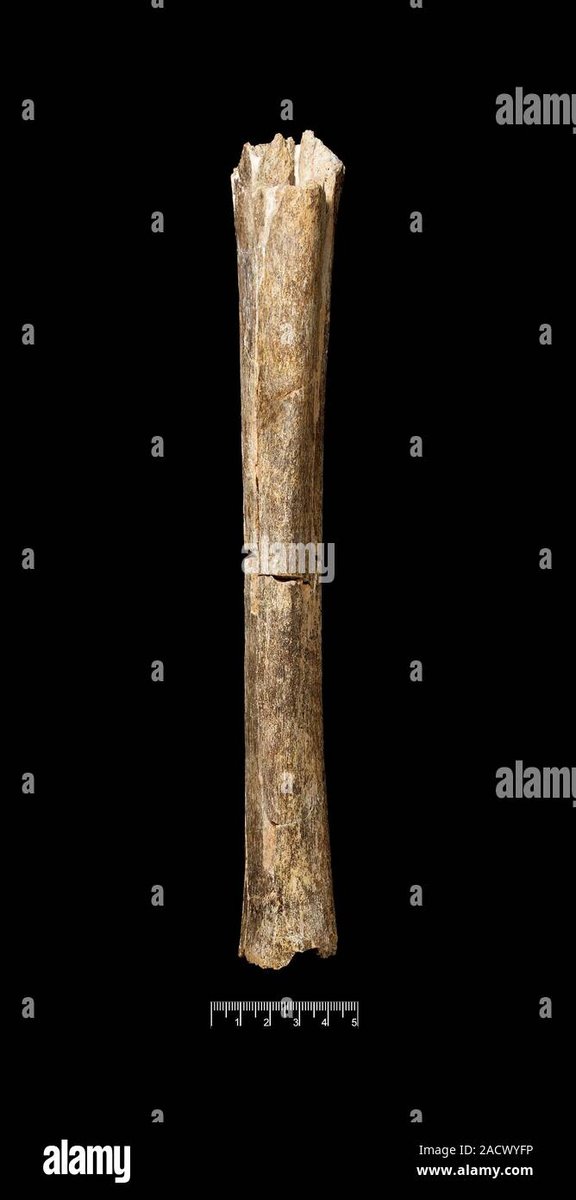
The discovery history of this species began in 1907 when a workman named Daniel Hartmann unearthed a robust and complete lower jaw in a sand quarry in the village of Mauer, near Heidelberg, Germany. He recognized its significance and handed it over to Professor Otto Schoetensack of the University of Heidelberg. The following year, Schoetensack formally described the specimen, Mauer 1, and designated it the type specimen for a new species, Homo heidelbergensis. For decades, this jaw remained the sole representative. However, subsequent discoveries across Europe and Africa were later assigned to the species. Key specimens include the 'Arago 21' cranium from Caune de l'Arago, France; the 'Petralona' cranium from Greece; and the remarkably complete cranium known as 'Kabwe 1' (or Broken Hill 1) from Zambia. Perhaps the most significant site is the Sima de los Huesos ('Pit of Bones') in Atapuerca, Spain, which has yielded the remains of at least 28 individuals, providing an unprecedented look at population-level variation in this ancient hominid.
Homo heidelbergensis occupies a pivotal position in the human evolutionary tree. It is widely accepted as the descendant of an earlier species, likely Homo erectus or a related form like Homo antecessor, and the last common ancestor of Neanderthals and Homo sapiens. The species represents a crucial grade of evolution characterized by a significant increase in brain size and the development of more complex behaviors. Fossils from Europe, such as those from Sima de los Huesos, exhibit clear proto-Neanderthal traits, including a projecting mid-face and a developing suprainiac fossa on the occipital bone, indicating they are on the direct lineage leading to Neanderthals. In contrast, African fossils, like Kabwe 1 and Bodo 1 from Ethiopia, show features such as a less projecting face and a more rounded cranial vault, which are considered ancestral to Homo sapiens. This geographical divergence illustrates a classic case of allopatric speciation, where isolated populations in Africa and Europe followed separate evolutionary paths, ultimately giving rise to two distinct and highly successful human species.
Despite its crucial role, the taxonomy and definition of Homo heidelbergensis remain a subject of intense scientific debate. Some researchers advocate for a broad, inclusive definition, lumping fossils from Africa, Europe, and potentially Asia under this single species name. Others argue for a more restricted view, limiting H. heidelbergensis to only the European fossils that are ancestral to Neanderthals. Under this latter scheme, the African fossils are often assigned to a separate species, Homo rhodesiensis. This debate, often termed the 'muddle in the middle,' reflects the difficulty of drawing clear species boundaries in a continuous and geographically widespread evolutionary lineage. Furthermore, the Sima de los Huesos assemblage, with its mix of H. heidelbergensis and Neanderthal traits, has fueled discussions about the timing and mode of Neanderthal evolution. Recent genetic analysis of these fossils has further complicated the picture, suggesting a closer relationship to Denisovans than to classic Neanderthals, challenging previous morphological interpretations.
The fossil record of Homo heidelbergensis is geographically widespread but often fragmentary. Significant fossils have been recovered from numerous key sites across Europe, including Mauer in Germany, Boxgrove and Swanscombe in England, Petralona in Greece, and the extensive collection from the Sima de los Huesos site in the Atapuerca Mountains of Spain. The Sima collection is exceptional, representing the largest single accumulation of fossil hominins ever found, offering unparalleled insights into the morphology of one population. In Africa, important fossils are known from Kabwe (Broken Hill) in Zambia, Bodo in Ethiopia, and Elandsfontein in South Africa. Preservation quality varies from isolated teeth and jaw fragments to nearly complete crania. Postcranial remains are rarer but critically important, with the Sima de los Huesos fossils providing the most complete picture of their skeletal anatomy. The sheer number of individuals from this one Spanish site suggests it may have been a place of deliberate body disposal, a behavior with profound implications for their cognitive and symbolic capacities.
Though not as famous as Neanderthals or 'Lucy,' Homo heidelbergensis holds a significant place in public understanding of human evolution. Major natural history museums, including the Senckenberg Museum in Frankfurt and the American Museum of Natural History in New York, feature detailed reconstructions and fossil casts that bring this ancient ancestor to life for millions of visitors. Its role as the common ancestor to both us and our closest extinct relatives makes it a critical chapter in the story of human origins. Documentaries and popular science books frequently highlight the species' advanced hunting techniques, particularly the Schöningen spears, as a landmark achievement in human technological and cognitive evolution, capturing the public's fascination with the deep history of our own lineage.
Classification
Time Period
Discovery
Location
Germany
Formation
Mauer Sands
Frequently Asked Questions
What is Homo heidelbergensis?
Homo heidelbergensis is an extinct species of archaic human that lived during the Middle Pleistocene, approximately 700,000 to 200,000 years ago. Occupying a vast geographical range across Africa, Europe, and possibly Asia, this hominid represents a crucial intermediate stage in human evolution, wid...
When did Homo heidelbergensis live?
Homo heidelbergensis lived during the quaternary period of the cenozoic era approximately 0.7-0.2 million years ago.
Where was Homo heidelbergensis discovered?
Fossils of Homo heidelbergensis were discovered in Germany in the Mauer Sands.
What did Homo heidelbergensis eat?
Homo heidelbergensis was a omnivore. It lived in terrestrial habitats.
What type of fossil is Homo heidelbergensis?
Homo heidelbergensis is preserved as a body fossil. The preservation quality is good.
Related Specimens
From the cenozoic era · body fossils