Pentaceratops
Pentaceratops sternbergii
Image: Image sourced via web search (Fair use / Educational)
About Pentaceratops
Pentaceratops sternbergii was a large, herbivorous ceratopsian dinosaur that inhabited the coastal plains of western North America during the late Campanian stage of the Late Cretaceous Period, approximately 76 to 73 million years ago. Known for its exceptionally large and ornate frill, Pentaceratops is a significant member of the Chasmosaurinae subfamily, providing key insights into the diversity and evolution of horned dinosaurs just before the end of the Mesozoic Era. Its fossils, primarily found in the San Juan Basin of New Mexico, have helped paleontologists understand the complex ecosystems of the ancient subcontinent of Laramidia.
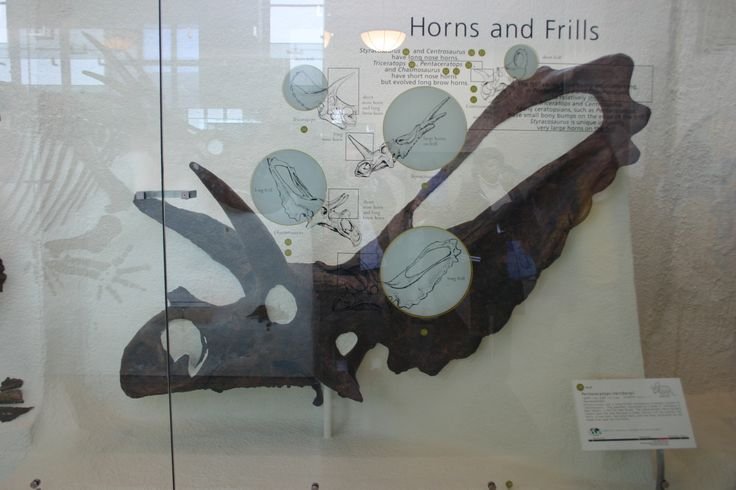
Pentaceratops was a robust and powerfully built quadruped, estimated to have reached lengths of 6 to 8 meters (20 to 26 feet) and a weight of around 5 metric tons (5.5 short tons), making it comparable in size to a large African elephant. Its most defining characteristic was its immense skull, which is among the largest of any known terrestrial animal. The holotype skull measures approximately 2.3 meters (7.5 feet) in length, though a larger, more controversial specimen (OMNH 10165), once assigned to Pentaceratops but now considered a separate genus, Titanoceratops, suggests skulls could potentially exceed 3 meters (9.8 feet). The name Pentaceratops, meaning 'five-horned face,' refers to its distinct cranial armament: a short horn on its nose, two long, forward-curving horns over its eyes, and two prominent, pointed jugal or 'cheek' bones that jutted outwards. Its most spectacular feature was its enormous, rectangular nuchal frill, a bony shield extending from the back of the skull. This frill was proportionally one of the largest relative to body size among all ceratopsians, characterized by a deep U-shaped notch at its midline and lined with a series of triangular bony projections called epoccipitals. The frill was perforated by two large openings, or fenestrae, which would have been covered by skin in life, likely reducing the skull's overall weight. Its body was stocky and barrel-chested, supported by four stout, pillar-like legs, ending in hoof-like claws. The dinosaur's powerful beak, or rostrum, was well-suited for shearing tough vegetation.
As a large herbivore, Pentaceratops's paleobiology was centered around the consumption of vast quantities of plant matter. Its powerful, shearing beak would have been used to crop low-lying vegetation such as ferns, cycads, and early angiosperms. Inside its mouth, complex dental batteries, consisting of hundreds of continuously replaced, stacked teeth, formed a formidable grinding surface for processing fibrous material. This efficient oral processing system allowed it to extract maximum nutrition from its diet. Locomotion was strictly quadrupedal, with its sturdy limbs supporting its massive frame. While not built for speed, it could likely achieve a respectable trot when threatened. Inferences about social behavior are drawn from bonebeds of related ceratopsians like Triceratops, which suggest that these animals may have lived in herds. Such social structures would have offered protection from predators and facilitated mating and raising young. The elaborate frill and horns are widely believed to have served multiple purposes, including species recognition, display for attracting mates, and intraspecific combat for dominance, rather than solely for defense against predators. Growth studies on ceratopsians indicate a relatively rapid growth rate, reaching adult size within a decade or two, a common strategy for large dinosaurs to outgrow their most vulnerable juvenile stages quickly.
During the late Campanian, Pentaceratops lived on the southern part of Laramidia, a long, narrow island continent that comprised the western portion of modern North America. The climate was warm and subtropical, characterized by high humidity and abundant rainfall, supporting lush, diverse ecosystems. Pentaceratops inhabited coastal floodplains, swamps, and riverine environments, as evidenced by the sedimentary deposits of the Kirtland and Fruitland Formations where its fossils are found. This world was teeming with a rich diversity of dinosaurian fauna. Pentaceratops shared its habitat with other herbivores, including hadrosaurs like Parasaurolophus, the armored nodosaur Glyptodontopelta, and the pachycephalosaur Sphaerotholus. The apex predator of this ecosystem was the formidable tyrannosaurid Bistahieversor sealeyi, a close relative of Tyrannosaurus rex, which would have been the primary threat to an adult Pentaceratops. The presence of such a large predator likely drove the evolution of the ceratopsian's defensive horns and massive size. The food web was complex, with Pentaceratops occupying the niche of a high-browsing megaherbivore, consuming large volumes of vegetation and shaping the plant communities of its environment. Its presence indicates a highly productive ecosystem capable of supporting multiple species of giant herbivores.
The discovery history of Pentaceratops is tied to the prolific fossil hunter Charles Hazelius Sternberg and his son, Charles Mortram Sternberg. In 1921, while on an expedition for the University of Uppsala in the San Juan Basin of New Mexico, C.H. Sternberg discovered the first significant remains of the animal. This find included a well-preserved skull and parts of the postcranial skeleton. The following year, in 1922, he collected another, more complete skull. These specimens were studied by paleontologist Henry Fairfield Osborn, who officially named and described the genus and species Pentaceratops sternbergii in 1923, honoring its discoverer. The holotype specimen is AMNH 6325, the skull collected in 1922. Another key specimen is PMU 24923 (formerly PMU.R200), the skull from the 1921 discovery. For decades, these New Mexico finds defined the genus. A particularly famous and massive skull, OMNH 10165, was discovered in 1941 by J. Willis Stovall's team and for a long time held the record as the largest terrestrial vertebrate skull ever found. Its taxonomic status, however, became a point of major scientific debate in the 21st century.
Pentaceratops holds a significant position within the evolutionary tree of ceratopsian dinosaurs. It is a member of the family Ceratopsidae and is firmly placed within the subfamily Chasmosaurinae, which is characterized by long, elaborate frills and prominent brow horns. Its closest relatives include other large, long-frilled chasmosaurines such as Chasmosaurus, Kosmoceratops, and Anchiceratops. The evolutionary relationships within this group are complex and continually refined, but Pentaceratops is often considered an advanced or 'derived' member of the lineage. Its immense, rectangular frill represents an extreme development of a key chasmosaurine trait. The study of Pentaceratops and its relatives provides crucial data on the patterns of dinosaur provincialism on Laramidia. Different species of ceratopsians appear to have been restricted to specific northern or southern regions of the continent, suggesting geographic barriers or ecological specialization drove rapid speciation. Pentaceratops is a classic example of the southern Laramidian fauna, contrasting with contemporaries like Chasmosaurus from the northern regions (modern Alberta). This pattern highlights the incredible diversity and regional differentiation of dinosaurs in the final stages of their reign. As a ceratopsian, it has no direct modern descendants, but its lineage, the Ornithischia, represents one of the two major branches of the dinosaur family tree.
Recent scientific debates have centered on the taxonomy and physical limits of Pentaceratops. The most significant controversy involves the giant skull OMNH 10165. For many years, it was considered a large, old individual of Pentaceratops sternbergii. However, in 2011, paleontologist Nicholas R. Longrich argued that its anatomical features were distinct enough to warrant a new genus, which he named Titanoceratops ouranos. Longrich proposed that Titanoceratops was not a close relative of Pentaceratops but was instead an early, giant member of the Triceratopsini tribe. This reclassification remains contentious; some researchers maintain that the differences can be attributed to ontogeny (growth changes) and individual variation within Pentaceratops. Another area of discussion involves the species P. fenestratus, which is now widely considered a synonym of P. sternbergii. The ongoing discovery of new chasmosaurine fossils continues to reshape our understanding of their diversity and interrelationships, with Pentaceratops often at the center of these phylogenetic revisions.
The fossil record of Pentaceratops is primarily concentrated in the San Juan Basin of northwestern New Mexico, specifically within the upper Fruitland Formation and the lower Kirtland Formation. These geological units have yielded a respectable number of specimens, including several partial to complete skulls and some postcranial material. While not as common as some other dinosaurs, enough material has been found to provide a clear picture of its anatomy. The preservation quality is generally good, with skulls often found articulated, though sometimes crushed or distorted by geological processes. The most commonly preserved elements are the robust parts of the skull, particularly the frill and horn cores, which were more resistant to decay and transport. Postcranial skeletons are rarer but have provided important information on its body proportions and posture. Famous fossil sites for Pentaceratops include the Bisti/De-Na-Zin Wilderness Area in New Mexico. The concentration of fossils in this region makes it a key locality for studying the Late Cretaceous ecosystems of the southern United States.
Pentaceratops has made a notable impact on popular culture and public education, largely due to its visually striking appearance and its record-holding skull size. It is a staple in dinosaur books, documentaries, and toy lines, often highlighted for its five 'horns' and massive frill. Several major museums feature impressive displays of Pentaceratops. The Sam Noble Oklahoma Museum of Natural History in Norman, Oklahoma, houses the enormous skull of the controversial 'Titanoceratops' (OMNH 10165), which is a centerpiece of their collection. The American Museum of Natural History in New York City displays the holotype skull, and other significant fossils can be found in institutions like the University of Uppsala in Sweden. Its distinctive silhouette makes it a memorable and educational example of the incredible diversity and gigantism achieved by the horned dinosaurs.
Classification
Time Period
Discovery
Location
New Mexico, USA
Formation
Kirtland Formation, Fruitland Formation
Frequently Asked Questions
What is Pentaceratops?
Pentaceratops sternbergii was a large, herbivorous ceratopsian dinosaur that inhabited the coastal plains of western North America during the late Campanian stage of the Late Cretaceous Period, approximately 76 to 73 million years ago. Known for its exceptionally large and ornate frill, Pentaceratop...
When did Pentaceratops live?
Pentaceratops lived during the cretaceous period of the mesozoic era approximately 76-73 million years ago.
Where was Pentaceratops discovered?
Fossils of Pentaceratops were discovered in New Mexico, USA in the Kirtland Formation, Fruitland Formation.
What did Pentaceratops eat?
Pentaceratops was a herbivore. It lived in terrestrial habitats.
What type of fossil is Pentaceratops?
Pentaceratops is preserved as a body fossil. The preservation quality is good.
Related Specimens
From the mesozoic era · body fossils