/929f881473a0.jpg)
Trilobite (Phacops rana)
Phacops rana
About Trilobite (Phacops rana)
Phacops rana, frequently referred to in contemporary scientific literature under the revised taxonomic designation Eldredgeops rana, stands as one of the most iconic and extensively studied trilobite species in the global fossil record. Thriving during the Devonian period of the Paleozoic era, spanning approximately 419.2 to 358.9 million years ago, this remarkable marine arthropod inhabited the warm, shallow epicontinental seas that blanketed much of what is now the North American continent. Its exceptional preservation in the geological strata of the northeastern United States and parts of Canada, combined with its highly distinctive anatomical features, has made it a cornerstone species for paleontologists seeking to understand early marine benthic ecosystems, the mechanics of ancient vision, and the broader evolutionary trajectories of early arthropods.
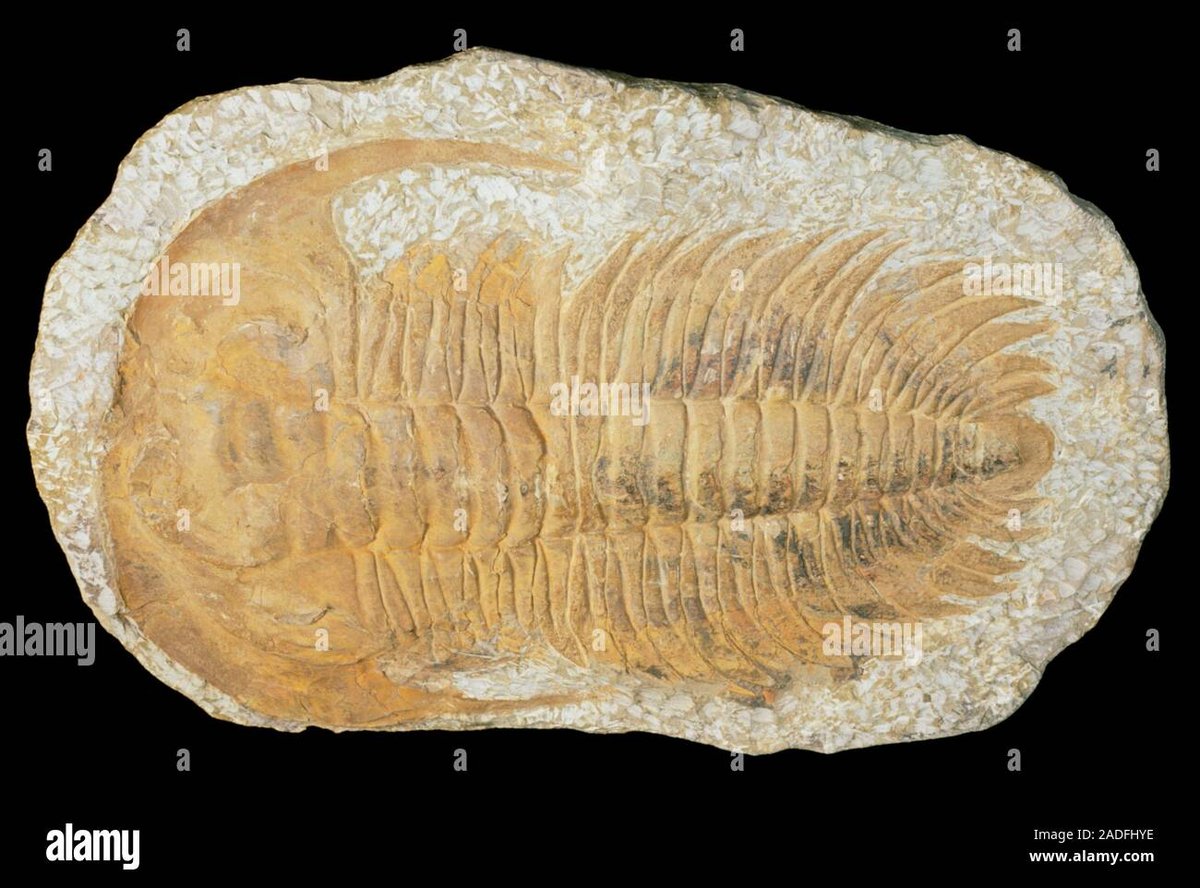
The physical description of Phacops rana reveals a highly specialized and heavily armored organism perfectly adapted to its bottom-dwelling environment. Adult specimens typically range in length from one to six inches, though the vast majority of recovered fossils measure between one and three inches. Like all trilobites, its body plan is divided both longitudinally into three distinct lobes—a central axial lobe flanked by two pleural lobes—and transversely into three main sections: the cephalon or head shield, the multi-segmented thorax, and the pygidium or tail shield. The cephalon of Phacops rana is particularly robust, featuring a broadly rounded, semi-circular shape with a prominent, inflated glabella that dominates the central facial region. The thorax is composed of eleven articulating segments, which provided the creature with a remarkable degree of flexibility. The pygidium is relatively small and semi-circular, seamlessly integrating with the overall streamlined shape of the organism. However, the most extraordinary anatomical feature of Phacops rana is undoubtedly its eyes. This species possessed schizochroal eyes, an advanced and highly unusual visual system found only in the suborder Phacopina. Unlike the holochroal eyes of earlier trilobites, which consisted of thousands of tightly packed, tiny lenses sharing a single corneal covering, the schizochroal eyes of Phacops rana featured relatively few, large, distinct lenses, each separated by thick cuticular material called sclera and covered by its own individual cornea. These lenses were composed of exceptionally pure calcite crystals. Because calcite has unique optical properties, including double refraction, the lenses were structured as doublets, with two distinct layers of varying refractive indices. This sophisticated biological engineering effectively corrected for spherical aberration, allowing the trilobite to form sharp, focused images underwater, a visual capability that rivals or exceeds that of many modern marine arthropods. In terms of modern analogues, the overall body shape and segmented armor of Phacops rana bear a superficial resemblance to contemporary terrestrial woodlice or marine isopods, though they are not closely related, representing a profound example of convergent evolution in armored, segmented body plans.
In terms of paleobiology, Phacops rana was a benthic organism, meaning it lived on or very near the ocean floor. Its diet and feeding strategies are generally understood to be those of a detritivore and scavenger, though some paleontologists suggest it may have occasionally engaged in opportunistic predation on very small, soft-bodied invertebrates. As a detritivore, it would have used its multiple pairs of jointed legs to sift through the soft, muddy sediments of the Devonian seafloor, extracting organic matter, decaying plant and animal material, and microbial mats. The creature possessed a specialized structure on its underside known as a hypostome, a hard mouthpart that likely aided in the processing of food particles before they were passed into the digestive tract. Locomotion was achieved primarily through walking along the substrate using its biramous limbs, which consisted of a walking leg and a feathery, gill-bearing branch used for respiration. While primarily a crawler, the hydrodynamic shape of its exoskeleton suggests it was capable of short bursts of swimming to evade predators. One of the most fascinating behavioral inferences drawn from the fossil record of Phacops rana is its defensive mechanism. When threatened, the trilobite could engage in a behavior known as enrollment. By tucking its cephalon and pygidium together and utilizing the articulating segments of its thorax, it could roll itself into a tight, impenetrable sphere, much like a modern pillbug. This posture protected its vulnerable soft underbelly and legs, presenting only its thick, calcified dorsal exoskeleton to potential attackers. The interlocking structures on the edges of its cephalon and pygidium created a nearly perfect seal. Growth in Phacops rana, as in all arthropods, was achieved through ecdysis, or molting. The organism would periodically shed its rigid exoskeleton to accommodate an increase in body size. The fossil record is replete with the discarded molts of Phacops rana, which often separate at the facial sutures of the cephalon, providing paleontologists with a rich timeline of the organism's ontogenetic development from microscopic larval stages to fully mature adults.
The ecological context of Phacops rana is deeply tied to the specific climatic and geographic conditions of the Devonian period, an era often colloquially referred to as the Age of Fishes. During this time, the landmasses that would eventually form North America were situated near the equator, resulting in a warm, tropical to subtropical climate. The Appalachian Basin, where the majority of Phacops rana fossils are found, was a vast, shallow inland sea teeming with life. This marine environment was characterized by soft, muddy, and silty substrates, which provided the perfect habitat for benthic scavengers. Phacops rana shared its ecosystem with a diverse array of marine organisms. The seafloor was densely populated with various species of brachiopods, bivalves, and gastropods, while extensive reefs were constructed by rugose and tabulate corals, as well as sponge-like stromatoporoids. Crinoids, or sea lilies, swayed in the ocean currents, creating underwater forests of filter-feeding echinoderms. In the water column above, the Devonian seas were dominated by an explosive radiation of fish. Phacops rana occupied a crucial position in the middle to lower tiers of the food web. While it played a vital role in recycling nutrients by consuming detritus on the ocean floor, it was also a primary prey item for the rapidly evolving predators of the era. Placoderms, heavily armored jawed fishes such as the terrifying apex predator Dunkleosteus, patrolled these waters, possessing jaws powerful enough to easily crush the calcified exoskeleton of an enrolled trilobite. Early sharks, such as Cladoselache, and large predatory cephalopods, including straight-shelled nautiloids, also posed significant threats. The evolutionary arms race between these formidable Devonian predators and benthic prey likely drove the development of the thick armor and highly efficient enrollment capabilities seen in Phacops rana.
The discovery history of Phacops rana is a fascinating chapter in the annals of North American paleontology. The species was first formally described and named by the American scientist Jacob Green in 1832. Green, an early pioneer in the study of North American trilobites, originally assigned the species to the genus Calymene, naming it Calymene bufo var. rana. The specific epithet rana is derived from the Latin word for frog, a moniker chosen by Green because the prominent, bulging eyes of the trilobite reminded him of a frog peering just above the surface of the water. As the science of taxonomy evolved and more specimens were studied, the species was eventually reassigned to the genus Phacops, a name meaning lens eye, which perfectly encapsulates its most defining characteristic. The fossils of Phacops rana are most famously associated with the Hamilton Group, a sequence of Middle Devonian sedimentary rocks that stretch across the northeastern United States and into Ontario, Canada. Within this group, specific geological formations have become legendary among paleontologists for their spectacular preservation of this species. The Silica Shale, located near Sylvania, Ohio, is particularly renowned. Discovered in the early 20th century during quarrying operations for cement manufacturing, the Silica Shale has yielded thousands of perfectly preserved, fully articulated specimens of Phacops rana, often found in their enrolled defensive posture. Similarly, the Mahantango Formation in Pennsylvania and various shale deposits in upstate New York have provided countless high-quality specimens. The sheer abundance and excellent preservation of these fossils have allowed generations of scientists to study the anatomy and variation of this species in unprecedented detail, making it one of the most thoroughly documented extinct organisms in the world.
The evolutionary significance of Phacops rana extends far beyond its status as a common Devonian fossil; it has played a pivotal role in shaping modern evolutionary theory. As a member of the order Phacopida, it represents the pinnacle of adaptation in one of the most successful lineages of trilobites. The development of the schizochroal eye is considered one of the most remarkable evolutionary innovations in the history of arthropods, demonstrating a complex, highly optimized solution to the physical challenges of underwater vision. However, the most profound evolutionary significance of this species lies in its contribution to the theory of punctuated equilibrium. In the early 1970s, paleontologist Niles Eldredge, working in conjunction with Stephen Jay Gould, utilized extensive biometric studies of Phacops rana and its close relatives across different stratigraphic layers of the Middle Devonian to challenge the traditional Darwinian view of phyletic gradualism. Eldredge observed that populations of these trilobites remained morphologically static for millions of years, a phenomenon known as stasis. When evolutionary changes did occur, such as alterations in the number of vertical files of lenses in their eyes, these changes happened rapidly in isolated peripheral populations before the new morphotype migrated back to replace the ancestral population. This observation formed the empirical foundation for punctuated equilibrium, a theory that revolutionized evolutionary biology by suggesting that evolution occurs in rapid bursts of speciation separated by long periods of stability. Ultimately, the lineage of Phacops rana met its demise during the Late Devonian extinction events. The environmental upheavals of this period, which likely included global cooling, marine anoxia, and dramatic fluctuations in sea level, decimated the shallow marine ecosystems upon which these trilobites depended. By the end of the Devonian, the once-thriving order Phacopida was entirely extinct, leaving only the order Proetida to carry the trilobite lineage into the Carboniferous period.
Despite its status as a well-studied organism, Phacops rana remains the subject of ongoing scientific debates and taxonomic revisions. One of the most significant debates in recent decades has centered around its generic classification. In 1990, paleontologist Burton and his colleagues proposed that the North American species traditionally assigned to Phacops were sufficiently distinct from their European counterparts to warrant a new genus. They erected the genus Eldredgeops in honor of Niles Eldredge and his groundbreaking work on the group. Consequently, in strict taxonomic circles, the species is now correctly referred to as Eldredgeops rana. However, the name Phacops rana remains deeply entrenched in older literature, museum displays, and the popular consciousness, leading to a dual nomenclature that can sometimes cause confusion. Beyond taxonomy, debates continue regarding the precise functional morphology of the schizochroal eyes. While it is universally accepted that they provided excellent vision, some researchers argue they were optimized for low-light conditions in murky, deep waters, while others contend they were adapted for bright, shallow environments, pointing to the presence of a visor-like structure above the eyes that may have acted as a sunshade. Additionally, the exact nature of their diet remains a topic of discussion. While the consensus leans heavily toward detritivory, the discovery of trace fossils suggesting predatory behavior in related trilobites has led some scientists to hypothesize that Phacops rana may have been a more active hunter than traditionally believed, perhaps ambushing small worms or crustaceans in the Devonian mud.
The fossil record of Phacops rana is extraordinary both in its geographic breadth and the sheer volume of recovered specimens. Fossils of this species are distributed extensively across the Appalachian Basin, with major concentrations found in New York, Pennsylvania, Ohio, Michigan, and the Canadian province of Ontario. The number of individual specimens collected over the past two centuries easily numbers in the hundreds of thousands, ranging from isolated pygidia and cephalons to perfectly articulated, complete exoskeletons. The preservation quality is frequently exceptional, largely due to the fine-grained, light-colored mudstones and shales in which they were entombed. These anoxic or sub-oxic sedimentary environments prevented rapid decomposition and protected the remains from extensive scavenging. The fossils often exhibit fine detail and high relief, with the intricate textures of the exoskeleton, the individual lenses of the eyes, and even the delicate sensory pores remaining clearly visible. Famous localities, such as the aforementioned Silica Shale in Ohio and the Penn Dixie Fossil Park and Nature Reserve in Hamburg, New York, have become legendary sites for both professional paleontologists and amateur collectors. At these sites, the light-colored matrix contrasts beautifully with the dark, often black or dark brown calcified exoskeletons of the trilobites, creating visually striking specimens that are highly prized in the fossil trade and essential for academic study.
The cultural impact of Phacops rana is surprisingly profound for an extinct marine invertebrate. Its recognizable shape and abundance have made it an ambassador for paleontology to the general public. In recognition of its scientific importance and its prevalence in the state's geological formations, Pennsylvania officially designated Phacops rana as its state fossil in 1988, a move initiated by elementary school students that highlights the organism's educational value. Specimens of this trilobite are featured prominently in natural history museums worldwide, serving as tangible, easily understandable examples of ancient life, fossilization processes, and evolutionary history. For amateur rockhounds and fossil enthusiasts, finding a complete Phacops rana is often considered a rite of passage, cementing its legacy not just as a subject of rigorous scientific inquiry, but as a beloved icon of the ancient world that continues to inspire wonder and curiosity about the deep history of our planet.
Time Period
Discovery
Location
Northeastern USA (e.g., Ohio, New York), parts of Canada
Formation
Hamilton Group (e.g., Silica Shale, Mahantango Formation)
Frequently Asked Questions
What is Trilobite (Phacops rana)?
Phacops rana, frequently referred to in contemporary scientific literature under the revised taxonomic designation Eldredgeops rana, stands as one of the most iconic and extensively studied trilobite species in the global fossil record. Thriving during the Devonian period of the Paleozoic era, spann...
When did Trilobite (Phacops rana) live?
Trilobite (Phacops rana) lived during the devonian period of the paleozoic era approximately 419.2 - 358.9 million years ago.
Where was Trilobite (Phacops rana) discovered?
Fossils of Trilobite (Phacops rana) were discovered in Northeastern USA (e.g., Ohio, New York), parts of Canada in the Hamilton Group (e.g., Silica Shale, Mahantango Formation).
What did Trilobite (Phacops rana) eat?
Trilobite (Phacops rana) was a detritivore / scavenger. It lived in marine, benthic (bottom-dwelling) habitats.
What type of fossil is Trilobite (Phacops rana)?
Trilobite (Phacops rana) is preserved as a body fossil. The preservation quality is excellent.
Related Specimens
From the paleozoic era · body fossils
/cc86f4a1bc00.jpg)