Liopleurodon
Liopleurodon ferox
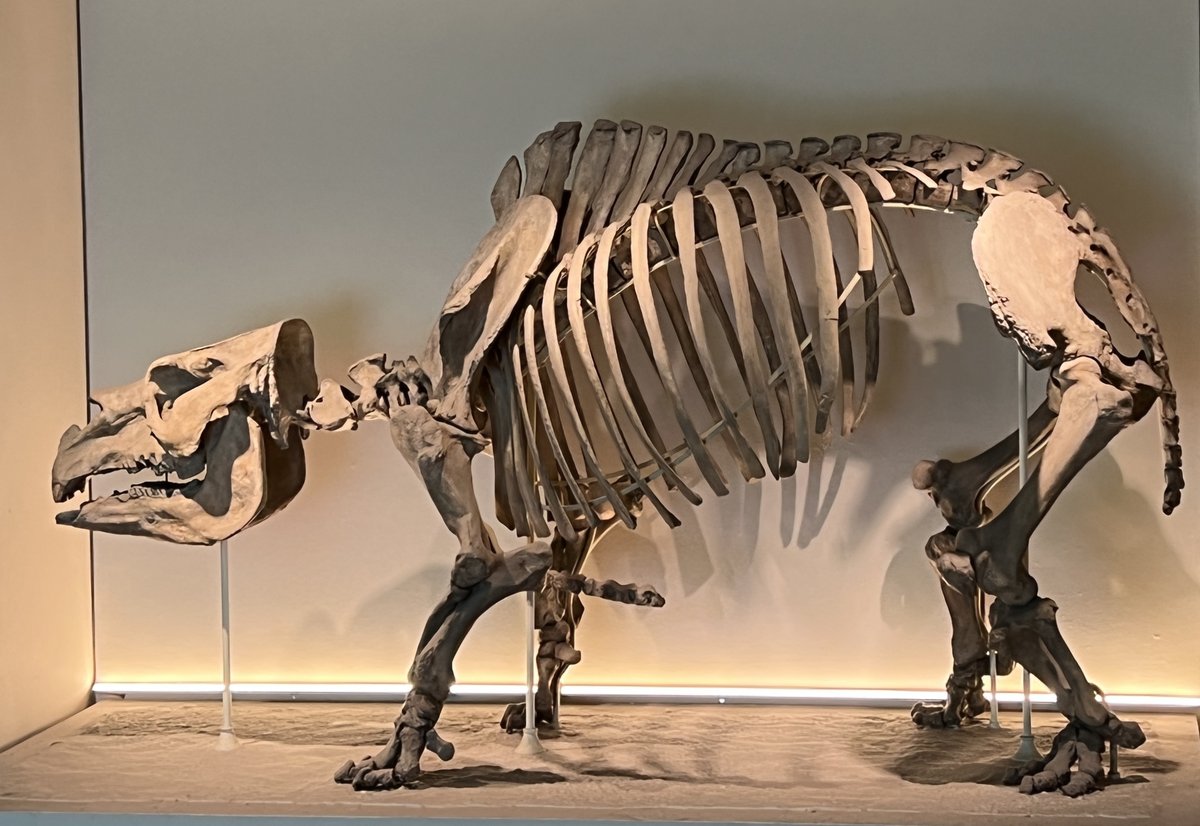
Image: Image sourced via web search (Fair use / Educational)
About Liopleurodon
Liopleurodon was a large, carnivorous marine reptile that patrolled the epicontinental seas of Europe during the Middle to Late Jurassic period. As a member of the Pliosauridae family, it represented one of the apex predators of its time, a formidable hunter in a vibrant and dangerous marine ecosystem. Its fossils provide a crucial window into the evolution of marine reptiles and the structure of ancient oceanic food webs, cementing its status as a significant and well-studied prehistoric predator.
Liopleurodon possessed a classic pliosaur body plan, characterized by a large, elongated skull, a short, robust neck, a teardrop-shaped body, and four powerful, wing-like flippers. Contrary to popular depictions that once suggested lengths of over 20 meters, scientific consensus based on available fossil evidence places the adult size of Liopleurodon ferox at a more modest, yet still impressive, 5 to 6.4 meters (approximately 16 to 21 feet) in length. Weight estimates for an individual of this size range from 1 to 1.7 metric tons. Its most formidable feature was its massive skull, which could reach over a meter in length, accounting for roughly one-fifth of its total body length. This skull was armed with a battery of large, conical, and deeply rooted teeth, perfectly adapted for seizing and dispatching large prey. The teeth, circular in cross-section, were housed in individual sockets and were particularly concentrated at the front of the jaws. The skull's structure was a marvel of biomechanical engineering, combining lightweight construction with immense strength, allowing for a powerful bite without being overly cumbersome. The placement of its nostrils far back on the skull, just in front of the eyes, suggests it could have detected scents in the water directionally, a key adaptation for an ambush predator tracking prey by smell.
As an apex predator, Liopleurodon's paleobiology was centered around efficient and powerful hunting. Its diet was varied and likely included large fish like Leedsichthys (or at least its younger, smaller individuals), ammonites, belemnites, and other marine reptiles, including ichthyosaurs and smaller plesiosaurs. Evidence for this comes from bite marks on the fossils of other animals from the same deposits. Its hunting strategy was likely that of an ambush predator, using its dark dorsal coloration for camouflage against the deep water below, striking at unsuspecting prey from beneath. The four-flippered locomotion of pliosaurs, including Liopleurodon, was unique. It is believed they employed a form of underwater flight, using all four flippers to generate thrust. Studies suggest a possible alternating flapping pattern, with the front flippers providing power on the downstroke and the rear flippers on the upstroke, creating continuous, efficient propulsion. This would have allowed for both powerful bursts of speed to catch prey and energy-efficient cruising while searching for it. Its powerful jaws, estimated to deliver a formidable bite force, would have made short work of its victims. There is no direct evidence for social behavior, and like many large marine predators today, it was likely a solitary hunter. Growth patterns inferred from bone histology suggest a relatively rapid growth rate to reach its large adult size.
Liopleurodon lived during the Callovian and Kimmeridgian stages of the Jurassic period, a time when much of Europe was submerged beneath a warm, shallow epicontinental sea known as the Sundance Sea. This marine environment was incredibly rich and supported a complex ecosystem. The climate was subtropical to tropical, with no polar ice caps, resulting in high sea levels. The waters teemed with life, from vast shoals of fish to giant filter-feeders like Leedsichthys. The invertebrate fauna was dominated by ammonites and belemnites, which likely formed a staple part of the diet for many marine carnivores. Liopleurodon shared this habitat with a diverse array of other marine reptiles. These included long-necked plesiosaurs like Cryptoclidus and Muraenosaurus, which were potential prey, and various species of ichthyosaurs such as Ophthalmosaurus, which were swift-swimming, dolphin-like reptiles. At the top of this food web, Liopleurodon occupied the niche of a macropredator, competing with other large pliosaurs. Its position was analogous to that of the modern orca or great white shark, a keystone predator whose presence would have had a significant regulatory effect on the populations of other large marine animals, maintaining the balance of the entire ecosystem.
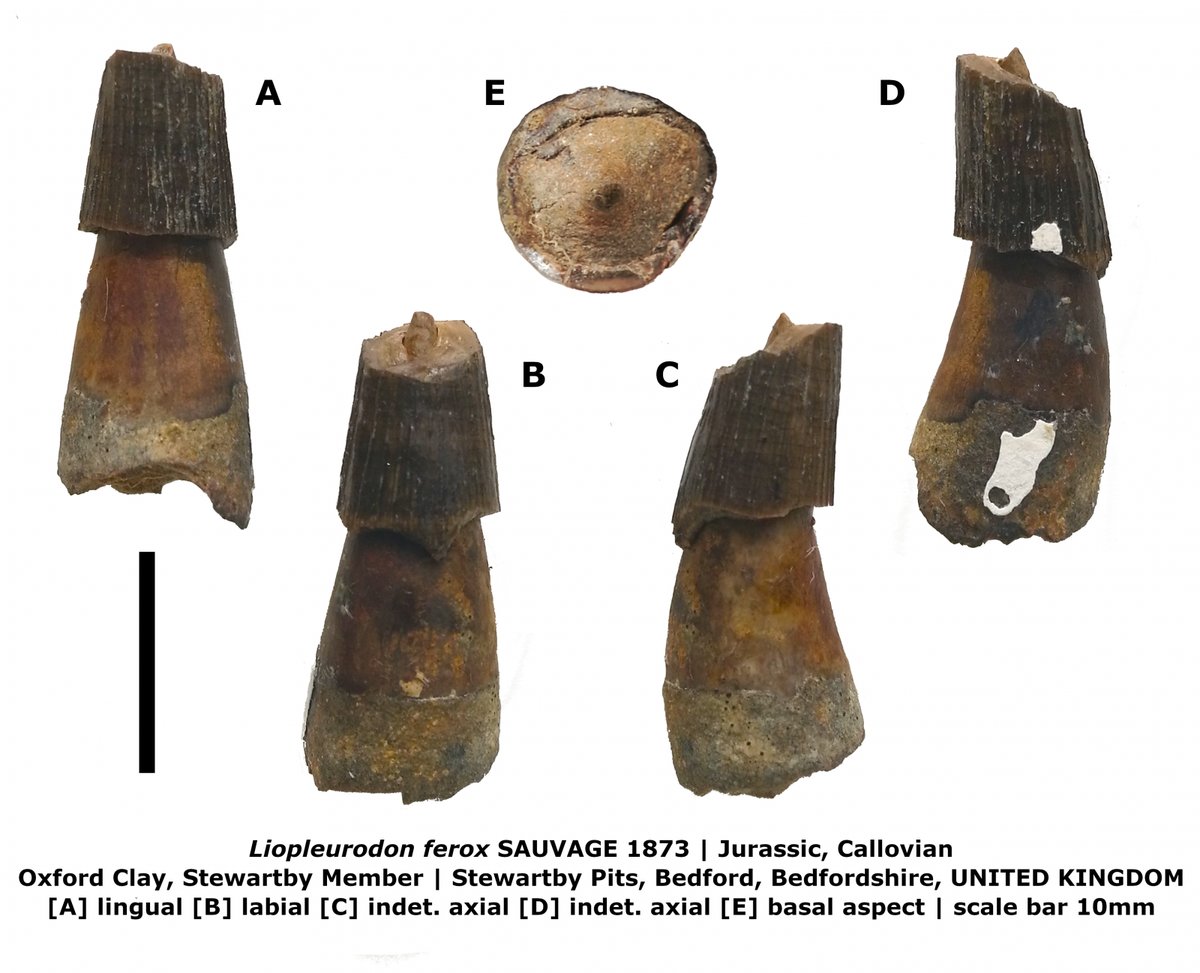
The discovery history of Liopleurodon is complex and dates back to the mid-19th century. The name itself was coined by the French paleontologist Henri Émile Sauvage in 1873. However, Sauvage based the name not on a complete skeleton, but on three isolated, 70-millimeter-long teeth found in Boulogne-sur-Mer, France. The name 'Liopleurodon', meaning 'smooth-sided tooth', refers to the smooth enamel surfaces of these teeth. For many years, the genus was known only from such fragmentary remains. The species Liopleurodon ferox was originally named by Sauvage based on one of these teeth. Independently, numerous more complete pliosaur skeletons were being unearthed from the Oxford Clay of England, particularly near Peterborough. These were initially assigned to other genera, such as Pliosaurus. It was not until the work of paleontologist Lambert Beverly Halstead (writing as Tarlo) in the 1960s and subsequent researchers that a comprehensive revision of pliosaur taxonomy was undertaken. This research led to the realization that many of the well-preserved skeletons from the Oxford Clay, including a particularly famous and near-complete specimen housed at the Natural History Museum in London (NHM R3536), actually belonged to the genus Liopleurodon. This reclassification firmly established the animal's anatomy and cemented its identity as a distinct and significant Jurassic predator.
Liopleurodon holds a key position in the evolutionary history of marine reptiles. It belongs to the Plesiosauria, a highly successful order of diapsid reptiles that returned to the sea. Within this group, it is a member of the Pliosauridae, a family characterized by their short necks and massive skulls, contrasting with the long-necked plesiosaurids. The pliosaurs represent a remarkable example of convergent evolution with other marine apex predators like mosasaurs and modern sperm whales, all developing large body sizes and powerful jaws to dominate their respective marine environments. Liopleurodon itself showcases the peak of this evolutionary trend in the Middle Jurassic. Its specialized anatomy, including the four-flipper propulsion system and hydrodynamically efficient body, illustrates the profound adaptations required for a fully aquatic lifestyle. While plesiosaurs have no direct modern descendants, having gone extinct at the end of the Cretaceous period, their closest living relatives are thought to be turtles or archosaurs (crocodiles and birds), though the exact placement of Plesiosauria within the reptile family tree remains a subject of ongoing research. Liopleurodon's well-preserved fossils provide invaluable data for understanding the biomechanics, physiology, and ecological roles of this extinct but highly successful lineage of marine predators.
One of the most significant scientific debates surrounding Liopleurodon concerns its maximum size. For many years, fueled by fragmentary remains from sites like the Kimmeridge Clay and a misinterpretation of a specimen from Mexico (the 'Monster of Aramberri', later identified as a different pliosaur species), estimates for Liopleurodon's length reached an exaggerated 20-25 meters. This colossal size was famously popularized in the 1999 BBC documentary 'Walking with Dinosaurs'. However, rigorous scientific re-evaluation of the fossil evidence, primarily based on the more complete skeletons from the Oxford Clay, has led to a significant downward revision. Paleontologists like Leslie Noè and Colin McHenry have demonstrated that the known complete specimens of Liopleurodon ferox point to a maximum length of around 6.4 meters. While other, larger pliosaur genera like Pliosaurus and Kronosaurus did exist, the evidence for a truly gigantic Liopleurodon is currently lacking. This revision highlights the critical importance of basing reconstructions on complete and well-understood fossil material rather than extrapolating from fragmentary finds.
The fossil record of Liopleurodon is primarily concentrated in the marine deposits of Middle to Late Jurassic Europe. The most significant and best-preserved specimens have been recovered from the Oxford Clay Formation in England, a lagerstätte renowned for its exceptional preservation of marine fossils. Other fossils attributed to the genus have been found in France and Germany, indicating a wide distribution across the shallow seas that covered the continent at the time. The Oxford Clay fossils often include articulated or partially articulated skeletons, providing detailed information about the animal's anatomy. Skulls, vertebrae, and limb bones are the most commonly preserved elements. While dozens of partial specimens are known, truly complete skeletons remain rare. The Peterborough area in Cambridgeshire, England, is a particularly famous locality, where commercial brick-making operations in the 20th century unearthed a wealth of Jurassic marine reptile fossils, including the key specimens that now define our understanding of Liopleurodon. These collections, housed in museums like the Natural History Museum, London, and the Oxford University Museum of Natural History, are vital resources for ongoing research.
Liopleurodon achieved significant cultural impact largely due to its memorable, albeit oversized, portrayal in the landmark 1999 BBC documentary series 'Walking with Dinosaurs'. The episode 'Cruel Sea' depicted a colossal 25-meter individual, cementing the image of a truly monstrous marine predator in the public consciousness. Although this size is now known to be a major exaggeration, the depiction sparked widespread fascination with Liopleurodon and other marine reptiles. It has since appeared in numerous other documentaries, books, and video games, often retaining its reputation as one of the largest carnivores of all time. Notable museum displays featuring Liopleurodon skeletons or casts, such as the one at the Natural History Museum in London, continue to educate and inspire visitors about the incredible diversity of life in Earth's prehistoric oceans.
Classification
Time Period
Discovery
Location
England, United Kingdom
Formation
Oxford Clay Formation
Frequently Asked Questions
What is Liopleurodon?
Liopleurodon was a large, carnivorous marine reptile that patrolled the epicontinental seas of Europe during the Middle to Late Jurassic period. As a member of the Pliosauridae family, it represented one of the apex predators of its time, a formidable hunter in a vibrant and dangerous marine ecosyst...
When did Liopleurodon live?
Liopleurodon lived during the jurassic period of the mesozoic era approximately 166-155 million years ago.
Where was Liopleurodon discovered?
Fossils of Liopleurodon were discovered in England, United Kingdom in the Oxford Clay Formation.
What did Liopleurodon eat?
Liopleurodon was a carnivore. It lived in marine habitats.
What type of fossil is Liopleurodon?
Liopleurodon is preserved as a body fossil. The preservation quality is good.
Related Specimens
From the mesozoic era · body fossils
/929f881473a0.jpg)