Albertosaurus
Albertosaurus sarcophagus
Image: Image sourced via web search (Fair use / Educational)
About Albertosaurus
Albertosaurus sarcophagus was a large bipedal predatory dinosaur that roamed the floodplains of western North America during the Late Cretaceous Period, approximately 70 million years ago. As a member of the Tyrannosauridae family, it was a close relative of the more famous Tyrannosaurus rex, but lived several million years earlier and was somewhat smaller. Its name, meaning 'Alberta lizard' and 'flesh-eater,' reflects its discovery location and carnivorous nature, and its well-preserved fossils have provided paleontologists with invaluable insights into the biology, behavior, and evolution of tyrannosaurids.
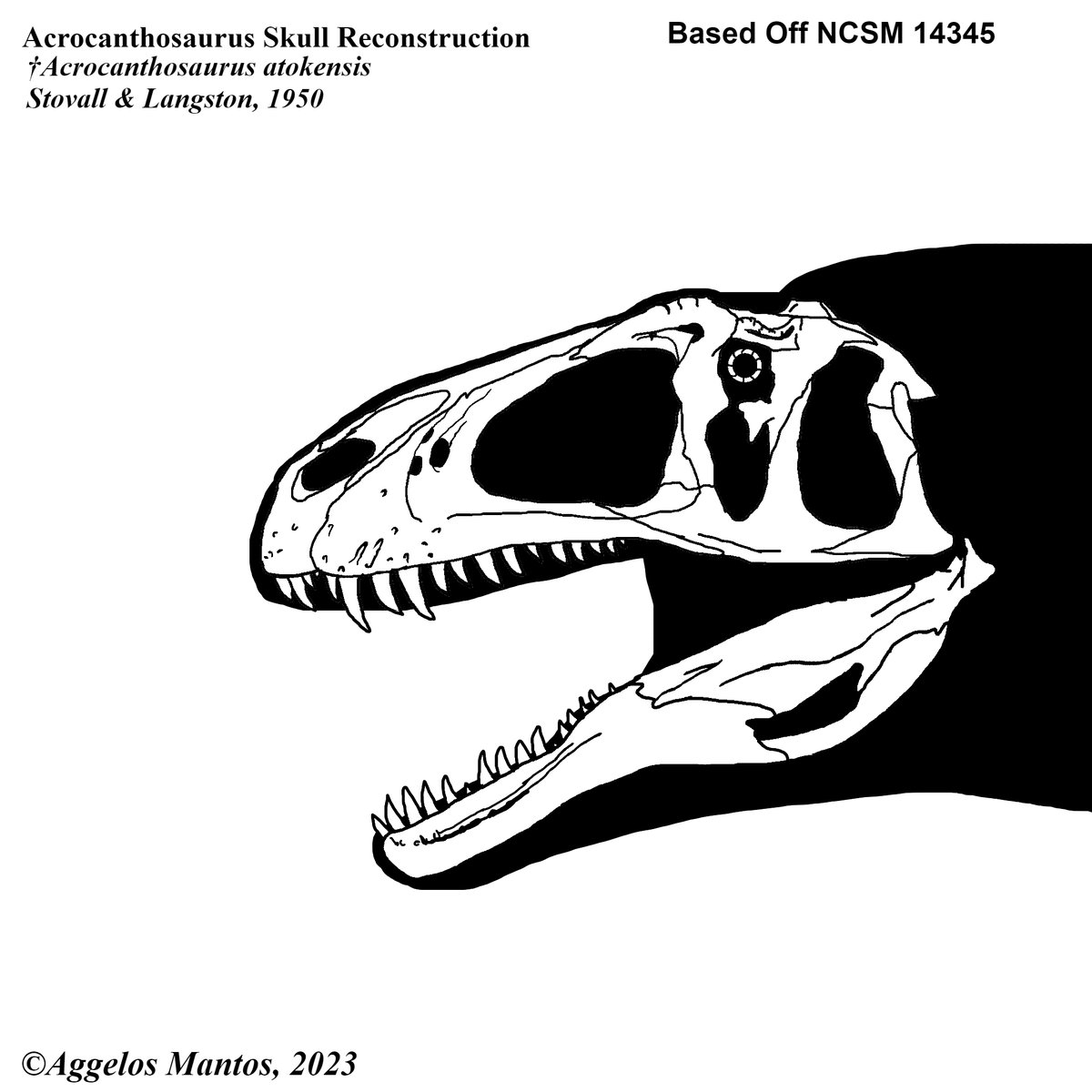
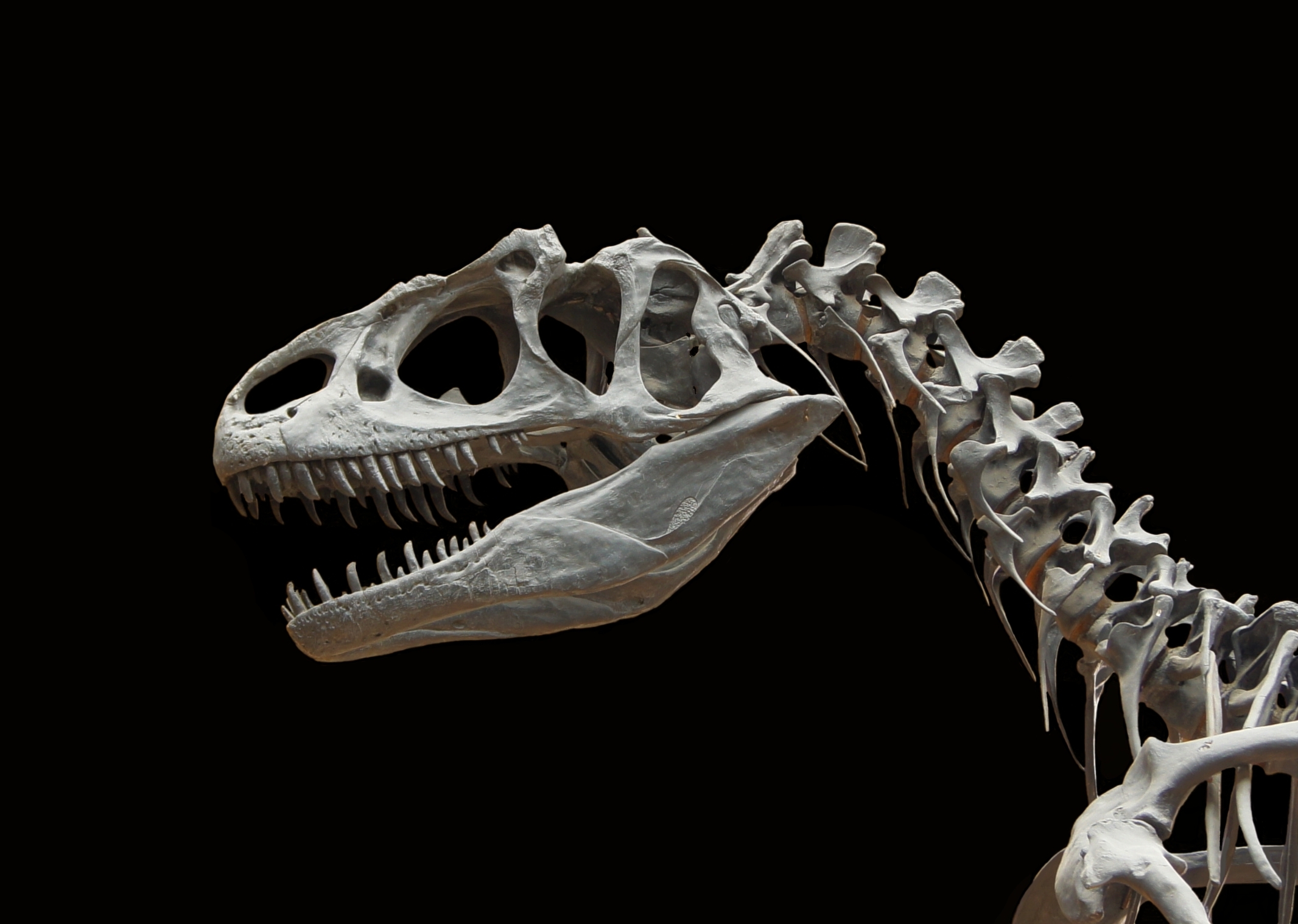
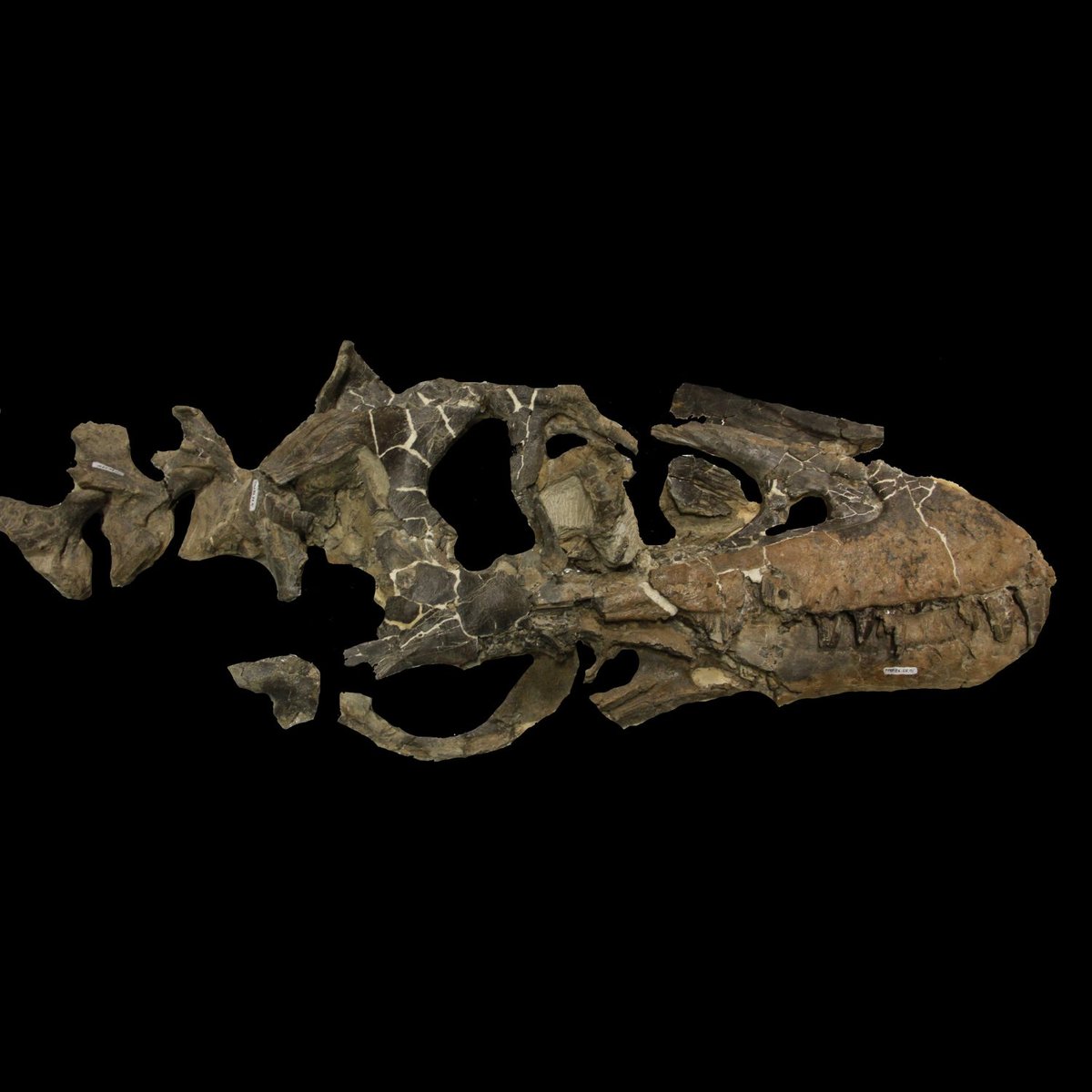
Albertosaurus was a formidable predator, reaching lengths of up to 10 meters (about 33 feet) and standing roughly 3.5 meters tall at the hips, making it comparable in size to a large modern bus. Weight estimates for a fully grown adult typically range from 2 to 3 metric tons. Its most prominent feature was its massive skull, which could be over 1 meter long, perched atop a short, S-shaped neck. This skull was proportionally large but built for lightness, with large openings called fenestrae that reduced weight without compromising structural integrity. Its jaws were lined with approximately 60 large, banana-shaped, serrated teeth designed for puncturing hide and crushing bone. Like other tyrannosaurids, Albertosaurus had disproportionately small, two-fingered forelimbs, the function of which remains a subject of debate. In stark contrast, its hind limbs were long, powerful, and muscular, indicating it was a fast and agile runner for its size. Its long, heavy tail acted as a counterbalance to its head and torso, providing stability during locomotion. Inferred soft tissues, based on skin impressions from related tyrannosaurids, suggest its body was likely covered in small, non-overlapping scales, although the presence of juvenile feathers cannot be entirely ruled out.
As an apex predator, Albertosaurus was a hypercarnivore, subsisting entirely on a diet of other dinosaurs. Its powerful bite force, estimated to be substantial though less than that of T. rex, allowed it to tackle large prey. The primary herbivores in its ecosystem, such as hadrosaurs (duck-billed dinosaurs) like Edmontosaurus and ceratopsians (horned dinosaurs) like Pachyrhinosaurus, would have been its main targets. Fossil evidence suggests a dynamic hunting strategy. The discovery of a bonebed containing the remains of at least 26 individuals of various ages in the Dry Island Buffalo Jump Provincial Park has led to a compelling hypothesis of gregarious behavior. Paleontologist Philip J. Currie has proposed that Albertosaurus may have hunted in packs, a complex social behavior that would have allowed them to coordinate attacks on large herds of herbivores. Younger, more agile individuals might have herded prey towards the larger, more powerful adults in an ambush. Growth studies based on bone histology indicate a rapid growth spurt during their teenage years, reaching maturity around age 16 and living to a maximum of about 28 years. This rapid growth implies a high metabolic rate, closer to that of modern birds and mammals than to typical reptiles.
Albertosaurus lived in a lush, coastal floodplain environment along the western edge of the Western Interior Seaway, an inland sea that divided North America during the Late Cretaceous. The climate was subtropical, warm, and humid, with distinct wet and dry seasons that influenced the landscape and the distribution of life. The environment, preserved today as the Horseshoe Canyon Formation, was a mosaic of forests, swamps, and river deltas, supporting a rich and diverse ecosystem. Albertosaurus shared this habitat with a wide array of other dinosaurs. Its prey included abundant hadrosaurs like Edmontosaurus and Saurolophus, and horned dinosaurs such as Anchiceratops and Pachyrhinosaurus. Smaller theropods, like troodontids and dromaeosaurs ('raptors'), would have competed for smaller prey and may have scavenged Albertosaurus kills. At the top of the food web, Albertosaurus was the undisputed apex predator of its specific time and place, facing little competition from other large carnivores. Its presence would have exerted significant evolutionary pressure on its prey, driving the development of defensive armor, horns, and herding behaviors in ceratopsians and hadrosaurs.
The history of Albertosaurus begins in 1884, when geologist Joseph B. Tyrrell, while searching for coal seams along the Red Deer River in Alberta, Canada, discovered a partial skull. This specimen, now cataloged as CMN 5600, was the first tyrannosaurid fossil found in North America. It was studied by paleontologist Edward Drinker Cope, who initially misidentified it and named it Laelaps incrassatus in 1892. The name Laelaps was already in use for a mite, so it was later renamed Dryptosaurus. It wasn't until 1905 that Henry Fairfield Osborn, realizing the distinctiveness of the material, erected the new genus Albertosaurus, naming the type species Albertosaurus sarcophagus. The most significant discovery, however, occurred in 1910 when Barnum Brown unearthed a massive bonebed near Dry Island. This site, later excavated extensively by teams from the Royal Tyrrell Museum of Palaeontology starting in 1997, yielded the remains of numerous individuals, providing an unprecedented snapshot of an Albertosaurus population. This specific site, often called the 'Dry Island bonebed,' remains the most important source of information about the species' biology and social structure, containing individuals ranging from two-year-old juveniles to fully grown adults.
Albertosaurus occupies a crucial position within the evolutionary tree of the Tyrannosauridae family. It belongs to the subfamily Albertosaurinae, along with its slightly older and more slender relative, Gorgosaurus. Albertosaurines are considered more 'gracile' or lightly built than the robust tyrannosaurines, which include giants like Tyrannosaurus, Tarbosaurus, and Daspletosaurus. This split represents a major evolutionary divergence within the tyrannosaur lineage. Albertosaurus and its kin showcase a body plan optimized for speed and agility, with longer legs and more slender skulls compared to their heavily-built cousins. This suggests a different ecological niche or hunting strategy, possibly focusing on faster or more agile prey. By studying Albertosaurus, paleontologists can trace the development of key tyrannosaurid traits, such as the enlargement of the skull, the reduction of the forelimbs, and the development of a bone-crushing bite. It serves as a vital data point for understanding the radiation and diversification of these apex predators across North America and Asia during the final stages of the dinosaur era. It provides a clearer picture of the evolutionary steps that ultimately led to the larger and more powerful Tyrannosaurus rex.
Despite being a well-studied dinosaur, Albertosaurus is still at the center of some scientific debates. The most prominent controversy revolves around its relationship with Gorgosaurus libratus, a closely related tyrannosaurid found in the slightly older Dinosaur Park Formation. Some paleontologists, noting their strong anatomical similarities and chronological proximity, have argued that Gorgosaurus should be considered a species within the genus Albertosaurus, as Albertosaurus libratus. However, most researchers today maintain them as separate genera, pointing to subtle but consistent differences in skull and postcranial anatomy. Another area of active discussion is the interpretation of the Dry Island bonebed. While the pack-hunting hypothesis proposed by Philip J. Currie is widely supported, alternative explanations suggest the assemblage could be the result of a mass death event, such as a flood or drought, that trapped a large, socially-unrelated group of individuals in one place. Differentiating between a true social group and a coincidental aggregation remains a key challenge in taphonomy, the study of how organisms decay and become fossilized. Ongoing research continues to refine our understanding of its growth rates, bite mechanics, and precise ecological role.
The fossil record of Albertosaurus is geographically restricted but locally abundant. The vast majority of specimens have been unearthed in the province of Alberta, Canada, particularly from the Horseshoe Canyon Formation. This geological unit has yielded more than thirty individuals, making Albertosaurus one of the best-represented tyrannosaurids in the fossil record. The most famous locality is the Dry Island bonebed, which has produced over two dozen specimens of varying ages, providing a unique demographic cross-section of a population. Preservation quality is generally good, with many articulated or partially articulated skeletons discovered, in addition to numerous isolated bones. Skulls are relatively common finds, which is fortunate as the cranium holds many key diagnostic features for tyrannosaurids. While skin impressions have not been found directly associated with Albertosaurus, they are known from related species, allowing for reasonable inferences. The Royal Tyrrell Museum of Palaeontology in Drumheller, Alberta, holds the world's most significant collection of Albertosaurus fossils and is a central hub for research on the species.
As a slightly smaller but equally fearsome relative of T. rex, Albertosaurus has carved out its own niche in popular culture. It is frequently featured in dinosaur books, documentaries, and television series, often portrayed as a fast and agile pack-hunter. Notable appearances include the BBC's 'Chased by Dinosaurs' and the film 'Walking with Dinosaurs 3D.' Many natural history museums around the world, including the Royal Tyrrell Museum, the American Museum of Natural History, and the Field Museum, feature impressive skeletal mounts of Albertosaurus. These displays serve as powerful educational tools, illustrating the diversity of tyrannosaurids and showcasing a top predator from the Late Cretaceous ecosystems of North America, captivating the public imagination with visions of a world ruled by giant reptiles.
Classification
Time Period
Discovery
Location
Alberta, Canada
Formation
Horseshoe Canyon Formation
Frequently Asked Questions
What is Albertosaurus?
Albertosaurus sarcophagus was a large bipedal predatory dinosaur that roamed the floodplains of western North America during the Late Cretaceous Period, approximately 70 million years ago. As a member of the Tyrannosauridae family, it was a close relative of the more famous Tyrannosaurus rex, but li...
When did Albertosaurus live?
Albertosaurus lived during the cretaceous period of the mesozoic era approximately 70-66 million years ago.
Where was Albertosaurus discovered?
Fossils of Albertosaurus were discovered in Alberta, Canada in the Horseshoe Canyon Formation.
What did Albertosaurus eat?
Albertosaurus was a carnivore. It lived in terrestrial habitats.
What type of fossil is Albertosaurus?
Albertosaurus is preserved as a body fossil. The preservation quality is good.
Related Specimens
From the mesozoic era · body fossils