Placodus
Placodus gigas
Image: Image sourced via web search (Fair use / Educational)
About Placodus
Placodus gigas was a specialized marine reptile that thrived in the shallow coastal seas of the Middle Triassic period, approximately 245 to 235 million years ago. As the namesake of the order Placodontia, it represents a unique and early experiment in marine adaptation by reptiles following the devastating Permian-Triassic extinction event. Its fossils, primarily found in the epicontinental seas that covered central Europe, reveal a creature exquisitely adapted for a durophagous diet, feeding on hard-shelled invertebrates, making it a key component of the recovering Triassic marine ecosystems.
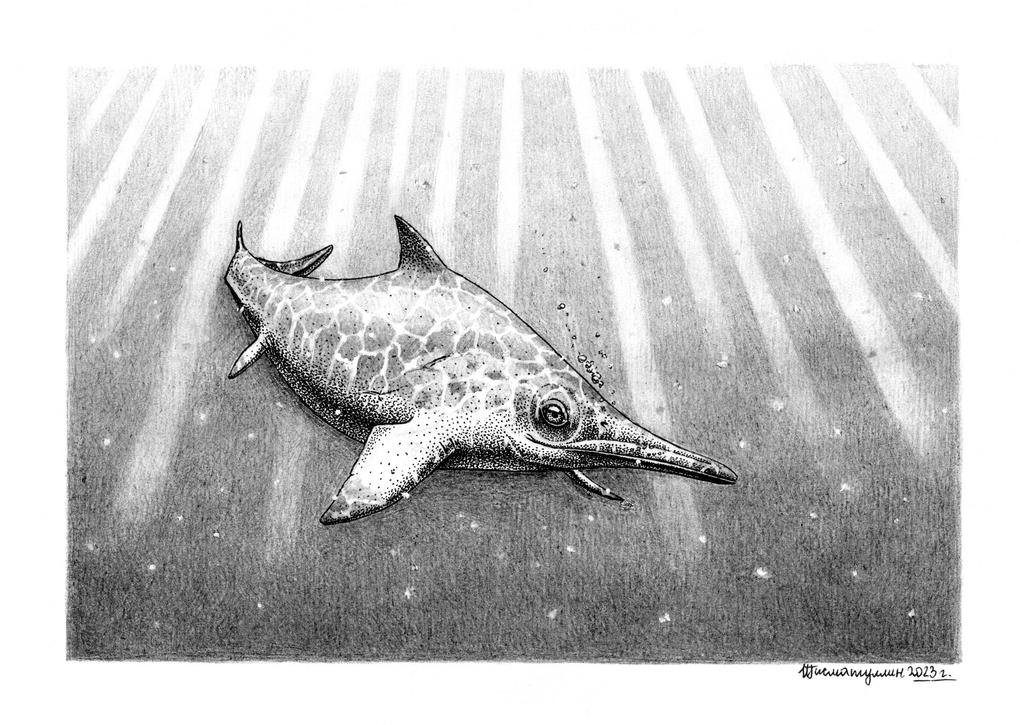
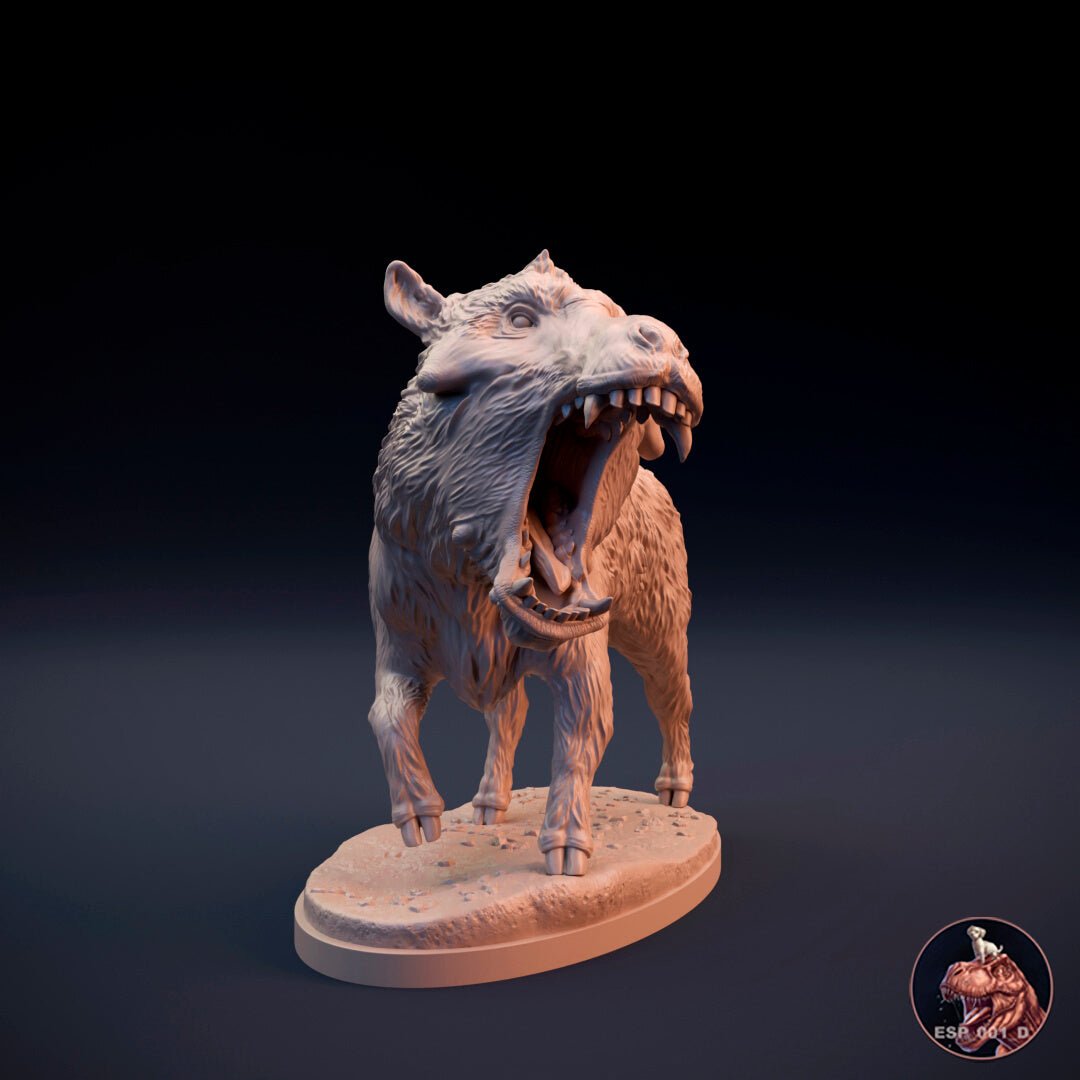
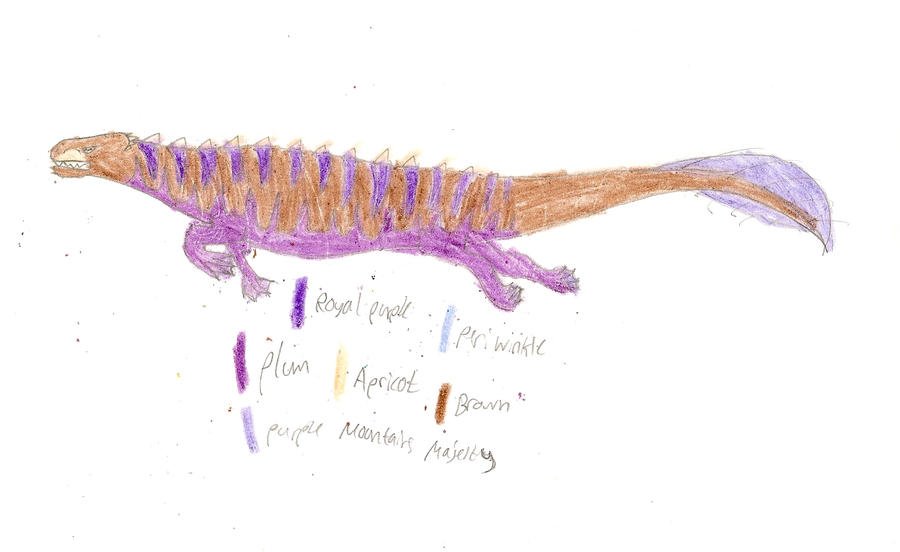
Placodus was a stocky, barrel-bodied reptile, typically reaching lengths of 2 to 3 meters (about 6.5 to 10 feet), comparable in size to a modern manatee or a large sea turtle. Its most striking feature was its highly specialized skull and dentition. The skull was short, robust, and heavily built, a characteristic known as pachyostosis, which likely served as ballast to help it stay submerged while foraging on the seabed. The dentition was heterodont, meaning it had different types of teeth for different functions. Projecting from the front of its snout were stout, peg-like incisors, perfectly suited for prying shelled prey like brachiopods and bivalves from rocks. The real specialization, however, was found on the palate and in the lower jaw. Instead of typical reptilian teeth, Placodus possessed massive, broad, and flattened crushing teeth. These molariform teeth formed extensive grinding plates, with the largest located on the palatine bones of the roof of the mouth, which occluded with similar teeth on the lower jaw. This dental battery was a powerful crushing mill, capable of pulverizing the thickest shells. Its postcranial skeleton was also robust, with a stiff trunk, short, powerful limbs, and a long, laterally compressed tail used for propulsion. Its feet were likely webbed, functioning as hydrofoils for steering and stability rather than primary propulsion. The ribs were thick and dense, further contributing to its negative buoyancy.
Placodus was a slow-moving, bottom-dwelling predator, a lifestyle dictated by its anatomy. Its heavy skeleton and barrel-shaped body were not suited for fast pursuit; instead, it was a deliberate forager in shallow, nearshore environments. It would have used its protruding incisors to pluck shellfish from the seafloor and then employ its powerful palatal and jaw teeth to crush them, swallowing the soft body within and expelling the shell fragments. This feeding strategy, known as durophagy, is seen in modern animals like walruses and some rays, but the dental arrangement of Placodus was unique among reptiles. Locomotion was likely achieved through lateral undulation of its long tail, with its limbs used for maneuvering at low speeds and possibly for walking along the seabed. There is no direct evidence of social behavior, but it is plausible they were solitary or lived in small groups, congregating in areas with abundant food resources. Its pachyostotic bones suggest a low metabolic rate, consistent with a slow-moving ectotherm, allowing it to conserve energy between meals. Growth patterns inferred from bone histology indicate a relatively slow but steady growth to its adult size, a common strategy among Triassic marine reptiles.
The world of Placodus was the supercontinent of Pangea, surrounded by the vast Panthalassic Ocean. During the Middle Triassic, a large, shallow epicontinental sea called the Tethys Sea transgressed across parts of Pangea, creating the Muschelkalk sea in what is now central Europe. This environment was a warm, subtropical marine basin characterized by extensive carbonate platforms, lagoons, and reefs. The climate was generally arid and hot. Placodus shared this ecosystem with a diverse array of marine life. Its primary food sources were abundant bivalves, gastropods, and brachiopods. It occupied a mid-level trophic position as a specialized carnivore. Potential predators for an adult Placodus were likely the larger marine reptiles of the time, such as the formidable ichthyosaur Cymbospondylus or the early sauropterygian Nothosaurus, which was a more agile predator. Placodus itself might have preyed upon smaller, slower-moving organisms, but its main ecological role was defined by its shell-crushing niche, a role that had been largely vacant after the Permian extinction and one that Placodus and its relatives successfully exploited, contributing to the complex restructuring of marine food webs during the Triassic.
The discovery of Placodus dates back to the early days of paleontology. The first fossils, primarily isolated teeth and skull fragments, were found in the Muschelkalk limestone deposits of Bavaria, Germany. In 1830, the German paleontologist Georg zu Münster first described these peculiar, flattened teeth but, without a complete skeleton, mistakenly attributed them to a species of fish, naming them Placodus, meaning 'plaster tooth' or 'flat tooth'. It was not until the renowned paleontologist Hermann von Meyer began studying more complete remains that the true reptilian nature of the animal was understood. The species name, *Placodus gigas*, was formally coined by Louis Agassiz in 1833. For many years, the understanding of Placodus was based on fragmentary material. The discovery of more articulated skeletons throughout the 19th and 20th centuries, particularly from sites like Bayreuth in Germany and Winterswijk in the Netherlands, allowed for a comprehensive reconstruction of its anatomy and lifestyle. No single specimen has achieved a popular nickname, but the collective material from the Muschelkalk provides an excellent record of this genus and its close relatives.
Placodus is a pivotal member of the Sauropterygia, the superorder of reptiles that also includes the famous long-necked plesiosaurs. As the type genus for the Placodontia, it represents a basal, early-diverging branch of this major marine reptile radiation. Placodonts are considered a sister group to the Eosauropterygia, which contains nothosaurs and plesiosaurs. The anatomy of Placodus provides crucial insights into the early stages of marine adaptation in diapsid reptiles. Its robust, non-hydrodynamic body and only partially adapted limbs show a less complete transition to a fully aquatic lifestyle compared to later groups like ichthyosaurs or plesiosaurs. It demonstrates an evolutionary pathway focused on exploiting a specific benthic food source rather than open-water predation. The extreme dental specialization is a classic example of adaptive radiation, where a group diversifies to fill newly available ecological niches. While the placodont lineage ultimately went extinct at the end of the Triassic and left no direct modern descendants, their position near the base of the sauropterygian tree helps paleontologists understand the ancestral characteristics and evolutionary potential from which more derived and long-lasting groups like the plesiosaurs later evolved.
Despite being known for nearly two centuries, Placodus and its relatives are still the subject of scientific debate. The precise phylogenetic placement of Placodontia within the broader group of Diapsida has been historically contentious. While a consensus now places them as basal sauropterygians, some earlier hypotheses suggested they might be related to turtles due to their robust bodies and, in the case of armored placodonts like Henodus, their turtle-like shells. This 'placodont-turtle' hypothesis has been largely refuted by more comprehensive cladistic analyses, but it highlights the convergent evolution between these groups. Another area of ongoing research is the exact mechanics of their locomotion. The relative contributions of tail-based swimming versus limb-based paddling are still debated, with different interpretations of their functional morphology leading to slightly different reconstructions of their movement. Recent discoveries of new placodont species in China have significantly expanded the known geographic and morphological diversity of the group, suggesting they were more widespread and varied than previously thought, and challenging the long-held view of them as an exclusively European group. These new fossils continue to refine our understanding of their evolutionary history and ecological roles.
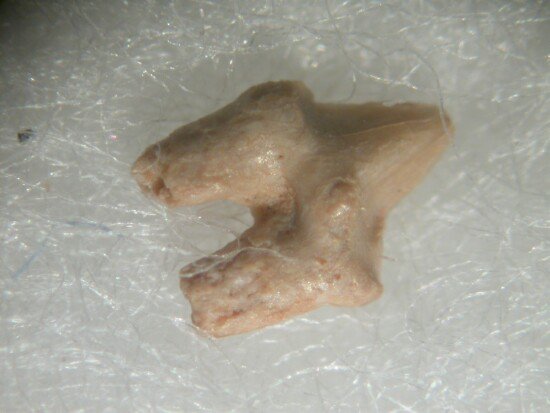
The fossil record of Placodus is primarily concentrated in the Middle Triassic marine deposits of central Europe, particularly the German and Polish Muschelkalk Basin. Fossils have also been found in France, Switzerland, and the Netherlands. While complete, fully articulated skeletons are rare, numerous partial skeletons, skulls, and isolated teeth have been recovered. The bones are often well-preserved due to the calm, low-energy depositional environment of the Muschelkalk sea. The most commonly found elements are the highly durable and distinctive crushing teeth, which are often discovered as isolated fossils. Skulls are also relatively common finds due to their robust construction. Famous fossil localities include the Bayreuth region in Bavaria, Germany, and the Winterswijk quarry in the Netherlands, which has yielded exceptionally well-preserved remains of various Triassic marine life, including Placodus. The abundance of fossils in this specific region provides a detailed snapshot of the shallow marine ecosystem in which Placodus was a key player, allowing for detailed paleoecological studies.
Placodus, while not as famous as dinosaurs or plesiosaurs, holds a significant place in paleontological education and museum exhibits. Its bizarre appearance, particularly its specialized teeth, makes it a fascinating example of evolutionary adaptation. Major natural history museums in Europe, such as the Senckenberg Museum in Frankfurt and the Natural History Museum in Berlin, feature prominent displays of Placodus fossils, including impressive skeletal mounts and life-sized reconstructions. These exhibits serve to educate the public about the diversity of life during the Triassic and the early evolution of marine reptiles. Although it rarely appears in mainstream popular culture like movies or television shows, Placodus is a staple in paleontological literature and documentaries focusing on the 'Age of Reptiles,' valued for illustrating the strange and wonderful evolutionary paths taken by life in the wake of Earth's greatest mass extinction.
Classification
Time Period
Discovery
Location
Germany
Formation
Muschelkalk
Frequently Asked Questions
What is Placodus?
Placodus gigas was a specialized marine reptile that thrived in the shallow coastal seas of the Middle Triassic period, approximately 245 to 235 million years ago. As the namesake of the order Placodontia, it represents a unique and early experiment in marine adaptation by reptiles following the dev...
When did Placodus live?
Placodus lived during the triassic period of the mesozoic era approximately 245-235 million years ago.
Where was Placodus discovered?
Fossils of Placodus were discovered in Germany in the Muschelkalk.
What did Placodus eat?
Placodus was a durophagous carnivore. It lived in shallow marine, coastal habitats.
What type of fossil is Placodus?
Placodus is preserved as a body fossil. The preservation quality is good.
Related Specimens
From the mesozoic era · body fossils