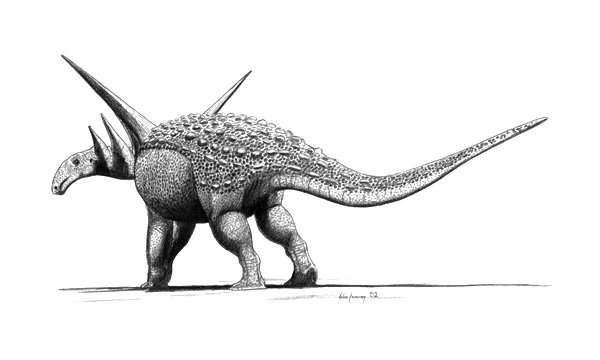
Rugops
Rugops primus
Image: Image sourced via web search (Fair use / Educational)
About Rugops
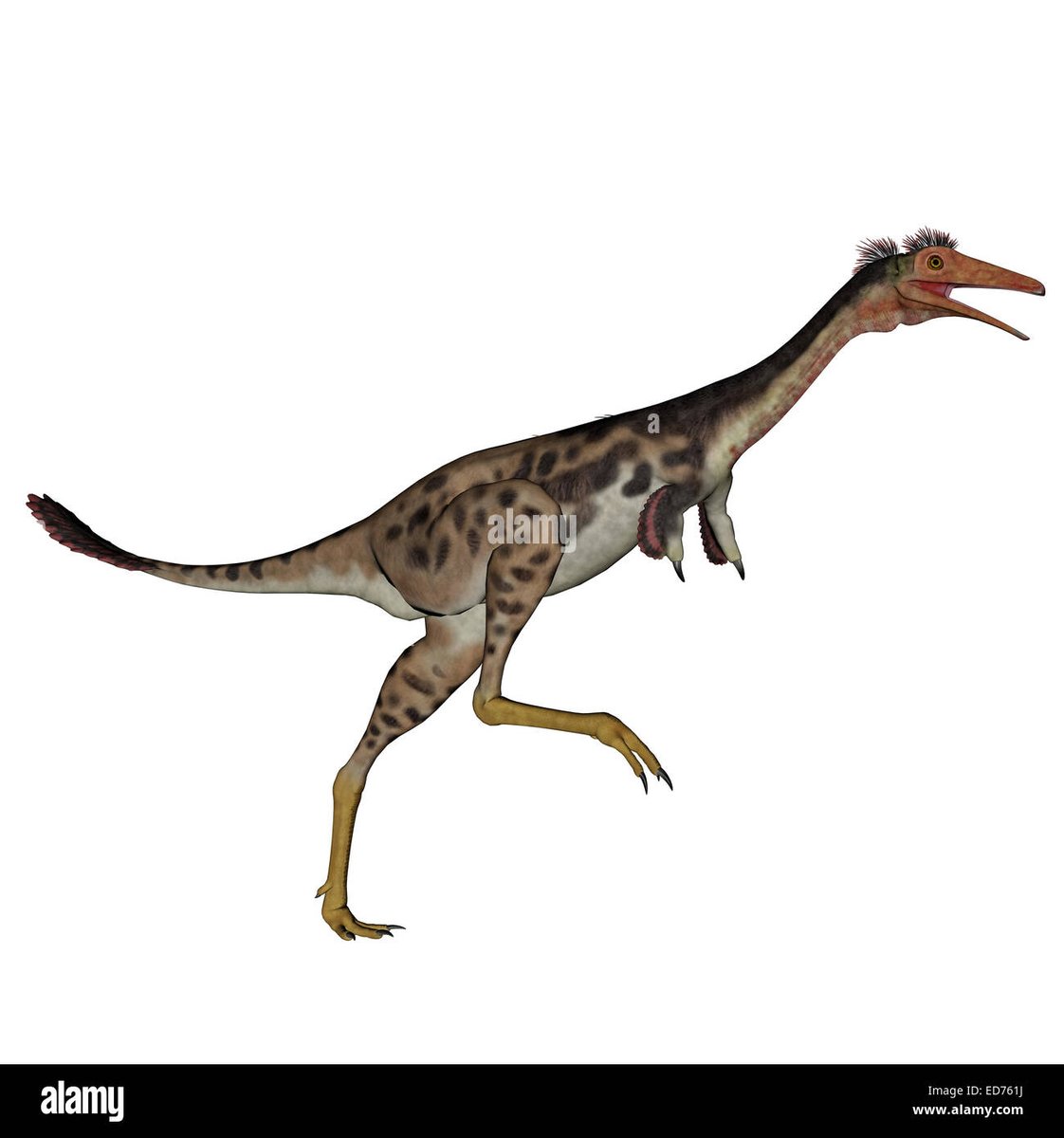
Rugops primus was a medium-sized theropod dinosaur that inhabited what is now North Africa during the Late Cretaceous period, approximately 95 to 93 million years ago. Its name, meaning 'first wrinkle face,' alludes to the distinctive, textured surface of its skull, which has become a focal point for scientific inquiry and speculation. As an early member of the Abelisauridae family, Rugops provides crucial insights into the evolution, diversity, and biogeography of this unique group of southern hemisphere predators, offering a window into a complex and dynamic prehistoric ecosystem.
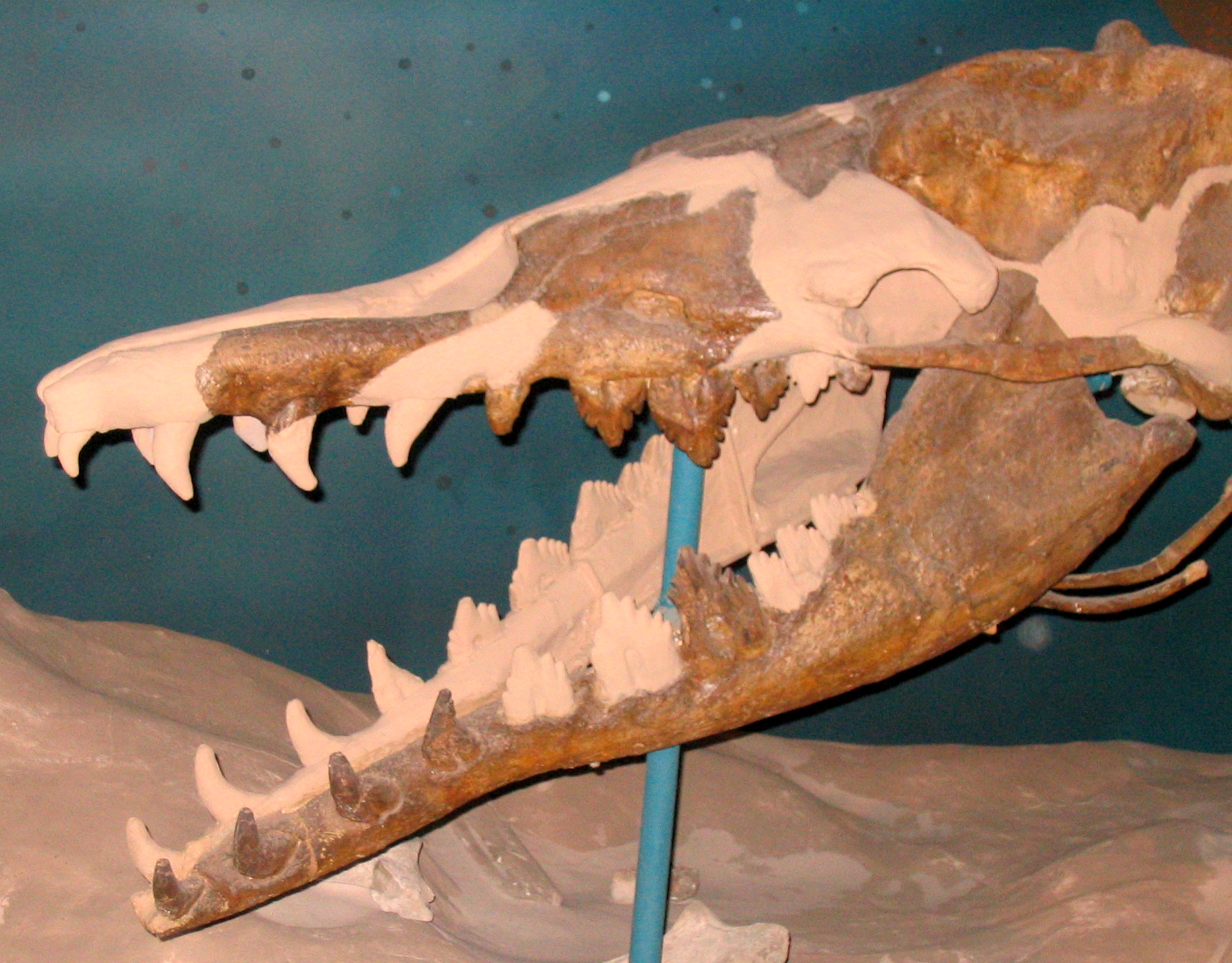
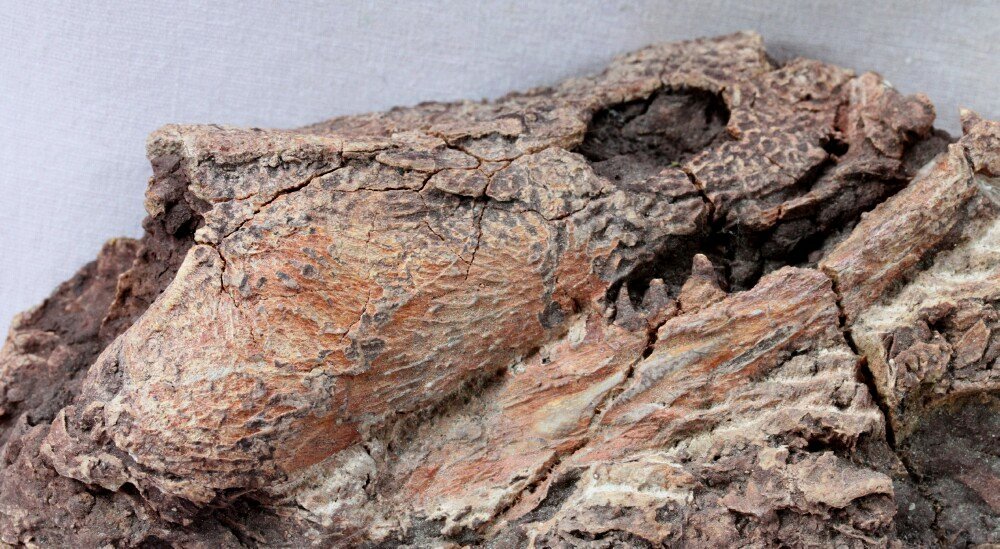
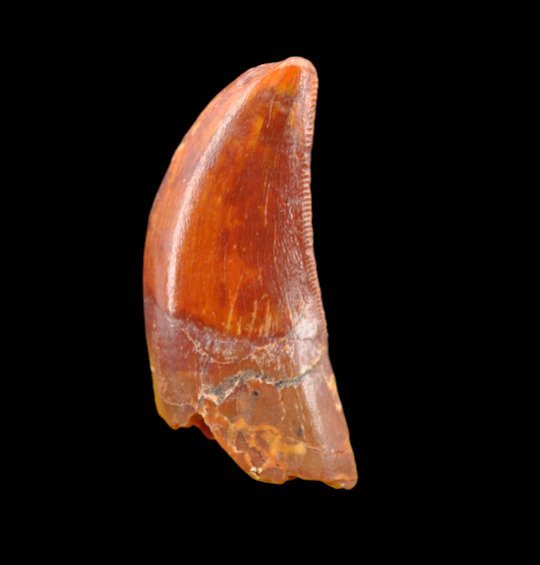
The physical characteristics of Rugops primus, while inferred from a single, incomplete skull, paint a picture of a specialized and distinct theropod. Initial estimates by paleontologist Paul Sereno, who led the discovery team, suggested a body length of around 6 meters (approximately 20 feet), with later analyses by Gregory S. Paul in 2010 revising this down to a more modest 4.4 meters (14.4 feet) and a weight of about 410 kilograms (900 pounds). This places Rugops in the category of a medium-sized predator, significantly smaller than its contemporary, the colossal Carcharodontosaurus, but comparable in size to a large modern-day tiger or a small grizzly bear. The most striking feature of Rugops is undoubtedly its skull. The preserved fossil, though missing the lower jaw, reveals a short, broad snout characteristic of abelisaurids. The skull's surface is highly rugose, covered in rough textures, pits, and grooves. Two prominent rows of seven small depressions, or fossae, run along the top of the snout, which Sereno hypothesized may have anchored a keratinous crest or display structure, not used for combat but perhaps for species recognition or mating rituals. The skull bones are relatively thin and delicate compared to other large theropods, and the teeth, though not fully preserved, were likely small and blade-like, suggesting a feeding strategy different from the bone-crushing bites of tyrannosaurs. Like other abelisaurids, it would have possessed a robust torso, powerful hind limbs, and notoriously tiny, vestigial forelimbs that were functionally useless for grasping prey.
The paleobiology of Rugops is a subject of considerable scientific interest, primarily due to its unusual cranial anatomy. The delicate skull and relatively weak bite force, inferred from its construction, suggest that Rugops was not a macropredator tackling large, struggling prey in the same manner as its giant contemporaries like Carcharodontosaurus or Spinosaurus. Instead, it has been proposed that Rugops was primarily a scavenger. This hypothesis is supported by the skull's vascularized, pitted surface, which could have supported sensitive soft tissues or a fleshy display, but not a weapon. As a scavenger, it would have used its keen sense of smell, a trait common in theropods, to locate carcasses of dinosaurs brought down by larger predators or natural causes. Its relatively small teeth would have been sufficient for stripping flesh from bone rather than crushing it. Locomotion would have been bipedal, with its powerful hind legs allowing for efficient movement across the floodplain environment it inhabited. Little is known about its social behavior, but like many predators, it may have been a solitary animal, only coming together for mating. Its growth patterns and metabolism remain unstudied due to the scarcity of fossil material, but as a mid-sized theropod, it likely had a relatively high metabolic rate compared to modern reptiles, enabling an active lifestyle.
Rugops lived in a lush, river-delta environment during the Cenomanian stage of the Late Cretaceous, a period characterized by a warm, greenhouse climate and high sea levels. The Echkar Formation of Niger, where its fossils were found, represents a vast floodplain or coastal swamp, crisscrossed by large river systems. This ecosystem supported an incredible diversity of life, creating a complex and competitive food web. Rugops shared this habitat with some of the largest predatory dinosaurs ever known, including the massive fish-eater Spinosaurus and the formidable carnosaur Carcharodontosaurus. The presence of these apex predators reinforces the theory that Rugops occupied a secondary predatory or scavenger niche, avoiding direct competition by feeding on leftovers or smaller prey. The herbivorous fauna was equally impressive, including the giant sauropods Paralititan and Aegyptosaurus, which would have been the primary targets for the larger carnivores. The waterways teemed with giant fish like Onchopristis (a massive sawskate) and Mawsonia (a giant coelacanth), providing a rich food source for semi-aquatic predators. This assemblage of megafauna, often referred to as the 'mid-Cretaceous extinction-before-the-extinction' fauna, highlights a unique and highly productive ecosystem where multiple giant predators coexisted, likely through intense niche partitioning, with Rugops playing the role of a mid-tier carnivore or specialized scavenger.
The discovery of Rugops primus was a significant event in African paleontology, shedding new light on the continent's dinosaur fauna. The holotype specimen, cataloged as MNN IGU1, was discovered in 2000 during an expedition in the Gadoufaoua region of the Ténéré Desert in Niger. The expedition was led by American paleontologist Paul Sereno from the University of Chicago. The find consisted of a partial skull, which, despite its incompleteness, was exceptionally informative. Sereno and his team, including co-authors Jeffrey A. Wilson and Jack L. Conrad, formally described and named the dinosaur in a 2004 publication in the journal Proceedings of the Royal Society B. The genus name, Rugops, is derived from the Latin 'ruga' (wrinkle) and the Greek 'ops' (face), a direct reference to the highly textured and pitted surface of the skull bones. The species name, 'primus,' is Latin for 'first,' chosen to signify its status as a basal or early-diverging member of the Abelisauridae family. This single skull remains the only known fossil evidence of Rugops, making it a rare but critically important specimen for understanding the evolutionary history of its lineage. The discovery was part of a larger project that unearthed several other significant dinosaurs from the region, collectively painting a more complete picture of this ancient African ecosystem.
The evolutionary significance of Rugops primus is profound, particularly concerning the Abelisauridae family. Abelisaurids were the dominant predators across the southern supercontinent of Gondwana during the Late Cretaceous, filling the ecological niches occupied by tyrannosaurs in the northern hemisphere. Rugops, as one of the earliest and most primitive known abelisaurids, provides a crucial anchor point for understanding the group's origins and subsequent radiation. Its anatomy displays a mosaic of primitive and derived features. While possessing the characteristic short, deep skull of the family, it lacks some of the more extreme specializations seen in later members like Carnotaurus, such as prominent horns and a more heavily reinforced skull. This suggests that the distinctive abelisaurid head shape evolved early, while features like cranial ornamentation and bone-crushing bite forces evolved later in more derived lineages. The discovery of Rugops in Africa, alongside finds in South America and India, strongly supported the theory that these landmasses were interconnected for longer than previously thought, allowing these dinosaurs to disperse across Gondwana before the continents fully separated. Rugops helps to trace the evolutionary path from more generalized ceratosaurian ancestors to the highly specialized abelisaurids that dominated the southern continents until the end of the age of dinosaurs.
Despite its importance, Rugops is not without its scientific debates, primarily stemming from the fragmentary nature of its remains. The interpretation of its cranial features is a key area of discussion. While Sereno's hypothesis of a non-combative keratinous crest or sensory display structure is widely cited, other interpretations are possible. Some researchers suggest the rugosities could have been attachment points for thick, protective skin or scales, similar to the facial tissues of modern iguanas. The debate over its ecological role—specialized scavenger versus predator of small animals—also continues. The weak-bite hypothesis is compelling, but without postcranial remains, it is difficult to fully assess its predatory capabilities. It might have been an opportunistic hunter, capable of taking down smaller prey while also scavenging frequently. Furthermore, its exact placement within the Abelisauridae family tree is subject to ongoing phylogenetic analysis. As new abelisaurid fossils are discovered across the former Gondwanan continents, the relationships between genera like Rugops, Majungasaurus, and Carnotaurus are continually reassessed, refining our understanding of their evolutionary divergence and biogeographical history. Each new analysis offers a slightly different perspective on how this unique family of theropods evolved and spread across the southern world.
The fossil record of Rugops primus is exceptionally limited, which contributes to its rarity and the ongoing scientific debates surrounding it. To date, the only known specimen is the holotype skull, MNN IGU1, housed at the Musée National du Niger in Niamey. This fossil consists of a nearly complete cranium but lacks the mandible (lower jaw). It was recovered from the upper portion of the Echkar Formation in Niger, a geological unit renowned for its rich Cenomanian-age vertebrate fossils. The preservation quality is considered fair; while the overall structure of the skull is intact, some of the finer details and bone surfaces have been subject to erosion. No postcranial material, such as vertebrae, ribs, or limb bones, has ever been definitively assigned to Rugops. This scarcity makes every detail of the single skull incredibly valuable. The Gadoufaoua region, where it was found, is a world-famous fossil site that has yielded numerous other dinosaurs, including the iguanodontian Lurdusaurus, the spinosaurid Suchomimus, and the sauropod Nigersaurus, making it a key location for studying the fauna of Cretaceous Africa.
In terms of cultural impact, Rugops has not achieved the same level of fame as its larger contemporaries like Spinosaurus or relatives like Carnotaurus. However, it holds a significant place in paleontological circles and has made appearances in various forms of popular media. It was featured in the 2009 television documentary 'Monsters Resurrected,' where it was depicted as a scavenger, following and feeding on the kills of the larger Carcharodontosaurus, an interpretation that has helped popularize the scavenger hypothesis among the public. It has also been mentioned in numerous books and dinosaur encyclopedias, often highlighted for its bizarre 'wrinkle-faced' appearance and its importance in understanding abelisaur evolution. While casts of its skull may be found in some museum collections, such as the University of Chicago, dedicated full-skeletal mounts are speculative reconstructions. Its primary cultural and educational importance lies in its role as a key piece of the puzzle in reconstructing one of Earth's most fascinating and competitive prehistoric ecosystems, showcasing the diversity of life in Cretaceous Africa.
Classification
Time Period
Discovery
Location
Niger, Africa
Formation
Echkar Formation
Frequently Asked Questions
What is Rugops?
Rugops primus was a medium-sized theropod dinosaur that inhabited what is now North Africa during the Late Cretaceous period, approximately 95 to 93 million years ago. Its name, meaning 'first wrinkle face,' alludes to the distinctive, textured surface of its skull, which has become a focal point fo...
When did Rugops live?
Rugops lived during the cretaceous period of the mesozoic era approximately 95-93 million years ago.
Where was Rugops discovered?
Fossils of Rugops were discovered in Niger, Africa in the Echkar Formation.
What did Rugops eat?
Rugops was a carnivore. It lived in terrestrial habitats.
What type of fossil is Rugops?
Rugops is preserved as a body fossil. The preservation quality is fair.
Related Specimens
From the mesozoic era · body fossils