Anhanguera
Anhanguera blittersdorffi
Image: Image sourced via web search (Fair use / Educational)
About Anhanguera
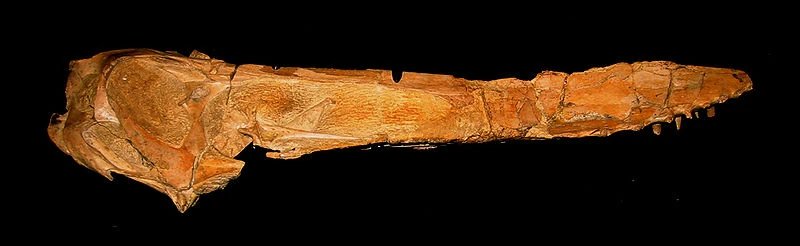
Anhanguera, a name derived from the indigenous Tupi language of Brazil meaning old devil, was a highly successful and widely distributed genus of pterodactyloid pterosaur that soared through the skies of the Early Cretaceous period, approximately 112 to 100 million years ago. Primarily discovered in the incredibly fossil-rich deposits of northeastern Brazil, specifically within the Romualdo Formation of the Araripe Basin, Anhanguera blittersdorffi stands as a monumental figure in the study of prehistoric flight and Mesozoic marine ecosystems. Its discovery has provided paleontologists with unprecedented insights into the anatomy, ecology, and evolutionary dynamics of ornithocheiroid pterosaurs, largely due to the exceptional three-dimensional preservation of its fossilized remains in calcareous nodules. As one of the most iconic and well-represented pterosaurs of the Mesozoic era, Anhanguera has significantly shaped our understanding of how these magnificent winged reptiles dominated the ancient coastal skies, interacting with both the marine environments below and the terrestrial ecosystems along the shorelines long before the eventual rise and diversification of modern seabirds. The physical description of Anhanguera blittersdorffi reveals a creature perfectly adapted for a life on the wing and a diet consisting primarily of slippery aquatic prey. This pterosaur possessed an impressive wingspan estimated to be between 4 and 5 meters (13 to 16 feet), making it a formidable presence in the Early Cretaceous skies. Despite its massive wingspan, the body length of Anhanguera was relatively modest, measuring approximately 1.5 meters (150 centimeters), and its overall weight was remarkably light, likely falling between 15 and 25 kilograms. This extreme lightweight construction was achieved through a highly pneumatized skeleton, where the bones were hollow, incredibly thin-walled, and filled with air sacs connected to the respiratory system, much like modern birds but taken to an even greater extreme. The most distinctive feature of Anhanguera was its highly specialized skull. The skull was elongated, narrow, and equipped with a rosette of long, sharp, interlocking teeth at the very tip of the jaws, which were angled outward to effectively snare and hold onto slippery fish. Furthermore, the skull featured distinct, rounded, keel-like crests positioned at the anterior ends of both the upper and lower jaws. These crests, which varied in size and shape among different specimens, are thought to have played a role in aerodynamics, stabilization during feeding, or perhaps sexual dimorphism and species recognition. The forelimbs were heavily modified, with an elongated fourth finger supporting a massive membranous wing composed of skin, muscle, and specialized structural fibers called actinofibrils, which provided stiffness and aerodynamic control. The paleobiology of Anhanguera paints a picture of a highly active, dynamic predator that was intimately tied to the marine environment. Based on its specialized dentition and jaw morphology, paleontologists universally agree that Anhanguera was a dedicated piscivore, feeding almost exclusively on the abundant fish populations of the shallow Cretaceous seas. For decades, it was widely hypothesized that Anhanguera and its relatives employed a skim-feeding strategy, flying low over the water surface with their lower jaw submerged to snap up fish, similar to modern skimmers. However, extensive biomechanical studies and aerodynamic modeling have largely debunked this idea, showing that the drag created by submerging the jaw at flight speeds would have been too immense, potentially causing the animal to crash. Instead, it is now believed that Anhanguera was a surface-dipper or plunge-diver, spotting prey from the air and swooping down to pluck fish from the upper water column, perhaps briefly landing on the water surface before taking off again. Its robust forelimbs suggest it was capable of a powerful quadrupedal launch, using its wings to vault itself into the air from both the ground and the water. Furthermore, the presence of pycnofibers—hair-like filaments covering the bodies of pterosaurs—indicates that Anhanguera was endothermic (warm-blooded), possessing a high metabolic rate necessary to sustain the immense energetic demands of active, powered flight. The ecological context in which Anhanguera lived was a dynamic and rapidly changing world, characterized by the ongoing breakup of the supercontinent Gondwana. During the Early Cretaceous, the region that is now northeastern Brazil was situated near the newly forming South Atlantic Ocean, which was opening up as South America and Africa slowly drifted apart. The Araripe Basin was a complex environment, likely consisting of shallow, warm, brackish to marine lagoons and coastal waterways that were subject to periodic fluctuations in salinity and oxygen levels. The climate was generally warm, arid to semi-arid, with distinct wet and dry seasons. Anhanguera shared this vibrant coastal ecosystem with a diverse array of organisms. The waters teemed with ancient fish, such as the predatory Vinctifer and the large, heavily armored mawsoniid coelacanths, which likely formed the bulk of Anhanguera's diet. The skies were shared with other pterosaur species, including the massive, sail-crested Tapejara and Tupandactylus, which occupied different ecological niches, likely focusing on frugivory or omnivory. On land, the shorelines were patrolled by various dinosaurs, including the spinosaurid Irritator and the small theropod Santanaraptor, as well as ancient crocodilians like Araripesuchus. In this complex food web, Anhanguera occupied the role of an apex aerial predator of the coastal margins, though it may have occasionally fallen prey to large marine reptiles or terrestrial predators if caught on the ground or water surface. The discovery history of Anhanguera is deeply intertwined with the rich paleontological heritage of Brazil and the complex, often controversial nature of fossil collection in the region. The genus was first officially described and named in 1985 by renowned Brazilian paleontologists Alexander Kellner and Diogenes de Almeida Campos. The type species, Anhanguera blittersdorffi, was named in honor of Rainer von Blittersdorff, a private collector who had acquired the remarkably well-preserved holotype skull and subsequently brought it to the attention of the scientific community. The fossils of Anhanguera are primarily sourced from the Romualdo Formation, a geological unit famous for its calcareous concretions—hard, rounded nodules of rock that formed around decaying organic matter, perfectly encasing and protecting the bones within. For decades, local miners and farmers in the Araripe Basin have collected these nodules, often splitting them open to reveal the fossils inside. While this has led to the discovery of thousands of spectacular specimens, it has also fueled a massive illegal fossil trade, resulting in many scientifically invaluable specimens, including numerous Anhanguera fossils, being smuggled out of Brazil and sold to private collectors and museums in Europe, North America, and Asia. This complex history has sparked ongoing debates about fossil repatriation and the ethics of paleontology, even as the specimens themselves continue to yield critical scientific data. The evolutionary significance of Anhanguera cannot be overstated, as it occupies a crucial position within the complex family tree of the Pterosauria. Anhanguera belongs to the clade Pterodactyloidea, the advanced group of short-tailed pterosaurs that dominated the latter half of the Mesozoic. More specifically, it is a prominent member of the Ornithocheiroidea, a highly successful lineage of predominantly marine, soaring pterosaurs that achieved global distribution during the Cretaceous. The anatomy of Anhanguera represents a pinnacle of adaptation for a pelagic, piscivorous lifestyle, showcasing extreme specializations in wing elongation, bone pneumatization, and cranial morphology. By studying Anhanguera, paleontologists can trace the evolutionary trajectory of pterosaurs as they adapted to exploit marine environments, a niche that would later be occupied by modern seabirds like albatrosses and pelicans. Furthermore, Anhanguera provides vital clues about the evolutionary relationships between different pterosaur families. It shares close morphological affinities with other famous genera, such as the European Ornithocheirus and the North American Pteranodon, demonstrating how certain successful body plans were distributed across the globe before the eventual decline and extinction of the toothed pterosaurs toward the end of the Cretaceous period. Scientific debates surrounding Anhanguera have been vigorous and multifaceted, reflecting the challenges of interpreting the biology of extinct flying reptiles. One of the most enduring controversies has been the taxonomic status of the genus itself and its relationship to other closely related pterosaurs. Because many ornithocheirid pterosaurs were historically described based on fragmentary remains from Europe, there has been significant debate over whether Anhanguera is a distinct genus or simply a junior synonym of older names like Ornithocheirus, Tropeognathus, or Coloborhynchus. While modern consensus generally supports the validity of Anhanguera, the boundaries between these genera remain a subject of intense cladistic analysis. Another major area of debate involves the function of the distinctive premaxillary and mandibular crests. While early theories suggested they were used as keels for skim-feeding, biomechanical refutations of this feeding style have led researchers to propose alternative functions. Some argue the crests served as aerodynamic stabilizers during flight or diving, while others strongly advocate for a role in sexual dimorphism and display, suggesting that the crests may have been brightly colored and used to attract mates or intimidate rivals, similar to the casques of modern hornbills. The fossil record of Anhanguera is heavily concentrated in the Araripe Basin of Brazil, but its implications are global. The Romualdo Formation has yielded dozens of exceptionally preserved skulls and partial skeletons of Anhanguera, making it one of the best-known pterosaurs in the world. The preservation quality in this formation is truly exceptional; the calcareous nodules protect the delicate, paper-thin bones from the crushing pressures of fossilization, allowing paleontologists to study the skulls and skeletons in perfect three dimensions. This is a stark contrast to most pterosaur fossils worldwide, which are typically found flattened into two dimensions on slabs of shale or limestone. Through the use of weak acid preparation techniques, preparators can dissolve the surrounding rock matrix, revealing the intricate internal structures of the skull, including the braincase, the inner ear, and the complex network of pneumatic foramina. While the vast majority of Anhanguera fossils are from Brazil, fragmentary remains attributed to the genus or very closely related anhanguerids have been reported from other parts of the world, including the United Kingdom, Australia, and North Africa, suggesting that these powerful flyers were capable of crossing vast oceanic distances and had a nearly cosmopolitan distribution during the Early Cretaceous. The cultural impact of Anhanguera has been significant, helping to shape the public's perception of pterosaurs as dynamic, bizarre, and awe-inspiring creatures. Its striking appearance, characterized by its toothy, crested snout and massive wingspan, has made it a popular subject in paleoart and documentary films. Anhanguera was prominently featured in the groundbreaking BBC documentary series Walking with Dinosaurs, where it was depicted soaring over the ancient oceans and interacting with other Mesozoic wildlife, bringing the creature to life for millions of viewers worldwide. In the realm of museums, spectacular three-dimensional mounts and casts of Anhanguera skeletons are displayed in major institutions across the globe, including the National Museum of Brazil in Rio de Janeiro (prior to the tragic 2018 fire) and the American Museum of Natural History in New York. These exhibits serve as vital educational tools, illustrating the incredible diversity of prehistoric life and the marvels of evolutionary adaptation, ensuring that the old devil of the Cretaceous skies continues to captivate the human imagination.
Classification
Time Period
Discovery
Location
Brazil
Formation
Romualdo Formation
Frequently Asked Questions
What is Anhanguera?
Anhanguera, a name derived from the indigenous Tupi language of Brazil meaning old devil, was a highly successful and widely distributed genus of pterodactyloid pterosaur that soared through the skies of the Early Cretaceous period, approximately 112 to 100 million years ago. Primarily discovered in...
When did Anhanguera live?
Anhanguera lived during the cretaceous period of the mesozoic era approximately 112-100 million years ago.
Where was Anhanguera discovered?
Fossils of Anhanguera were discovered in Brazil in the Romualdo Formation.
What did Anhanguera eat?
Anhanguera was a carnivore. It lived in aerial habitats.
What type of fossil is Anhanguera?
Anhanguera is preserved as a body fossil. The preservation quality is exceptional.
Related Specimens
From the mesozoic era · body fossils