Chalicothere
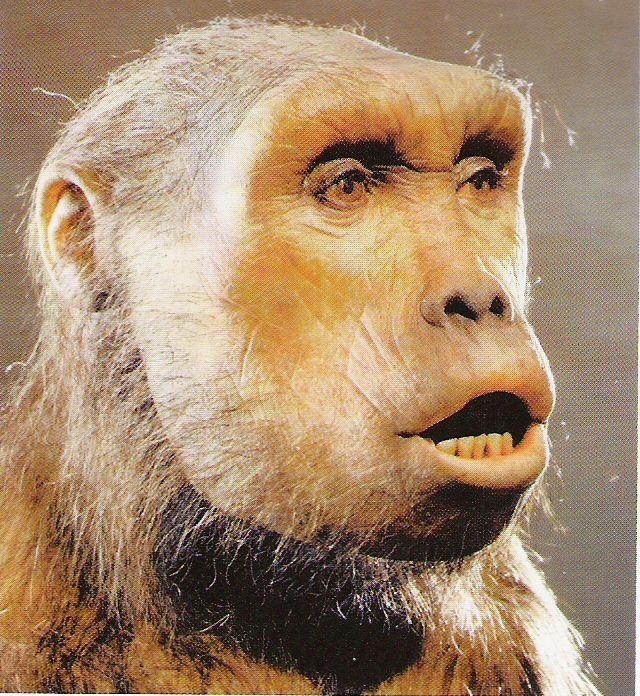
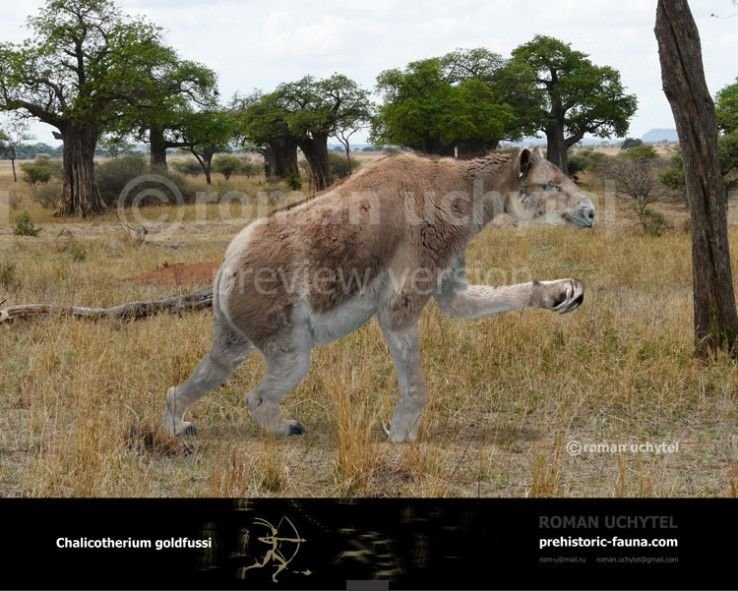
Chalicotherium goldfussi
Image: Image sourced via web search (Fair use / Educational)
About Chalicothere
The Chalicotherium is one of the most enigmatic and fascinating mammals of the Cenozoic Era, a creature that defied simple classification for decades after its discovery. Belonging to the order Perissodactyla, which includes modern horses, rhinoceroses, and tapirs, this large herbivore lived across Europe and Asia during the Miocene epoch of the Neogene period, approximately 16 to 5 million years ago. Its bizarre combination of features—a horse-like head, long forelimbs with massive claws instead of hooves, and shorter, stout hind limbs—makes it a prime example of evolutionary experimentation and a subject of enduring paleontological interest.
The physical appearance of Chalicotherium goldfussi was truly unique, a mosaic of traits not seen in any living animal. It was a large mammal, standing approximately 2.6 meters (8.5 feet) tall at the shoulder and reaching a body length of around 4 meters (13 feet). Weight estimates vary, but a mature adult likely weighed between 1,000 and 1,500 kilograms (2,200 to 3,300 pounds), comparable to a large modern horse or a small rhinoceros. Its most striking feature was its limb disparity. The forelimbs were significantly longer than the hind limbs, giving it a sloped, gorilla-like posture. Unlike its perissodactyl relatives, Chalicotherium's feet terminated not in hooves but in large, deeply cleft claws, particularly on the second and third digits of the forelimbs. The skull was elongated and resembled that of a horse, with a long snout and high-crowned, brachyodont (low-crowned) molars adapted for browsing. The neck was long and muscular, allowing it to reach high into trees. The robust hind limbs and broad pelvis provided a stable, powerful base, suggesting it could support its weight in a bipedal, tripodal, or seated posture while feeding. This strange anatomy puzzled early paleontologists, who initially mistook its claws for those of a giant pangolin or edentate.
The paleobiology of Chalicotherium has been pieced together through careful analysis of its functional morphology. Its dentition clearly indicates a herbivorous diet, specifically that of a browser. The low-crowned molars were suited for processing soft vegetation like leaves, twigs, and fruit, rather than the abrasive grasses consumed by grazers. The primary feeding strategy likely involved using its long, powerful forelimbs and formidable claws. For years, it was debated whether the claws were used for digging up roots and tubers or for pulling down branches. The prevailing hypothesis, supported by biomechanical studies and wear patterns on the claws, is that Chalicotherium was a 'hook-and-pull' feeder. It would rear up on its strong hind legs, possibly using its tail for balance, and use its claws to hook high branches, pulling them down to its mouth to strip the foliage. This niche is somewhat analogous to that of the extinct giant ground sloths of the Americas or modern gorillas. Locomotion was another area of debate. The claws would have been awkward for walking on, and wear patterns on the outer edges of the forefeet suggest that Chalicotherium engaged in knuckle-walking, similar to modern great apes, to protect the claws from being blunted. This mode of locomotion, unique among ungulates, underscores its highly specialized lifestyle. Social behavior is difficult to infer, but the discovery of multiple individuals in some locations suggests they may have lived in small groups or family units, though solitary existence cannot be ruled out.
Chalicotherium lived during the Miocene, a time of significant global cooling and drying that led to the expansion of grasslands and savannas at the expense of dense forests. The world of Chalicotherium goldfussi in Europe was a mosaic of woodlands, open savannas, and riparian forests, providing a diverse array of vegetation. This environment supported a rich megafauna. Chalicotherium shared its habitat with a variety of other large mammals, placing it within a complex food web. Co-existing herbivores included early three-toed horses like Hipparion, various species of rhinoceroses (e.g., Aceratherium), gomphotheres (extinct elephant relatives), and deer. As a large herbivore, an adult Chalicotherium would have had few natural predators, but the young, old, or sick may have been vulnerable. Potential predators in Miocene Europe included large 'bear-dogs' (Amphicyon), saber-toothed cats like Machairodus, and the giant hyaenodont Creodonts. Chalicotherium's large size and formidable claws would have served as a powerful defense against these threats. Its specialized browsing niche likely reduced direct competition with the more numerous grazing animals that thrived in the expanding open habitats, allowing it to successfully occupy a specific ecological role as a high-level browser in wooded environments.
The discovery history of Chalicotherium is a classic tale of paleontological confusion and correction. The first fossils were unearthed in the early 19th century from the Dinotheriensande deposits near Eppelsheim, Germany. In 1825, the German naturalist Johann Jakob Kaup described a large claw, initially believing it belonged to a giant pangolin-like mammal. A few years later, in 1833, he described teeth from the same locality which he correctly identified as belonging to a perissodactyl, naming the genus Chalicotherium, meaning 'pebble beast,' in reference to the molar cusps. For decades, the claws and the teeth were considered to belong to two entirely different animals. It was not until the 1880s, following the discovery of more complete skeletons in Sansan, France, by the French paleontologist Henri Filhol, that the perplexing association was confirmed. Filhol's work demonstrated conclusively that the horse-like skull and the giant claws belonged to the same bizarre creature. The type species, Chalicotherium goldfussi, was named by Kaup in honor of his contemporary, the German paleontologist Georg August Goldfuss. This resolution cemented Chalicotherium's status as one of the most unusual mammals ever discovered and highlighted the importance of complete skeletons in understanding prehistoric life.
Chalicotherium's position in the tree of life is firmly within the order Perissodactyla, the odd-toed ungulates. However, it belongs to a highly specialized, extinct suborder called Ancylopoda. This group diverged from the lineage leading to modern horses, rhinos, and tapirs early in the Eocene, over 50 million years ago. Chalicotheres represent a fascinating evolutionary experiment where a lineage of hoofed mammals secondarily evolved claws. This transition is a remarkable example of convergent evolution, as their feeding strategy and knuckle-walking posture independently evolved traits also seen in unrelated groups like ground sloths and great apes. The family Chalicotheriidae is divided into two main subfamilies: the Chalicotheriinae (like Chalicotherium), which were more gorilla-like in their proportions and likely knuckle-walkers, and the Schizotheriinae (like Moropus), which had less disparity between their fore and hind limbs and may have walked in a more plantigrade fashion. Chalicotherium itself has no direct modern descendants; the entire family went extinct during the Pleistocene. Their evolutionary story is a powerful illustration of how lineages can adapt to specific ecological niches, developing highly derived and unique anatomies that, while successful for millions of years, can ultimately lead to an evolutionary dead end when environmental conditions change.
Despite a general consensus on its lifestyle, Chalicotherium remains the subject of some scientific debate. The exact mechanics of its locomotion and feeding posture are still discussed. While knuckle-walking is the most widely accepted hypothesis for Chalicotherium, some researchers have proposed alternative gaits, suggesting the claws could have been retracted or held aloft during movement. The degree to which it could adopt a bipedal stance for high browsing versus a more stable tripodal posture (balancing on hind limbs and tail) is also an area of active biomechanical modeling and research. Furthermore, the precise reasons for the group's extinction are not fully understood. It was likely a combination of factors, including climate change during the Pliocene and Pleistocene which reduced their preferred woodland habitats, and possibly increased competition from other evolving browsers, such as deer and giraffids, that were more adaptable to the changing environments.
The fossil record of Chalicotherium goldfussi and its close relatives is primarily concentrated in Miocene deposits across Europe and Asia. Key fossil sites include Eppelsheim in Germany (the type locality), Sansan in France, and various locations in Austria, Slovakia, and Greece. Fossils have also been found as far east as China, indicating a wide geographic distribution for the genus. The fossil record consists mostly of isolated teeth, jaws, and limb bones, which are relatively robust and preserve well. Complete or even partially articulated skeletons are much rarer but have been crucial in understanding the animal's overall anatomy. The quality of preservation is generally good, allowing for detailed studies of bone structure and muscle attachment sites. The abundance of teeth in the fossil record has been particularly useful for tracking the genus's geographic and temporal range across the Eurasian continent during the Miocene.
While not as famous as dinosaurs or mammoths, Chalicotherium has carved out a niche in popular culture due to its strange appearance. It has been featured in several television documentaries, most notably in the BBC's 'Walking with Beasts' series, which depicted it as a solitary, gorilla-like browser defending its territory. This portrayal significantly raised its public profile. Museum exhibits featuring Chalicotherium skeletons or life-sized reconstructions are popular attractions, with notable displays at the Senckenberg Natural History Museum in Frankfurt, Germany, and the Natural History Museum of Paris. Its bizarre combination of familiar (horse-like head) and unfamiliar (giant claws) features makes it a compelling subject for illustrating the diversity of prehistoric life and the surprising paths that evolution can take, serving as an excellent educational tool in paleontological outreach.
Classification
Time Period
Discovery
Location
Germany
Formation
Upper Freshwater Molasse (Obere Süßwassermolasse)
Frequently Asked Questions
What is Chalicothere?
The Chalicotherium is one of the most enigmatic and fascinating mammals of the Cenozoic Era, a creature that defied simple classification for decades after its discovery. Belonging to the order Perissodactyla, which includes modern horses, rhinoceroses, and tapirs, this large herbivore lived across ...
When did Chalicothere live?
Chalicothere lived during the neogene period of the cenozoic era approximately 16-5 million years ago.
Where was Chalicothere discovered?
Fossils of Chalicothere were discovered in Germany in the Upper Freshwater Molasse (Obere Süßwassermolasse).
What did Chalicothere eat?
Chalicothere was a herbivore. It lived in terrestrial (woodland, savanna) habitats.
What type of fossil is Chalicothere?
Chalicothere is preserved as a body fossil. The preservation quality is good.
Related Specimens
From the cenozoic era · body fossils