Mesosaurus
Mesosaurus tenuidens
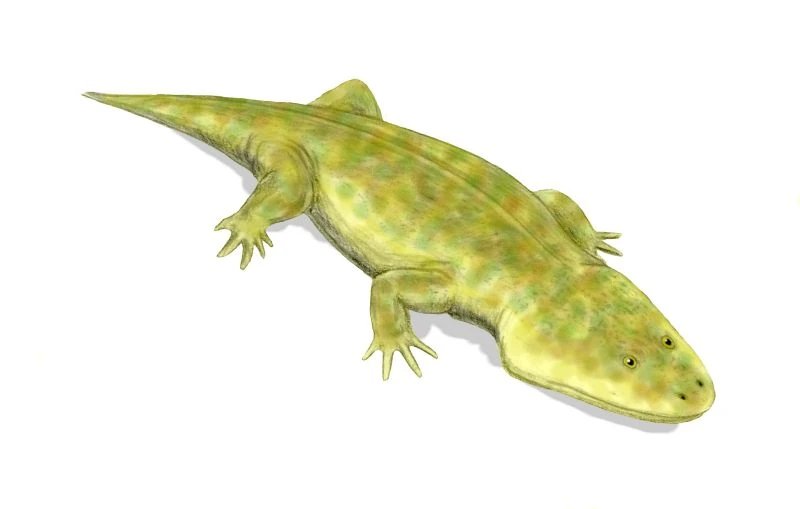
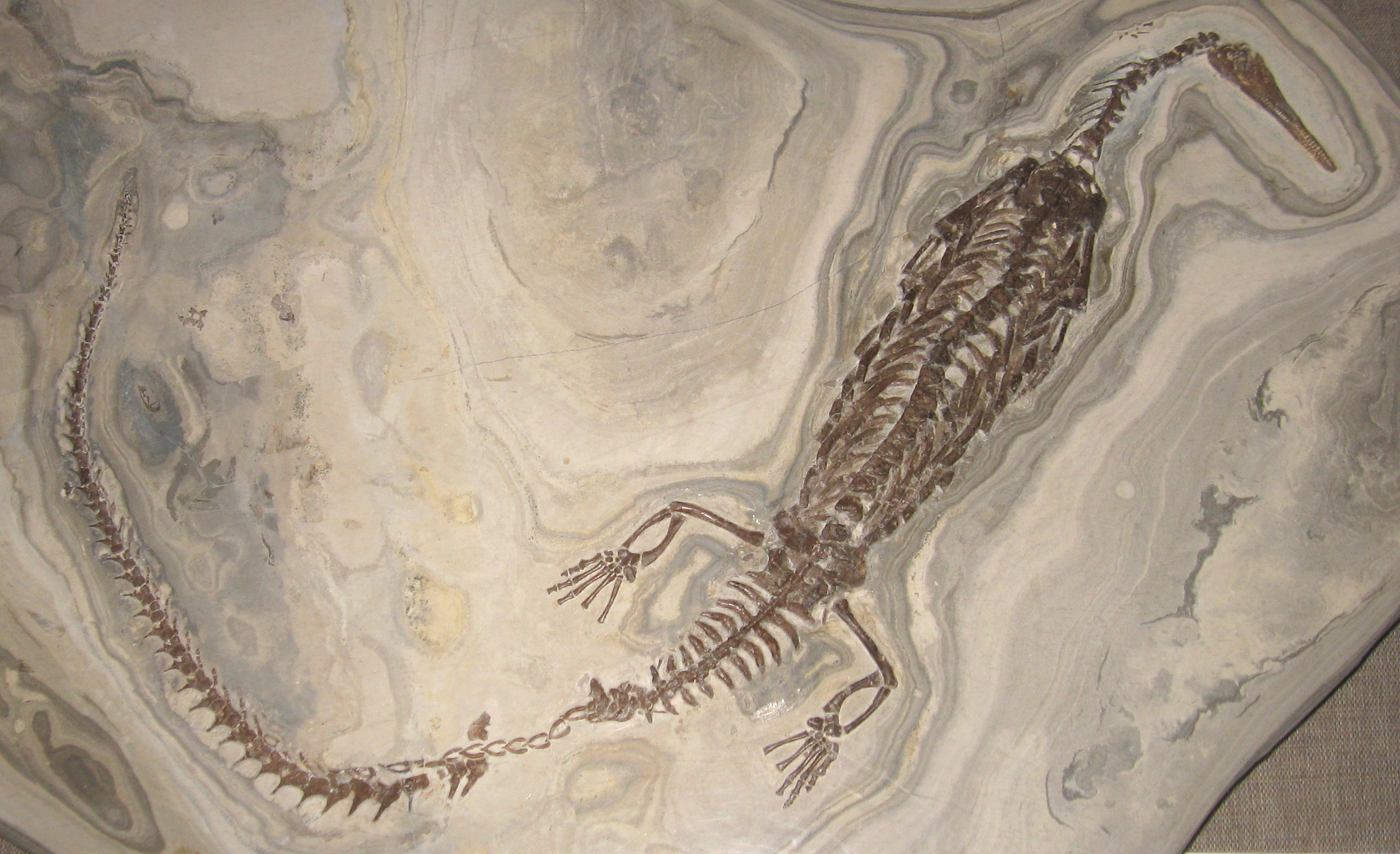
Image: File:Mesosaurus tenuidens 1.jpg - Wikimedia Commons (CC BY-SA)
About Mesosaurus
Mesosaurus tenuidens was a small, aquatic reptile that inhabited the freshwater and brackish environments of the Early Permian period, approximately 299 to 280 million years ago. As one of the earliest known amniotes to return to a fully aquatic lifestyle, it represents a pivotal moment in vertebrate evolution, presaging the later success of great marine reptile dynasties. However, its most profound legacy lies not in its biology but in its geography; the discovery of its fossils on the widely separated continents of South America and Africa provided the first definitive biological evidence for the theory of continental drift, forever cementing its place in the annals of both paleontology and geology.
The physical anatomy of Mesosaurus tenuidens was exquisitely adapted for a life spent in water. Adults typically reached a length of around 100 centimeters, with a slender, streamlined body that minimized drag. Its most prominent feature was its long, laterally compressed tail, which likely served as its primary means of propulsion, moving with a sinuous, eel-like motion. The limbs were also modified for an aquatic existence; while the front limbs were relatively small, the hind limbs were larger and more powerful, with elongated toes that almost certainly supported a web of skin, forming paddle-like feet for steering and providing additional thrust. The bones of Mesosaurus exhibit pachyostosis, a condition of bone thickening that would have acted as ballast, helping the animal control its buoyancy and remain submerged. The skull was perhaps its most specialized feature: long, low, and tapering to a delicate, elongated snout. This snout was armed with an impressive battery of exceptionally long, thin, needle-like teeth, with some of the longest teeth located near the tip of the jaws. These teeth were too fragile for seizing large prey and instead likely functioned as a sieve or cage, allowing the reptile to strain small crustaceans, larvae, and other invertebrates from the water column.
The unique morphology of Mesosaurus provides significant insight into its paleobiology and behavior. Its dental structure strongly suggests a diet of small, soft-bodied aquatic prey. The interlocking, needle-like teeth would have formed an effective trap for capturing tiny organisms, similar to the feeding mechanism of modern crabeater seals or some filter-feeding fish. It is hypothesized that Mesosaurus would swim through the water with its mouth agape, filtering out its food. Its powerful, flexible tail indicates it was an agile swimmer, capable of navigating the shallow inland seas and lakes it called home. The pachyostotic ribs and vertebrae would have made it negatively buoyant, an adaptation useful for a bottom-feeder or an animal that needed to remain submerged for extended periods while hunting. Fossil evidence, including slabs containing multiple individuals of varying ages, suggests that Mesosaurus may have exhibited gregarious behavior, possibly living in groups. Furthermore, the discovery of what appear to be fossilized embryos within the body cavities of adult specimens has led to the interpretation that Mesosaurus was viviparous, giving birth to live young in the water rather than laying eggs on land. This adaptation would have completely severed its ties to the terrestrial environment, making it a truly aquatic reptile.
Mesosaurus lived during the Artinskian and Kungurian ages of the Early Permian, a time when the Earth's landmasses were coalescing into the supercontinent Pangaea. Its habitat was a vast, shallow inland sea or a series of interconnected brackish lakes that stretched across the portion of the southern supercontinent Gondwana that would later become southern Africa and eastern South America. This body of water, often referred to as the Mesosaur Sea, was relatively isolated from the larger Panthalassic Ocean, leading to unique environmental conditions, possibly including periods of hypersalinity or anoxia in its deeper regions. The climate was generally arid to semi-arid. The ecosystem of this sea was relatively simple. The base of the food web likely consisted of algae and microorganisms, which supported a population of small crustaceans like pygocephalomorphs and the fish Palaeonisciformes. Mesosaurus, as the largest known vertebrate in this specific environment, occupied the position of the apex predator, feeding on these smaller animals. Its only known contemporary and close relative, Stereosternum tumidum, shared this habitat but was slightly smaller and more robustly built, suggesting potential niche partitioning between the two species. The fossil beds that preserve Mesosaurus are often laminated shales, indicating calm, low-energy waters with anoxic bottom conditions that were ideal for exceptional fossil preservation.
The discovery and study of Mesosaurus are intertwined with the development of major geological theories. The genus was first described by the French paleontologist Paul Gervais in 1865, based on specimens found in the Griqualand West region of South Africa. The specific name, *tenuidens*, is Latin for "slender-toothed," a direct reference to its most conspicuous cranial feature. Shortly thereafter, in the late 19th century, similar fossils were unearthed in the Paraná Basin of Brazil. It was the South African geologist Alexander Du Toit who, in the early 20th century, championed the connection between these discoveries. Building upon Alfred Wegener's controversial hypothesis of continental drift, Du Toit used Mesosaurus, along with the plant fossil Glossopteris, as key evidence in his 1937 book "Our Wandering Continents." He argued compellingly that a small, coastal freshwater reptile could not possibly have traversed the thousands of kilometers of open ocean separating Africa and South America. The only logical explanation was that the continents themselves had once been connected. This argument, initially met with skepticism, eventually became a cornerstone of the evidence supporting plate tectonics, transforming Mesosaurus from a paleontological curiosity into a geological icon.
Evolutionarily, Mesosaurus occupies an important but somewhat enigmatic position in the reptile family tree. It belongs to the family Mesosauridae, which is the sole family within the order Mesosauria. As early amniotes, they represent one of the first lineages to diverge after the split between the Synapsida (mammal relatives) and the Sauropsida (reptiles and birds). For many years, mesosaurs were classified within the Anapsida, a group characterized by a skull lacking temporal fenestrae (openings behind the eye sockets). However, more recent and detailed anatomical studies have suggested the presence of a lower temporal fenestra, which would place them as very early members of the Synapsida. This classification remains a subject of debate, but it highlights their basal position within the amniote radiation. Regardless of their precise placement, mesosaurs are profoundly significant as the first known group of amniotes to secondarily adapt to an aquatic lifestyle. This evolutionary transition involved a suite of adaptations—a streamlined body, paddle-like limbs, a propulsive tail, and buoyancy control—that would be mirrored convergently millions of years later by more famous marine reptile groups like the ichthyosaurs, plesiosaurs, and mosasaurs, making Mesosaurus a crucial case study in the dynamics of macroevolution.
Despite its long history of study, Mesosaurus is still the subject of scientific debate. Its precise phylogenetic placement remains contentious, with researchers variously assigning it to a basal sauropsid position, as a sister group to all other reptiles (Parareptilia), or as an early synapsid. The resolution of this issue is critical for understanding the initial radiation of all amniotes. Another area of active discussion concerns its exact habitat and salinity tolerance. While traditionally viewed as a freshwater or brackish water animal, some geochemical analyses of the surrounding rock formations suggest the "Mesosaur Sea" may have been periodically hypersaline, raising questions about the reptile's physiological adaptations. The evidence for viviparity, while strong, is also debated; some paleontologists argue that the small skeletons found within adults could represent cannibalized juveniles rather than unborn embryos. These ongoing discussions ensure that Mesosaurus remains a focus of research, with new analytical techniques continually refining our understanding of this ancient reptile.
The fossil record of Mesosaurus is remarkable for its quality and geographic specificity. Its remains are found almost exclusively in two geological formations: the Whitehill Formation (part of the Ecca Group) in southern Africa, particularly in the Karoo Basin, and the Irati Formation (part of the Passa Dois Group) in the Paraná Basin of Brazil and Uruguay. These formations represent the same ancient lacustrine or shallow marine system and are famous for producing articulated, and often exquisitely preserved, skeletons. The fine-grained, anoxic shales have preserved not only the delicate bones and needle-like teeth but also, in some rare cases, soft tissue impressions, including skin and webbing between the toes. The abundance of fossils is notable, with some rock layers containing dense concentrations of individuals, suggesting mass mortality events. These sites have yielded hundreds of specimens, from small juveniles to fully grown adults, providing a comprehensive view of the animal's life history and anatomy.
Because of its critical role in validating the theory of continental drift, Mesosaurus has achieved a cultural impact far exceeding that of many other prehistoric creatures of its size and age. It is a textbook example of an index fossil and is featured prominently in geology, earth science, and biology curricula worldwide to illustrate the concept of plate tectonics. Casts and original specimens of Mesosaurus are displayed in major natural history museums across the globe, from the American Museum of Natural History in New York to the Iziko South African Museum in Cape Town, where they serve as a powerful visual aid for explaining Earth's dynamic history. Its unique appearance and compelling story have made it a recognizable and important figure in popular science literature and educational materials, forever linking the evolution of life with the movement of the continents.
Classification
Time Period
Discovery
Location
Southern Africa and South America
Formation
Irati Formation and Whitehill Formation
Frequently Asked Questions
What is Mesosaurus?
Mesosaurus tenuidens was a small, aquatic reptile that inhabited the freshwater and brackish environments of the Early Permian period, approximately 299 to 280 million years ago. As one of the earliest known amniotes to return to a fully aquatic lifestyle, it represents a pivotal moment in vertebrat...
When did Mesosaurus live?
Mesosaurus lived during the permian period of the paleozoic era approximately 299-280 million years ago.
Where was Mesosaurus discovered?
Fossils of Mesosaurus were discovered in Southern Africa and South America in the Irati Formation and Whitehill Formation.
What did Mesosaurus eat?
Mesosaurus was a carnivore. It lived in freshwater habitats.
What type of fossil is Mesosaurus?
Mesosaurus is preserved as a body fossil. The preservation quality is excellent.
Related Specimens
From the paleozoic era · body fossils