Calymene
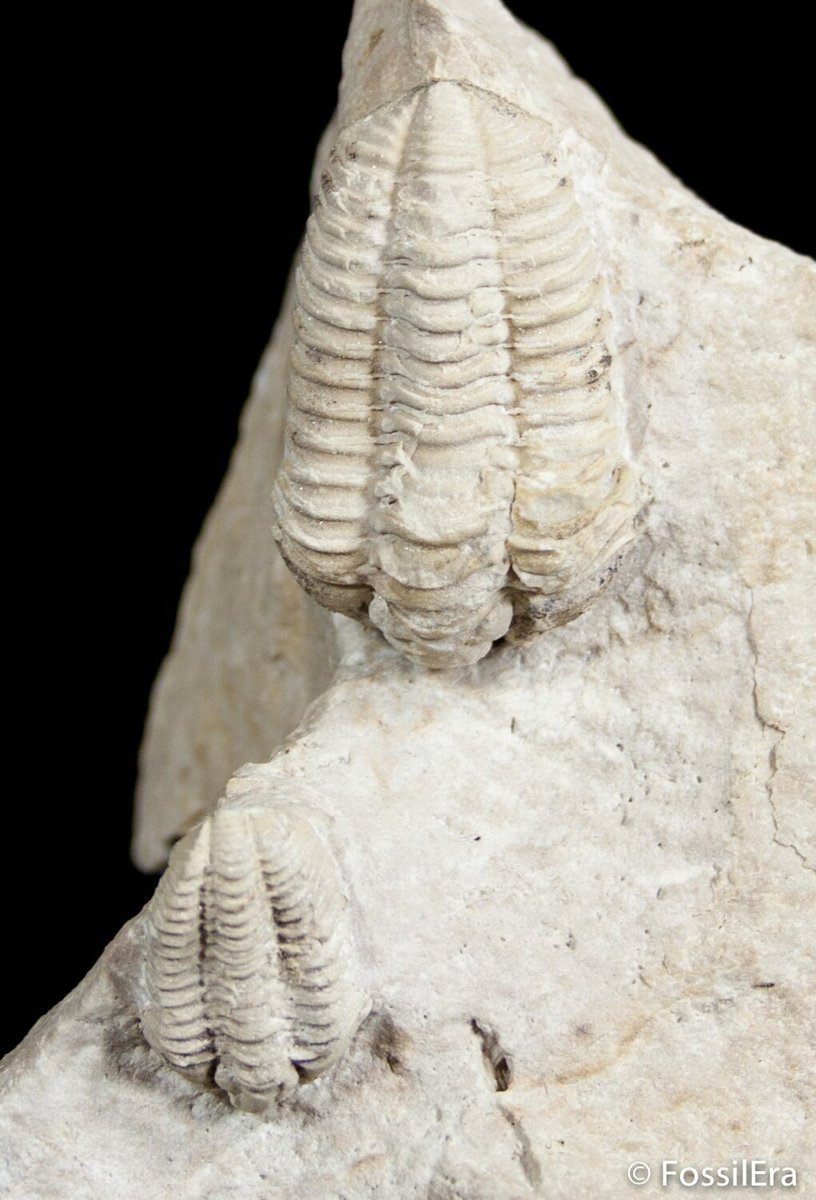
Calymene celebra
Image: Image sourced via web search (Fair use / Educational)
About Calymene
Calymene celebra is an iconic species of trilobite, an extinct group of marine arthropods that flourished during the Paleozoic Era. This particular species inhabited the warm, shallow seas of the Silurian Period, approximately 444 to 419 million years ago, in a region that is now North America, particularly the midwestern United States. As the official state fossil of Wisconsin, Calymene celebra holds significant paleontological and cultural importance, representing a classic example of trilobite morphology and providing a window into the diverse reef ecosystems of the Silurian world.
Calymene celebra was a relatively small trilobite, with most adult specimens measuring between 2 and 7 centimeters in length, roughly the size of a human thumb. Its body was dorsoventrally flattened and divided longitudinally into three distinct lobes: a central axial lobe and two lateral pleural lobes, which is the defining characteristic of all trilobites. The exoskeleton, or carapace, was composed of calcite and was further divided transversely into three main sections: the cephalon (head), the thorax (body), and the pygidium (tail). The cephalon was semi-circular and featured a prominent, highly convex central region called the glabella, which was marked by deep furrows. On either side of the glabella were the compound eyes, which were of the schizochroal type, composed of multiple, relatively large, and individually set lenses. This visual system would have provided a wide, mosaic field of view. The thorax consisted of 13 articulated segments, allowing for significant flexibility. This flexibility was crucial for its primary defense mechanism, conglobation, or the ability to roll into a tight, armored ball, protecting its soft ventral side and delicate appendages from predators. The pygidium was small and rounded, composed of several fused segments. While appendages are rarely preserved, it is inferred that, like other trilobites, Calymene possessed a pair of jointed legs and a gill branch associated with each thoracic segment for locomotion and respiration.
As a benthic, or bottom-dwelling, organism, the paleobiology of Calymene celebra was intrinsically linked to the seafloor environment. It is widely believed to have been a detritivore, feeding on organic matter and microorganisms within the sediment. Its locomotion was likely a slow crawl across the substrate using its numerous legs, similar to modern isopods or pill bugs. It would have used these appendages to sift through the mud and carbonate ooze of the reef, searching for food particles. Evidence from trace fossils suggests that trilobites were active burrowers, either to seek refuge from predators or to forage for food beneath the sediment surface. The conglobation defense mechanism was a critical survival strategy. When threatened by predators such as large nautiloids or early jawed fish, Calymene could quickly roll up, presenting a hard, indigestible sphere to its attacker. Growth occurred through a process called ecdysis, or molting, where the trilobite would shed its old exoskeleton to accommodate its increasing size. This process left behind numerous empty carapaces (exuviae), which account for a significant portion of the fossil record and provide valuable data on trilobite ontogeny and population structures. Social behavior is difficult to infer, but fossil assemblages showing mass groupings suggest they may have congregated for mating or in response to environmental cues.
The world of Calymene celebra during the Silurian Period was one of warm, tropical, shallow epicontinental seas covering much of the Laurentian continent (the precursor to North America). Geographically, the region now known as Wisconsin, Illinois, and Indiana was situated near the equator. The climate was globally warm, with high sea levels creating vast marine habitats. Calymene celebra was a key inhabitant of the Great Lakes region's extensive reef systems, known as the Niagaran reef complex. These were not coral-dominated reefs like today's, but were built by a combination of stromatoporoids (extinct sponges), tabulate and rugose corals, and bryozoans. This complex, thriving ecosystem supported a high diversity of life. Co-existing fauna included brachiopods, crinoids (sea lilies), gastropods, cephalopods (like the straight-shelled nautiloid Orthoceras), and other trilobite species. Calymene celebra occupied a low-level position in the food web as a detritivore. It was prey for larger invertebrates, such as eurypterids (sea scorpions), and the newly evolving jawed fish (acanthodians and placoderms), which were becoming more prominent predators in marine environments. Its abundance made it a crucial part of the energy transfer system within the Silurian reef community.
The discovery and study of Calymene celebra are tied to the 19th-century geological surveys of the American Midwest. The species was formally described by Raymond C. Moore in 1928, based on exceptionally well-preserved fossils from the Silurian dolomite quarries of Wisconsin and Illinois. However, fossils of this type had been known to local collectors and quarry workers for decades prior. The specific name 'celebra' reflects its celebrated status and abundance in these formations. One of the most important localities for this species is the Waukesha Biota in Wisconsin, a Konservat-Lagerstätte known for its exceptional preservation, sometimes including soft-bodied organisms. While there isn't a single, famous named specimen akin to 'Sue' the T. rex, the sheer number of complete, articulated specimens recovered from sites like the Racine and Waukesha formations has made Calymene celebra a benchmark for trilobite studies. Early paleontologists like James Hall and Fielding B. Meek also contributed to the understanding of the broader Calymenidae family in North America, laying the groundwork for Moore's later specific description. The abundance of these fossils made them a staple of early American museum collections.
Within the grand tapestry of life, Calymene celebra represents a highly successful lineage within the Phylum Arthropoda, the most diverse animal phylum on Earth. As a member of the Class Trilobita, it belongs to one of the earliest and most successful groups of arthropods, which dominated marine ecosystems for over 270 million years before their ultimate extinction at the end of the Permian Period. Within the Order Phacopida, the family Calymenidae is characterized by its distinctive glabella shape and the ability to enroll. Calymene itself serves as a classic example of this morphology. Trilobites are crucial for understanding early arthropod evolution, showcasing the development of key features like jointed appendages, compound eyes, and a hardened exoskeleton. While trilobites left no direct descendants, their closest living relatives are the chelicerates, which include horseshoe crabs, spiders, and scorpions. Studying the well-preserved anatomy of species like Calymene celebra helps paleontologists reconstruct the ancestral body plan of arthropods and understand the evolutionary pressures that drove their diversification throughout the Paleozoic Era.
Despite its status as a well-known fossil, Calymene has been the subject of some taxonomic debate. For many years, the genus Calymene was used as a 'wastebasket taxon,' with numerous species from around the world being assigned to it. More recent and rigorous phylogenetic analyses have led to a significant revision of the family Calymenidae. Many species previously assigned to Calymene have been moved to other genera, such as the well-known Calymene blumenbachii from the Wenlock Limestone of Dudley, England (nicknamed the 'Dudley Bug' or 'Dudley Locust'). This has refined the definition of the genus Calymene to be more geographically and morphologically constrained, primarily to Laurentian species like C. celebra. Ongoing research focuses on the subtle morphological differences between populations to better understand speciation and biogeography during the Silurian. The precise function of the glabellar furrows and the exact mechanics of its feeding appendages remain topics of active scientific inquiry, relying on comparative anatomy and trace fossil evidence for interpretation.
The fossil record of Calymene celebra is exceptionally rich and geographically concentrated. Fossils are predominantly found in the Silurian-aged dolomitic limestone formations of the midwestern United States, particularly in Wisconsin, Illinois, and Indiana. The geological units, collectively known as the Niagaran Series (including the Racine, Waukesha, and Joliet Formations), are famous for yielding vast quantities of these trilobites. The preservation quality is often excellent, with thousands of complete, articulated exoskeletons known. Because they are found in hard dolomite, fossils are often preserved as internal and external molds, which can be used to create highly detailed casts. The abundance is such that they are one of the most commonly collected and commercially available trilobite fossils in the world. Famous fossil sites include quarries near Milwaukee and Racine in Wisconsin, and the Thornton Quarry near Chicago, Illinois. The frequency of finding molted exuviae compared to carcasses provides valuable insights into the life history and population dynamics of these ancient arthropods.
Calymene celebra has had a notable cultural impact, particularly in the American Midwest. In 1985, it was officially designated the state fossil of Wisconsin, a decision driven by schoolchildren and championed by the Wisconsin Geological Society. This status has cemented its role in public education, making it a familiar symbol of the state's deep geological history. Museums such as the Milwaukee Public Museum and the Field Museum in Chicago feature prominent displays of Calymene celebra fossils, showcasing the rich biodiversity of the ancient Silurian reefs that once covered the region. Its classic, aesthetically pleasing trilobite form and its common availability have made it a favorite among amateur fossil collectors and a staple in science classrooms, serving as a tangible connection to the deep past for millions of people.
Classification
Time Period
Discovery
Location
Wisconsin, USA
Formation
Niagaran Series (including Racine, Waukesha, and Joliet Formations)
Frequently Asked Questions
What is Calymene?
Calymene celebra is an iconic species of trilobite, an extinct group of marine arthropods that flourished during the Paleozoic Era. This particular species inhabited the warm, shallow seas of the Silurian Period, approximately 444 to 419 million years ago, in a region that is now North America, part...
When did Calymene live?
Calymene lived during the silurian period of the paleozoic era approximately 444-419 million years ago.
Where was Calymene discovered?
Fossils of Calymene were discovered in Wisconsin, USA in the Niagaran Series (including Racine, Waukesha, and Joliet Formations).
What did Calymene eat?
Calymene was a detritivore. It lived in marine reef habitats.
What type of fossil is Calymene?
Calymene is preserved as a body fossil. The preservation quality is excellent.
Related Specimens
From the paleozoic era · body fossils