Askeptosaurus
Askeptosaurus italicus
Image: Image sourced via web search (Fair use / Educational)
About Askeptosaurus
Askeptosaurus italicus was a highly specialized marine reptile that thrived during the Middle Triassic period, approximately 245 to 235 million years ago, in the shallow, tropical waters of the western Tethys Ocean. Belonging to the enigmatic and entirely extinct order known as Thalattosauria, this fascinating creature represents a crucial chapter in the story of how early reptiles adapted to aquatic environments in the aftermath of the devastating Permian-Triassic mass extinction. Its remains, primarily discovered in the world-renowned, fossil-rich black shales of the Monte San Giorgio region along the modern border of Switzerland and Italy, have provided paleontologists with invaluable insights into the diverse ecological niches occupied by marine reptiles long before the global dominance of more famous groups like the ichthyosaurs and plesiosaurs. Askeptosaurus stands as a testament to the rapid evolutionary experimentation that characterized the Triassic period, serving as a vital data point for understanding the complex transition of terrestrial tetrapods back into the marine realm.
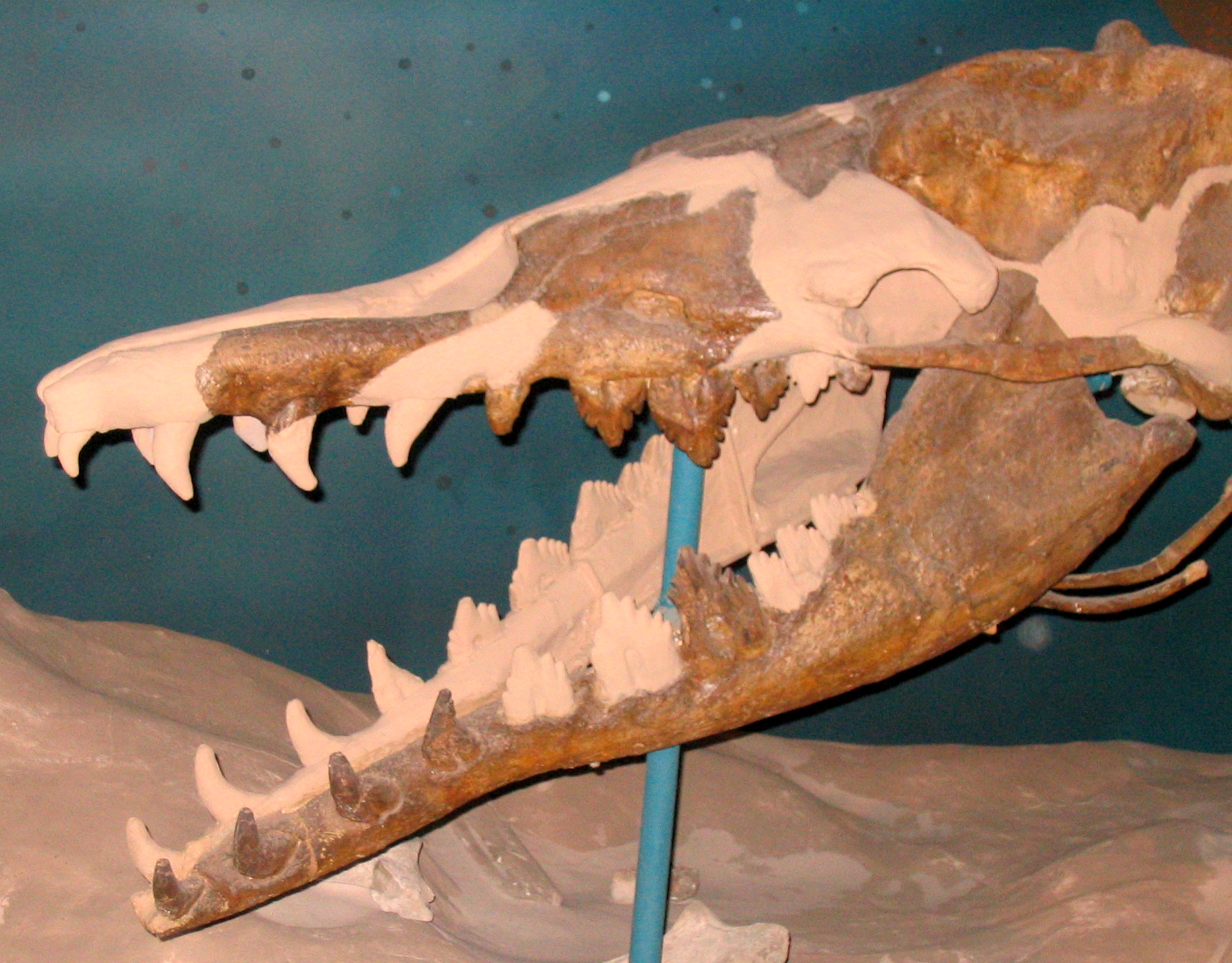
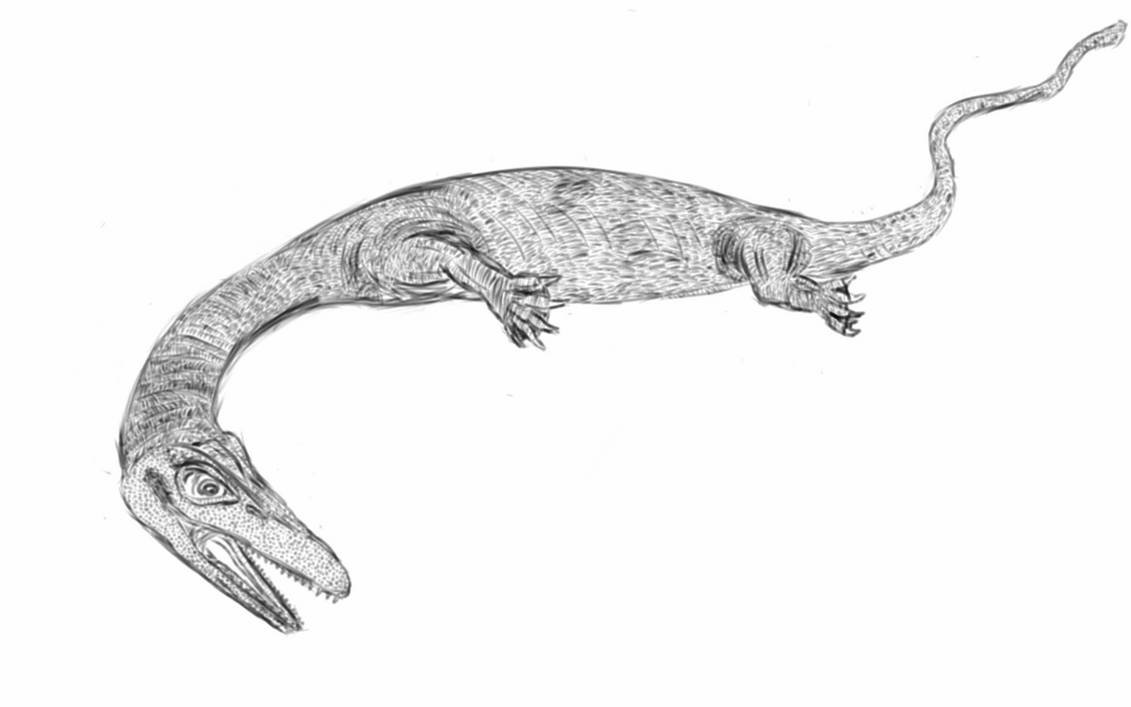
In terms of physical description, Askeptosaurus was a remarkably slender and elongated animal, reaching an approximate total body length of up to two meters, or roughly 200 centimeters. When compared to modern animals, its overall body plan might superficially resemble that of a large monitor lizard or a highly elongated crocodilian, though it possessed unique anatomical specializations tailored for a predominantly aquatic lifestyle. The skull of Askeptosaurus was particularly distinctive; it was highly elongated, narrow, and somewhat flattened, terminating in a pointed snout that was lined with numerous sharp, conical teeth perfectly adapted for piercing and grasping slippery prey. Unlike some of its close relatives in the thalattosaur group, which possessed crushing dentition for a durophagous diet of hard-shelled organisms, Askeptosaurus retained a more primitive, predatory dental arrangement. Its neck was relatively long, leading to a streamlined, serpentine torso supported by a robust vertebral column. The tail was exceptionally long, making up more than half of the animal's total length, and was laterally compressed to serve as the primary organ of propulsion through the water. The limbs of Askeptosaurus were somewhat reduced in size compared to its terrestrial ancestors, yet they retained distinct digits that were likely webbed rather than fully transformed into the stiff flippers seen in later, more derived marine reptiles. Soft tissue inferences suggest a smooth, streamlined integument to reduce hydrodynamic drag, while its large eye sockets indicate that vision played a critical role in its survival and hunting strategies.
The paleobiology of Askeptosaurus paints a picture of a highly capable, agile predator perfectly suited to the shallow, sunlit waters of the Triassic lagoons. Its diet was strictly carnivorous, consisting primarily of the abundant small to medium-sized fish and soft-bodied cephalopods that populated the reef environments of the Tethys Ocean. The elongated snout and sharp, interlocking teeth functioned much like a modern gharial's jaws, allowing Askeptosaurus to execute rapid lateral strikes through the water column to snatch elusive, fast-moving prey. Locomotion was achieved primarily through anguilliform swimming—a snake-like, side-to-side undulation of its elongated body and powerful, laterally compressed tail. The webbed limbs were likely held close to the body during rapid swimming to minimize drag, but they would have been utilized for steering, stabilization, and maneuvering through complex reef structures or dense underwater vegetation. Based on the anatomy of its limbs and girdles, paleontologists infer that while Askeptosaurus was highly adapted to the water, it may not have been entirely pelagic; it might have retained the ability to haul itself onto sandy beaches or rocky outcrops to bask in the sun, much like modern marine iguanas, in order to regulate its body temperature. Growth patterns analyzed from bone histology suggest a relatively rapid initial growth phase, typical of many marine reptiles of the era, allowing them to quickly reach a size that would deter potential predators. Its metabolism was likely ectothermic, relying on the warm ambient temperatures of the Triassic climate to maintain optimal physiological function.
The ecological context of the Middle Triassic world in which Askeptosaurus lived was dramatically different from the Earth we know today. During this time, the supercontinent of Pangea dominated the globe, and the area that is now the Swiss-Italian Alps was situated along the western margin of the vast Tethys Ocean. This region was characterized by a complex network of shallow, warm-water carbonate platforms, intra-platform basins, and restricted lagoons. The climate was generally hot and arid on land, but the coastal marine environments were lush, vibrant, and teeming with life. Askeptosaurus shared its habitat with an extraordinary diversity of early marine reptiles, including the early ichthyosaur Mixosaurus, the long-necked prolacertiform Tanystropheus, the placodonts with their shell-crushing jaws, and the pachypleurosaurs. In this complex food web, Askeptosaurus occupied the niche of a mid-level pursuit predator. It would have hunted the abundant actinopterygian fishes and early cephalopods that schooled in the lagoonal waters. However, Askeptosaurus itself was not at the top of the food chain. It would have had to remain vigilant to avoid the massive, apex predatory archosaurs and larger marine reptiles, such as the formidable nothosaur Ceresiosaurus, which patrolled the deeper channels connecting the lagoons to the open ocean. The restricted, sometimes anoxic bottom waters of these basins played a crucial role in the ecosystem, occasionally causing localized die-offs but also ensuring the spectacular preservation of the organisms that sank into the oxygen-depleted muds.
The discovery history of Askeptosaurus is deeply intertwined with the early days of vertebrate paleontology in Europe. The genus was first described and named in 1925 by the brilliant but eccentric Hungarian paleontologist Baron Franz Nopcsa, based on fragmentary fossil material recovered from the Besano Formation in northern Italy. The generic name Askeptosaurus translates roughly to 'unconsidered lizard' or 'unseen lizard,' reflecting the fact that the initial remains were somewhat obscure and difficult to interpret. For decades, the animal remained poorly understood due to the incomplete nature of the early specimens. However, the true breakthrough in understanding Askeptosaurus came during the extensive, systematic excavations conducted at Monte San Giorgio by Swiss paleontologists, most notably Emil Kuhn-Schnyder, in the mid-to-late 20th century. These meticulous digs in the Grenzbitumenzone (the boundary bitumen zone) yielded spectacular, nearly complete, and fully articulated skeletons of Askeptosaurus italicus. These exceptional specimens allowed researchers to reconstruct the animal's anatomy with unprecedented accuracy, revealing the true length of its tail, the delicate structure of its skull, and the precise arrangement of its limbs. The ongoing excavations at Monte San Giorgio and the surrounding areas continue to produce valuable material, solidifying the region's reputation as one of the most important Triassic fossil sites in the world.
The evolutionary significance of Askeptosaurus lies primarily in its position within the order Thalattosauria, a group of marine reptiles whose exact placement within the broader reptilian family tree has been a subject of intense study. Thalattosaurs are generally considered to be diapsid reptiles, but they represent a distinct, early offshoot that independently adapted to marine life, separate from the lineages that gave rise to ichthyosaurs, plesiosaurs, or modern marine reptiles like sea snakes and marine iguanas. Within the Thalattosauria, Askeptosaurus is the type genus of the family Askeptosauridae, which is characterized by elongated, straight snouts and a lack of the specialized, crushing dentition seen in the sister family, the Claraziidae. Askeptosaurus provides a vital morphological baseline for understanding the primitive condition of thalattosaurs. Its anatomy demonstrates a transitional stage of aquatic adaptation; while its body and tail are highly modified for swimming, its limbs still retain a relatively primitive, terrestrial-like structure. This mosaic of features helps evolutionary biologists map the step-by-step anatomical changes required for a terrestrial tetrapod to conquer the marine realm. Furthermore, because thalattosaurs went extinct at the end of the Triassic period, leaving no modern descendants, Askeptosaurus serves as a fascinating example of an evolutionary dead end—a highly successful, specialized lineage that ultimately succumbed to the changing global environments of the Late Triassic.
Scientific debates surrounding Askeptosaurus have historically focused on its precise phylogenetic placement and its degree of aquatic adaptation. For many years, the exact relationship of thalattosaurs to other diapsid reptiles was highly contentious, with various researchers proposing affinities to squamates (lizards and snakes), archosauromorphs, or even more basal reptilian lineages. Modern cladistic analyses, utilizing high-resolution CT scanning of Askeptosaurus skulls, have helped to stabilize their position as basal neodiapsids, though minor disagreements still occur regarding their closest sister taxa. Another ongoing debate involves the animal's terrestrial capabilities. While early interpretations sometimes depicted Askeptosaurus as a fully marine creature incapable of leaving the water, recent biomechanical studies of its limb girdles and joint articulations suggest that its limbs were robust enough to support its weight on land. This has led to a revised consensus that Askeptosaurus was likely semi-aquatic, utilizing the land for resting or reproduction, though the exact nature of its reproductive strategy—whether it laid eggs on beaches or gave birth to live young in the water like ichthyosaurs—remains a tantalizing mystery yet to be solved by the fossil record.
The fossil record of Askeptosaurus is geographically restricted but exceptionally rich in quality. The vast majority of known specimens, numbering in the dozens, have been recovered from the Middle Triassic (Anisian to Ladinian stage) deposits of the Monte San Giorgio region, encompassing both the Besano Formation in Italy and the equivalent strata in Switzerland. The preservation quality of these fossils is frequently categorized as exceptional. Because the dead animals sank into the stagnant, anoxic bottom waters of the intra-platform basins, they were protected from scavengers and strong currents. As a result, Askeptosaurus fossils are often found as fully articulated, complete skeletons compressed onto slabs of black shale. These specimens preserve not only the complete osteology, including the delicate bones of the skull and the tiny elements of the digits, but occasionally also preserve faint carbonized traces of soft tissues or stomach contents, providing direct evidence of their piscivorous diet. The concentration of these high-quality fossils makes Monte San Giorgio a uniquely important window into the Middle Triassic marine ecosystem.
The cultural impact of Askeptosaurus is closely tied to the fame of its primary discovery site. Monte San Giorgio was designated a UNESCO World Heritage site in 2003, largely due to the incredible diversity and preservation of marine reptiles like Askeptosaurus. While it may not possess the mainstream pop-culture recognition of a Tyrannosaurus or a Velociraptor, Askeptosaurus is a celebrated icon within the paleontology community and the regions of southern Switzerland and northern Italy. Spectacular, nearly complete skeletons of Askeptosaurus are prominently displayed in major institutions, including the Paleontological Museum of Zurich and the Civic Museum of Natural History in Milan, as well as the dedicated fossil museum in Meride, Switzerland. These exhibits serve a vital educational role, illustrating the concept of convergent evolution and highlighting the incredible burst of biodiversity that occurred in the oceans during the Triassic period, thereby capturing the public's fascination with the ancient, hidden history of the Alpine region.
Classification
Time Period
Discovery
Location
Italy/Switzerland
Formation
Besano Formation
Frequently Asked Questions
What is Askeptosaurus?
Askeptosaurus italicus was a highly specialized marine reptile that thrived during the Middle Triassic period, approximately 245 to 235 million years ago, in the shallow, tropical waters of the western Tethys Ocean. Belonging to the enigmatic and entirely extinct order known as Thalattosauria, this ...
When did Askeptosaurus live?
Askeptosaurus lived during the triassic period of the mesozoic era approximately 245-235 million years ago.
Where was Askeptosaurus discovered?
Fossils of Askeptosaurus were discovered in Italy/Switzerland in the Besano Formation.
What did Askeptosaurus eat?
Askeptosaurus was a carnivore. It lived in marine habitats.
What type of fossil is Askeptosaurus?
Askeptosaurus is preserved as a body fossil. The preservation quality is excellent.
Related Specimens
From the mesozoic era · body fossils