Brontosaurus
Brontosaurus excelsus
Image: Image sourced via web search (Fair use / Educational)
About Brontosaurus
Brontosaurus, whose name translates to 'thunder lizard,' is one of the most iconic dinosaurs to have ever roamed the Earth. This colossal herbivore lived during the Late Jurassic period, approximately 155 to 150 million years ago, in what is now western North America. Its immense size and distinctive long-necked, long-tailed silhouette have made it a staple of popular culture and a subject of intense scientific interest and debate for over a century, embodying the grandeur of the Mesozoic Era's megafauna.
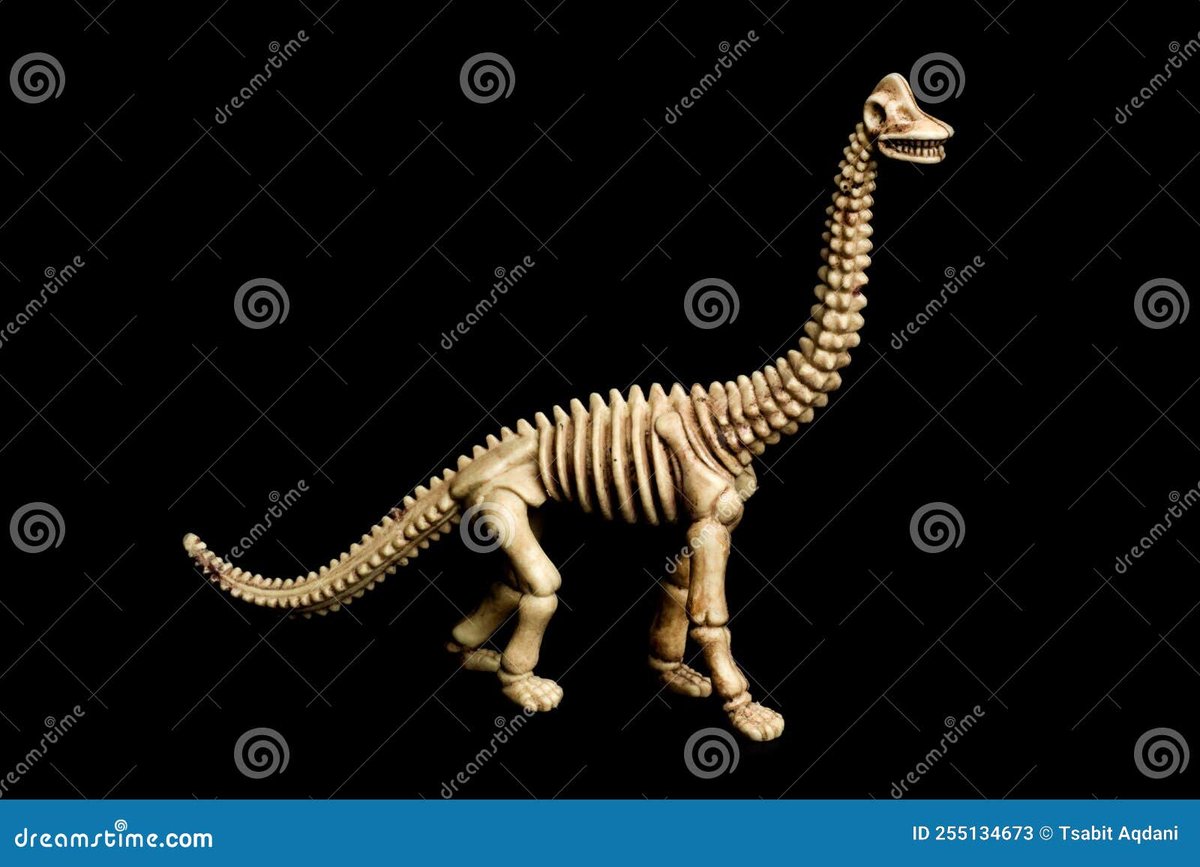
Brontosaurus was a truly massive animal, a classic example of the sauropod body plan. An adult Brontosaurus excelsus could reach an estimated length of 22 meters (about 72 feet) from the tip of its snout to the end of its whip-like tail, and stand over 4.5 meters (15 feet) tall at the hips. Weight estimates have varied over the years with changing methodologies, but modern calculations place it in the range of 15 to 20 metric tons (approximately 33,000 to 44,000 pounds), comparable to several large African elephants combined. Its most striking features were its exceptionally long neck and a correspondingly long, tapering tail. The neck, while long, was relatively thick and less flexible than often depicted, likely held more horizontally than vertically. Its skull was small and horse-like, containing simple, peg-like teeth adapted for stripping foliage. The torso was deep and barrel-chested, supported by four pillar-like legs. The forelimbs were shorter than the hindlimbs, giving its back a gentle slope downwards from the hips. A key distinguishing feature of Brontosaurus, separating it from relatives like Apatosaurus, is its more robust build, particularly a deeper and wider neck. Its vertebrae were also distinct, with tall neural spines on its back, suggesting powerful muscle attachments.
As a high-browsing herbivore, Brontosaurus's life revolved around consuming vast quantities of plant matter to fuel its enormous body. Its peg-like teeth were not suited for chewing; instead, it likely used them as a rake to strip leaves and fronds from ferns, cycads, and conifers. The ingested vegetation would have been processed in a massive gut, possibly with the aid of gastroliths (stomach stones) to help grind the tough plant material. Its long neck would have allowed it to browse over a wide arc without moving its body, conserving energy while feeding on low-to-mid-level vegetation. Locomotion was a slow, ponderous walk on its four columnar legs. While once thought to be semi-aquatic, with water supporting its weight, its skeletal structure is now understood to be fully adapted for a terrestrial life. Fossil trackways suggest that sauropods like Brontosaurus may have moved in herds, a social behavior that could have offered protection against predators. Growth was rapid; studies on related sauropods indicate they reached near-adult size in about a decade, a necessary strategy to outgrow predators quickly. Its metabolism was likely gigantothermic, where its sheer mass helped maintain a stable, high body temperature, rather than being truly warm-blooded like mammals or birds.
Brontosaurus inhabited the vast, semi-arid floodplain environment of the Morrison Formation in Late Jurassic North America. The climate was seasonal, with distinct wet and dry periods, supporting a landscape of riverine forests, fern savannas, and open woodlands. This ecosystem was populated by a remarkable diversity of dinosaurs, creating a complex food web. Brontosaurus shared its habitat with other giant sauropods like Diplodocus, Camarasaurus, and Brachiosaurus, suggesting niche partitioning where different species fed on different types or heights of vegetation to avoid direct competition. It was a primary consumer, occupying a crucial position in the ecosystem by converting large amounts of plant biomass. However, its great size did not grant it immunity from danger. Apex predators of the time, such as the formidable Allosaurus and the slightly larger Torvosaurus, would have preyed upon Brontosaurus, likely targeting younger, smaller, or weaker individuals. The long, muscular, whip-like tail of Brontosaurus may have served as a formidable defensive weapon, capable of delivering powerful and damaging strikes to an attacking carnivore.
The discovery and naming of Brontosaurus are intertwined with the infamous 'Bone Wars' of the late 19th century, a period of intense and competitive fossil hunting between paleontologists Othniel Charles Marsh and Edward Drinker Cope. In 1879, a team working for Marsh at Como Bluff, Wyoming, unearthed a large, nearly complete sauropod skeleton. Marsh named this new discovery Brontosaurus excelsus, meaning 'noble thunder lizard.' This specimen, now cataloged as YPM 1980, became the iconic first mount of the creature. However, the skeleton was missing a skull, so Marsh controversially mounted a skull found miles away, which belonged to a Camarasaurus. Later, in 1903, paleontologist Elmer Riggs of the Field Museum concluded that Brontosaurus was not distinct enough from Apatosaurus, a genus Marsh had named two years earlier in 1877. Riggs argued that the Brontosaurus specimen was simply a more mature Apatosaurus, and by the rules of scientific nomenclature, the older name, Apatosaurus, took precedence. For over a century, Brontosaurus was scientifically relegated to a junior synonym of Apatosaurus excelsus, even as its original name remained firmly embedded in the public consciousness.
Brontosaurus is a member of the family Diplodocidae, a group of sauropod dinosaurs characterized by their long necks and tails, slender builds, and peg-like teeth. Within this family, it belongs to the subfamily Apatosaurinae, alongside its close relative Apatosaurus. For most of the 20th century, its evolutionary story was subsumed into that of Apatosaurus. However, the story of its revival highlights the dynamic nature of paleontological science. The detailed phylogenetic analyses of the 2010s, which used powerful computing to compare hundreds of anatomical features across dozens of diplodocid specimens, provided the evidence to resurrect the genus. This research demonstrated that the original Brontosaurus excelsus specimen, along with a few other related species, possessed a suite of unique characteristics—such as a more robust skeleton and a higher, wider neck—that were consistently distinct from the more gracile build of Apatosaurus ajax. This separation helps paleontologists better understand the diversity and evolutionary relationships within the Diplodocidae, showing how multiple giant, closely related herbivores could coexist by evolving subtle but significant differences in their anatomy and likely their feeding ecology. Brontosaurus does not have any direct modern descendants, as its lineage, like all non-avian dinosaurs, went extinct at the end of the Cretaceous period.
The taxonomic status of Brontosaurus was one of the longest-running and most famous debates in paleontology. Following Elmer Riggs's 1903 publication, the scientific community almost universally accepted that Brontosaurus was a synonym of Apatosaurus. This view was cemented in textbooks and scientific literature for over 100 years. The public, however, never let go of the more evocative name 'Brontosaurus.' The debate was reignited and ultimately resolved by a comprehensive 2015 study led by paleontologist Emanuel Tschopp and his colleagues. Their exhaustive analysis of diplodocid fossils concluded that the differences between the type specimens of Apatosaurus and Brontosaurus were numerous and significant enough to warrant separate generic status. This decision was widely, though not universally, accepted, marking a celebrated comeback for the 'thunder lizard.' The controversy serves as a powerful example of how scientific understanding evolves with new evidence and more rigorous analytical methods, demonstrating that even long-settled conclusions can be overturned.
The fossil record of Brontosaurus is primarily concentrated in the Upper Jurassic Morrison Formation of the western United States, particularly in Wyoming, Colorado, and Utah. While not as common as some of its contemporaries like Camarasaurus or Diplodocus, a fair number of Brontosaurus specimens are known, allowing for a robust understanding of its anatomy. The original holotype specimen (YPM 1980) discovered by O.C. Marsh's team is one of the most complete sauropod skeletons from the 19th century, though it famously lacked a skull and feet. Other significant specimens have since been attributed to the genus, providing more data on its skeletal morphology. The preservation quality is generally good, with large, durable bones often surviving the fossilization process well. Famous fossil sites within the Morrison Formation, such as Como Bluff in Wyoming and Dinosaur National Monument on the Utah-Colorado border, have yielded important apatosaurine fossils that were crucial to the research that ultimately re-validated the Brontosaurus genus. These sites continue to be vital for understanding the Late Jurassic ecosystem of North America.
Despite its century-long scientific exile, Brontosaurus never lost its place in the public's imagination. Its powerful name and immense size made it a cultural icon, a quintessential symbol of the age of dinosaurs. It featured prominently in early 20th-century media, including the 1914 animated film 'Gertie the Dinosaur' and the 1925 film 'The Lost World.' The Sinclair Oil Corporation famously adopted a Brontosaurus (often identified as such, despite the Apatosaurus name being scientifically correct at the time) as its logo in the 1930s, cementing its image in American popular culture. Major museums, such as the Yale Peabody Museum of Natural History and the American Museum of Natural History, feature spectacular mounted skeletons that draw millions of visitors, serving as powerful educational tools to inspire awe and interest in Earth's deep past. The scientific reinstatement of the genus in 2015 was met with widespread public enthusiasm, a testament to the enduring cultural legacy of the 'thunder lizard.'
Classification
Time Period
Discovery
Location
Wyoming, USA
Formation
Morrison Formation
Frequently Asked Questions
What is Brontosaurus?
Brontosaurus, whose name translates to 'thunder lizard,' is one of the most iconic dinosaurs to have ever roamed the Earth. This colossal herbivore lived during the Late Jurassic period, approximately 155 to 150 million years ago, in what is now western North America. Its immense size and distinctiv...
When did Brontosaurus live?
Brontosaurus lived during the jurassic period of the mesozoic era approximately 155-150 million years ago.
Where was Brontosaurus discovered?
Fossils of Brontosaurus were discovered in Wyoming, USA in the Morrison Formation.
What did Brontosaurus eat?
Brontosaurus was a herbivore. It lived in terrestrial habitats.
What type of fossil is Brontosaurus?
Brontosaurus is preserved as a body fossil. The preservation quality is good.
Related Specimens
From the mesozoic era · body fossils