Centrosaurus
Centrosaurus apertus
Image: Image sourced via web search (Fair use / Educational)
About Centrosaurus
Centrosaurus apertus was a medium-sized ceratopsid dinosaur that inhabited the coastal plains of western North America during the Late Cretaceous Period, approximately 76 to 75 million years ago. As a member of the Centrosaurinae subfamily, it is renowned for its elaborate frill ornamentation and the massive bonebeds it left behind, which provide unparalleled insights into dinosaur social behavior. Its discovery and study have been pivotal in understanding the diversity and paleoecology of horned dinosaurs during their evolutionary peak.
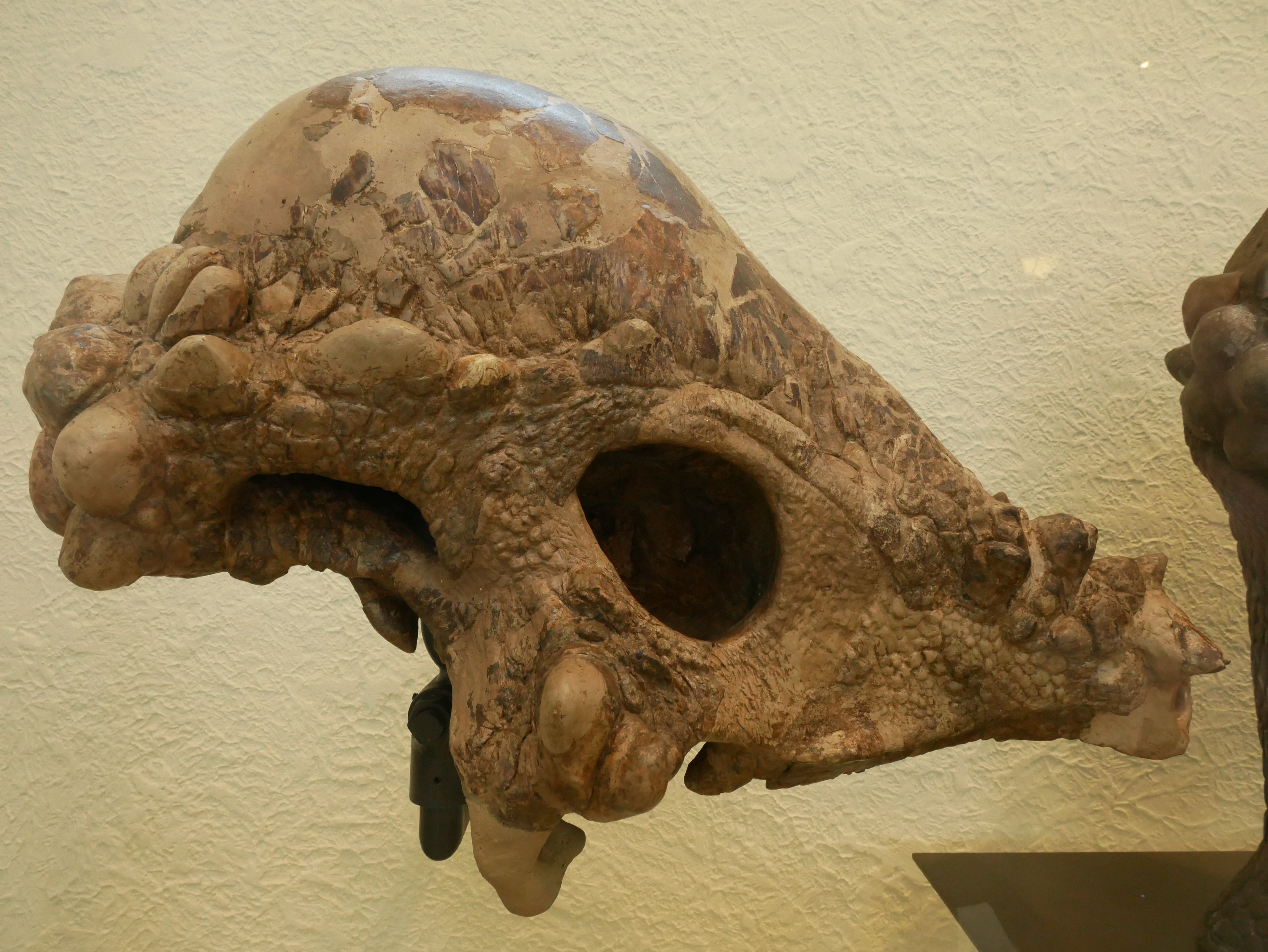
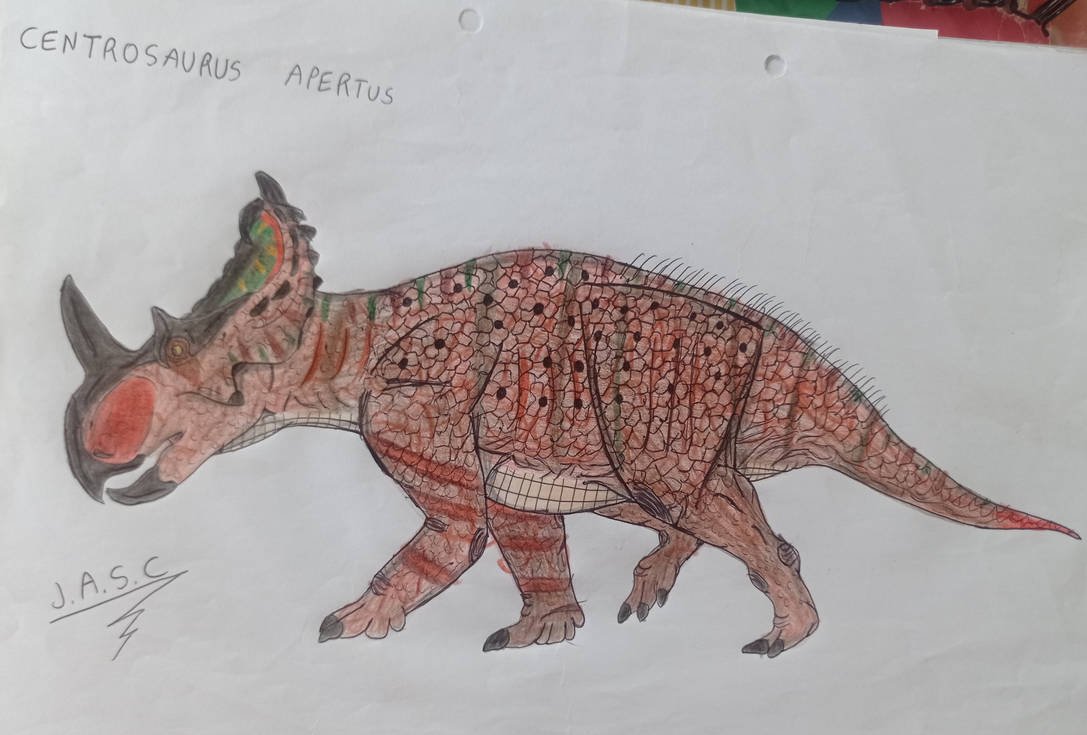
Centrosaurus was a robust, quadrupedal herbivore, measuring approximately 5.5 meters (18 feet) in length and weighing an estimated 2 to 3 metric tons, comparable in size to a modern white rhinoceros. Its most distinguishing feature was its cranial ornamentation. A single, prominent horn projected forward from above its nose, which could be straight or curved in different individuals. Unlike its famous relative Triceratops, it lacked brow horns; instead, small, horn-like bumps were often present over its eyes. The most elaborate feature was its large, bony frill, which was relatively short and rectangular compared to other ceratopsids. The frill was perforated by two large openings, or fenestrae, which gave the species its name 'apertus' (meaning 'open'). A series of small, hook-like hornlets, called epoccipitals, lined the upper edge of the frill. Two of these hornlets were particularly long and hooked downwards over the center of the frill, creating a distinctive silhouette. Its body was stocky and barrel-chested, supported by powerful, pillar-like limbs. The animal possessed a sharp, toothless beak for cropping tough vegetation, with batteries of shearing teeth further back in its jaws for processing plant matter.
As a herbivore, Centrosaurus's diet consisted primarily of the low-growing, tough vegetation prevalent in the Late Cretaceous, such as ferns, cycads, and early flowering plants. Its powerful beak was well-suited for snipping off plant material, which was then sliced and ground by its complex dental batteries. The primary function of its elaborate horns and frill is widely interpreted as being for intraspecific display, species recognition, and combat for mates or social status, rather than primarily for defense against predators. Evidence from massive bonebeds, some containing thousands of individuals, strongly suggests that Centrosaurus was a highly gregarious animal that lived in vast herds. This social structure may have offered some protection from predators and facilitated migration. Locomotion was strictly quadrupedal, with a sturdy frame built for supporting its considerable weight. Growth studies based on bone histology indicate a relatively rapid growth rate, reaching adult size in several years, a common strategy for animals facing high predation pressure in their ecosystem.
Centrosaurus lived in a warm, subtropical coastal plain environment along the western margin of the Western Interior Seaway, a vast inland sea that divided North America. This region, now preserved as the Dinosaur Park Formation in Alberta, Canada, was a lush, swampy landscape crisscrossed by rivers and deltas, similar to the modern-day Louisiana bayou. The climate was humid and seasonal, supporting a rich and diverse flora. Centrosaurus shared this ecosystem with a remarkable array of other dinosaurs. It was a primary herbivore, occupying a niche alongside other ceratopsids like Styracosaurus and hadrosaurs such as Parasaurolophus and Corythosaurus. The primary predator in this environment was the formidable tyrannosaurid Gorgosaurus, a slightly smaller relative of Tyrannosaurus rex. Fossil evidence, including bite marks on Centrosaurus bones, confirms that it was a frequent prey item for these large carnivores. The herding behavior of Centrosaurus was likely a key defensive strategy against such powerful predators, allowing the group to mob or present a formidable wall of horns to an attacker.
Centrosaurus was first described by the prolific paleontologist Lawrence Lambe in 1904. The fossils were discovered in the Red Deer River valley of Alberta, Canada, a region that has since become one of the richest sources of dinosaur fossils in the world. The holotype specimen, NMC 971, consisted of a partial frill and other cranial elements. Lambe initially named the genus based on the hook-like hornlets on the frill, deriving the name from the Greek 'kentron' (point or center) and 'sauros' (lizard). The specific name, 'apertus,' is Latin for 'open,' referring to the large fenestrae in the frill. The most significant discoveries related to Centrosaurus are the colossal bonebeds found within the Dinosaur Park Formation. The most famous of these, Bonebed 43, is a massive, mono-specific assemblage containing the remains of thousands of Centrosaurus individuals of all age groups. These sites are interpreted as the remains of entire herds that perished catastrophically, likely while attempting to cross a flooded river during a storm or seasonal migration, providing a unique snapshot of a dinosaur population structure.
Centrosaurus is a key taxon for understanding the evolution of the Ceratopsidae, specifically the Centrosaurinae subfamily, which is named after it. This group is characterized by prominent nasal horns, reduced or absent brow horns, and highly ornate, often shorter frills. Centrosaurus represents a classic example of this morphology. Its position within the evolutionary tree helps paleontologists trace the diversification of ceratopsids in Late Cretaceous North America, a period of rapid evolution and high species turnover known as 'dinosaur provincialism.' The subtle variations in horn and frill ornamentation among closely related genera like Styracosaurus and Monoclonius illustrate how sexual selection and species recognition likely drove the rapid evolution of these bizarre cranial structures. While ceratopsids have no direct modern descendants, their evolutionary story of diversification, herbivory, and complex social behavior provides a fascinating parallel to the large mammalian megafauna that would evolve millions of years later.
While Centrosaurus apertus is a well-established and well-represented species, the taxonomy of its closest relatives has been a subject of ongoing debate. For many years, the genus Monoclonius was considered a valid taxon, but many of its specimens are now considered to be juvenile or subadult Centrosaurus, or are too fragmentary to be definitively identified. This highlights the challenge of dinosaur taxonomy, where ontogeny (changes during growth) can dramatically alter an animal's appearance. Another area of discussion revolves around the function of the frill. While the display hypothesis is widely accepted, some researchers still argue for a more significant role in defense or thermoregulation. The catastrophic death assemblages have also sparked debate, with the mass-drowning hypothesis being the most supported, though other scenarios like disease or drought have also been proposed. Recent discoveries continue to refine our understanding of centrosaurine diversity and relationships.
The fossil record of Centrosaurus is exceptionally rich, but geographically restricted almost exclusively to the Dinosaur Park Formation of Alberta, Canada. It is one of the most common dinosaurs found in these deposits. The abundance of fossils is largely due to the discovery of at least 15 extensive bonebeds. These sites contain the disarticulated but well-preserved remains of hundreds to thousands of individuals, ranging from juveniles to mature adults. This wealth of material has allowed for detailed studies of its anatomy, variation, growth patterns, and population dynamics that are impossible for most other dinosaur species. The preservation quality is generally excellent, with complete skulls and partial skeletons being relatively common finds even outside of the bonebeds. The Royal Tyrrell Museum of Palaeontology in Drumheller, Alberta, is situated near many of these fossil sites and holds the world's most extensive collection of Centrosaurus fossils.
As one of the most recognizable horned dinosaurs after Triceratops, Centrosaurus has a notable presence in popular culture and public institutions. It is frequently featured in dinosaur books, documentaries, and toy lines, often depicted moving in vast herds as suggested by the fossil evidence. Major museums around the world, including the Royal Tyrrell Museum, the Canadian Museum of Nature, and the American Museum of Natural History, feature impressive skeletal mounts and skull displays of Centrosaurus. These exhibits, particularly those that recreate scenes from the bonebeds, are powerful educational tools that bring the complex social lives of these ancient animals to life for the public.
Classification
Time Period
Discovery
Location
Alberta, Canada
Formation
Dinosaur Park Formation
Frequently Asked Questions
What is Centrosaurus?
Centrosaurus apertus was a medium-sized ceratopsid dinosaur that inhabited the coastal plains of western North America during the Late Cretaceous Period, approximately 76 to 75 million years ago. As a member of the Centrosaurinae subfamily, it is renowned for its elaborate frill ornamentation and th...
When did Centrosaurus live?
Centrosaurus lived during the cretaceous period of the mesozoic era approximately 76-75 million years ago.
Where was Centrosaurus discovered?
Fossils of Centrosaurus were discovered in Alberta, Canada in the Dinosaur Park Formation.
What did Centrosaurus eat?
Centrosaurus was a herbivore. It lived in terrestrial habitats.
What type of fossil is Centrosaurus?
Centrosaurus is preserved as a body fossil. The preservation quality is excellent.
Related Specimens
From the mesozoic era · body fossils