Syndyoceras
Syndyoceras cooki
Image: Image sourced via web search (Fair use / Educational)
About Syndyoceras
Syndyoceras cooki was a remarkable, superficially deer-like artiodactyl mammal that roamed the plains and open woodlands of North America during the early Miocene epoch, approximately 23 to 15 million years ago. Belonging to the entirely extinct family Protoceratidae, this creature is most famous for its bizarre, multi-horned skull, which featured two distinct pairs of prominent bony appendages that give it an almost mythical appearance. Its discovery in the fossil-rich beds of the American West has provided paleontologists with crucial insights into the explosive evolutionary radiation of hoofed mammals during the Neogene period, highlighting a time of intense morphological experimentation in North American terrestrial ecosystems. The presence of Syndyoceras in the fossil record serves as a spectacular example of the diverse and often highly specialized anatomical adaptations that arose among endemic North American ungulates before major climatic shifts and faunal interchanges altered the continent's biodiversity forever. As a representative of a lineage that left no modern descendants, Syndyoceras offers a unique window into an alternative evolutionary pathway for horned mammals, distinct from the familiar deer, antelopes, and bovids of the modern world.
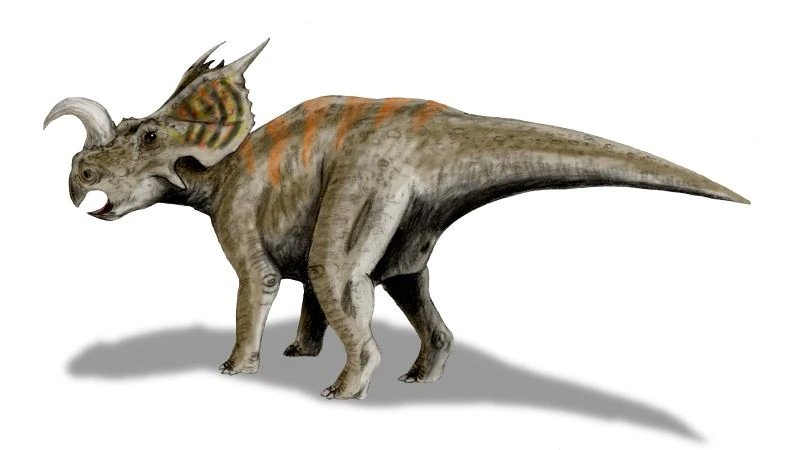
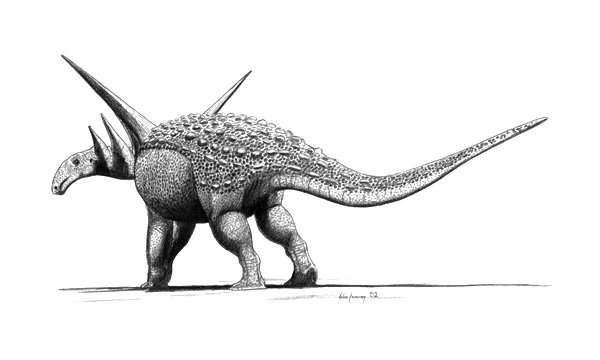
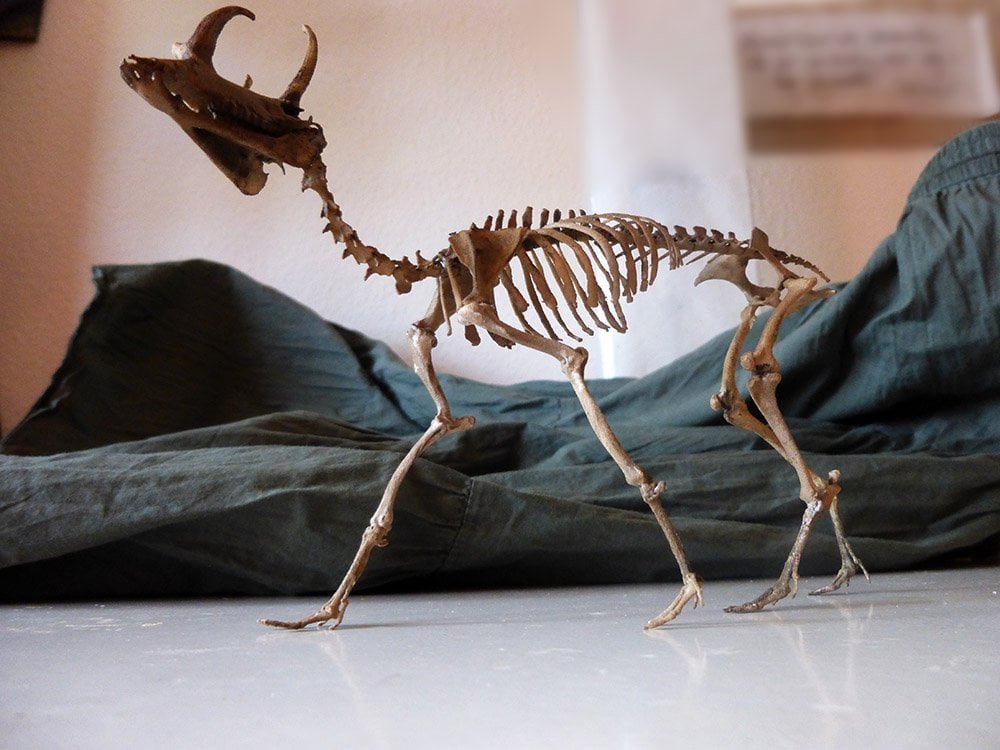
In terms of physical description, Syndyoceras was roughly the size of a modern male mule deer, standing about 1 meter tall at the shoulder and measuring approximately 150 to 160 centimeters in body length. Weight estimates place the animal between 50 and 70 kilograms, making it a medium-sized herbivore for its time. The most distinctive and visually striking feature of Syndyoceras was undoubtedly its complex cranial ornamentation. Unlike modern deer, which possess antlers made of bone that are shed annually, or bovids, which have permanent horns with a keratinous sheath, the cranial appendages of Syndyoceras were permanent bony outgrowths of the skull. It possessed two pairs of these horn-like structures. The first pair was located on the snout, just behind the nasal opening; these rostral horns grew upward and curved outward in a V-shape. The second pair was situated at the back of the head, above the eyes, and curved inward toward each other, sometimes nearly meeting at the tips. In addition to these spectacular headgear, Syndyoceras retained enlarged, tusk-like upper canine teeth, a primitive trait shared with some modern deer like the musk deer and water deer. The postcranial skeleton of Syndyoceras reveals that it was a relatively cursorial animal, built for sustained running. Its limbs were elongated, and the feet ended in two functional, hooved toes, similar to modern artiodactyls, though the lateral toes were greatly reduced. The combination of tusks, four horns, and a deer-like body makes Syndyoceras one of the most anatomically unusual mammals of the Cenozoic era. Soft tissue inferences suggest that the bony horns were likely covered in skin or a thin layer of keratin, similar to the ossicones of modern giraffes, rather than the thick keratinous sheaths of true horns.
Turning to paleobiology, Syndyoceras was a dedicated herbivore, specifically adapted to a browsing diet. Its dentition, characterized by low-crowned (brachydont) cheek teeth, indicates that it fed primarily on the soft leaves, shoots, and twigs of shrubs and lower-canopy trees, rather than the tough, abrasive grasses that were beginning to spread across North America during the Miocene. The presence of the elaborate cranial appendages and tusk-like canines strongly suggests complex social behaviors, likely driven by sexual selection. It is highly probable that these structures were sexually dimorphic, being larger and more pronounced in males, though the fossil record of the genus is not extensive enough to confirm this with absolute certainty across a large population. Males likely used their horns and tusks in intraspecific combat or display to establish dominance and secure mating rights. The rostral horns, in particular, may have been used for broadside displays or interlocking during pushing matches, while the tusks could have inflicted significant wounds during more intense conflicts. Locomotion in Syndyoceras was highly efficient; its elongated distal limb bones and digitigrade stance allowed for rapid movement to escape predators. The metabolic demands of growing and maintaining such elaborate cranial structures, combined with an active, cursorial lifestyle, suggest a relatively high metabolic rate typical of modern active ungulates. Growth patterns inferred from related protoceratids indicate that the horns developed gradually as the animal reached sexual maturity, serving as a visual indicator of age and fitness to potential mates and rivals.
In its ecological context, Syndyoceras lived during a period of significant environmental transition in North America. The early Miocene was characterized by a gradual cooling and drying trend, which led to the slow retreat of dense, continuous forests and the expansion of open woodlands, savannas, and early grassland ecosystems. Syndyoceras occupied the transitional zones, likely favoring riparian environments and wooded savannas where its preferred browse was abundant. It shared its habitat with a diverse array of co-existing species, forming a complex and dynamic food web. Herbivorous contemporaries included early horses like Miohippus and Parahippus, rhinoceroses such as Diceratherium, camelids, and massive herds of oreodonts, which were among the most common mammals of the time. As a medium-sized browser, Syndyoceras would have partitioned resources with these other herbivores, feeding at specific heights in the vegetation canopy to avoid direct competition. In terms of predator-prey relationships, Syndyoceras was a prime target for the formidable carnivores of the Miocene. It had to remain vigilant against attacks from nimravids (false saber-toothed cats), early canids, and the massive, bear-like amphicyonids (bear-dogs). Its primary defense mechanism was undoubtedly its speed and agility, relying on its keen senses of hearing and smell to detect predators before they could launch an ambush. The complex horns, while primarily for intraspecific use, might have offered some limited defense against smaller predators, but flight was almost certainly the preferred strategy.
The discovery history of Syndyoceras is deeply intertwined with the golden age of American paleontology in the early 20th century. The genus was first discovered and described by the prominent paleontologist Erwin Hinckley Barbour in 1905. The type specimen was unearthed in the fossil-rich deposits of northwestern Nebraska, an area that has yielded some of the most spectacular Cenozoic mammal fossils in the world. The specific epithet, cooki, was chosen by Barbour to honor Harold J. Cook, a fellow paleontologist and the son of James H. Cook, the rancher on whose land the famous Agate Fossil Beds were located. The initial discovery consisted of a remarkably well-preserved skull, which immediately captivated the scientific community due to its unprecedented four-horned morphology. Prior to this discovery, paleontologists had no idea that such bizarre cranial configurations existed among North American artiodactyls. Subsequent expeditions to the Harrison Formation and surrounding geological units in Nebraska and Wyoming yielded additional material, including postcranial elements that allowed for a complete reconstruction of the animal. The discovery of Syndyoceras played a pivotal role in establishing the University of Nebraska State Museum as a premier institution for vertebrate paleontology. The holotype skull remains one of the most prized specimens in the museum's collection, serving as a testament to the rich paleontological heritage of the Great Plains region.
In terms of evolutionary significance, Syndyoceras occupies a fascinating position in the mammalian tree of life. It belongs to the family Protoceratidae, a group of endemic North American artiodactyls that thrived from the Eocene to the Pliocene epochs. For many years, the exact phylogenetic placement of protoceratids was a subject of considerable debate. Because of their deer-like bodies and elaborate headgear, they were often mistakenly thought to be closely related to the Cervidae (true deer) or the Bovidae. However, detailed morphological analyses, particularly of the inner ear and the structure of the limbs, have conclusively demonstrated that protoceratids are actually members of the suborder Tylopoda, making them distant cousins of modern camels and llamas. Syndyoceras represents a highly derived, specialized branch within this lineage. It illustrates a remarkable example of convergent evolution, having independently evolved a body plan and ecological niche similar to that of modern deer and antelopes, despite being more closely related to camels. The evolutionary trajectory of the Protoceratidae is characterized by a progressive increase in the size and complexity of cranial appendages, culminating in later, even more bizarre forms like Synthetoceras, which possessed a massive, Y-shaped horn on its snout. Syndyoceras serves as a crucial transitional form in this sequence, showing the intermediate stages of this extreme morphological specialization. The eventual extinction of the protoceratids, including the descendants of Syndyoceras, is generally attributed to the continued expansion of open grasslands and the arrival of more advanced, highly competitive ruminants from Eurasia, which outcompeted the endemic North American browsers.
Scientific debates surrounding Syndyoceras have historically focused on the precise function of its cranial appendages and its exact relationships within the Artiodactyla. While the consensus today strongly supports the use of the horns in sexual display and intraspecific combat, early paleontologists debated whether they might have served a more practical purpose, such as defense against predators or even foraging. The fragile nature of the rostral horns in some specimens led some researchers to argue they were purely for visual display, while others pointed to the robust bases as evidence for physical combat. Additionally, the exact soft-tissue covering of the horns remains a topic of minor debate. While most agree they were skin-covered like giraffe ossicones, the extent of keratinization at the tips is unknown and cannot be definitively proven without exceptional soft-tissue preservation, which is currently lacking. Taxonomically, while the placement of Protoceratidae within Tylopoda is now widely accepted, the internal relationships of the family, and exactly which earlier protoceratids gave rise to the highly derived Syndyoceras, are still refined as new, fragmentary fossils are discovered and analyzed using modern cladistic methods.
The fossil record of Syndyoceras is relatively sparse compared to some of its contemporaries, making it a rare and highly prized find for paleontologists. Fossils are almost exclusively restricted to the Great Plains region of the United States, with the vast majority of specimens originating from the Harrison Formation in western Nebraska and eastern Wyoming. The preservation quality of known specimens is generally good, particularly the skulls, which are robust enough to survive the fossilization process intact. However, complete, articulated skeletons are exceedingly rare. Typically, paleontologists find isolated teeth, jaw fragments, and occasionally the robust limb bones. The skulls, when found, are often the key diagnostic elements used to identify the genus. The Agate Fossil Beds area remains the most famous and productive site for Syndyoceras material, providing a snapshot of the ancient Miocene environment where these animals lived and died. The rarity of Syndyoceras in the fossil record compared to the hyper-abundant oreodonts suggests that it was either a solitary animal, lived in small, dispersed groups, or occupied specific microhabitats that were less conducive to fossilization.
Culturally, Syndyoceras has made a significant impact as a quintessential example of prehistoric mammalian weirdness. Its bizarre, four-horned appearance makes it a favorite subject for paleoartists, and it frequently appears in encyclopedias, children's books, and documentaries about prehistoric life as a representation of the alien nature of ancient ecosystems. Notable museum displays, particularly at the University of Nebraska State Museum (Morrill Hall) and the Agate Fossil Beds National Monument visitor center, highlight Syndyoceras to educate the public about the dynamic history of North American wildlife. The public fascination with Syndyoceras stems from its chimera-like appearance—a creature that looks like a deer but possesses the horns of a mythical beast and the evolutionary lineage of a camel. This unique combination of traits makes it an excellent educational tool for explaining concepts like convergent evolution, sexual selection, and the ever-changing nature of life on Earth.
Classification
Time Period
Discovery
Location
United States
Formation
Harrison Formation
Frequently Asked Questions
What is Syndyoceras?
Syndyoceras cooki was a remarkable, superficially deer-like artiodactyl mammal that roamed the plains and open woodlands of North America during the early Miocene epoch, approximately 23 to 15 million years ago. Belonging to the entirely extinct family Protoceratidae, this creature is most famous fo...
When did Syndyoceras live?
Syndyoceras lived during the neogene period of the cenozoic era approximately 23-15 million years ago.
Where was Syndyoceras discovered?
Fossils of Syndyoceras were discovered in United States in the Harrison Formation.
What did Syndyoceras eat?
Syndyoceras was a herbivore. It lived in terrestrial habitats.
What type of fossil is Syndyoceras?
Syndyoceras is preserved as a body fossil. The preservation quality is good.
Related Specimens
From the cenozoic era · body fossils