Triceratops
Triceratops horridus
About Triceratops
Triceratops horridus stands as one of the most recognizable and iconic dinosaurs to have ever roamed the Earth, a colossal herbivore that witnessed the final moments of the Mesozoic Era. Living during the very end of the Late Cretaceous period, approximately 68 to 66 million years ago, it was among the last non-avian dinosaurs to exist before the cataclysmic Cretaceous-Paleogene extinction event. Its name, derived from Greek, literally translates to 'three-horned face,' a fitting moniker for an animal whose massive skull was its most defining and formidable feature, making it a true giant of its time in the floodplains and forests of ancient North America.
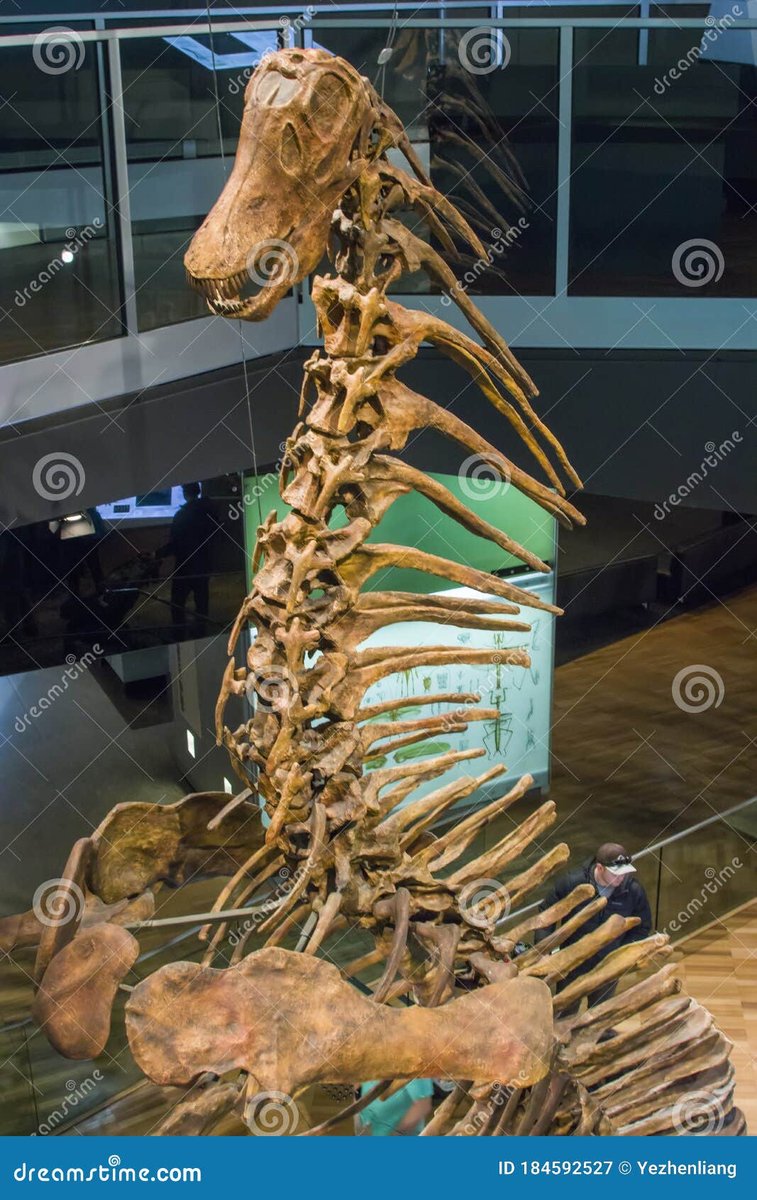
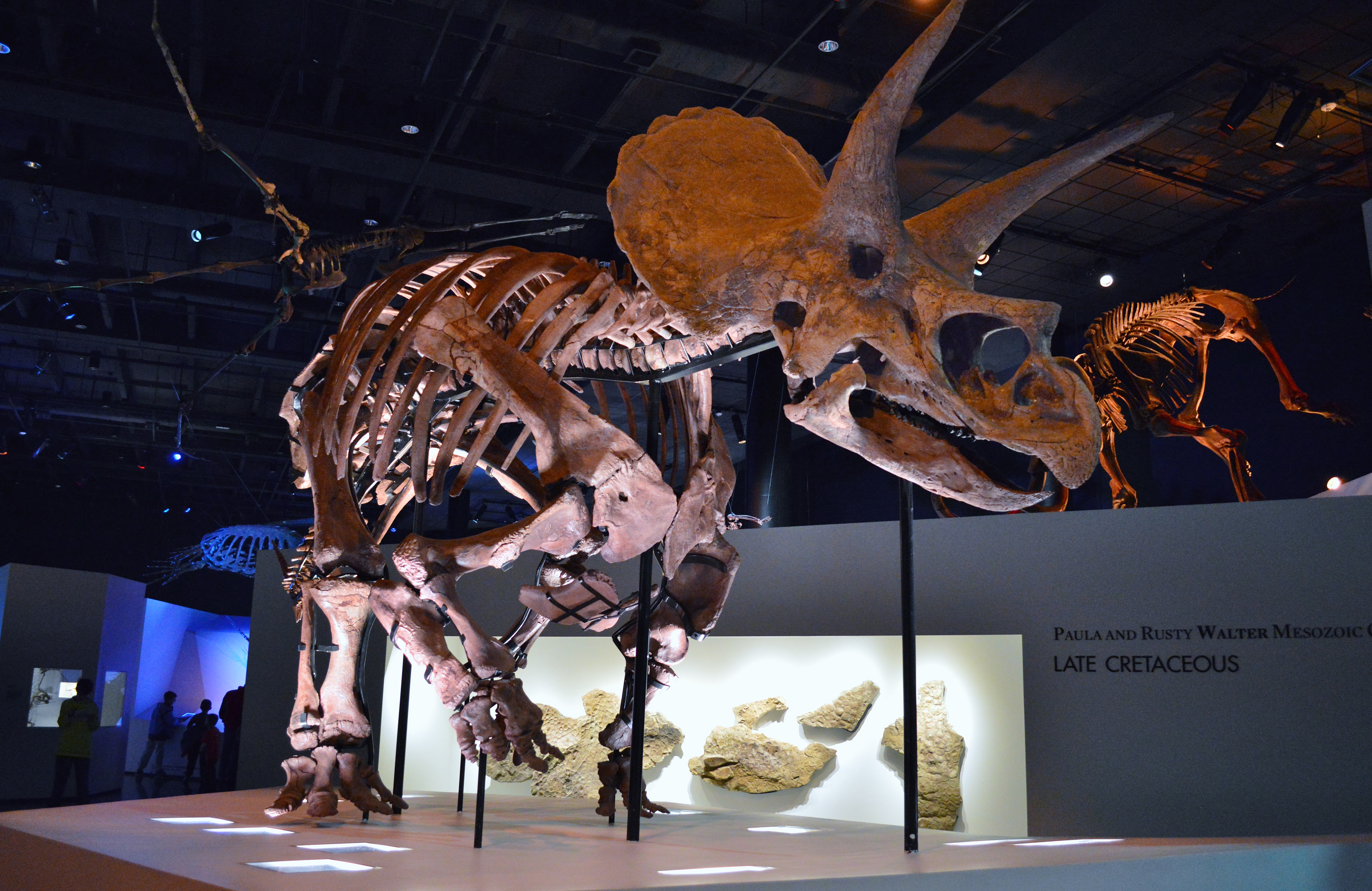
The physical anatomy of Triceratops horridus was a masterclass in defensive evolution and herbivorous adaptation. A mature adult could reach lengths of 8 to 9 meters (approximately 26 to 30 feet) and stand about 3 meters (10 feet) tall at the hips, with an estimated body mass ranging from 6 to 12 metric tons, making it comparable in weight to a large African elephant. Its body was immense and barrel-shaped, supported by four powerful, pillar-like limbs. The hind limbs were longer and more robust than the forelimbs, which splayed slightly outwards in a semi-sprawling posture, giving it a low center of gravity and immense stability. This robust build was necessary to support its most remarkable feature: its skull. The skull of Triceratops was one of the largest of any land animal, measuring up to 2.5 meters (over 8 feet) in length. It was adorned with two prominent brow horns, which could exceed a meter in length, and a smaller, conical horn on its snout. Extending from the back of the skull was a massive, solid sheet of bone known as a frill. Unlike many of its ceratopsian relatives, whose frills had large openings (fenestrae) to reduce weight, the frill of Triceratops was a solid, thick shield of bone, bordered by a series of small, triangular bones called epoccipitals. Its mouth terminated in a sharp, toothless beak, ideal for cropping tough vegetation, behind which lay batteries of shearing teeth arranged in vertical columns.
The paleobiology of Triceratops reveals a highly successful, large-bodied herbivore adapted to processing vast quantities of tough, fibrous plant matter. Its powerful beak would have been used to grasp and snip vegetation like cycads, palms, and ferns, which were then sliced into smaller, more digestible pieces by its dental batteries. As teeth wore down, new ones would erupt from below to replace them, ensuring a continuous sharp cutting surface throughout its life. While its massive build suggests a slow-moving animal, studies of its limb structure indicate it was capable of moving at a considerable pace, perhaps reaching speeds of up to 32 kilometers per hour (20 miles per hour) in short bursts, likely when charging a predator or a rival. The function of its famous cranial ornamentation has been a subject of extensive study. While undoubtedly a formidable defense against predators like Tyrannosaurus rex, evidence of healed puncture wounds on the frills and skulls of Triceratops specimens strongly suggests they were also used in intraspecific combat. These contests, likely involving horn-locking and shoving matches, would have been crucial for establishing dominance, defending territory, and securing mating rights. Furthermore, the frill, which was richly supplied with blood vessels, may have served as a vibrant display structure, changing color to communicate with other members of its species. The ontogeny, or growth, of Triceratops is well-documented, showing that juveniles had small, upward-curving horns that straightened and then curved forward as they reached adulthood, indicating these features were also linked to sexual maturity and social signaling.
Triceratops inhabited the lush, subtropical coastal plains and forested floodplains of western North America during the late Maastrichtian age of the Cretaceous. This environment, part of a landmass known as Laramidia, was characterized by a warm, humid climate with distinct wet and dry seasons. The landscape was dominated by flowering plants, conifers, ferns, and cycads, providing an abundant food source for large herbivores. Triceratops was a keystone species in this ecosystem, sharing its habitat with a diverse array of other dinosaurs. It was a contemporary of other large herbivores such as the duck-billed hadrosaur Edmontosaurus, the armored Ankylosaurus, and the dome-headed Pachycephalosaurus. In its position as a primary consumer, Triceratops played a crucial role in the food web, converting vast amounts of plant biomass into a food source for the apex predator of its time, Tyrannosaurus rex. Fossil evidence, including T. rex tooth marks found on Triceratops bones, confirms a direct predator-prey relationship. The abundance of Triceratops fossils suggests it was one of the most common large animals in its environment, likely forming small groups or herds that roamed the landscape, profoundly shaping the vegetation structure through their intensive grazing.
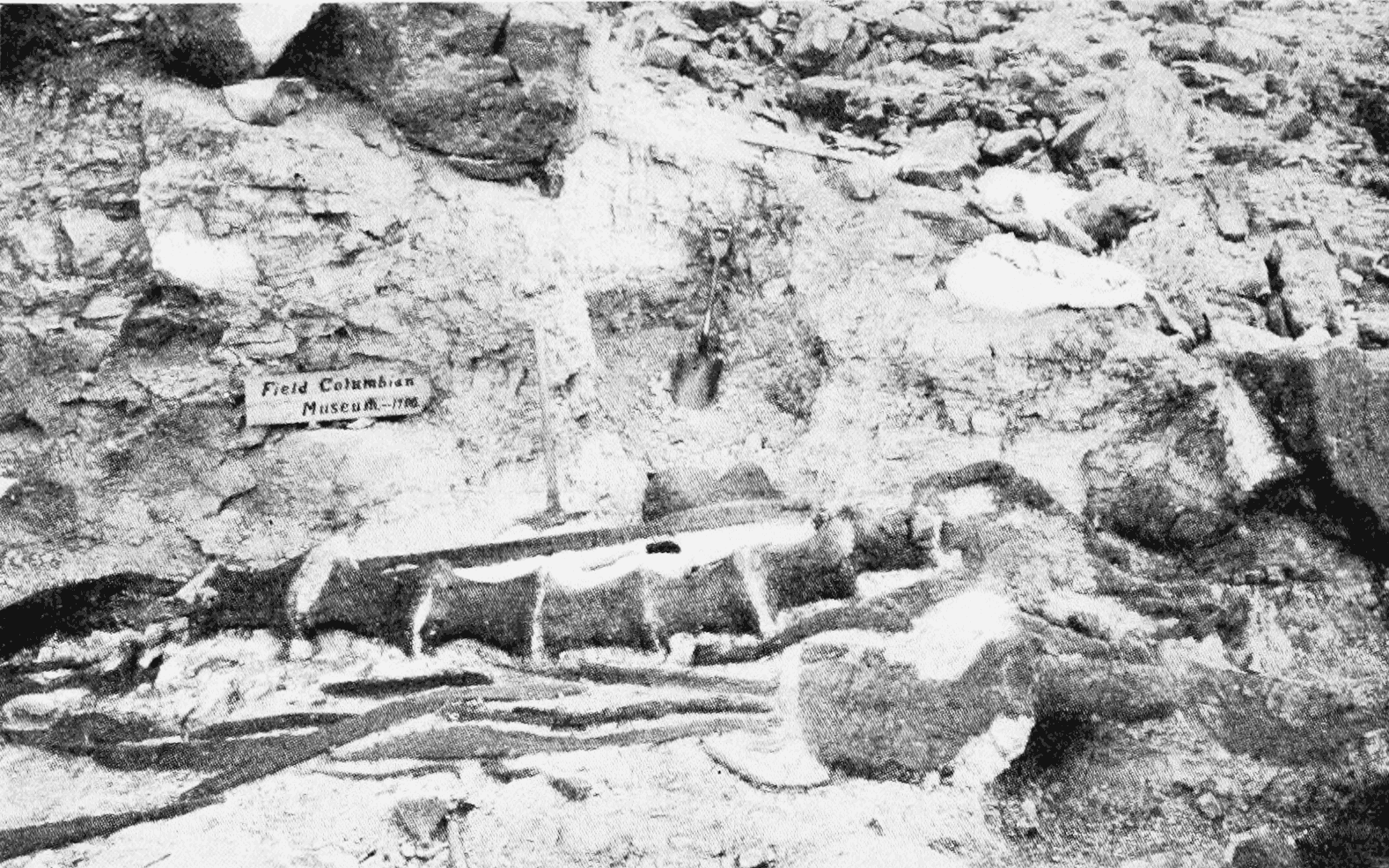
The discovery of Triceratops dates back to the late 19th century, a period of intense paleontological exploration in the American West known as the "Bone Wars." The first officially recognized remains were a pair of large brow horns attached to a skull roof, found near Denver, Colorado, in 1887. These were initially sent to the renowned paleontologist Othniel Charles Marsh, who, believing them to be from an unusually large Pliocene bison, named the creature Bison alticornis. It was only after the discovery of a more complete skull in 1888 by John Bell Hatcher in Wyoming's Lance Formation that Marsh realized his error. Recognizing the three-horned nature of the new specimen, he coined the name Triceratops in 1889. Hatcher, working under Marsh's direction, went on to excavate dozens of Triceratops skulls and partial skeletons, providing the foundational material for our understanding of the genus. Over the years, a plethora of specimens have been unearthed, primarily from the Hell Creek Formation of Montana, Wyoming, and the Dakotas, as well as the Lance Formation of Wyoming and the Scollard Formation in Alberta, Canada. One of the most famous and complete specimens is "Lane," a Triceratops housed at the Houston Museum of Natural Science, which includes skin impressions, revealing its hide was covered in large, non-overlapping scales.
Within the grand evolutionary tapestry of life, Triceratops represents the pinnacle of ceratopsian evolution. It belongs to the family Ceratopsidae, specifically the Chasmosaurinae subfamily, which is characterized by long, elaborate frills and prominent brow horns. The evolutionary lineage of these horned dinosaurs can be traced back to small, bipedal ancestors like Psittacosaurus from the Early Cretaceous of Asia. Over millions of years, these animals migrated to North America, grew in size, adopted a quadrupedal stance, and developed their characteristic horns and frills. Triceratops is one of the last and largest known members of this lineage, showcasing the culmination of these evolutionary trends. Its solid, unfenestrated frill is a derived trait, setting it apart from many other chasmosaurs like Chasmosaurus or Pentaceratops, which had large openings in their frills. This feature may have evolved as a specific adaptation for increased defensive strength or for enhanced visual display in its particular ecological niche. As a member of the Ornithischia, or "bird-hipped" dinosaurs, Triceratops is only very distantly related to modern birds, which are the direct descendants of the "lizard-hipped" Saurischian dinosaurs, specifically theropods. Its closest living relatives, though separated by over 66 million years of evolution, would be other reptiles like crocodiles and turtles, all belonging to the broader group Archosauria.
Despite its fame, Triceratops has been at the center of several significant scientific debates. One of the most prominent controversies revolved around its relationship with another, smaller ceratopsian named Torosaurus. In 2010, paleontologists John Scannella and Jack Horner proposed that Torosaurus, known for its longer frill with large fenestrae, was not a separate genus but rather the fully mature, old-adult form of Triceratops. This "ontogenetic morph" hypothesis suggested that as a Triceratops aged, its solid frill would thin and develop the characteristic holes of Torosaurus. This theory was based on bone histology and the apparent lack of truly juvenile Torosaurus specimens. However, subsequent research by other paleontologists has challenged this view, pointing to anatomical differences and the discovery of immature Torosaurus specimens, suggesting they are indeed distinct, albeit closely related, genera. Another ongoing discussion concerns the posture of Triceratops. While traditionally depicted with sprawling, lizard-like forelimbs, more recent biomechanical studies suggest a more upright, columnar posture, at least for the hindlimbs, with the forelimbs held in an intermediate, semi-erect stance. The exact nature of its social behavior, whether it lived in large herds or was mostly solitary, also remains a topic of active research and debate.
The fossil record of Triceratops is exceptionally robust, making it one of the best-understood of all dinosaurs. Hundreds of specimens, ranging from isolated bones to complete skulls and partial skeletons, have been recovered from the Hell Creek, Lance, and Scollard formations of western North America. This geographic distribution corresponds to the ancient coastal plain of Laramidia. The sheer number of fossils indicates that Triceratops was an incredibly abundant animal in its ecosystem, possibly constituting a significant portion of the large herbivore biomass. The quality of preservation is often excellent, particularly for the massive and durable skulls, which are the most commonly found elements. Famous fossil sites in Montana and South Dakota have yielded bonebeds containing the remains of multiple individuals, providing invaluable data on population structure and taphonomy. The wealth of material has allowed for detailed studies of its growth series, from small juveniles with tiny hornlets to massive, battle-scarred adults, offering a rare and detailed window into the life history of a non-avian dinosaur.
Few dinosaurs have captured the public imagination as profoundly as Triceratops. Its unique and powerful appearance, a blend of the familiar rhinoceros and a fantastical dragon, has made it a perennial favorite in popular culture for over a century. Skeletons and life-sized models of Triceratops are centerpiece exhibits in natural history museums around the world, from the Smithsonian National Museum of Natural History in Washington, D.C., to the Natural History Museum in London. It is a staple in children's books, documentaries, and films, often depicted in epic confrontations with its contemporary, Tyrannosaurus rex. This cultural ubiquity serves a vital educational purpose, acting as a gateway for many into the broader sciences of paleontology and evolutionary biology, inspiring wonder and curiosity about Earth's deep past.
Classification
Time Period
Discovery
Location
North America (USA and Canada)
Formation
Hell Creek Formation
Frequently Asked Questions
What is Triceratops?
Triceratops horridus stands as one of the most recognizable and iconic dinosaurs to have ever roamed the Earth, a colossal herbivore that witnessed the final moments of the Mesozoic Era. Living during the very end of the Late Cretaceous period, approximately 68 to 66 million years ago, it was among ...
When did Triceratops live?
Triceratops lived during the cretaceous period of the mesozoic era approximately 68-66 million years ago.
Where was Triceratops discovered?
Fossils of Triceratops were discovered in North America (USA and Canada) in the Hell Creek Formation.
What did Triceratops eat?
Triceratops was a herbivore. It lived in floodplains, forests, and coastal plains habitats.
What type of fossil is Triceratops?
Triceratops is preserved as a permineralized fossil. The preservation quality is excellent.
Related Specimens
From the mesozoic era · permineralized fossils