Scaphites
Scaphites nodosus
Image: Image sourced via web search (Fair use / Educational)
About Scaphites
Scaphites nodosus is a highly distinctive and scientifically invaluable species of heteromorph ammonite that thrived during the Late Cretaceous period, approximately 84 to 66 million years ago. Inhabiting the warm, shallow waters of the Western Interior Seaway that once bisected the North American continent, this marine invertebrate represents a fascinating chapter in cephalopod evolution. As an index fossil, Scaphites nodosus holds immense significance in the field of paleontology, allowing geologists and paleontologists to precisely date and correlate sedimentary rock layers across vast geographic distances. Its unique, partially uncoiled shell and widespread abundance make it a cornerstone species for understanding Late Mesozoic marine ecosystems and the evolutionary dynamics of ammonoids prior to their ultimate extinction at the Cretaceous-Paleogene boundary. The sheer volume of Scaphites nodosus fossils recovered from North American deposits has provided researchers with an unprecedented window into the life cycles, ecological roles, and evolutionary adaptations of these ancient mollusks, cementing their status as one of the most important invertebrate taxa of the Mesozoic era.
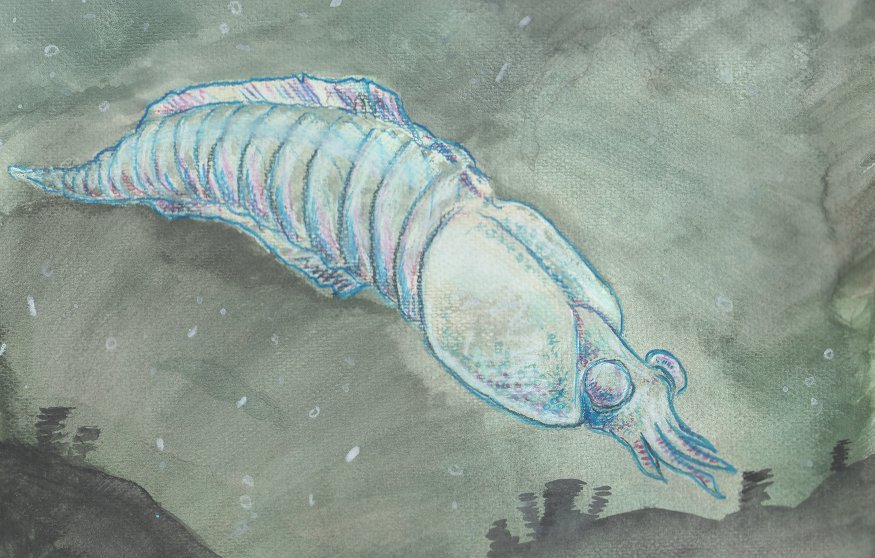
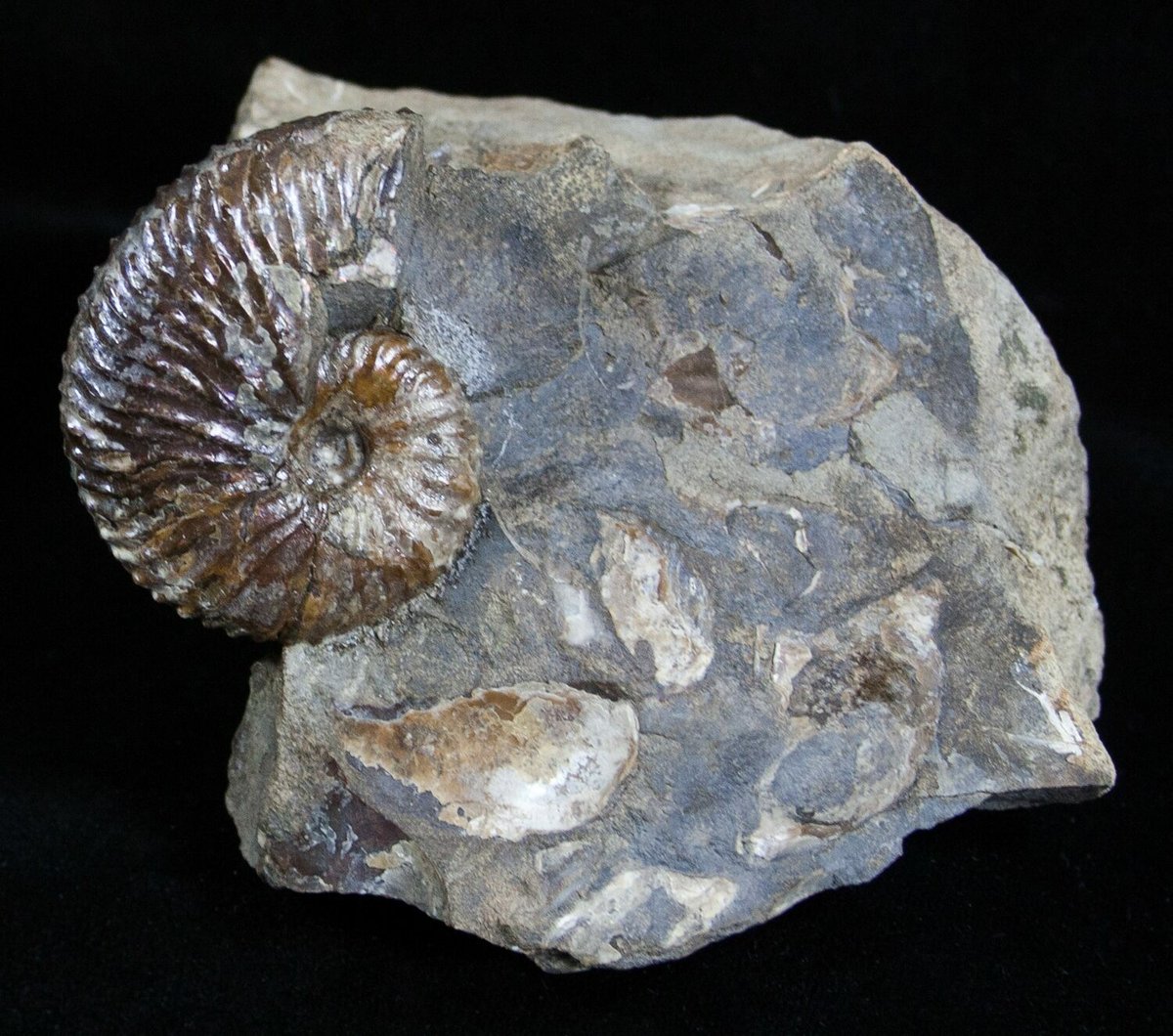
The physical anatomy of Scaphites nodosus is characterized by its remarkable heteromorph shell, which deviates significantly from the tightly coiled, planispiral shapes typical of more traditional ammonites. The shell of Scaphites nodosus begins with a tightly coiled juvenile portion, known as the phragmocone, which then uncoils into a straight or slightly curved shaft before hooking back toward the initial coil in a distinct J-shape or U-shape, forming the adult body chamber. This species is particularly noted for the prominent, rounded bumps or 'nodes' that line the flanks and venter of its shell, giving it the specific epithet 'nodosus.' These nodes, along with a series of intricate ribs, likely served to strengthen the shell against the crushing jaws of marine predators while also potentially aiding in buoyancy control or hydrodynamic stability. In terms of size, Scaphites nodosus was a relatively modest creature, with adult shells typically measuring between 5 and 15 centimeters in length, though some exceptional specimens may have grown slightly larger. The living animal inside the shell would have resembled a modern squid or octopus, possessing a well-developed head with large, complex eyes, a sharp, parrot-like beak for processing prey, and a ring of prehensile tentacles used for capturing food and manipulating objects. The internal structure of the shell was divided into a series of chambers separated by complex, highly folded walls called septa. A specialized tube of tissue known as the siphuncle ran through these chambers, allowing the animal to regulate its buoyancy by pumping gas and fluid in and out of the empty spaces, much like a modern chambered nautilus. Furthermore, Scaphites nodosus exhibited pronounced sexual dimorphism, a feature common among ammonites. The shells of the females, known as macroconchs, were generally larger and more robust to accommodate the production and storage of eggs, while the males, or microconchs, were significantly smaller and often possessed distinct modifications near the shell aperture, known as lappets, which may have played a role in mating displays or copulation.
The paleobiology of Scaphites nodosus presents a fascinating study in adaptation and survival within the dynamic marine environments of the Late Cretaceous. Unlike their streamlined, fast-swimming relatives, the unusual shape of the Scaphites shell suggests that they were not built for sustained, high-speed pursuit. Instead, biomechanical modeling and hydrodynamic analyses indicate that Scaphites nodosus was likely a slow-moving, vertically migrating organism that spent much of its time bobbing in the water column. Its center of buoyancy and center of mass were positioned in such a way that the animal would have naturally floated with its shell aperture facing upward or slightly angled, making horizontal swimming a cumbersome and energy-intensive endeavor. Consequently, paleontologists hypothesize that Scaphites nodosus employed a passive hunting strategy, drifting along with ocean currents and utilizing its tentacles to snatch small prey that drifted within reach. Its diet likely consisted of zooplankton, small crustaceans, larval fish, and possibly other diminutive cephalopods. The sharp, chitinous beak and specialized radula (a tongue-like organ covered in tiny teeth) would have been highly effective at crushing the exoskeletons of small arthropods and processing soft-bodied prey. Growth patterns in Scaphites nodosus, as recorded by the accretionary growth lines on their shells, suggest a relatively rapid maturation process, likely reaching adulthood within a few years. This fast growth rate, combined with their presumed high reproductive output, would have been essential for maintaining population numbers in an ocean teeming with formidable predators. The metabolism of these creatures was likely moderate, adapted to the warm, oxygen-rich waters of the shallow epicontinental seas they inhabited, allowing them to thrive in massive, swarming populations that dominated the mid-level water column.
The ecological context in which Scaphites nodosus existed was one of the most vibrant and dangerous marine environments in Earth's history. During the Campanian and Maastrichtian stages of the Late Cretaceous, much of North America was submerged beneath the Western Interior Seaway, a massive, shallow body of water that stretched from the Arctic Ocean to the Gulf of Mexico. This seaway was characterized by warm, subtropical temperatures, relatively shallow depths, and a highly productive marine ecosystem supported by nutrient upwelling. Scaphites nodosus shared this bustling habitat with a staggering array of marine life. The seafloor was carpeted with massive, plate-like bivalves known as Inoceramus, which sometimes grew to over a meter across, while the water column was filled with schools of bony fish, sharks, and other cephalopods, including the straight-shelled Baculites and various species of squid. However, the Western Interior Seaway was also home to some of the most fearsome apex predators of the Mesozoic era. Massive marine reptiles, such as the serpentine mosasaurs (including species like Tylosaurus and Prognathodon) and the long-necked plesiosaurs, patrolled the waters, alongside fast-swimming lamniform sharks and giant, predatory fish like Xiphactinus. In this complex food web, Scaphites nodosus occupied a crucial middle tier. As abundant, mid-sized consumers of plankton and small nekton, they served as a vital food source for a wide variety of larger predators. Fossil evidence, including Scaphites shells bearing the unmistakable puncture marks of mosasaur teeth and the crushing damage inflicted by specialized shell-crushing (durophagous) fish and sharks, vividly illustrates the intense predation pressure these ammonites faced. Their heavily ribbed and nodose shells were an evolutionary response to this pressure, providing a measure of defense against being easily crushed, while their sheer numbers ensured the survival of the species despite heavy losses to predation.
The discovery history of Scaphites nodosus is deeply intertwined with the early geological exploration of the American West during the 19th century. As the United States expanded westward, government-sponsored expeditions were dispatched to map the vast, uncharted territories and assess their natural resources. It was during these pioneering surveys that the first significant fossils of Scaphites nodosus were brought to the attention of the scientific community. The species was formally described and named by the eminent American geologist and paleontologist David Dale Owen in 1852, based on specimens collected from the dark, fossil-rich shales of the Dakota Territory. The generic name 'Scaphites' is derived from the Greek word 'skaphē,' meaning 'boat' or 'skiff,' a nod to the shell's resemblance to a small, curved vessel. The specific epithet 'nodosus' directly refers to the conspicuous nodes that adorn the shell. In the decades following Owen's initial description, legendary paleontologists such as Fielding Bradford Meek and Ferdinand Vandeveer Hayden conducted extensive surveys of the Western Interior, recovering thousands of Scaphites specimens from the sprawling exposures of the Pierre Shale and the Bearpaw Formation. These early discoveries were instrumental in establishing the biostratigraphic framework for the North American Cretaceous, as researchers quickly realized that different species of Scaphites were restricted to specific, narrow bands of geological time. Over the ensuing century and a half, countless specimens of Scaphites nodosus have been unearthed by professional paleontologists, commercial collectors, and amateur rockhounds alike. Some of the most spectacular and scientifically significant specimens reside in the collections of major institutions such as the American Museum of Natural History in New York and the Smithsonian Institution's National Museum of Natural History in Washington, D.C., where they continue to be studied by modern researchers utilizing advanced imaging techniques and geochemical analyses.
The evolutionary significance of Scaphites nodosus lies in its representation of the remarkable adaptability and morphological plasticity of the ammonoids. For hundreds of millions of years, the dominant shell form among ammonites was the tightly coiled, planispiral shape, which offered excellent hydrodynamic efficiency for active swimming. However, during the Jurassic and Cretaceous periods, various lineages of ammonites began to experiment with uncoiled, asymmetrical, and bizarrely twisted shell forms, collectively known as heteromorphs. Scaphites nodosus belongs to the family Scaphitidae, a highly successful group of heteromorphs that radiated explosively during the Late Cretaceous. The evolution of the scaphitid shell shape represents a major ecological shift, marking a transition from active, nektonic (swimming) predators to more passive, planktonic or demersal (near-bottom) drifters. This morphological innovation allowed Scaphites and their relatives to exploit new ecological niches that were perhaps unavailable to their tightly coiled ancestors, such as feeding on specific concentrations of zooplankton in the middle water column or navigating the complex environments of the shallow epicontinental seas. Furthermore, the intricate suture patterns (the visible lines where the internal septa meet the outer shell) of Scaphites nodosus are among the most complex in the cephalopod fossil record. These highly folded, fractal-like structures are thought to have provided maximum structural integrity to the shell with minimal weight, a crucial adaptation for a creature relying on precise buoyancy control. Tragically, despite their immense evolutionary success and global distribution, the entire lineage of ammonites, including Scaphites nodosus, was completely wiped out during the Cretaceous-Paleogene (K-Pg) mass extinction event 66 million years ago. Their extinction, alongside the non-avian dinosaurs, remains a subject of intense study, with researchers theorizing that their reliance on planktonic larval stages made them uniquely vulnerable to the catastrophic collapse of marine food webs triggered by the Chicxulub asteroid impact. Today, their closest living relatives are the coleoids (squid, octopus, and cuttlefish), which internalized or lost their shells entirely, and the distantly related chambered nautilus.
Scientific debates surrounding Scaphites nodosus have historically centered on the precise nature of its mode of life and the functional morphology of its unusual shell. For many years, paleontologists argued over whether scaphitids were benthic (bottom-dwelling) crawlers, active mid-water swimmers, or passive planktonic drifters. Early 20th-century interpretations often depicted them resting on the sea floor, using their uncoiled body chamber like a snail shell. However, modern biomechanical studies, utilizing 3D scanning and computer modeling of buoyancy and center of mass, have largely overturned this view, strongly suggesting that adult Scaphites nodosus floated in the water column with the aperture facing upward. Yet, debates continue regarding their exact orientation and ability to maneuver; some researchers argue they could achieve limited horizontal movement through jet propulsion, while others maintain they were entirely at the mercy of ocean currents. Another area of ongoing discussion involves the taxonomy and classification of the Scaphitidae family. The extreme morphological variation seen within populations of Scaphites nodosus has led to historical over-splitting, where minor variations in node size or rib density were erroneously classified as entirely new species. Modern paleontologists, utilizing massive datasets and morphometric analyses, are continuously working to untangle these taxonomic knots, increasingly recognizing that much of this variation is the result of sexual dimorphism (macroconchs vs. microconchs) or natural intraspecific diversity rather than distinct evolutionary lineages.
The fossil record of Scaphites nodosus is exceptionally robust, making it one of the most well-documented marine invertebrates of the Mesozoic era. Fossils of this species are found in staggering abundance across the central United States and western Canada, particularly within the vast geological exposures of the Pierre Shale, the Bearpaw Formation, and the Fox Hills Formation. These sedimentary deposits, which stretch from Texas up through the Dakotas, Montana, Wyoming, and into Alberta and Saskatchewan, represent the muddy bottom of the ancient Western Interior Seaway. The preservation quality of Scaphites nodosus fossils is often exceptional. Because they were buried in fine-grained, oxygen-poor muds, the delicate aragonite of their original shells is frequently preserved unaltered. In many cases, the fossils retain their original nacre, or mother-of-pearl, exhibiting a brilliant, iridescent sheen that flashes with vibrant reds, greens, and blues. In certain Canadian deposits, this fossilized nacre has been subjected to specific geological pressures and temperatures, transforming it into the valuable organic gemstone known as ammolite. While the soft tissues of the animal (tentacles, eyes, internal organs) are almost never preserved due to rapid decomposition, the hard parts—including the shell, the calcified jaws (aptychi), and occasionally the radula—are recovered with remarkable frequency. The sheer density of these fossils in specific stratigraphic layers allows geologists to use Scaphites nodosus as a high-resolution index fossil, enabling them to date rock layers to within a few hundred thousand years, a remarkable level of precision for deposits that are over 70 million years old.
The cultural impact of Scaphites nodosus extends far beyond the confines of academic paleontology. Due to their abundance, aesthetic appeal, and manageable size, these fossils are highly prized by amateur rockhounds, fossil collectors, and natural history enthusiasts around the world. Specimens of Scaphites nodosus are a staple in museum dioramas and educational exhibits, where they are frequently used to illustrate the bizarre and diverse nature of prehistoric marine life and to teach students about the concepts of biostratigraphy, evolution, and mass extinction. Furthermore, the iridescent, gem-quality preservation of some Scaphites shells, particularly those yielding ammolite, has created a significant commercial market. Ammolite jewelry, crafted from the crushed and polished shells of scaphitids and related ammonites, is celebrated for its unique beauty and is recognized as the official gemstone of the Canadian province of Alberta. Through museum displays, educational curricula, and their striking visual appeal, Scaphites nodosus continues to capture the public imagination, serving as a tangible and beautiful connection to a lost world that vanished millions of years ago.
Classification
Time Period
Discovery
Location
United States
Formation
Pierre Shale
Frequently Asked Questions
What is Scaphites?
Scaphites nodosus is a highly distinctive and scientifically invaluable species of heteromorph ammonite that thrived during the Late Cretaceous period, approximately 84 to 66 million years ago. Inhabiting the warm, shallow waters of the Western Interior Seaway that once bisected the North American c...
When did Scaphites live?
Scaphites lived during the cretaceous period of the mesozoic era approximately 84-66 million years ago.
Where was Scaphites discovered?
Fossils of Scaphites were discovered in United States in the Pierre Shale.
What did Scaphites eat?
Scaphites was a carnivore. It lived in marine habitats.
What type of fossil is Scaphites?
Scaphites is preserved as a body fossil. The preservation quality is excellent.
Related Specimens
From the mesozoic era · body fossils