Chasmosaurus
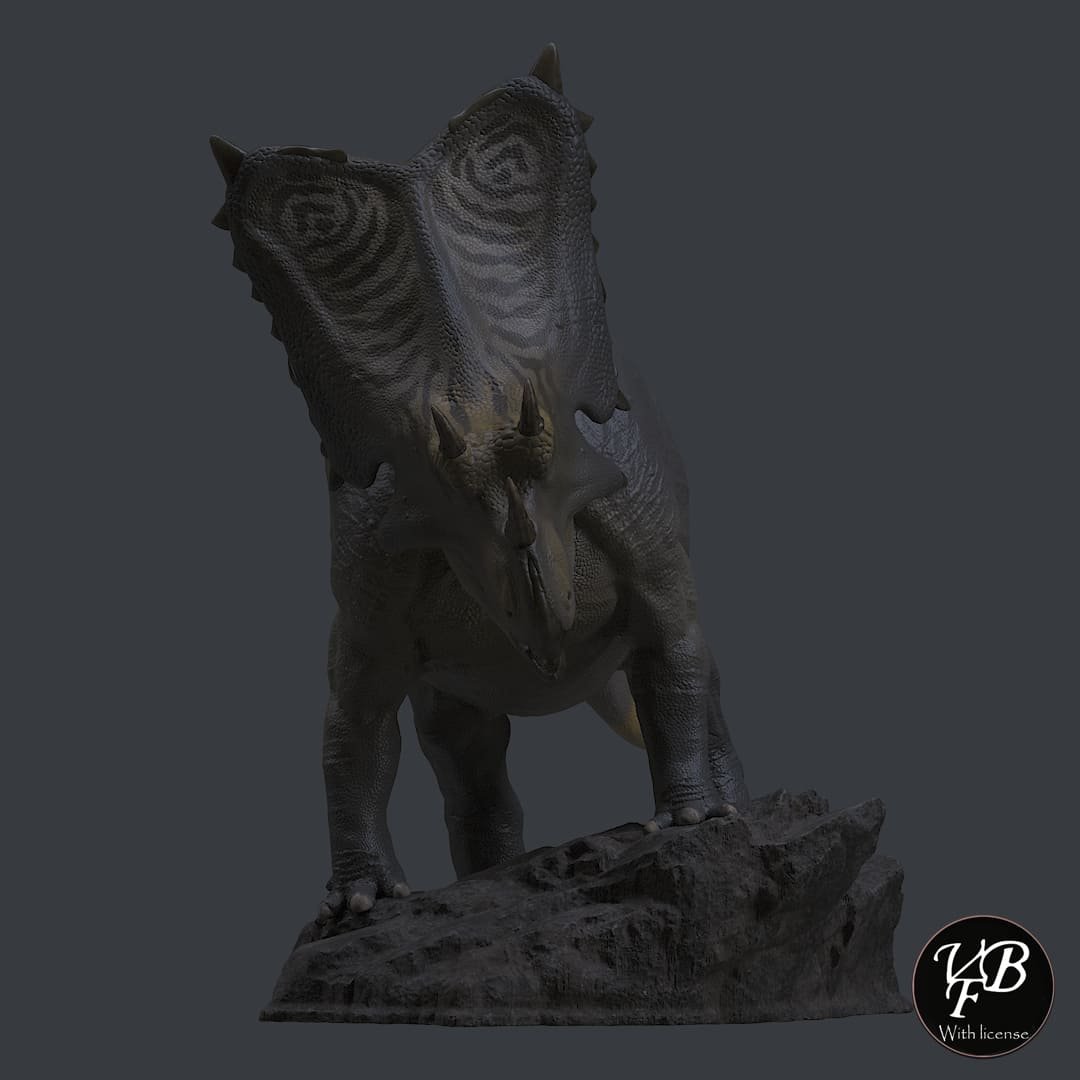
Chasmosaurus belli
Image: Image sourced via web search (Fair use / Educational)
About Chasmosaurus
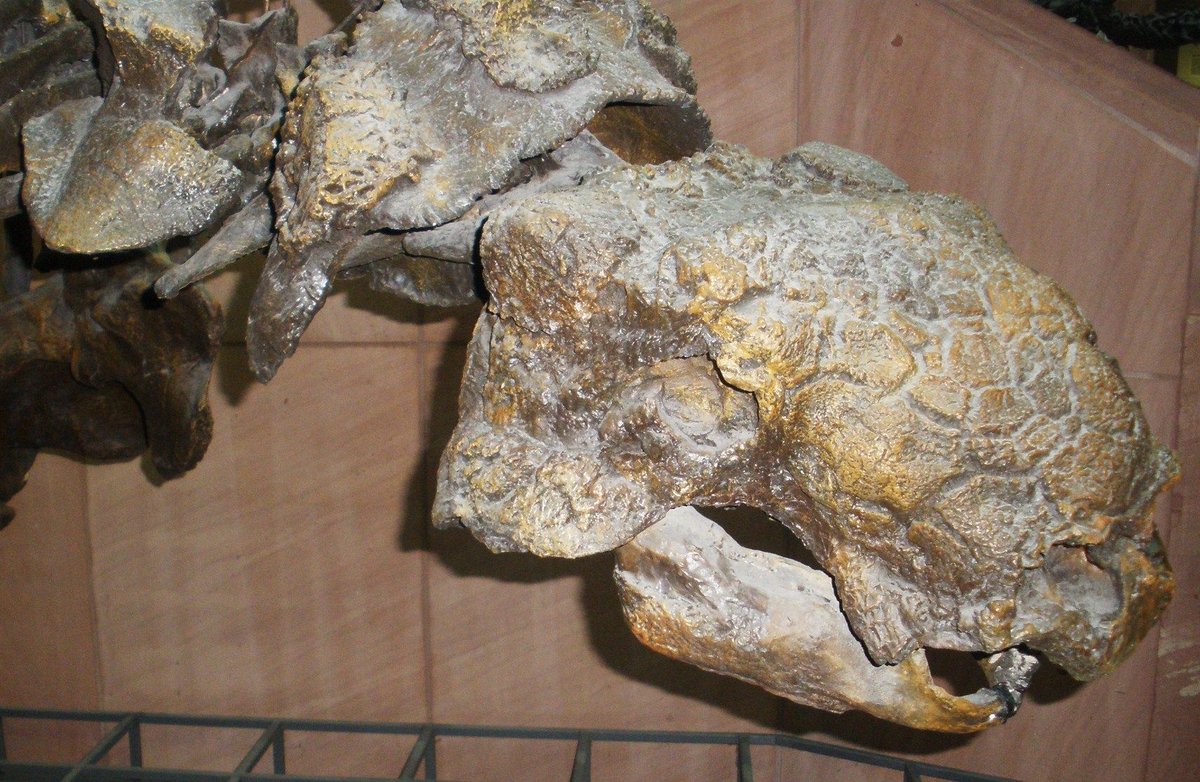
Chasmosaurus was a medium-sized ceratopsian dinosaur that inhabited the coastal plains of western North America during the Late Cretaceous Period, approximately 77 to 75 million years ago. As a member of the Chasmosaurinae subfamily, it is renowned for its exceptionally long, rectangular frill, which was punctuated by two large openings called fenestrae, giving the animal its name, meaning 'opening lizard'. Its fossils provide crucial insights into the diversity, social behavior, and paleoecology of horned dinosaurs during a peak period of their evolution. Chasmosaurus is a cornerstone genus for understanding ceratopsian anatomy and the potential functions of their elaborate cranial ornamentation, from defense to species recognition and sexual display.
Chasmosaurus was a moderately built quadrupedal herbivore, reaching lengths of approximately 4.3 to 5 meters (14 to 16.5 feet) and weighing an estimated 1.5 to 2 tonnes (3,300 to 4,400 pounds). For comparison, it was roughly the size of a modern white rhinoceros, though with a different body plan. Its most striking feature was its immense cranial frill, which could extend for over a meter, making up a significant portion of its total body length. This frill was not solid bone but was a lightened framework, characterized by two enormous parietal fenestrae (the 'chasms' of its name) covered in life by skin. The frill's edge was adorned with a series of small, triangular hornlets called epoccipitals. In contrast to its massive frill, its facial horns were relatively modest compared to contemporaries like Triceratops. It possessed a short, stout horn on its nose and two smaller, brow horns above the eyes, which varied in size and curvature between species and possibly individuals. Its powerful beak, or rostrum, was well-suited for shearing tough vegetation, and its jaws contained complex dental batteries for grinding plant material. Its body was robust, with strong limbs supporting its weight, ending in hoof-like claws. A remarkable specimen of Chasmosaurus belli (ROM 839) preserved skin impressions, revealing a pattern of large, rosette-like scales arranged in rows, interspersed with smaller, non-overlapping polygonal scales, providing a rare glimpse into the external appearance of these dinosaurs.
As a ceratopsian, Chasmosaurus was a dedicated herbivore. Its powerful beak would have been used to crop low-growing vegetation like ferns, cycads, and early flowering plants. The sophisticated dental batteries, composed of hundreds of teeth stacked in columns, created a continuous shearing surface that efficiently processed fibrous plant matter. This dental arrangement allowed it to consume large quantities of tough foliage. Chasmosaurus was an obligate quadruped, with a sturdy, pillar-like limb structure to support its considerable bulk. While not built for speed, it was likely capable of short bursts of agility to defend against predators. There is strong evidence for social behavior in Chasmosaurus. The discovery of a bonebed in Alberta containing the remains of multiple individuals of various ages, from juveniles to adults, suggests they may have lived in herds. This herding behavior could have offered protection against large predators like tyrannosaurids and facilitated raising young. The elaborate frill, while too delicate for direct combat, likely served multiple functions in its paleobiology. It would have anchored powerful jaw muscles, acted as a thermoregulatory device, and, most importantly, served as a visual display structure for species recognition and attracting mates, with its large surface area potentially being brightly colored.
Chasmosaurus lived in a warm, humid, subtropical coastal plain environment along the western margin of the Western Interior Seaway, an inland sea that divided North America. This region, now preserved as the Dinosaur Park Formation in Alberta, Canada, was a lush, swampy lowland crisscrossed by rivers and estuaries, supporting a rich and diverse ecosystem. The flora was dominated by ferns, conifers, and a growing number of angiosperms (flowering plants). Chasmosaurus shared this habitat with an incredible array of other dinosaurs, placing it within a complex food web. It was a primary consumer, occupying a niche as a low-browsing herbivore. It coexisted with other ceratopsians like Centrosaurus and Styracosaurus, hadrosaurs such as Parasaurolophus and Corythosaurus, and armored ankylosaurs like Euoplocephalus. This high diversity of large herbivores suggests significant niche partitioning to avoid direct competition for resources. The primary predators in this ecosystem were large tyrannosaurids, most notably Gorgosaurus libratus, a formidable carnivore that undoubtedly preyed upon Chasmosaurus. The dinosaur's horns would have provided a formidable defense against such attacks, while herding behavior would have offered collective protection for the group, especially for vulnerable juveniles.
The history of Chasmosaurus begins in 1898 when Lawrence M. Lambe of the Geological Survey of Canada discovered parts of a neck frill near the Berry Creek in Alberta. Initially, Lambe misidentified these remains, assigning them to a short-frilled ceratopsian he named Monoclonius belli. However, the true nature of the animal remained unrecognized until 1913, when Charles Sternberg and his sons, working for the Geological Survey of Canada, discovered several complete and well-preserved skulls of the same species in the area that would become Dinosaur Provincial Park. Recognizing that this animal was distinct from Monoclonius due to its long frill with large openings, Lambe established the new genus Chasmosaurus in 1914, designating his original 1898 specimen as the type species, Chasmosaurus belli. One of the most significant specimens is the aforementioned Royal Ontario Museum specimen (ROM 839), discovered by the Sternbergs in 1914, which not only includes a nearly complete skeleton but also the rare skin impressions. Another key specimen is AMNH 5401, a skull that helped define the species Chasmosaurus kaiseni. The work of the Sternberg family was instrumental in uncovering the rich fossil heritage of Alberta and establishing Chasmosaurus as one of the best-known ceratopsians.
Chasmosaurus is a key member of the Ceratopsidae family, specifically within the subfamily Chasmosaurinae, which is named after it. This group is distinguished by its members typically having long, triangular frills and prominent brow horns, in contrast to the Centrosaurinae, which usually have shorter, more ornamented frills and large nasal horns. The evolutionary story of Chasmosaurinae shows a trend towards increasing frill size and complexity over millions of years. Chasmosaurus represents a relatively early and 'classic' form within this lineage, providing a crucial anatomical baseline for understanding the evolution of later, more derived members like Triceratops and Torosaurus. The structure of its frill, with its large fenestrae, illustrates an evolutionary solution to developing a massive display structure without incurring a prohibitive weight penalty. This adaptation highlights the intense selective pressures related to visual communication and display in these animals. As a highly successful genus with multiple recognized species, Chasmosaurus demonstrates the rapid diversification and ecological success of ceratopsians during the Campanian stage of the Late Cretaceous. It has no direct modern descendants, as the entire non-avian dinosaur lineage was extinguished at the end of the Cretaceous period.
Despite being a well-known genus, Chasmosaurus is still the subject of scientific debate, primarily concerning its taxonomy and the function of its frill. For years, several species were assigned to the genus, including C. belli, C. canadensis, C. russelli, and C. kaiseni. However, recent analyses have revised this classification. A 2010 study by Campbell and colleagues suggested that 'Vagaceratops' was actually a distinct genus, not a species of Chasmosaurus. Further research has synonymized some species, with C. russelli now often considered a distinct genus, Mojoceratops, though the validity of Mojoceratops itself is debated. The primary function of the frill also remains a topic of discussion. While the display hypothesis is widely accepted, some researchers argue for a more significant role in thermoregulation or defense, though its delicate structure makes a primary defensive role unlikely. The exact mechanics of its jaw and feeding preferences are also continually refined as new biomechanical models are developed.
Fossils of Chasmosaurus are found almost exclusively in the Dinosaur Park Formation of Alberta, Canada, a UNESCO World Heritage Site renowned for its abundance and diversity of Late Cretaceous fossils. Dozens of specimens have been recovered, making Chasmosaurus one of the most common and well-represented ceratopsians from this formation. The fossil record includes numerous complete or partial skulls, articulated skeletons, and at least one significant bonebed, providing a comprehensive view of its anatomy and life history across different age groups. Preservation quality is generally good to excellent, with some specimens exhibiting remarkable detail, including the famous skin impressions. The abundance of fossils in a relatively constrained geographic and temporal window allows paleontologists to study population-level variation and ontogeny (growth from juvenile to adult) in great detail, making it a model organism for ceratopsian research. Key institutions housing important Chasmosaurus fossils include the Canadian Museum of Nature, the Royal Tyrrell Museum of Palaeontology, and the Royal Ontario Museum.
Chasmosaurus is a popular and recognizable dinosaur, frequently featured in museum exhibits worldwide. Its impressive, fenestrated frill makes it a visually distinctive example of ceratopsian diversity. Skeletons and skulls of Chasmosaurus are prominent displays in major museums, such as the Canadian Museum of Nature in Ottawa and the Royal Tyrrell Museum in Drumheller, Alberta, where it helps educate the public about Canada's rich fossil heritage. It has appeared in numerous books, documentaries, and other media, often used to illustrate the vibrant ecosystem of the Late Cretaceous. While perhaps not as famous as its relative Triceratops, Chasmosaurus holds a significant place in popular culture as a classic 'horned dinosaur' and is vital for illustrating the incredible variety of forms that existed within this iconic group.
Classification
Time Period
Discovery
Location
Canada (Alberta)
Formation
Dinosaur Park Formation
Frequently Asked Questions
What is Chasmosaurus?
Chasmosaurus was a medium-sized ceratopsian dinosaur that inhabited the coastal plains of western North America during the Late Cretaceous Period, approximately 77 to 75 million years ago. As a member of the Chasmosaurinae subfamily, it is renowned for its exceptionally long, rectangular frill, whic...
When did Chasmosaurus live?
Chasmosaurus lived during the cretaceous period of the mesozoic era approximately 77-75 million years ago.
Where was Chasmosaurus discovered?
Fossils of Chasmosaurus were discovered in Canada (Alberta) in the Dinosaur Park Formation.
What did Chasmosaurus eat?
Chasmosaurus was a herbivore. It lived in terrestrial habitats.
What type of fossil is Chasmosaurus?
Chasmosaurus is preserved as a body fossil. The preservation quality is good.
Related Specimens
From the mesozoic era · body fossils