Cheirolepis
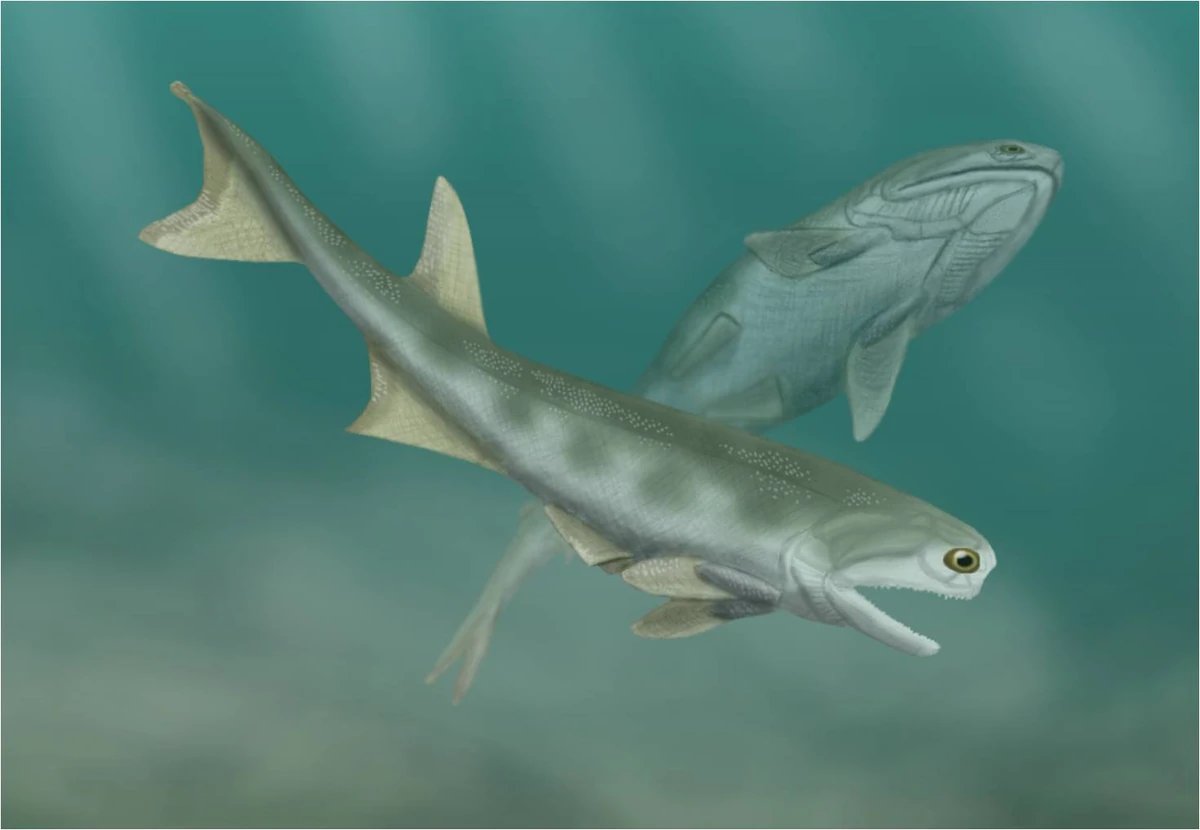
Cheirolepis trailli
Image: Image sourced via web search (Fair use / Educational)
About Cheirolepis
Cheirolepis trailli is an extinct species of basal ray-finned fish that lived during the Middle to Late Devonian period, approximately 385 to 375 million years ago. Recognized as one of the earliest and most primitive known actinopterygians, this remarkable organism swam in the freshwater lakes and river systems of the paleocontinent Euramerica, specifically in regions that correspond to modern-day Scotland and parts of North America. As a foundational member of the ray-finned fishes, a group that today comprises over half of all living vertebrate species, Cheirolepis holds a position of immense significance in the field of paleontology. Its well-preserved fossil remains provide critical insights into the early morphological evolution of fish, bridging the anatomical gap between ancestral osteichthyans and the highly diverse actinopterygians that would eventually dominate aquatic ecosystems worldwide. The study of Cheirolepis trailli not only illuminates the origins of modern fish anatomy but also offers a vital window into the dynamic and rapidly diversifying aquatic environments of the Devonian period, often referred to as the Age of Fishes.
In terms of physical description, Cheirolepis trailli was a moderately sized, streamlined predator, typically reaching lengths of about fifty-five centimeters, though some estimates suggest certain individuals may have grown slightly larger. Its body was torpedo-shaped, highly adapted for swift, agile swimming in open water environments. One of the most distinctive features of Cheirolepis was its dermal armor; the fish was covered in thousands of tiny, interlocking, diamond-shaped scales. These scales were composed of bone, dentine, and a shiny enamel-like substance called ganoine, providing both flexibility and formidable protection against predators. Unlike modern teleost fish, which possess highly mobile and specialized jaws, Cheirolepis featured a massive, wide-gaping mouth lined with numerous sharp, conical teeth, indicative of a predatory lifestyle. Its skeletal characteristics were decidedly primitive. The skull was heavily ossified and composed of numerous small dermal bones, while the internal skeleton remained largely cartilaginous, a trait common among early osteichthyans. The fins of Cheirolepis were supported by long, parallel bony rays, the defining characteristic of actinopterygians. It possessed a single, large dorsal fin situated far back on the body, paired pectoral and pelvic fins, an anal fin, and a distinctly heterocercal tail. In this asymmetrical tail, the vertebral column extended into the larger upper lobe, a feature similar to modern sharks, which would have provided powerful forward thrust. The large orbits of the skull suggest that Cheirolepis had well-developed eyes, relying heavily on vision to navigate its environment and locate prey. When compared to modern animals for scale, Cheirolepis would have been roughly the size of a large modern trout or a small salmon, though its heavy ganoid scales and primitive jaw structure would have given it a distinctly archaic appearance.
The paleobiology of Cheirolepis trailli paints a picture of a highly active, visual predator perfectly adapted to its Devonian freshwater habitat. Based on its streamlined morphology, powerful heterocercal tail, and large, tooth-filled jaws, paleontologists confidently classify Cheirolepis as a carnivore. Its hunting strategy likely involved rapid bursts of speed to ambush or chase down smaller fish, acanthodians, and aquatic invertebrates. The wide gape of its mouth would have allowed it to swallow prey whole or inflict devastating bites on larger targets. Locomotion in Cheirolepis was driven primarily by the undulation of its muscular posterior body and the powerful strokes of its asymmetrical tail fin, which provided the necessary lift and thrust to counteract the weight of its heavy, armored scales. The paired pectoral and pelvic fins were likely used for steering and stabilization rather than propulsion. While direct evidence of social behavior is difficult to ascertain from the fossil record, the abundance of Cheirolepis fossils in certain localized deposits suggests that they may have congregated in specific areas, perhaps for spawning or feeding purposes, similar to the schooling behaviors observed in many modern predatory fish. Growth patterns inferred from the microscopic analysis of its ganoid scales indicate that Cheirolepis grew continuously throughout its life, with seasonal variations in growth rates likely reflecting changes in food availability and environmental temperatures. Its metabolism was almost certainly ectothermic, relying on the ambient water temperature to regulate its physiological processes, though its active predatory lifestyle suggests a relatively high metabolic rate compared to more sluggish, bottom-dwelling contemporaries.
The ecological context of Cheirolepis trailli is rooted in the Middle to Late Devonian period, a time of profound biological and geological transformation. During this era, the Earth's landmasses were consolidating into two supercontinents, Gondwana to the south and Euramerica to the north. Cheirolepis inhabited the extensive freshwater lake systems and river basins of the Old Red Sandstone continent, a vast landmass characterized by semi-arid to tropical climates with distinct seasonal rainfall. The terrestrial landscape was undergoing a dramatic greening, with the first extensive forests of early vascular plants, such as Archaeopteris, beginning to stabilize riverbanks and contribute significant organic matter to aquatic ecosystems. In these nutrient-rich waters, Cheirolepis occupied a mid-to-high level position in the food web. It co-existed with a diverse array of aquatic organisms, including heavily armored placoderms, spiny acanthodians, early lobe-finned fishes (sarcopterygians), and various aquatic arthropods. While Cheirolepis was a formidable predator in its own right, it was not the apex predator of its environment. It would have fallen prey to larger, more powerful hunters, such as the massive predatory placoderms or large lobe-finned fishes like Eusthenopteron. The evolutionary arms race between predators and prey in these Devonian ecosystems likely drove the development of Cheirolepis's swift locomotion and protective ganoid scales, ensuring its survival in a highly competitive and dangerous environment.
The discovery history of Cheirolepis trailli is deeply intertwined with the early days of paleontology and the exploration of the Scottish Old Red Sandstone. The genus was first described and named by the eminent Swiss-born paleontologist Louis Agassiz in 1835, during his monumental study of fossil fishes. The specific epithet, trailli, honors Thomas Stewart Traill, a Scottish polymath and professor who collected some of the early specimens. The first significant fossils of Cheirolepis were unearthed in the Middle Devonian deposits of the Orcadian Basin in northern Scotland, a region renowned for its exceptionally preserved fossil fish assemblages. These early discoveries were made by quarrymen and amateur collectors who recognized the strange, scale-covered impressions in the flagstones used for building and roofing. Agassiz's meticulous descriptions of these specimens laid the foundation for our understanding of early actinopterygian anatomy. Over the decades, further expeditions to the Old Red Sandstone formations in Scotland, as well as subsequent discoveries in equivalent strata in North America, such as the Escuminac Formation in Miguasha, Quebec, have yielded numerous additional specimens. These discoveries have included nearly complete, articulated skeletons that have allowed paleontologists to reconstruct the anatomy of Cheirolepis in remarkable detail. The historical specimens studied by Agassiz remain crucial reference points in modern paleontological collections, serving as the holotypes for the genus and species.
The evolutionary significance of Cheirolepis trailli cannot be overstated. As one of the most basal known members of the Class Actinopterygii, it occupies a critical position near the very base of the ray-finned fish family tree. Its anatomy provides a unique blend of primitive osteichthyan features and derived actinopterygian traits, offering a clear snapshot of the transitional stages in fish evolution. The presence of a heavily ossified skull with numerous dermal bones, a cartilaginous internal skeleton, and a heterocercal tail links Cheirolepis to earlier, ancestral bony fishes. However, the defining characteristic of parallel bony rays supporting the fins firmly places it within the actinopterygian lineage. By studying Cheirolepis, scientists can deduce the ancestral condition of the ray-finned fishes before the group underwent the massive evolutionary radiations that produced the astonishing diversity of forms seen today. It demonstrates that the early actinopterygians were heavily armored, active predators with complex jaw structures. While Cheirolepis itself did not leave any direct modern descendants, it represents an early, successful offshoot of the lineage that would eventually give rise to the teleosts, the group that includes the vast majority of living fish species, from minnows to marlins. The anatomical innovations seen in Cheirolepis, such as the specialized fin structures and ganoid scales, laid the evolutionary groundwork for the subsequent success and diversification of the ray-finned fishes over the next 380 million years.
Despite its long history of study, Cheirolepis trailli remains the subject of ongoing scientific debates and revisions. One of the primary areas of controversy involves its exact phylogenetic placement within the early actinopterygian radiation. While universally recognized as a basal ray-finned fish, the precise relationships between Cheirolepis and other early genera, such as Moythomasia and Mimia, are continually reassessed as new fossil evidence emerges and analytical techniques improve. Some researchers argue that Cheirolepis represents the sister taxon to all other actinopterygians, while others suggest it may be part of a slightly more derived clade. Additionally, there has been debate regarding the functional morphology of its jaw apparatus. Early interpretations suggested a relatively simple, hinge-like jaw mechanism, but more recent biomechanical studies utilizing high-resolution CT scanning of well-preserved skulls indicate a more complex system capable of significant expansion, allowing for a wider gape and more efficient prey capture. The interpretation of its sensory systems, particularly the lateral line and olfactory organs, also remains an active area of research, with paleontologists striving to understand how this ancient predator perceived its Devonian environment.
The fossil record of Cheirolepis trailli is relatively robust for a Devonian vertebrate, with fossils found primarily in the Middle to Late Devonian strata of the Northern Hemisphere. The most famous and prolific fossil sites are located within the Old Red Sandstone formations of the Orcadian Basin in Scotland, including localities such as Achanarras Quarry and Lethen Bar. These sites are renowned for their exceptional preservation quality, often yielding complete, articulated specimens where the delicate arrangement of the ganoid scales and fin rays is perfectly maintained. In North America, significant fossils of closely related Cheirolepis species have been discovered in the Escuminac Formation of Miguasha, Quebec, and the Red Hill site in Nevada. The preservation in these deposits is typically excellent, with the hard, enamel-like ganoine of the scales resisting decay and fossilizing beautifully. While complete skeletons are highly prized, the most commonly preserved parts are isolated scales, jaw fragments, and partial skull roofs, which are frequently used by biostratigraphers to date Devonian rock layers. The abundance of these microfossils suggests that Cheirolepis was a relatively common and widespread component of Devonian freshwater ecosystems across Euramerica.
The cultural impact of Cheirolepis trailli, while perhaps less pronounced than that of iconic dinosaurs, is significant within the realms of paleontology and natural history education. As a quintessential representative of the Age of Fishes, Cheirolepis frequently appears in museum dioramas and educational literature illustrating Devonian ecosystems. Notable displays featuring exquisite Cheirolepis fossils can be found in major institutions such as the Natural History Museum in London and the National Museum of Scotland in Edinburgh. These exhibits play a crucial role in educating the public about the deep evolutionary history of aquatic life and the origins of modern fish. For fossil enthusiasts and amateur collectors, particularly in Scotland, finding a Cheirolepis scale or partial specimen remains a thrilling connection to a world that existed hundreds of millions of years before the first dinosaurs walked the Earth.
Classification
Time Period
Discovery
Location
Scotland
Formation
Old Red Sandstone
Frequently Asked Questions
What is Cheirolepis?
Cheirolepis trailli is an extinct species of basal ray-finned fish that lived during the Middle to Late Devonian period, approximately 385 to 375 million years ago. Recognized as one of the earliest and most primitive known actinopterygians, this remarkable organism swam in the freshwater lakes and ...
When did Cheirolepis live?
Cheirolepis lived during the devonian period of the paleozoic era approximately 385-375 million years ago.
Where was Cheirolepis discovered?
Fossils of Cheirolepis were discovered in Scotland in the Old Red Sandstone.
What did Cheirolepis eat?
Cheirolepis was a carnivore. It lived in freshwater habitats.
What type of fossil is Cheirolepis?
Cheirolepis is preserved as a body fossil. The preservation quality is excellent.
Related Specimens
From the paleozoic era · body fossils
-tooth/7fb56d2cf543.png)