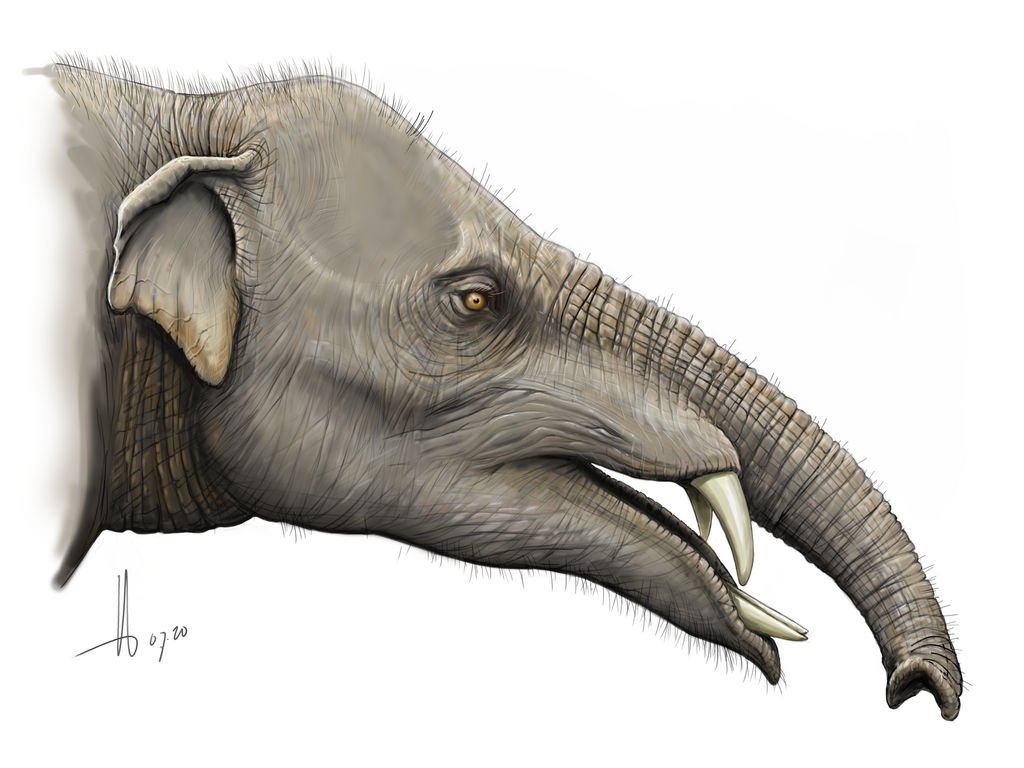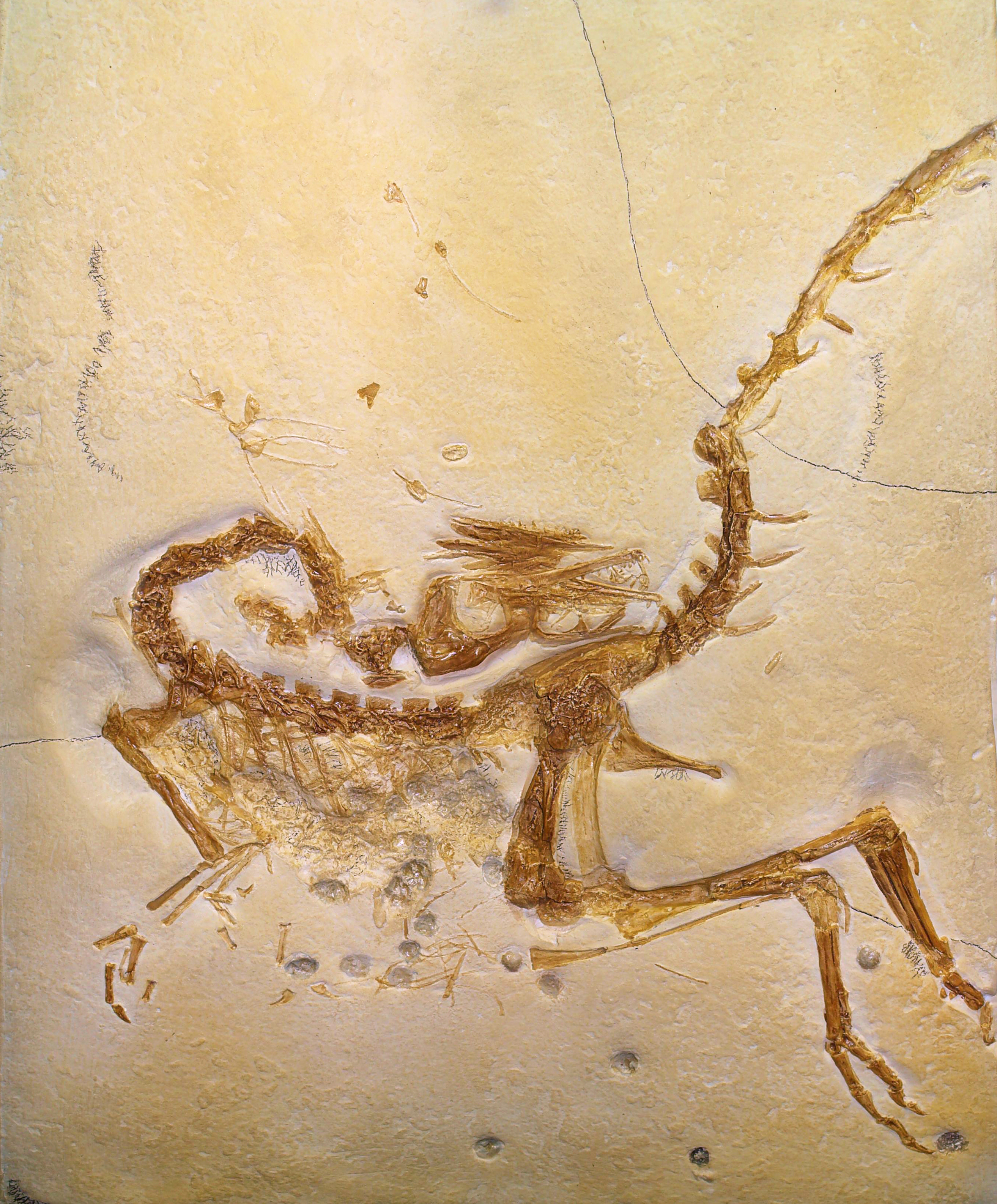
Megalania
Varanus priscus
Image: Image sourced via web search (Fair use / Educational)
About Megalania
Megalania, scientifically known as Varanus priscus, was a colossal monitor lizard that roamed the Australian continent during the Pleistocene epoch. As the largest terrestrial lizard known to have ever existed, it was a formidable apex predator in its ecosystem, coexisting with the famed Australian megafauna. Its discovery and subsequent study have provided profound insights into the dynamics of prehistoric ecosystems, the limits of reptilian gigantism, and the potential impact of both climate change and early human arrival on a continent's native fauna.
Megalania was an animal of truly impressive proportions, dwarfing its closest living relative, the Komodo dragon (Varanus komodoensis). While a complete skeleton has yet to be discovered, extrapolations from numerous fossil vertebrae, skull fragments, and limb bones allow for robust size estimations. Conservative estimates place its total body length at around 5.5 meters (18 feet), with some researchers suggesting lengths up to 7 meters (23 feet) are plausible. Weight estimates are similarly broad, ranging from 320 kilograms (710 pounds) to over 1,900 kilograms (4,200 pounds) for the largest individuals, though a range of 500-600 kg is more commonly cited. Its skeleton was exceptionally robust, indicating a powerful, heavily-built animal. The skull, though known only from fragments, featured a prominent sagittal crest for strong jaw muscle attachment. Its teeth were large, recurved, and serrated like steak knives, perfectly adapted for slicing through flesh. Like modern monitor lizards, Megalania likely possessed a forked tongue for detecting scents and a flexible, kinetic skull that allowed it to swallow large prey. Its limbs were stout and powerful, supporting its massive frame in a sprawling reptilian posture, capable of surprising bursts of speed over short distances.
The paleobiology of Megalania paints a picture of a highly effective and versatile predator. As a hypercarnivore, its diet would have consisted of the diverse megafauna of Pleistocene Australia. Prey likely included giant marsupials such as the rhinoceros-sized Diprotodon, the massive short-faced kangaroos like Procoptodon, and giant flightless birds. Its hunting strategy probably involved ambush tactics, using its size and power to overwhelm prey, followed by a devastating bite. Like the Komodo dragon, Megalania may have possessed a sophisticated venom system. Studies of its fossilized jawbones suggest the presence of glands capable of producing a complex venom that would induce shock, prevent blood clotting, and hasten the death of its victims. This would have allowed it to tackle prey much larger than itself. Locomotion was terrestrial, and while not a pursuit predator over long distances, it could likely muster formidable speed for ambushes. Inferred social behavior is solitary, typical of large varanids today. As an ectotherm, its metabolism would have been slower than a mammal's, allowing it to survive on infrequent large meals, a crucial adaptation for a predator in an often-unpredictable environment.
Megalania inhabited an Australia vastly different from today's. During the Pleistocene, the continent experienced dramatic climatic shifts, fluctuating between arid glacial periods and warmer, wetter interglacials. Megalania thrived in a variety of habitats, from open woodlands and grasslands to savanna-like environments, primarily across eastern Australia. It was the undisputed terrestrial apex predator, occupying the top of the food web. Its ecosystem was populated by a remarkable array of giant animals, including the aforementioned Diprotodon, the marsupial lion Thylacoleo carnifex, and the giant wombat Phascolonus. Megalania would have competed for resources with other large predators like Thylacoleo and the terrestrial crocodile Quinkana. Its presence would have exerted significant predatory pressure on herbivore populations, shaping their behavior and distribution. The extinction of Megalania, along with most of the Australian megafauna, around 40,000 years ago, represents a major ecological shift, the causes of which are still debated but likely involve a combination of increasing aridity and the arrival of the first Aboriginal Australians.
The discovery history of Megalania begins in the 19th century with the pioneering English anatomist and paleontologist, Sir Richard Owen. In 1859, Owen described the first scientifically recognized fossils of the giant lizard, which consisted of several large vertebrae found in the Darling Downs region of Queensland, Australia. Recognizing their reptilian nature and immense size, he coined the name Megalania prisca, meaning "ancient great roamer." For many years, Megalania was considered its own distinct genus. However, as more fossil material came to light and comparative anatomy improved, its close relationship to the modern monitor lizards of the genus Varanus became undeniable. This led to its reclassification as Varanus priscus, though the original name "Megalania" has persisted as a widely used and recognized common name. No single, iconic, near-complete specimen like 'Sue' the T. rex exists for Megalania; our understanding is pieced together from a composite of disarticulated remains from dozens of individuals found at various sites, including the Wellington Caves in New South Wales and the Capricorn Caves in Queensland.
Megalania's place in the tree of life is firmly within the family Varanidae, the monitor lizards. It is part of a lineage of giant varanids that evolved in Australia, and its closest living relative is the Komodo dragon of Indonesia. Genetic and morphological studies suggest that the ancestors of the Komodo dragon likely dispersed from Australia to Indonesia, making Megalania a representative of the ancestral stock from which the world's largest living lizard evolved. The study of Varanus priscus provides critical information on the evolutionary potential for gigantism within the Squamata order. It demonstrates that, under the right ecological conditions—namely, a warm climate, large landmass, and an abundance of large prey—lizards can evolve to fill the niche of apex predator, a role more commonly associated with mammals or archosaurs. Its existence challenges assumptions about the physiological and ecological limitations of ectothermic reptiles and highlights the unique evolutionary pathways that occurred on the isolated continent of Australia.
Despite over 150 years of study, several scientific debates surrounding Megalania continue. The most prominent is the ongoing discussion about its maximum size. The fragmentary nature of the fossil record makes definitive size and mass calculations difficult, leading to a wide range of published estimates. Some researchers argue for the more conservative 5.5-meter estimates, while others maintain that larger 7-meter individuals were possible, which would significantly alter calculations of its metabolic needs and ecological impact. Another area of debate concerns the precise role of its proposed venom. While the evidence for venom glands is strong, the potency and exact function of the venom—whether it was primarily for killing prey, for defense, or for intra-specific combat—remain subjects of active research. Finally, the cause of its extinction is a major point of contention. The debate centers on the relative importance of climate change, which led to increased aridity and habitat loss, versus the impact of newly arrived humans through hunting (the "overkill hypothesis") or habitat modification through fire-stick farming. Most likely, a combination of these pressures led to its demise.
The fossil record of Megalania is exclusively Australian, with remains found primarily in Pleistocene-aged deposits across the eastern half of the continent, from central Queensland down through New South Wales and into South Australia. Fossils are typically found in riverine and floodplain deposits. Unfortunately, the record is frustratingly incomplete. No complete or even partially articulated skeleton has ever been found. The known material consists of isolated vertebrae (which are the most common fossils), skull fragments (including parts of the maxilla and braincase), individual teeth, and various limb bones like the femur and humerus. This disarticulated nature suggests that carcasses were often scavenged or broken apart by environmental processes before fossilization. Despite the lack of a complete skeleton, the sheer number of fragmentary finds from numerous localities has allowed paleontologists to build a confident, albeit composite, picture of this magnificent reptile. Famous fossil sites yielding Megalania remains include the Darling Downs in Queensland and the Wellington Caves system in New South Wales.
Megalania has captured the public imagination as a real-life dragon from Australia's prehistoric past. It is a staple in documentaries about prehistoric life and megafauna, often depicted as a fearsome predator hunting giant marsupials. Its immense size and predatory nature make it a subject of fascination and a powerful educational tool for teaching about extinction, evolution, and ancient ecosystems. Several museums, most notably the Australian Museum in Sydney and the Melbourne Museum, feature impressive fossil casts and life-sized reconstructions of Megalania, allowing visitors to appreciate the sheer scale of this incredible animal and the unique megafauna with which it shared its world.
Classification
Time Period
Discovery
Location
Australia
Formation
Various Pleistocene deposits across eastern Australia (e.g., Darling Downs)
Frequently Asked Questions
What is Megalania?
Megalania, scientifically known as Varanus priscus, was a colossal monitor lizard that roamed the Australian continent during the Pleistocene epoch. As the largest terrestrial lizard known to have ever existed, it was a formidable apex predator in its ecosystem, coexisting with the famed Australian ...
When did Megalania live?
Megalania lived during the quaternary period of the cenozoic era approximately 1.5-0.04 million years ago.
Where was Megalania discovered?
Fossils of Megalania were discovered in Australia in the Various Pleistocene deposits across eastern Australia (e.g., Darling Downs).
What did Megalania eat?
Megalania was a carnivore. It lived in terrestrial habitats.
What type of fossil is Megalania?
Megalania is preserved as a body fossil. The preservation quality is fair.
Related Specimens
From the cenozoic era · body fossils