Europasaurus
Europasaurus holgeri
Image: Image sourced via web search (Fair use / Educational)
About Europasaurus
Europasaurus holgeri was a remarkable species of macronarian sauropod dinosaur that lived during the Late Jurassic period, approximately 154 million years ago, in what is now northern Germany. It is primarily celebrated in the paleontological community as one of the most definitive and spectacular examples of insular dwarfism—a fascinating evolutionary process where large-bodied animals evolve to become significantly smaller over successive generations when confined to an isolated island environment with limited resources. Unlike its colossal relatives such as Brachiosaurus or Giraffatitan, which could reach lengths of over twenty-five meters and weigh tens of tons, Europasaurus was a diminutive giant, representing a unique evolutionary adaptation to the fragmented, archipelagic geography of Late Jurassic Europe. Its discovery and subsequent study have profoundly enriched our understanding of dinosaurian plasticity, growth dynamics, and the ecological constraints that shaped the evolution of the largest terrestrial animals to ever walk the Earth.
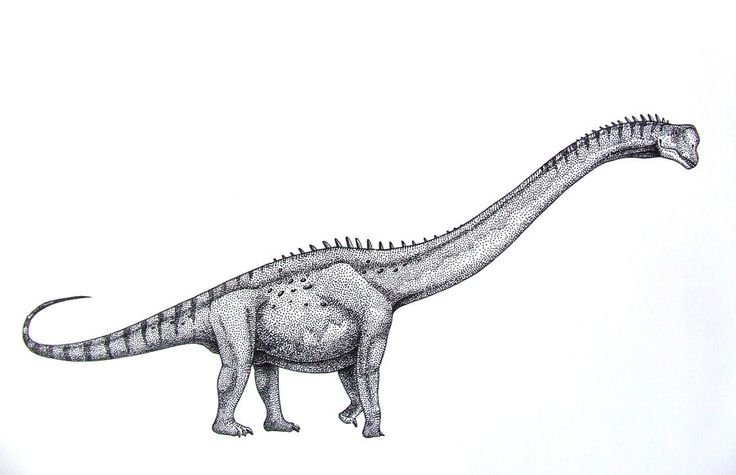
In terms of its physical description, Europasaurus possessed the classic anatomical blueprint of a basal macronarian sauropod, yet scaled down to surprisingly modest proportions. Fully grown adult individuals are estimated to have reached maximum body lengths of only about six meters (approximately twenty feet) and weighed roughly 800 to 1,000 kilograms, making them comparable in size to a modern domestic cow or a small rhinoceros, rather than the towering behemoths typically associated with the sauropod lineage. Despite its small stature, Europasaurus retained the characteristic long neck, relatively small head, robust barrel-shaped torso, and pillar-like limbs of its larger kin. Its skull was relatively short and deep, equipped with spatulate teeth ideal for cropping vegetation. The forelimbs were slightly longer than the hindlimbs, a hallmark of the brachiosaurid lineage, giving the animal a distinctive upward-sloping posture. Skeletal characteristics, particularly the morphology of the cervical vertebrae, indicate that while the neck was long, it may not have been held in a completely vertical position, but rather at an angle that allowed for efficient browsing of low to medium-height flora. Soft tissue inferences, drawn from the well-preserved bone surfaces and muscle attachment sites, suggest a heavily muscled neck and a robust digestive tract necessary for processing large volumes of fibrous plant material. When compared to modern animals, a fully grown Europasaurus would have stood only about as tall as a large horse at the shoulder, a staggering contrast to its gigantic mainland contemporaries.
The paleobiology of Europasaurus offers a fascinating glimpse into the life of an island-dwelling dinosaur. As an obligate herbivore, its diet likely consisted of the abundant ferns, cycads, and conifers that populated its island habitat. Its spatulate teeth were well-suited for stripping leaves from branches, though it lacked the complex chewing mechanisms seen in later ornithischian dinosaurs, relying instead on a massive gut and possibly gastroliths to ferment and break down tough plant matter. Locomotion was quadrupedal and graviportal; despite its smaller size, its limb bone proportions indicate it was not a fast runner, moving instead at a steady, deliberate pace. One of the most significant paleobiological insights derived from Europasaurus comes from extensive bone histology studies conducted by researchers like Martin Sander. By examining the microscopic structure of the fossilized bones, scientists discovered that Europasaurus achieved its small size not by stopping its growth early (progenesis), but by growing at a significantly slower rate than its giant relatives. The growth rings (lines of arrested growth) in the bones of fully mature individuals confirm that these were not simply juveniles of a larger species, but true dwarfs. Socially, the discovery of multiple individuals of varying ages—from very young juveniles to fully mature adults—within the same fossil deposits strongly suggests that Europasaurus lived in herds. This gregarious behavior would have provided protection against predators and facilitated foraging and reproductive success within the confined space of their island home.
The ecological context of Europasaurus is inextricably linked to the paleogeography of Late Jurassic Europe. During the Kimmeridgian stage, high global sea levels had flooded much of the European continent, transforming it into a vast, shallow epicontinental sea dotted with numerous islands of varying sizes, much like the modern Indonesian archipelago. Europasaurus inhabited one of these islands located in the Lower Saxony Basin. The climate was generally warm, subtropical to tropical, with distinct wet and dry seasons. The flora of this island ecosystem was dominated by gymnosperms, including diverse species of conifers, seed ferns, and cycads, which provided the primary food source for the herbivorous dinosaurs. The island environment imposed strict ecological constraints; limited land area meant limited food and freshwater resources, which drove the evolutionary pressure toward dwarfism. Europasaurus shared its habitat with a variety of other organisms, though the terrestrial vertebrate fauna was relatively impoverished compared to mainland ecosystems. Co-existing species included small ornithopod dinosaurs, various crocodiliforms, turtles, and early mammals. The apex predators of this island were likely theropod dinosaurs, though due to the same spatial constraints, these predators were also likely smaller than their mainland counterparts. The food web was relatively simple, with Europasaurus serving as a primary consumer, converting the abundant but tough vegetation into biomass that could potentially be exploited by the island's carnivores.
The discovery history of Europasaurus is a testament to the importance of amateur paleontologists and careful, sustained excavation. The first fossils were discovered in 1998 by Holger Lüdtke, a private fossil collector, in the Langenberg Quarry near Oker, in the Harz Mountains of Lower Saxony, Germany. The quarry, primarily mined for limestone, had previously yielded marine fossils, making the discovery of terrestrial dinosaur bones a significant surprise. Recognizing the importance of the find, Lüdtke brought the fossils to the attention of professional paleontologists. Subsequent systematic excavations led by the Dinosaurier-Park Münchehagen and the State Museum of Natural History in Braunschweig uncovered a massive bonebed containing the remains of more than a dozen individuals. The species was formally described and named in 2006 by Octávio Mateus, Thomas Laven, and Nils Knötschke. The generic name, Europasaurus, translates to 'reptile from Europe', while the specific epithet, holgeri, honors the discoverer, Holger Lüdtke. The sheer volume and quality of the material recovered from the Langenberg Quarry make Europasaurus one of the best-represented sauropods in the fossil record. The specimens range from individuals with a body length of just 1.7 meters to fully grown adults of 6 meters, providing an unparalleled ontogenetic (growth) series that has been crucial for understanding the species' biology.
The evolutionary significance of Europasaurus cannot be overstated, as it provides one of the clearest and most well-documented examples of insular dwarfism in the dinosaurian fossil record. Taxonomically, it is classified as a basal macronarian, placing it near the base of the evolutionary radiation that would eventually give rise to the massive titanosauriforms. Its position in the tree of life indicates that the genetic and developmental mechanisms required to drastically alter body size were already present early in the evolution of the Macronaria. Europasaurus demonstrates that the evolutionary trajectory toward gigantism in sauropods was not a one-way street; when environmental pressures demanded it, these animals were capable of rapidly evolving much smaller body sizes. This phenomenon, often referred to as the 'island rule' or Foster's rule, posits that large mainland animals tend to become smaller on islands due to limited resources, while small animals may become larger due to a lack of predators. Europasaurus serves as a textbook example of the former, offering profound insights into the evolutionary plasticity of the Dinosauria. Furthermore, its basal position helps clarify the complex biogeography of Late Jurassic sauropods, suggesting that macronarians were widespread across the European archipelago before the subsequent isolation of various island populations.
While Europasaurus is generally well-understood, it has not been immune to scientific debates and ongoing research. Initially, when the fossils were first discovered, there was considerable debate over whether the bones represented a new, dwarfed species or simply a herd of juvenile individuals of a known, larger sauropod species. This controversy was definitively resolved by the pioneering histological work of Martin Sander and colleagues, who demonstrated through bone microstructure analysis that the largest individuals in the assemblage possessed the tightly spaced growth lines characteristic of somatic maturity. Another area of ongoing discussion involves the exact phylogenetic placement of Europasaurus within the Macronaria. While most analyses place it as a basal macronarian, closely related to the Brachiosauridae, some studies have suggested slightly different affinities depending on the specific anatomical traits emphasized in the cladistic matrices. Additionally, there is debate regarding the precise paleogeographic mechanisms that led to its isolation. Some researchers propose that the ancestors of Europasaurus migrated to the island during a temporary drop in sea level, while others suggest that a larger landmass fragmented, stranding a population of normal-sized sauropods that subsequently dwarfed over thousands of years.
The fossil record of Europasaurus is exceptionally rich and geographically concentrated. All known specimens originate from a single locality: the Langenberg Quarry in northern Germany. The fossils are found within marine carbonate rocks, specifically in a bed of marly limestone. This unusual depositional environment suggests that the carcasses of these terrestrial animals were washed out to sea, perhaps during a massive flood or storm event, and subsequently buried in the shallow marine sediments surrounding their island home. The preservation quality is generally excellent, with many bones exhibiting minimal distortion and preserving delicate anatomical features. The fossil assemblage includes over a thousand individual bones, representing at least fourteen distinct individuals. Crucially, the material includes well-preserved cranial elements—which are notoriously rare in the sauropod fossil record—as well as articulated sections of the vertebral column, limb bones, and pelvic girdles. This abundance of high-quality material has allowed paleontologists to reconstruct the anatomy, growth, and variation of Europasaurus with a level of detail that is rarely possible for Mesozoic dinosaurs.
In terms of cultural impact, Europasaurus has captured the public imagination as the 'miniature giant' of the dinosaur world. It features prominently in the Dinosaurier-Park Münchehagen in Germany, where life-sized models and extensive educational exhibits detail its discovery and unique biology. The concept of a dwarf sauropod challenges the popular perception of dinosaurs as uniformly colossal monsters, making Europasaurus a valuable educational tool for explaining complex evolutionary concepts like adaptation, environmental constraints, and the island rule to the general public. It has appeared in various paleontology documentaries and popular science books, often highlighted as a prime example of how changing geography and shifting sea levels can dramatically influence the course of evolution. The story of its discovery by an amateur collector also serves to inspire public participation in paleontology, highlighting the ongoing potential for significant scientific discoveries in our own backyards.
Classification
Time Period
Discovery
Location
Germany
Formation
Langenberg Quarry
Frequently Asked Questions
What is Europasaurus?
Europasaurus holgeri was a remarkable species of macronarian sauropod dinosaur that lived during the Late Jurassic period, approximately 154 million years ago, in what is now northern Germany. It is primarily celebrated in the paleontological community as one of the most definitive and spectacular e...
When did Europasaurus live?
Europasaurus lived during the jurassic period of the mesozoic era approximately 155-150 million years ago.
Where was Europasaurus discovered?
Fossils of Europasaurus were discovered in Germany in the Langenberg Quarry.
What did Europasaurus eat?
Europasaurus was a herbivore. It lived in terrestrial habitats.
What type of fossil is Europasaurus?
Europasaurus is preserved as a body fossil. The preservation quality is excellent.
Related Specimens
From the mesozoic era · body fossils