Megarachne
Megarachne servinei
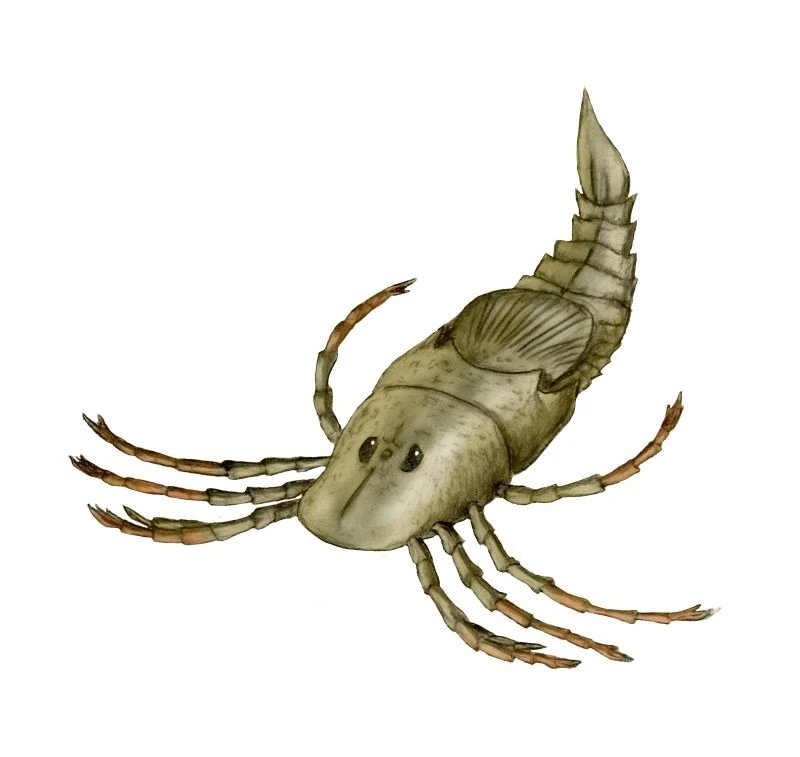
Image: Image sourced via web search (Fair use / Educational)
About Megarachne
Megarachne servinei is a prehistoric arthropod that lived during the late Carboniferous period, approximately 310 to 305 million years ago. Initially hailed as the largest spider to have ever existed, its fossils, found in what is now Argentina, sparked immense scientific and public interest. Subsequent re-examination revealed its true identity not as a spider, but as a eurypterid, or 'sea scorpion,' a revelation that fundamentally reshaped our understanding of this enigmatic creature and the evolution of giant arthropods.
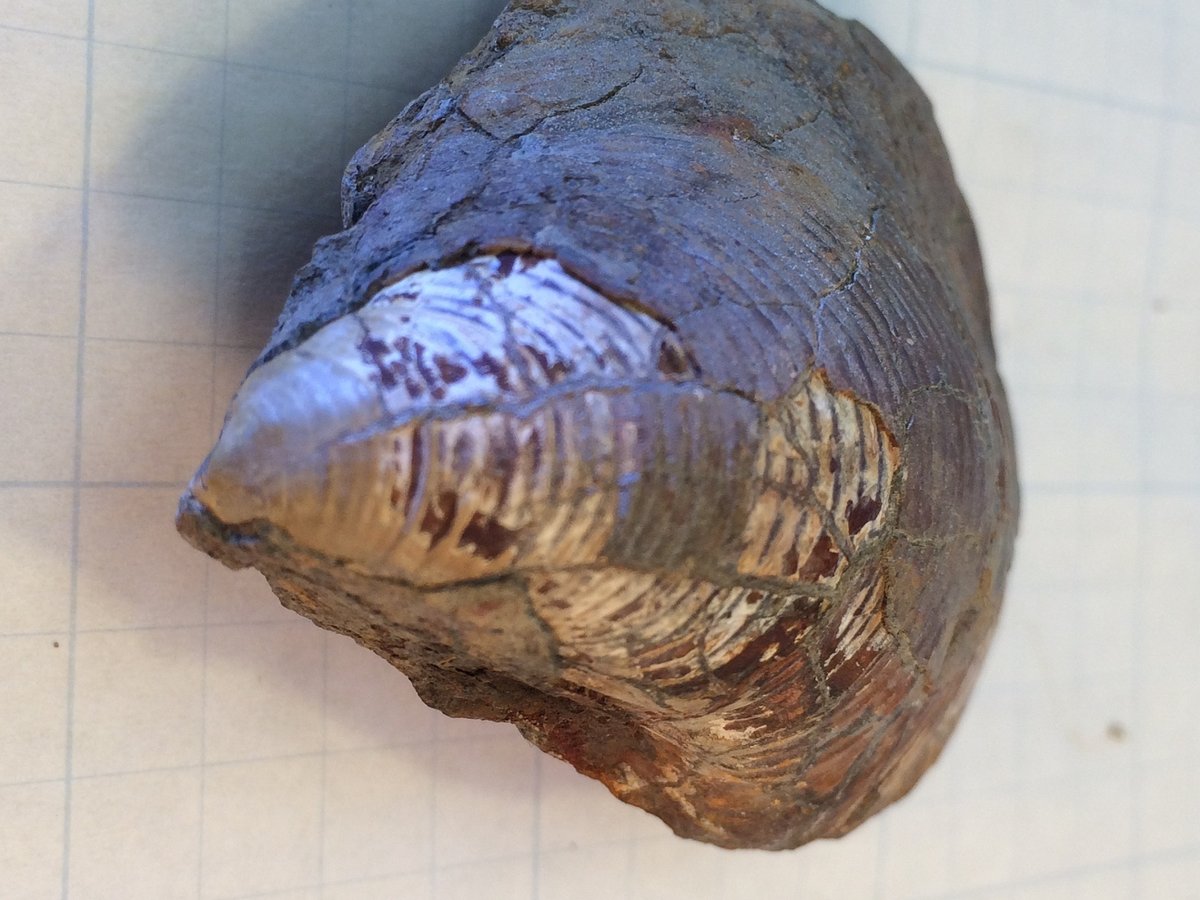
Megarachne servinei was a formidable arthropod, with the holotype specimen boasting a body length of approximately 34 centimeters (13.4 inches). While this is substantial, it falls short of the initial, more sensational estimates that suggested a leg span of over 50 centimeters. The most prominent feature of the fossil is its large, semicircular carapace, or head shield, which measured about 15 centimeters wide. The carapace possessed a distinctive tuberculated ornamentation, giving it a rough, bumpy texture. Centrally located on this shield were two large, raised eyes, providing a wide field of vision. The body, or opisthosoma, was segmented and tapered towards the posterior. The initial interpretation as a spider was based on the shape of the carapace, the position of the eyes, and what were thought to be chelicerae (spider fangs). However, the re-evaluation by Paul A. Selden and his colleagues identified key features inconsistent with spiders. The carapace shape is more typical of certain eurypterids, and the structures initially identified as chelicerae were reinterpreted as parts of the eurypterid's appendicular complex. The preserved fossil is primarily an external mold of the dorsal side, meaning soft tissues and ventral structures, including the legs, are not preserved. This lack of preserved limbs contributed significantly to the initial misidentification. Compared to a modern Goliath birdeater tarantula, which can have a leg span up to 30 cm, Megarachne's body was larger, but its true leg span remains unknown. As a eurypterid, it would have possessed six pairs of appendages, with the first pair being small chelicerae for feeding and the subsequent pairs being walking legs, potentially with the final pair modified into swimming paddles, a common trait in many eurypterid families.
As a eurypterid, Megarachne was undoubtedly a predator. Its paleoenvironment suggests it inhabited freshwater swamps and river systems, a departure from the marine habitats of its earlier Silurian and Devonian relatives. This indicates a successful transition by some eurypterid lineages into non-marine ecosystems. Its feeding strategy likely involved ambushing prey from the substrate. The forward-facing eyes would have been well-suited for spotting movement. It would have used its appendages to grasp and manipulate prey, which could have included other arthropods, early tetrapods, and fish that shared its swampy home. The absence of preserved appendages makes it difficult to determine its exact mode of locomotion. While many eurypterids were adept swimmers, using paddle-like hind limbs, others were primarily bottom-walkers. Given its association with the Mycteropidae family, it is plausible that Megarachne was more of a walker or crawler through the shallow, vegetated waters and muddy bottoms of its habitat, rather than an open-water swimmer. There is no fossil evidence to suggest social behavior; like most arthropods, it was likely a solitary hunter. Growth would have occurred through ecdysis, the process of molting its exoskeleton, with the animal being vulnerable to predation during this period. Its metabolism would have been ectothermic, dependent on the ambient temperature of the warm, tropical Carboniferous environment.
The world of Megarachne during the late Carboniferous was a vastly different place. The supercontinent Pangea was assembling, creating extensive coastlines and interior basins. The climate was warm, humid, and tropical, with atmospheric oxygen levels estimated to be as high as 35%, significantly greater than today's 21%. This oxygen-rich atmosphere is believed to be a key factor enabling the evolution of giant arthropods, or 'megafauna,' like Megarachne, the dragonfly-like Meganeura, and the millipede-like Arthropleura. Megarachne lived in the vast, coal-forming swamps that characterized the period. These were dense, lush ecosystems dominated by giant lycophyte trees like Lepidodendron and Sigillaria, towering tree ferns, and horsetails. The water would have been murky and filled with decaying plant matter. Megarachne shared this habitat with a diverse array of life. Its prey may have included early amphibians like Eryops, various temnospondyls, and a variety of freshwater fish. It would have also competed with other large invertebrate predators. In turn, Megarachne could have been prey for larger amphibians or sarcopterygian (lobe-finned) fish. Its position in the food web was likely that of a mid-to-high-level predator, a crucial component of the Carboniferous freshwater swamp ecosystem, helping to control populations of smaller animals in the complex, semi-aquatic environment.
The discovery of Megarachne is a fascinating story of scientific interpretation and correction. The first and only known specimen was discovered by amateur fossil hunter Mario Hünicken in the late 1970s. It was found within the Bajo de Veliz Formation, a fossil-rich geological layer in San Luis Province, Argentina. Hünicken, a paleontologist, formally described the fossil in 1980, naming it Megarachne servinei. The genus name translates to 'giant spider,' reflecting his interpretation, and the species name honors the landowner, Mr. Servine, on whose property the fossil was found. Hünicken's classification of Megarachne as a mygalomorph spider, a relative of modern tarantulas, was based on the general shape of the carapace and eye placement. This identification was widely accepted for over two decades, cementing Megarachne's status as the largest spider of all time in both scientific literature and popular media. The holotype specimen, designated PULR-A 001, remains the only example of this genus and is housed at the Paleontology Museum of the National University of Córdoba in Argentina. The story took a dramatic turn in the early 2000s when a cast of the fossil was examined by Paul A. Selden, a leading expert on fossil arachnids, who immediately recognized features inconsistent with a spider and more aligned with eurypterids. This led to a formal re-examination of the original specimen.
The reclassification of Megarachne from a giant spider to a eurypterid represents a significant moment in paleontology, highlighting the self-correcting nature of science. In their 2005 paper published in Biology Letters, Paul A. Selden, José A. Corronca, and Mario Hünicken himself presented the definitive re-evaluation. They pointed out that the carapace shape, with its curved anterior margin and posterior 'trilobation,' was characteristic of eurypterids in the family Mycteropidae, such as Mycterops and Woodwardopterus. Furthermore, the structures Hünicken had identified as massive chelicerae were reinterpreted as the first two segments of a eurypterid's appendage. This re-identification removed Megarachne from the spider lineage entirely. While disappointing to those fascinated by the idea of a tarantula the size of a dinner plate, this correction provided crucial insights. It demonstrated that some eurypterid lineages, a group primarily known from the Silurian and Devonian marine record, had successfully adapted to and thrived in freshwater environments well into the Carboniferous period. It also underscored the importance of re-examining historical specimens with new knowledge and techniques, showing how even well-established 'facts' in paleontology can be overturned by careful observation and comparative anatomy. Megarachne is now understood not as an evolutionary dead-end for spiders, but as a late-surviving member of a successful and diverse group of aquatic arthropods.
The reclassification of Megarachne from the order Araneae (spiders) to Eurypterida (sea scorpions) was a major scientific revision that resolved a long-standing paleontological puzzle. For years, Megarachne was an anomaly, a supposed spider far larger than any other known fossil or living specimen, which raised questions about the biomechanical limits of spider anatomy. Its re-identification as a eurypterid resolved this issue, placing it comfortably within a group known for producing giant forms like Jaekelopterus. The debate now centers on its precise placement within the Eurypterida. Selden and colleagues placed it within the family Mycteropidae due to similarities with other genera in that group. However, the fossil is incomplete, lacking the abdomen and appendages that are crucial for definitive classification. Without the discovery of more complete specimens, its exact relationship to other eurypterids remains a subject of discussion. The case of Megarachne serves as a powerful cautionary tale in paleontology about the dangers of interpreting incomplete fossils and the influence of preconceived notions on scientific analysis.
The fossil record of Megarachne servinei is extremely limited, consisting of a single known specimen. This holotype was unearthed from the Bajo de Veliz Formation in San Luis Province, Argentina. This geological formation is dated to the Gzhelian age of the late Carboniferous period. The preservation of the fossil is good but incomplete. It consists of the dorsal part of the prosoma (the fused head and thorax) and a few anterior segments of the opisthosoma (the abdomen). It is preserved as a part and counterpart external mold in fine-grained sedimentary rock, which has captured the detailed ornamentation of the carapace surface. Crucially, the ventral side, appendages, and the posterior part of the body, including the telson (tail), are missing. This incompleteness was the primary reason for its initial misidentification. The rarity of Megarachne fossils suggests it was not a common animal, or that the specific conditions required for its preservation were seldom met in the swampy, high-energy environments it inhabited. The Bajo de Veliz Formation itself is a significant fossil site, preserving a snapshot of a late Paleozoic freshwater ecosystem, including various plants, insects, and other invertebrates.
Before its reclassification, Megarachne achieved considerable fame as the 'world's largest spider.' This sensational identity led to its inclusion in numerous books, documentaries, and museum exhibits about prehistoric life. It was famously featured in the 2005 BBC documentary 'Walking with Monsters,' where it was depicted as a giant tarantula-like predator, an episode that unfortunately aired just as the scientific correction was being published. This has led to a lasting public misconception. Despite its true identity as a eurypterid now being established in scientific circles, its image as a colossal spider persists in popular culture. The story of its discovery and re-identification makes it an excellent educational tool for demonstrating the scientific process, showing how hypotheses are tested, revised, and improved with new evidence. Casts of the famous fossil are displayed in several museums worldwide, often accompanied by explanations of its fascinating taxonomic history.
Classification
Time Period
Discovery
Location
Argentina
Formation
Bajo de Veliz Formation
Frequently Asked Questions
What is Megarachne?
Megarachne servinei is a prehistoric arthropod that lived during the late Carboniferous period, approximately 310 to 305 million years ago. Initially hailed as the largest spider to have ever existed, its fossils, found in what is now Argentina, sparked immense scientific and public interest. Subseq...
When did Megarachne live?
Megarachne lived during the carboniferous period of the paleozoic era approximately 310-305 million years ago.
Where was Megarachne discovered?
Fossils of Megarachne were discovered in Argentina in the Bajo de Veliz Formation.
What did Megarachne eat?
Megarachne was a carnivore. It lived in terrestrial, freshwater swamp habitats.
What type of fossil is Megarachne?
Megarachne is preserved as a body fossil. The preservation quality is good.
Related Specimens
From the paleozoic era · body fossils