Corythosaurus
Corythosaurus casuarius
Image: Image sourced via web search (Fair use / Educational)
About Corythosaurus
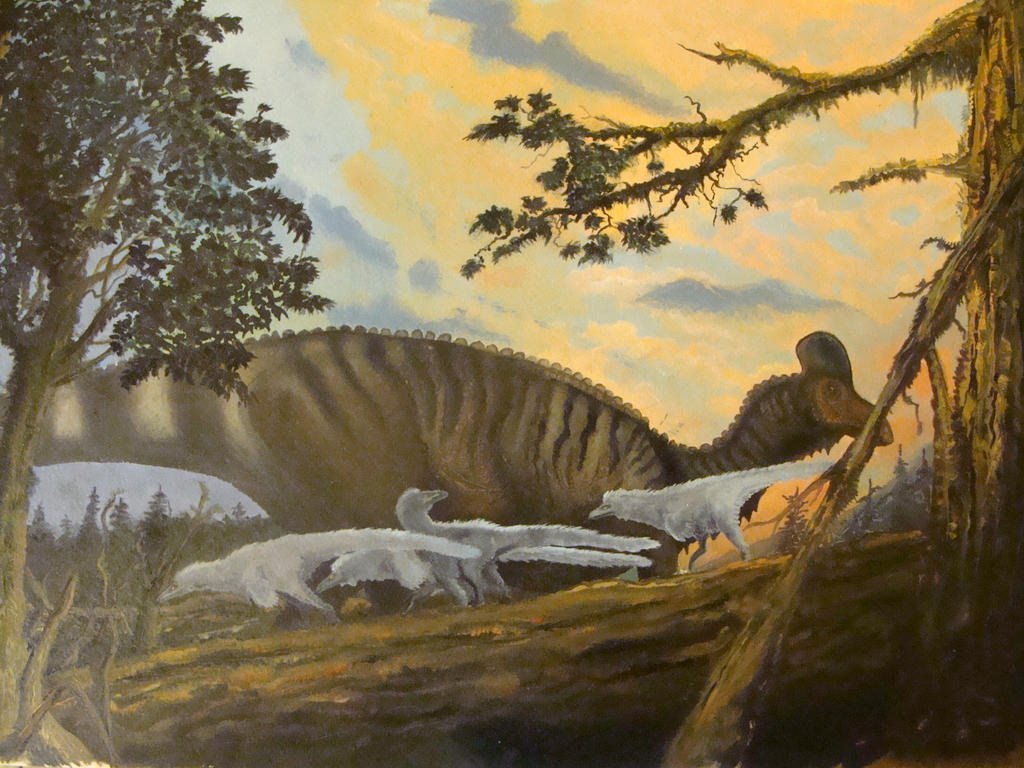
Corythosaurus casuarius was a large, herbivorous hadrosaurid dinosaur that inhabited the coastal plains of western North America during the Late Cretaceous Period, approximately 77 to 75 million years ago. Known for its distinctive, plate-like crest resembling the helmet of a Corinthian soldier, this dinosaur is one of the best-represented members of the 'duck-billed' dinosaur family, providing paleontologists with a wealth of information about hadrosaur anatomy, behavior, and evolution. Its numerous and well-preserved fossils have made it a cornerstone for understanding the diverse ecosystems of Late Cretaceous Laramidia.
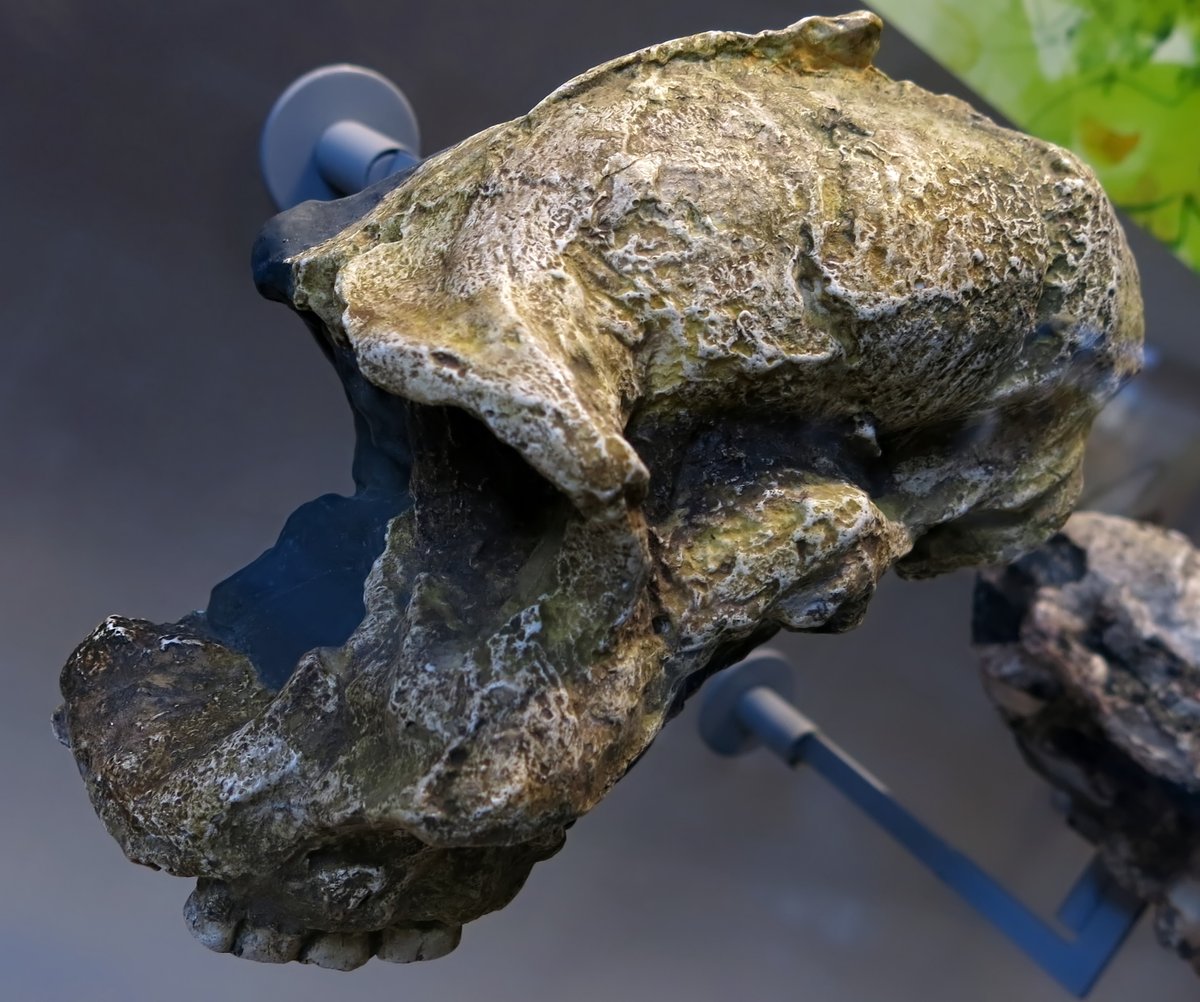
The most striking feature of Corythosaurus was its elaborate cranial crest, which was large, hollow, and semicircular, resembling the casque of a modern cassowary bird, a comparison that directly inspired its species name, 'casuarius'. This structure was formed by an extension of the premaxillary and nasal bones and contained a complex series of convoluted nasal passages that looped through the crest before entering the airway. An adult Corythosaurus reached an approximate length of 9 meters (about 30 feet) from snout to tail and stood roughly 4.5 meters tall at the hips, with an estimated body mass of 3 to 4 metric tons. For comparison, it was comparable in length to a large school bus and weighed as much as a white rhinoceros. Its skeleton was robust, with a long, stiffened tail counterbalancing a bulky torso. The forelimbs were shorter and more slender than the powerful hindlimbs, suggesting a primarily bipedal mode of locomotion for running, but a quadrupedal stance for slow walking or grazing. The snout terminated in a broad, toothless beak, or rhamphotheca, ideal for cropping vegetation, while deep inside its cheeks were complex dental batteries containing hundreds of tightly packed, continuously replacing teeth designed for grinding tough plant material. Fossilized skin impressions reveal that its hide was covered in a mosaic of non-overlapping, polygonal scales, known as tubercles, of varying sizes.
Corythosaurus was a highly specialized herbivore, adapted to processing large quantities of fibrous plant matter. The sophisticated dental batteries functioned like a rasp, efficiently shredding leaves, twigs, and possibly even primitive fruits and seeds. Its broad beak was likely used for indiscriminate bulk-browsing of low-to-medium-height vegetation. The function of its elaborate crest has been a subject of significant study, with multiple hypotheses proposed. The internal nasal passages would have greatly increased the surface area for olfactory tissues, suggesting a keen sense of smell. Furthermore, the hollow chambers likely acted as a resonating device, allowing Corythosaurus to produce loud, low-frequency calls for communication over long distances, potentially for species recognition, mating displays, or warning signals against predators. The crest's unique shape and size, which varied with age and possibly between sexes, also strongly suggest it served as a visual display structure. As a facultative biped, it could rear up to reach higher foliage or run from danger on its powerful hind legs, using its stiff tail for balance. Evidence from bonebeds containing multiple individuals suggests that Corythosaurus was a social, herding animal, a behavior that would have offered protection against the formidable predators of its time. Growth studies based on bone histology indicate a relatively rapid growth rate, reaching adult size in several years.
The world of Corythosaurus was a warm, humid, subtropical coastal plain bordering the western shore of the Western Interior Seaway, an immense inland sea that divided North America in two. This environment, preserved in the sediments of the Dinosaur Park Formation in Alberta, Canada, was a lush floodplain crisscrossed by rivers and dotted with swamps, ponds, and dense forests of conifers, ferns, and early flowering plants. This rich ecosystem supported one of the most diverse dinosaur faunas known. Corythosaurus shared its habitat with a vast array of other herbivores, including fellow lambeosaurine hadrosaurs like Parasaurolophus and Lambeosaurus, centrosaurine ceratopsians such as Centrosaurus and Styracosaurus, and armored ankylosaurs like Euoplocephalus. This high diversity of large herbivores suggests a significant degree of niche partitioning, with different species likely feeding on different types of plants or at different heights. The primary predators in this ecosystem were the large tyrannosaurids, most notably Gorgosaurus and Daspletosaurus, which would have preyed on both juvenile and adult hadrosaurs. Smaller predators included troodontids and dromaeosaurs, which likely targeted young or vulnerable individuals. Corythosaurus occupied a crucial position in the food web as a primary consumer, converting vast amounts of plant biomass into a food source for the apex carnivores of its time.
The discovery of Corythosaurus is a classic story from the 'Great Canadian Dinosaur Rush' of the early 20th century. In 1912, paleontologist Barnum Brown, working for the American Museum of Natural History, was exploring the rich fossil beds along the Red Deer River in Alberta, Canada. He discovered a remarkable, nearly complete skeleton of a hadrosaur, which would become the holotype specimen for a new genus and species. What made this find, cataloged as AMNH 5240, so exceptional was the extensive preservation of skin impressions over large portions of the body, providing the first detailed look at the external appearance of a 'duck-billed' dinosaur. Brown named it Corythosaurus casuarius in 1914, deriving the name from the Greek 'korythos' (Corinthian helmet) and 'sauros' (lizard), and the species name from the cassowary (Casuarius), in reference to the crest's similar appearance. Another spectacular specimen, AMNH 5338, was discovered by the Sternberg family in 1914 and is often referred to as the 'mummy' specimen due to its exceptional preservation, including skin, gut contents, and tendons. These early discoveries, along with dozens of subsequent finds, established Corythosaurus as one of the most completely known dinosaurs from North America.
Within the grand evolutionary tapestry of dinosaurs, Corythosaurus holds a key position as a derived member of the Hadrosauridae family, specifically within the subfamily Lambeosaurinae, which is characterized by the presence of hollow cranial crests. Its anatomy provides a clear example of the evolutionary pressures that shaped these large herbivores during the Late Cretaceous. The development of the complex dental battery represents a pinnacle of chewing efficiency among ornithischian dinosaurs, allowing them to exploit tough vegetation unavailable to other herbivores. The evolution of the hollow crest is a textbook example of a multi-functional structure, likely driven by sexual selection and the need for sophisticated social communication. By studying the crests of related lambeosaurines like Lambeosaurus and Hypacrosaurus, scientists can trace the diversification of these display and vocalization structures, suggesting that species recognition was a powerful evolutionary driver in these socially complex animals. Hadrosaurs, including Corythosaurus, do not have any direct modern descendants, as they, along with all non-avian dinosaurs, perished in the Cretaceous-Paleogene extinction event 66 million years ago. Their closest living relatives, like all dinosaurs, are modern birds, though the evolutionary distance is vast.
The primary scientific debates surrounding Corythosaurus have historically centered on the function of its iconic crest. Early hypotheses suggested it acted as a snorkel for an aquatic lifestyle or as an air-storage tank, but these ideas were refuted by anatomical studies showing the nasal passages had no external opening at the top and the tail was too stiff for aquatic propulsion. The prevailing modern consensus supports the crest's role in vocalization and visual display, a conclusion reinforced by CT scans revealing the intricate internal airways and acoustic modeling. Another area of discussion has been the taxonomy within the Lambeosaurinae. For a time, several other named genera from the Dinosaur Park Formation were thought to be distinct, but detailed studies, particularly by paleontologist Peter Dodson in the 1970s, demonstrated that many of these specimens were actually growth stages or represented sexual dimorphism within Corythosaurus or the closely related Lambeosaurus. This research highlighted the importance of considering ontogeny (growth) and individual variation when classifying dinosaurs, significantly refining our understanding of hadrosaur diversity. Ongoing research continues to explore the fine details of hadrosaur biomechanics, feeding ecology, and the precise acoustic properties of their cranial crests.
The fossil record of Corythosaurus is exceptionally rich and geographically concentrated. The vast majority of specimens have been unearthed from the Dinosaur Park Formation of Alberta, Canada, a UNESCO World Heritage site renowned for its abundance and quality of Late Cretaceous fossils. Over two dozen articulated skulls and numerous postcranial skeletons have been collected, making it one of the best-represented dinosaurs from this formation. The preservation quality is often excellent, with some specimens, like the aforementioned AMNH 5240 and AMNH 5338, preserving not just bone but also soft tissues like skin impressions and keratinous beak sheaths. These fossils provide an unparalleled window into the life appearance and biology of the animal. The abundance of remains, from juveniles to adults, has allowed for detailed studies of its growth patterns and population structure. The concentration of fossils in this specific region suggests that Corythosaurus was a dominant herbivore in its particular coastal plain environment but may have had a more restricted geographic range compared to some other dinosaur genera.
Corythosaurus has secured a firm place in public consciousness as one of the most recognizable 'duck-billed' dinosaurs. Its distinctive helmet-like crest makes it a visually appealing and easily identifiable species for museum visitors and dinosaur enthusiasts. Prominent and beautifully preserved skeletons of Corythosaurus are displayed in major museums worldwide, including the American Museum of Natural History in New York, the Royal Tyrrell Museum of Palaeontology in Alberta, and the Canadian Museum of Nature in Ottawa. It has been featured in numerous books, documentaries, and was notably depicted in the 1940 Disney film 'Fantasia' and the movie 'Jurassic Park III', cementing its status in popular culture. As a well-understood and common dinosaur, it serves as an excellent educational tool for teaching concepts of adaptation, social behavior, and paleoecology in the Late Cretaceous.
Classification
Time Period
Discovery
Location
Alberta, Canada
Formation
Dinosaur Park Formation
Frequently Asked Questions
What is Corythosaurus?
Corythosaurus casuarius was a large, herbivorous hadrosaurid dinosaur that inhabited the coastal plains of western North America during the Late Cretaceous Period, approximately 77 to 75 million years ago. Known for its distinctive, plate-like crest resembling the helmet of a Corinthian soldier, thi...
When did Corythosaurus live?
Corythosaurus lived during the cretaceous period of the mesozoic era approximately 77-75 million years ago.
Where was Corythosaurus discovered?
Fossils of Corythosaurus were discovered in Alberta, Canada in the Dinosaur Park Formation.
What did Corythosaurus eat?
Corythosaurus was a herbivore. It lived in terrestrial habitats.
What type of fossil is Corythosaurus?
Corythosaurus is preserved as a body fossil. The preservation quality is excellent.
Related Specimens
From the mesozoic era · body fossils