Amebelodon
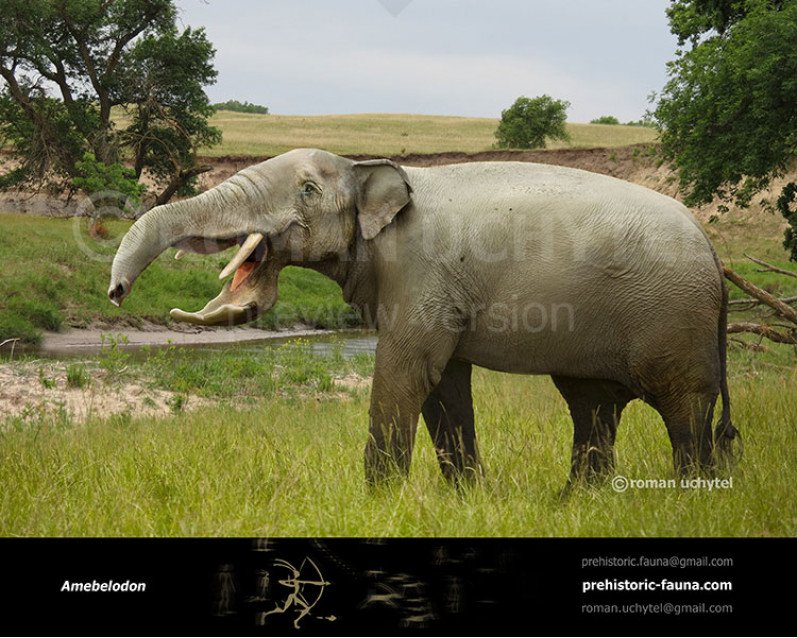
Amebelodon fricki
Image: Image sourced via web search (Fair use / Educational)
About Amebelodon
Amebelodon is an extinct genus of proboscidean, a group of large mammals that includes modern elephants, that inhabited North America, Asia, and Africa during the Miocene epoch of the Neogene period, approximately 10 to 5 million years ago. Belonging to the family Gomphotheriidae, these animals are colloquially known as 'shovel-tuskers' due to their remarkably specialized lower tusks, which were flattened and elongated, forming a distinctive scoop-like structure. This unique adaptation has made Amebelodon a subject of significant paleontological interest, providing critical insights into the diverse feeding strategies and ecological niches occupied by proboscideans during a period of major global climate change and faunal turnover.
Amebelodon was a large and robust proboscidean, comparable in size to a modern Asian elephant. A typical adult, such as a member of the species Amebelodon fricki, would have stood approximately 2.5 to 3 meters (8 to 10 feet) tall at the shoulder and measured 5 to 6 meters (16 to 20 feet) in length. Weight estimates for these animals range from 3.5 to 5 metric tons (7,700 to 11,000 pounds), placing them among the larger terrestrial mammals of their time. The most striking feature of Amebelodon was its dental and cranial anatomy. It possessed four tusks: two conventional, slightly curved tusks in the upper jaw, and two highly modified tusks in the lower jaw. These lower tusks, which were actually elongated incisors, were broad, flat, and fused at their base within a greatly elongated mandibular symphysis (the front of the lower jaw). This created a prominent, shovel-like apparatus that could extend up to a meter in front of the animal. The skull was long and relatively low compared to modern elephants, adapted to support the powerful musculature needed to operate this unique lower jaw structure. Its postcranial skeleton was robust, with thick, pillar-like limbs designed to support its considerable weight, similar to other large proboscideans.
The paleobiology of Amebelodon has been a topic of extensive study, centered on the function of its extraordinary lower tusks. Early hypotheses suggested that Amebelodon used its 'shovel' to dredge up aquatic plants from soft, muddy riverbeds and lake bottoms, a behavior inferred from the frequent discovery of its fossils in riverine or lacustrine deposits. This interpretation envisioned the animal wading in shallow water, using its tusks to scoop vegetation. However, subsequent analysis of microwear patterns on the tusks of Amebelodon fricki revealed predominantly horizontal scratches, inconsistent with a scooping motion. This evidence led to a revised hypothesis proposing that Amebelodon was primarily a terrestrial browser. It likely used its flattened tusks to strip bark from trees, cut through tough vegetation, or push over small trees to access higher foliage. The flexible, muscular trunk, though perhaps shorter than that of modern elephants, would have been used to grasp and manipulate the dislodged plant matter, bringing it to the mouth where powerful molars ground it down. Amebelodon was likely a mixed-feeder, adapting its strategy based on the available resources in its environment, which ranged from woodlands to open savannas. Social behavior is inferred to be similar to modern elephants, likely living in matriarchal herds for protection and cooperative foraging, though direct fossil evidence for this is scarce.
Amebelodon lived during the late Miocene, a time of significant environmental transition. Global climates were cooling and drying, leading to the expansion of grasslands and savannas at the expense of dense forests. In North America, where Amebelodon was particularly abundant, its habitat would have been a mosaic of open woodlands, grassy plains, and well-watered river valleys. This diverse landscape supported a rich megafauna with which Amebelodon coexisted. It shared its environment with a variety of other large herbivores, including three-toed horses like Neohipparion, hornless rhinoceroses such as Teleoceras, and various camels like Aepycamelus. As a large herbivore, Amebelodon occupied a key position in the food web, primarily as a primary consumer of coarse vegetation. Healthy adult individuals would have had few natural predators due to their immense size, but juveniles, the old, or the sick may have been vulnerable to formidable predators of the era. These included large, bone-crushing canids like Epicyon and saber-toothed cats such as Amphimachairodus, which were well-equipped to tackle large prey. The ecological role of Amebelodon was that of a mega-herbivore ecosystem engineer, shaping the landscape through its feeding habits by clearing vegetation and creating open spaces.
The discovery and study of Amebelodon began in the early 20th century, a period of intensive fossil exploration in the American West. The genus was formally named and described by the paleontologist Erwin H. Barbour in 1927. The name 'Amebelodon' is derived from Greek, meaning 'shovel tusk,' a direct reference to its most prominent feature. The initial discoveries were made in the rich Miocene fossil beds of Nebraska. Barbour, then the director of the University of Nebraska State Museum, based his description on specimens unearthed from the Ash Hollow Formation. One of the most significant fossil sites for this genus is the Ashfall Fossil Beds in northeastern Nebraska, where a complete herd of rhinoceroses and other animals were preserved after being buried by volcanic ash. While not the primary species at that specific site, related gomphotheres provide context, and numerous Amebelodon fossils have been found throughout the Great Plains region. No single specimen has achieved the popular nickname status of 'Sue' the T. rex, but collections at institutions like the American Museum of Natural History and the University of Nebraska State Museum house numerous important and relatively complete skeletons that have formed the basis of our understanding of the genus.
Amebelodon occupies a significant branch on the proboscidean evolutionary tree within the family Gomphotheriidae. The gomphotheres were a highly diverse and successful group of elephant relatives that flourished during the Miocene and Pliocene, spreading across every continent except Australia and Antarctica. They are characterized by their four-tusked condition and distinctive molar tooth structure. Amebelodon represents a specialized lineage within this family, known as the Amebelodontinae, which is defined by the development of flattened, shovel-like lower tusks. This adaptation evolved independently in another, unrelated proboscidean lineage, the Platybelodontidae (e.g., Platybelodon), in a remarkable case of convergent evolution. The evolutionary success of the shovel-tuskers demonstrates the incredible adaptability of proboscideans in exploiting a wide range of feeding niches. While Amebelodon itself has no direct modern descendants, its lineage is part of the broader radiation that eventually gave rise to modern elephants. The gomphotheres, including Amebelodon, ultimately declined and went extinct as climates continued to cool and dry into the Pliocene and Pleistocene, and more advanced, specialized elephants like the mammoths and mastodons rose to prominence.
Despite its distinctive appearance, the precise function of Amebelodon's tusks remains a subject of scientific discussion. The initial 'aquatic dredging' hypothesis, popular for many decades, was largely supplanted by the 'terrestrial browsing' model proposed by researchers like W. David Lambert in the 1990s, based on compelling microwear evidence. However, the debate is not entirely settled. Some paleontologists argue that the animal's behavior was likely more versatile, potentially employing different feeding strategies depending on the season or local environment. It might have used its tusks for digging for roots or water in dry riverbeds, in addition to stripping bark. Another area of ongoing research involves the exact taxonomic relationships within the Amebelodontinae. The distinction between closely related genera like Amebelodon and Konobelodon is complex and relies on subtle differences in tusk and skull morphology, leading to periodic re-evaluations as new and more complete specimens are discovered and analyzed.
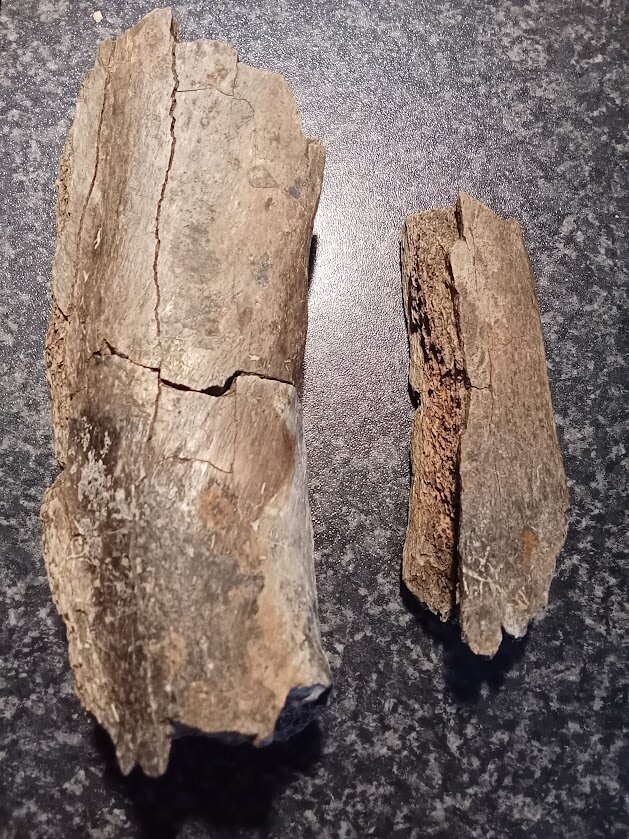
The fossil record of Amebelodon is robust, particularly in North America. Numerous specimens, ranging from isolated teeth and tusks to partial and nearly complete skeletons, have been recovered from Miocene deposits across the Great Plains, from Texas to South Dakota, as well as in Florida and California. The Ash Hollow Formation in Nebraska and the Clarendon beds in Texas are particularly famous for yielding high-quality Amebelodon fossils. The preservation quality is often good, allowing for detailed anatomical and microwear studies. Fossils attributed to the genus have also been found in Asia, specifically in China, suggesting a wide geographic distribution across the Bering Land Bridge during periods of lower sea levels. This extensive and well-preserved fossil record has been crucial for reconstructing not only the biology of Amebelodon but also the broader paleoecology of late Miocene terrestrial ecosystems in the Northern Hemisphere.
Amebelodon's bizarre and memorable appearance has secured it a place in popular culture and public paleontological exhibits. As the quintessential 'shovel-tusker,' it is frequently featured in museum displays about prehistoric mammals and the evolution of elephants. Impressive skeletal mounts of Amebelodon can be seen at major institutions such as the American Museum of Natural History in New York and the University of Nebraska State Museum (Morrill Hall) in Lincoln. It has also appeared in various television documentaries, books, and video games depicting prehistoric life, often highlighted as an example of the strange and wonderful evolutionary experiments that occurred in Earth's past. Its unique morphology makes it an excellent educational tool for teaching concepts like adaptation, specialized feeding niches, and convergent evolution.
Classification
Time Period
Discovery
Location
North America
Formation
Ash Hollow Formation
Frequently Asked Questions
What is Amebelodon?
Amebelodon is an extinct genus of proboscidean, a group of large mammals that includes modern elephants, that inhabited North America, Asia, and Africa during the Miocene epoch of the Neogene period, approximately 10 to 5 million years ago. Belonging to the family Gomphotheriidae, these animals are ...
When did Amebelodon live?
Amebelodon lived during the neogene period of the cenozoic era approximately 10-5 million years ago.
Where was Amebelodon discovered?
Fossils of Amebelodon were discovered in North America in the Ash Hollow Formation.
What did Amebelodon eat?
Amebelodon was a herbivore. It lived in terrestrial (savannas, woodlands, riverine environments) habitats.
What type of fossil is Amebelodon?
Amebelodon is preserved as a body fossil. The preservation quality is good.
Related Specimens
From the cenozoic era · body fossils
/cc86f4a1bc00.jpg)