Prognathodon
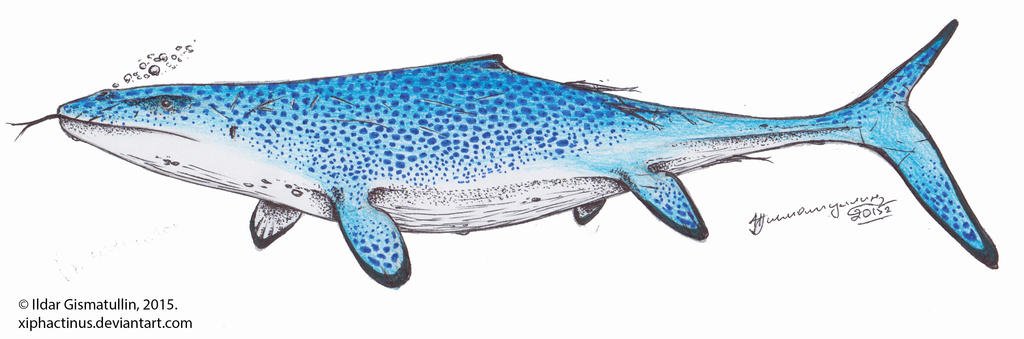
Prognathodon saturator
Image: Image sourced via web search (Fair use / Educational)
About Prognathodon
Prognathodon was a genus of large, powerful mosasaur, a type of extinct marine reptile that dominated the oceans during the Late Cretaceous Period. Living approximately 70 to 66 million years ago, its fossils have been unearthed globally, indicating a widespread distribution across the ancient seas that covered much of the planet. As one of the most robustly built mosasaurs, Prognathodon is significant for its specialized, durophagous (shell-crushing) feeding adaptations, which set it apart from many of its contemporaries and provide a crucial window into the diverse ecological niches occupied by these apex predators just before the Cretaceous-Paleogene extinction event.
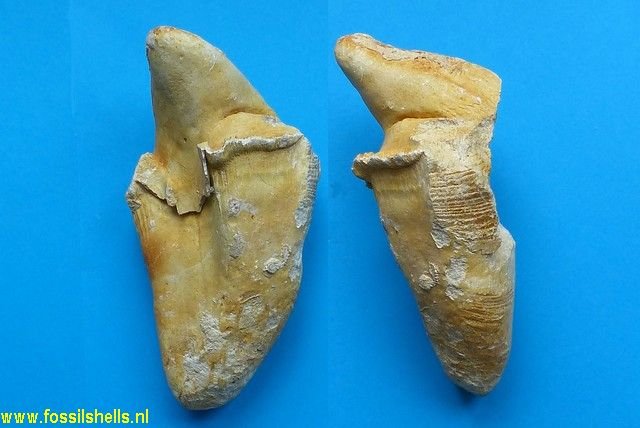
Prognathodon was a formidable predator, with most species, including P. saturator, reaching estimated lengths of around 10 meters (33 feet), though some fragmentary remains suggest individuals could have grown even larger, possibly up to 12 meters. For comparison, this is roughly the size of a large great white shark or a small school bus. Its most defining characteristic was its massive, powerfully built skull, which was shorter and wider than that of many other mosasaurs like Tylosaurus. This robust construction supported immense jaw muscles, giving Prognathodon an exceptionally strong bite force. The teeth were conical, stout, and often featured fine serrations, but their most unique feature was the presence of bony rings, or peduncles, at their bases, which firmly anchored them in the jaw. This adaptation prevented tooth loss when crushing hard-shelled prey. The skull also possessed sclerotic rings, bony structures within the eye sockets that supported the eyeballs against the immense pressure of deep dives. Its body was streamlined and serpentine, propelled by a long, powerful tail that likely culminated in a crescent-shaped fluke, similar to that of a shark, an inference supported by well-preserved fossils of related mosasaurs. Its four limbs had evolved into paddle-like flippers used for steering and stability rather than propulsion.
Prognathodon's unique anatomy points directly to its paleobiology as a specialized predator. The combination of a robust skull, powerful jaw musculature, and stout, deeply-rooted teeth strongly indicates a diet that included hard-shelled organisms, a feeding strategy known as durophagy. Stomach contents from a specimen of P. saturator confirm this, containing remains of a large sea turtle, various fish, and a large ammonite. This evidence suggests Prognathodon was an opportunistic, high-level predator capable of tackling a wide variety of prey, from swift-moving fish to heavily armored invertebrates and reptiles. Its hunting strategy likely involved ambush tactics, using its powerful tail for rapid acceleration to surprise victims. The large, forward-facing eyes with sclerotic rings suggest good vision, potentially adapted for hunting in lower light conditions at depth. Locomotion was primarily thunniform (tail-driven), with the flippers providing maneuverability. Like other mosasaurs, it was an air-breathing reptile that would have needed to surface periodically. There is little direct evidence for social behavior, but like modern marine predators, they may have been largely solitary hunters, coming together only for mating.
During the late Maastrichtian age, when Prognathodon thrived, the world was a warmer greenhouse planet with high sea levels that created vast epicontinental seas, such as the Western Interior Seaway in North America and the Tethys Ocean. Prognathodon was a cosmopolitan genus, inhabiting these warm, shallow to moderately deep marine environments. Its ecosystem was rich and diverse, teeming with potential prey and competitors. It shared the seas with a host of other marine life, including other mosasaur genera like the gigantic Mosasaurus and the slender Platecarpus, long-necked plesiosaurs like Elasmosaurus, and giant sea turtles such as Archelon. The waters were also filled with large predatory fish like Xiphactinus, numerous species of sharks including Cretoxyrhina, and vast shoals of smaller fish and cephalopods, particularly ammonites. As an apex predator, Prognathodon occupied a high trophic level, likely preying on sea turtles, large fish, ammonites, and even smaller marine reptiles. Its powerful build would have made it a formidable opponent, with few natural predators other than larger individuals of its own species or the very largest mosasaurs like Mosasaurus hoffmannii.
The history of Prognathodon begins in 1889 when Belgian paleontologist Louis Dollo described the first species, Prognathodon solvayi, based on a partial skull and skeleton found in the phosphatic chalk deposits of Ciply, Belgium. The genus name, meaning 'forward jaw tooth,' refers to a small, conical tooth located on the premaxilla at the very tip of the snout. However, the most significant and defining species, Prognathodon saturator, was described much later in 2002 by Dorthe Dahlmann. This species is based on a remarkably complete and well-preserved skeleton, nicknamed 'Bèr,' discovered in the Maastricht Formation near Maastricht, Netherlands. This specimen, housed at the Natuurhistorisch Museum Maastricht, is crucial because it included preserved stomach contents, providing direct, unambiguous evidence of the animal's diet. Over the years, numerous other species have been assigned to the genus from fossils found in North America (Kansas, South Dakota, Alberta), Europe (Netherlands, Belgium, Sweden), the Middle East (Jordan, Israel), and Africa (Angola, Morocco), highlighting its global distribution during the final stages of the Cretaceous.
Prognathodon belongs to the family Mosasauridae, a group of advanced squamates (the order that includes modern lizards and snakes) that became fully adapted to a marine lifestyle. Within this family, it is placed in the subfamily Mosasaurinae, alongside other large-bodied, robust predators like Mosasaurus and Clidastes. Its evolutionary path demonstrates a key trend within mosasaurs: niche partitioning. While some genera evolved into hypercarnivorous pursuit predators of soft-bodied prey (e.g., Tylosaurus), Prognathodon and its relatives specialized in a different direction, developing the powerful bite and reinforced dentition necessary for durophagy. This specialization allowed it to exploit food resources unavailable to other marine reptiles, reducing direct competition and contributing to the incredible success and diversity of mosasaurs in the Late Cretaceous. Mosasaurs have no direct modern descendants, as they, along with the non-avian dinosaurs, were wiped out by the K-Pg extinction event. Their closest living relatives are monitor lizards and snakes, with genetic and morphological studies increasingly favoring a close relationship with snakes.
Despite being a well-established genus, Prognathodon is still the subject of scientific debate, primarily concerning its taxonomy and the exact number of valid species. Over the years, many species have been assigned to the genus based on fragmentary remains, leading to a complex and sometimes confusing classification. Some paleontologists argue that the genus as currently defined may be paraphyletic, meaning it does not include all descendants of a common ancestor, and that some species might be better placed in other genera or warrant new ones. For example, the species once known as Prognathodon overtoni has since been reclassified into its own genus, Gnathomortis. Ongoing research, utilizing more advanced techniques like CT scanning of skulls and cladistic analysis of newly discovered, more complete specimens, continues to refine our understanding of the relationships within the Prognathodon lineage and its place within the broader mosasaur family tree. These studies help clarify which anatomical features are truly diagnostic for the genus versus those that represent convergent evolution for a shell-crushing lifestyle.
The fossil record of Prognathodon is geographically widespread but consists of variably complete specimens. Fossils are most famously found in the Maastrichtian-age marine deposits of Europe, particularly the Maastricht Formation in the Netherlands and Belgium, which has yielded some of the best-preserved skulls and skeletons, including the P. saturator holotype. In North America, significant remains have been recovered from the Pierre Shale and Bearpaw Formations of the Western Interior Seaway, spanning from Kansas to Alberta, Canada. Fossils have also been identified in the Middle East and North Africa, indicating its presence in the ancient Tethys Ocean. While complete, articulated skeletons are rare, disarticulated skulls, jaws, and isolated teeth are more commonly found. The robust nature of the skull and teeth means they preserve well, making them the most frequently discovered elements. These fossils provide invaluable data on the genus's anatomy, diet, and extensive geographic range during the final million years of the dinosaur era.
Prognathodon has made a notable, if somewhat niche, impact on popular culture, often appearing in documentaries and books about prehistoric marine life. While not as famous as Mosasaurus or Tylosaurus, its powerful build and shell-crushing abilities make it a fascinating subject. It has been featured in television series like the BBC's 'Sea Monsters' and is represented in video games that include prehistoric creatures. Major museum collections, such as the Natuurhistorisch Museum Maastricht in the Netherlands and the Royal Tyrrell Museum of Palaeontology in Canada, feature impressive fossil displays of Prognathodon, including skulls and skeletal mounts. These exhibits serve an important educational role, showcasing the incredible diversity of marine predators that existed in the Late Cretaceous and highlighting the complex food webs of ancient oceans.
Classification
Time Period
Discovery
Location
Netherlands
Formation
Maastricht Formation
Frequently Asked Questions
What is Prognathodon?
Prognathodon was a genus of large, powerful mosasaur, a type of extinct marine reptile that dominated the oceans during the Late Cretaceous Period. Living approximately 70 to 66 million years ago, its fossils have been unearthed globally, indicating a widespread distribution across the ancient seas ...
When did Prognathodon live?
Prognathodon lived during the cretaceous period of the mesozoic era approximately 70-66 million years ago.
Where was Prognathodon discovered?
Fossils of Prognathodon were discovered in Netherlands in the Maastricht Formation.
What did Prognathodon eat?
Prognathodon was a carnivore. It lived in marine habitats.
What type of fossil is Prognathodon?
Prognathodon is preserved as a body fossil. The preservation quality is good.
Related Specimens
From the mesozoic era · body fossils