Dicynodon
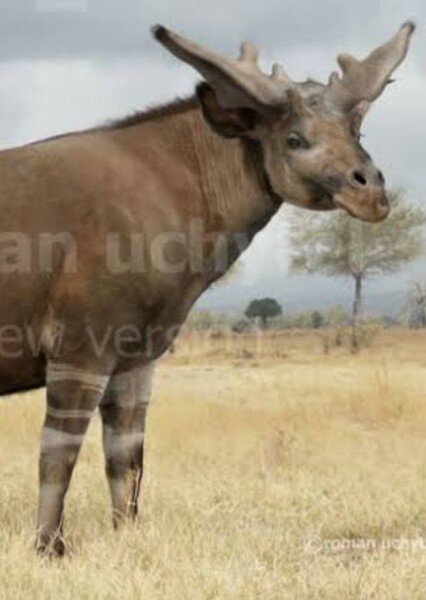
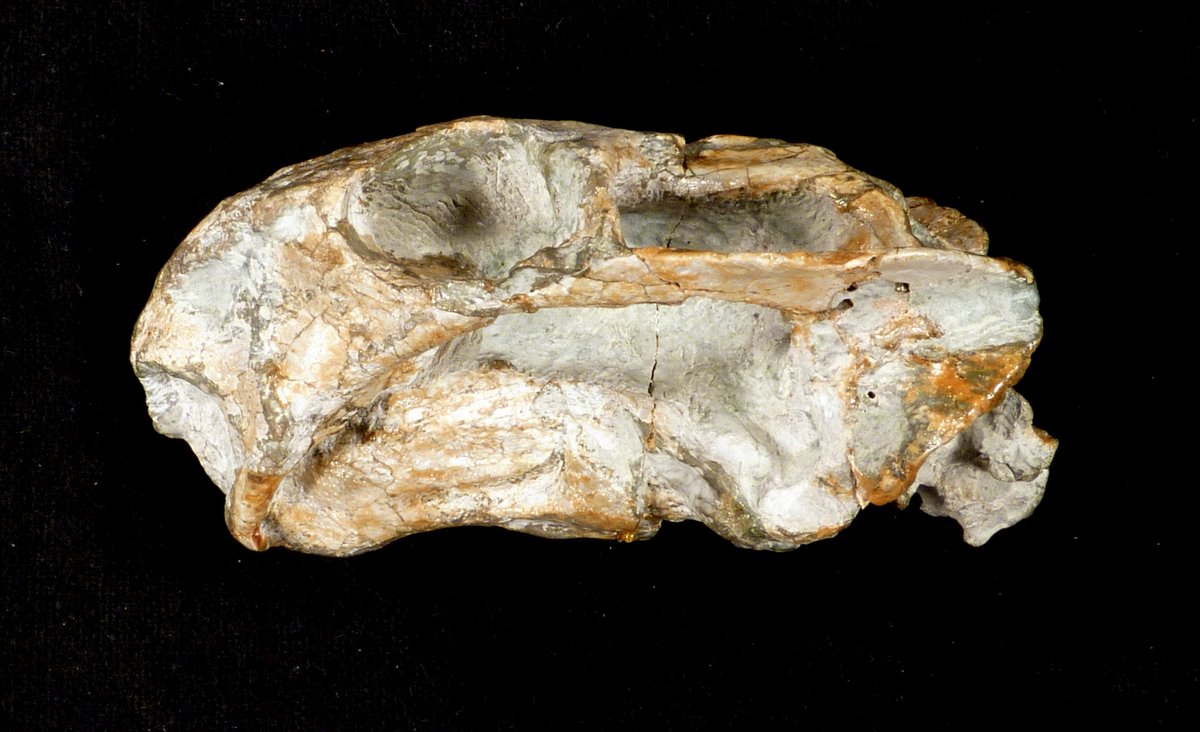
Dicynodon lacerticeps
Image: Image sourced via web search (Fair use / Educational)
About Dicynodon
Dicynodon was a highly successful genus of herbivorous synapsid that thrived during the Late Permian period, approximately 260 to 252 million years ago. As a quintessential member of the dicynodonts, a group of tusked therapsids, its fossils are abundant in the Karoo Supergroup of South Africa, making it a key index fossil for understanding terrestrial ecosystems just before the catastrophic Permian-Triassic extinction event. Its unique combination of a turtle-like beak and mammalian-like tusks represents a fascinating chapter in the evolution of the lineage that would eventually lead to mammals.
Dicynodon was a medium-sized, robustly built animal, typically reaching an average body length of about 1.2 meters (4 feet), comparable in size to a modern pig or a large sheep. Weight estimates vary, but likely ranged from 50 to 90 kilograms (110 to 200 pounds). Its most defining characteristic was its specialized skull. The front of the jaws was toothless and covered in a horny, turtle-like beak, which would have been highly effective for shearing and cropping tough plant material. Protruding from the upper jaw were two prominent, downward-pointing tusks, which are the basis for its name, meaning 'two dog-tooth'. These tusks, likely ever-growing, were present in both males and females, though they were often larger in males, suggesting a role in display or combat in addition to feeding or defense. The skull was broad at the back with large temporal fenestrae (openings behind the eye sockets) that anchored powerful jaw muscles. Its body was barrel-chested, supported by stout, pillar-like limbs. The forelimbs sprawled slightly to the side, while the hind limbs were positioned more directly beneath the body, indicating a semi-erect posture that was more efficient than the fully sprawling gait of its more primitive ancestors. This posture, combined with a short tail, gave it a distinctive, somewhat front-heavy appearance.
The paleobiology of Dicynodon reveals a successful herbivorous lifestyle adapted to the semi-arid environments of the Late Permian. Its keratinous beak was a powerful tool for processing vegetation, likely allowing it to consume a wide variety of plants, including the tough, fibrous flora such as glossopterids that dominated the landscape. The tusks may have been used to dig for roots and tubers, providing access to nutritious underground food sources, especially during dry seasons. Wear patterns on the tusks support this digging hypothesis. Its semi-erect gait suggests it was a deliberate, steady walker rather than a fast runner, capable of traversing long distances in search of food and water. Fossil evidence, particularly the discovery of bonebeds containing multiple individuals, suggests that Dicynodon may have been a social, herding animal. This behavior would have offered protection against predators and facilitated group migration to track seasonal resources. Like other therapsids, Dicynodon likely had a higher metabolic rate than contemporary reptiles, though probably not fully endothermic like modern mammals. This intermediate metabolism would have supported a more active lifestyle than that of its reptilian counterparts, allowing it to thrive in the fluctuating Permian climate.
Dicynodon lived on the supercontinent of Pangaea during the Wuchiapingian and Changhsingian ages of the Late Permian. The climate was generally arid to semi-arid, with pronounced seasons, vast deserts, and fern-filled floodplains along river systems. Dicynodon was a dominant primary consumer within the Karoo Basin ecosystem of what is now South Africa. It shared this environment with a diverse fauna, including other dicynodonts like Oudenodon and Diictodon, as well as large pareiasaurs such as Pareiasaurus. Its primary predators were the formidable gorgonopsians, large saber-toothed synapsids like Gorgonops and Rubidgea, which were the apex predators of the time. The food web was complex, with Dicynodon occupying a crucial position as a high-biomass herbivore, converting plant matter into a food source for the top carnivores. Its abundance made it a staple prey item, and its success was a key factor in the structure and stability of these pre-extinction ecosystems. The world of Dicynodon was one on the brink of collapse, and its fossils provide a detailed snapshot of the last flourishing of Paleozoic life before the 'Great Dying'.
The discovery and study of Dicynodon are intrinsically linked to the rich fossil beds of the Karoo Supergroup in South Africa. The genus was first named and described by the renowned British anatomist Sir Richard Owen in 1845, based on fossil skulls sent to him from the Eastern Cape. Owen, who also coined the term 'dinosaur', recognized the unique mix of reptilian and mammalian traits in these fossils and established the group Anomodontia to contain them. The type species, Dicynodon lacerticeps, was one of several species he named. For over a century, Dicynodon became a 'wastebasket taxon'—a taxonomic dumping ground where paleontologists placed hundreds of poorly understood dicynodont species from around the world. This led to immense confusion, with over 160 species being assigned to the genus at its peak. It wasn't until a comprehensive taxonomic revision in 2011 by paleontologist Christian F. Kammerer and his colleagues that the genus was rigorously redefined. They restricted the genus Dicynodon to only the type species, D. lacerticeps, and a few other closely related forms, reassigning the vast majority of other species to different genera. This landmark study clarified the evolutionary history of dicynodonts and re-established Dicynodon as a well-defined and scientifically useful genus.
Dicynodon holds immense evolutionary significance as a highly derived member of the Therapsida, the group of 'mammal-like reptiles' that includes the direct ancestors of mammals. It showcases the evolutionary experimentation that occurred within synapsids during the Permian. Its specialized feeding apparatus—the combination of a beak and tusks—was a highly successful adaptation for herbivory that evolved independently multiple times in different lineages. As a dicynodont, it belongs to the anomodont branch of therapsids, which is a sister group to the theriodonts, the lineage that ultimately gave rise to mammals. While Dicynodon itself was not a direct ancestor of mammals, it represents a successful side-branch that dominated terrestrial ecosystems for millions of years. The study of its anatomy, such as its semi-erect posture and evidence for powerful jaw musculature, provides crucial insights into the gradual acquisition of mammal-like traits, including more efficient locomotion and complex feeding mechanisms. The dicynodonts as a whole demonstrate how synapsids diversified to fill ecological niches previously dominated by other groups, prefiguring the later radiation of dinosaurs in the Mesozoic and mammals in the Cenozoic.
The primary scientific debate surrounding Dicynodon for decades was its chaotic taxonomy. The assignment of over 160 species from across Pangaea made it biologically implausible and taxonomically unworkable. The 2011 revision by Kammerer et al. resolved much of this, but debates continue regarding the precise function of the tusks. While digging and defense are primary hypotheses, their pronounced sexual dimorphism in some related species suggests a strong role in intraspecific competition and socio-sexual display, similar to the antlers of deer or the tusks of elephants. Another area of ongoing research is the metabolism of Dicynodon and its relatives. While it is generally agreed they were more active than ectothermic reptiles, the degree to which they were endothermic ('warm-blooded') remains an active area of investigation, with studies of bone histology and isotopic analysis providing conflicting or ambiguous clues. The exact cause of their ultimate demise in the Permian-Triassic extinction is also debated, though it was likely a combination of factors including massive volcanism, climate change, and ocean anoxia.
The fossil record of Dicynodon, in its modern, restricted sense, is primarily concentrated in the upper Permian strata of the Karoo Supergroup of South Africa. It is particularly abundant in the Cistecephalus and Daptocephalus Assemblage Zones, making it an excellent biostratigraphic marker for correlating rock layers of this age. Fossils are extremely common, consisting mostly of complete or partial skulls, which are robust and preserve well. Complete skeletons, while rarer, have also been discovered, providing a comprehensive understanding of its anatomy. The preservation quality is generally good, often capturing fine details of the bone structure. Famous fossil sites are scattered throughout the Karoo Basin, a region that has been a focal point for paleontological research for over 150 years. The sheer number of Dicynodon skulls collected has allowed for detailed studies of population structure, growth series, and individual variation, a level of analysis that is rare for most prehistoric animals.
Despite its scientific importance, Dicynodon has a relatively low profile in popular culture compared to dinosaurs. It is not a household name, but it is a staple in paleontological textbooks and museum exhibits focusing on the Permian period and the evolution of mammals. Major museums like the Natural History Museum in London, the Iziko South African Museum in Cape Town, and the Field Museum in Chicago often feature skulls or skeletal reconstructions of Dicynodon or its close relatives. Its strange, tusked-beak appearance makes it a memorable example of the 'weird and wonderful' life that existed before the age of dinosaurs, serving an important educational role in showcasing the diversity of prehistoric life and the deep evolutionary history of the mammalian lineage.
Classification
Time Period
Discovery
Location
South Africa
Formation
Karoo Supergroup (specifically the Teekloof, Balfour, and Katberg Formations)
Frequently Asked Questions
What is Dicynodon?
Dicynodon was a highly successful genus of herbivorous synapsid that thrived during the Late Permian period, approximately 260 to 252 million years ago. As a quintessential member of the dicynodonts, a group of tusked therapsids, its fossils are abundant in the Karoo Supergroup of South Africa, maki...
When did Dicynodon live?
Dicynodon lived during the permian period of the paleozoic era approximately 260-252 million years ago.
Where was Dicynodon discovered?
Fossils of Dicynodon were discovered in South Africa in the Karoo Supergroup (specifically the Teekloof, Balfour, and Katberg Formations).
What did Dicynodon eat?
Dicynodon was a herbivore. It lived in terrestrial habitats.
What type of fossil is Dicynodon?
Dicynodon is preserved as a body fossil. The preservation quality is good.
Related Specimens
From the paleozoic era · body fossils