Sordes
Sordes pilosus
Image: Image sourced via web search (Fair use / Educational)
About Sordes
Sordes pilosus was a small, long-tailed pterosaur that lived during the Late Jurassic period, approximately 155 to 148 million years ago, in what is now Kazakhstan. Its discovery was a landmark event in paleontology, providing the first definitive, direct fossil evidence that pterosaurs were covered in a hair-like integument, fundamentally changing our understanding of their biology and physiology. This small flying reptile, whose name translates to 'hairy devil', offered a crucial window into the appearance and life of non-pterodactyloid pterosaurs.
The physical description of Sordes pilosus reveals a creature exquisitely adapted for a life in the air, though on a small scale. With a wingspan of approximately 63 centimeters (about 2 feet), it was comparable in size to a modern crow or a small gull. Its total body length, including its long tail, was around 20 centimeters. Weight estimates for such a delicate animal are challenging, but likely fell in the range of 50 to 100 grams, similar to a small modern bird. The most striking feature, preserved in the holotype specimen, was its dense covering of pycnofibers, a type of filament unique to pterosaurs. These fibers were not uniform; the fossil shows two distinct types. A shorter, denser layer, about 5 millimeters long, covered the body and proximal parts of the wings, resembling a downy undercoat. Longer, stiffer filaments were present on the outer part of the wing membrane, or patagium. This discovery confirmed that pterosaurs were not scaly reptiles but were insulated, warm-blooded animals. The skull was relatively short and robust for a rhamphorhynchid, with small, sharp, widely spaced teeth well-suited for grasping slippery prey. Its long tail, characteristic of 'rhamphorhynchoid' pterosaurs, ended in a complex, diamond-shaped vane, which likely acted as a rudder for stability and maneuverability during flight.
The paleobiology of Sordes suggests it was an active and agile predator. Its small, sharp teeth indicate a diet primarily composed of small animals, a conclusion supported by its paleoenvironment. It likely hunted insects, small lizards, amphibians, and perhaps even tiny fish from the shores of the large lake system it inhabited. Its flight style was probably dynamic and agile, using its broad wings for powered flapping flight and its long, vaned tail for precise steering, allowing it to navigate cluttered environments or pursue nimble prey. On the ground, the limb structure of Sordes, like other pterosaurs, has been a subject of debate, but most evidence points to a quadrupedal stance, walking on all fours with its wings folded back. The presence of a dense pycnofiber coat is strong evidence for endothermy, or warm-bloodedness. This insulation would have been essential for maintaining a high metabolic rate required for powered flight, especially for a small animal with a high surface-area-to-volume ratio. There is little direct evidence for social behavior, but like many modern flying vertebrates, it is plausible that they congregated near water sources for hunting and nesting, though no fossil nests or eggs have been definitively attributed to the genus.
Sordes lived in the unique ecological context of the Karabastau Formation in southern Kazakhstan during the Late Jurassic. This environment was not a vast ocean but a large, brackish to freshwater lacustrine system, often compared to a Mesozoic version of the Dead Sea or the Aral Sea, characterized by high salinity and anoxic bottom waters that contributed to the exceptional preservation of fossils. The climate was likely warm and semi-arid. The lake was teeming with life, creating a complex food web. Sordes would have shared its airspace with other pterosaurs, such as the contemporary Batrachognathus. The waters below were inhabited by various fish and the unusual Tully-monster-like Tullimonstrum, while the surrounding terrestrial landscape supported a variety of small reptiles, amphibians, and insects, all of which would have been potential prey for Sordes. As a small flying predator, Sordes occupied a niche similar to modern insectivorous bats or birds. It would have been, in turn, prey for larger predators. While large theropod dinosaurs were likely rare in this specific lacustrine setting, larger pterosaurs or terrestrial predators prowling the shorelines could have posed a significant threat.
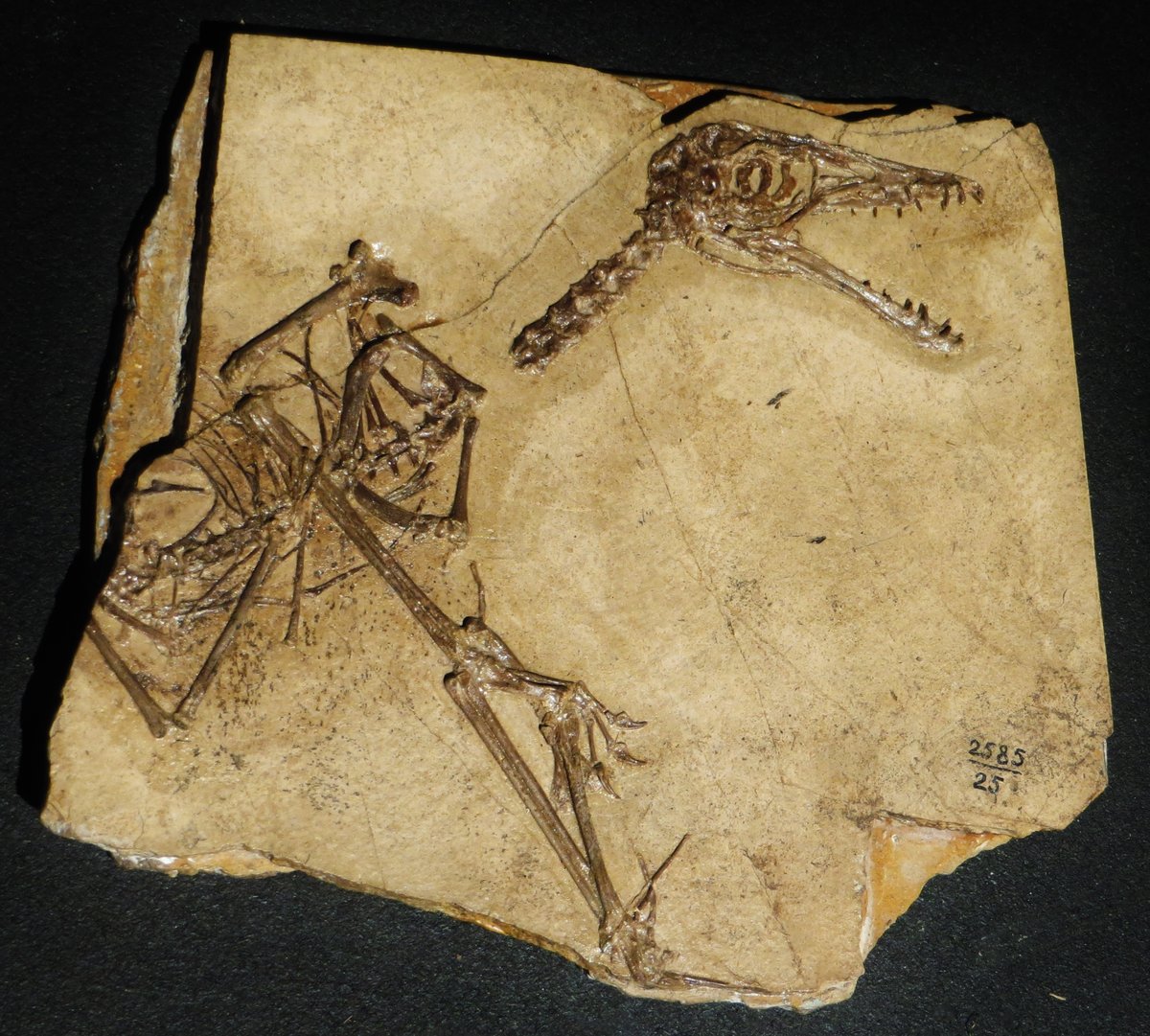
The discovery history of Sordes is pivotal to the history of pterosaur research. The animal was discovered in the 1960s by the renowned Soviet paleontologist Aleksandr Grigorevich Sharov. The fossils were unearthed from the foothills of the Karatau mountains in Kazakhstan, a site famous for its exquisitely preserved fossils. Sharov described the holotype specimen, PIN 2585/3, in a preliminary note in 1971. The specific name he chose, 'pilosus', is Latin for 'hairy', directly referencing the fossil's most significant feature. The generic name, 'Sordes', is Latin for 'filth' or 'devil', reportedly reflecting Sharov's initial impression of the creature. This discovery was revolutionary. While hints of pterosaur integument had been noted before, particularly in German Solnhofen specimens, they were often dismissed as frayed connective tissue fibers. Sharov's Sordes specimen was the first to show unambiguous, dense, hair-like filaments covering the body and parts of the wings, providing undeniable proof of an insulated coat. This single fossil forced a paradigm shift, moving the scientific consensus towards viewing pterosaurs as active, warm-blooded animals rather than sluggish, cold-blooded gliders.
The evolutionary significance of Sordes cannot be overstated. As a member of the family Rhamphorhynchidae, it represents a classic example of a non-pterodactyloid, or 'rhamphorhynchoid', pterosaur. These earlier forms are characterized by long, bony tails, relatively short wrist and neck bones, and teeth extending along most of the jaw. Sordes and its relatives showcase the ancestral body plan from which the later, more derived pterodactyloids—with their short tails and long necks—evolved. The primary importance of Sordes lies in what it revealed about pterosaur physiology and its relationship to other archosaurs. The discovery of its pycnofibers fueled the debate about the origins of feathers and insulation in the broader archosaur family tree, which includes dinosaurs, birds, and crocodilians. Pycnofibers are now understood to be a unique structure, analogous but not homologous to the feathers of dinosaurs and birds. This indicates that insulation evolved independently multiple times within Archosauria, highlighting the strong evolutionary pressure for endothermy in active, flying, or fast-moving lineages during the Mesozoic.
Despite its importance, Sordes has been at the center of some scientific debates. Initially, the nature of its pycnofibers was questioned, with some researchers suggesting they were simply reinforcing fibers within the wing membrane. However, subsequent discoveries of other fuzzy pterosaurs, like Jeholopterus and Anurognathus from China, have solidified the interpretation of a body-wide insulating coat. The exact classification within Pterosauria has also been discussed; while generally placed within Rhamphorhynchidae, its precise relationships to other members of the family remain a topic of phylogenetic analysis. Furthermore, the function of the different types of pycnofibers is still being explored. The shorter, downy coat was clearly for insulation, but the longer, stiffer filaments on the outer wing may have had an aerodynamic or sensory function, perhaps detecting airflow changes over the wing surface, similar to the vibrissae (whiskers) of mammals or the filoplumes of birds. These discussions continue as new imaging techniques and better-preserved fossils provide more data on the soft-tissue anatomy of these remarkable animals.
The fossil record for Sordes is concentrated entirely in one location: the Karabastau Formation of Kazakhstan. This site is a lagerstätte, a sedimentary deposit that exhibits extraordinary fossil richness and preservation. To date, about seven specimens of Sordes have been recovered from this formation. The holotype (PIN 2585/3) is the most famous, as it is a nearly complete and articulated skeleton preserved on a slab with clear impressions of the wing membranes and the crucial pycnofibers. Other specimens are more fragmentary but have helped to fill in details of the anatomy. The exceptional preservation is due to the unique depositional environment of the ancient lake, where fine-grained sediment and anoxic bottom waters prevented scavenging and decay, allowing for the fossilization of delicate structures like skin, membranes, and pycnofibers that are almost never preserved in the fossil record. This makes the Karatau fossil sites globally significant for understanding Mesozoic life.
In terms of cultural impact, Sordes is not as widely known to the public as giants like Pteranodon or Quetzalcoatlus, but it holds a legendary status within the paleontological community. It is a textbook example of a fossil that fundamentally changed scientific understanding. Reconstructions of Sordes, emphasizing its fuzzy coat, frequently appear in books, documentaries, and museum exhibits about pterosaurs to illustrate their true appearance as warm, active animals rather than naked, leathery reptiles. Casts and original specimens of Sordes are displayed in several major institutions, most notably the Orlov Museum of Paleontology in Moscow. Its discovery serves as a powerful educational tool, demonstrating how a single, well-preserved fossil can revolutionize a scientific field and overturn decades of previous assumptions about a whole group of extinct animals.
Classification
Time Period
Discovery
Location
Kazakhstan
Formation
Karabastau Formation
Frequently Asked Questions
What is Sordes?
Sordes pilosus was a small, long-tailed pterosaur that lived during the Late Jurassic period, approximately 155 to 148 million years ago, in what is now Kazakhstan. Its discovery was a landmark event in paleontology, providing the first definitive, direct fossil evidence that pterosaurs were covered...
When did Sordes live?
Sordes lived during the jurassic period of the mesozoic era approximately 155-148 million years ago.
Where was Sordes discovered?
Fossils of Sordes were discovered in Kazakhstan in the Karabastau Formation.
What did Sordes eat?
Sordes was a carnivore. It lived in terrestrial, aerial, lacustrine habitats.
What type of fossil is Sordes?
Sordes is preserved as a body fossil. The preservation quality is exceptional.
Related Specimens
From the mesozoic era · body fossils