Pteranodon
Pteranodon longiceps
Image: Category:Pteranodon longiceps fossils - Wikimedia Commons (CC BY-SA)
About Pteranodon
Pteranodon longiceps was a massive, iconic pterosaur that soared over the Western Interior Seaway of North America during the Late Cretaceous period, approximately 86 to 84.5 million years ago. It was not a dinosaur, but rather a highly specialized member of a distinct order of flying reptiles known as pterosaurs, representing a pinnacle of aerial adaptation in non-avian vertebrates. As one of the most recognizable and extensively studied flying animals of the Mesozoic era, Pteranodon provides crucial insights into the marine ecosystems of its time and the biomechanical limits of vertebrate flight.
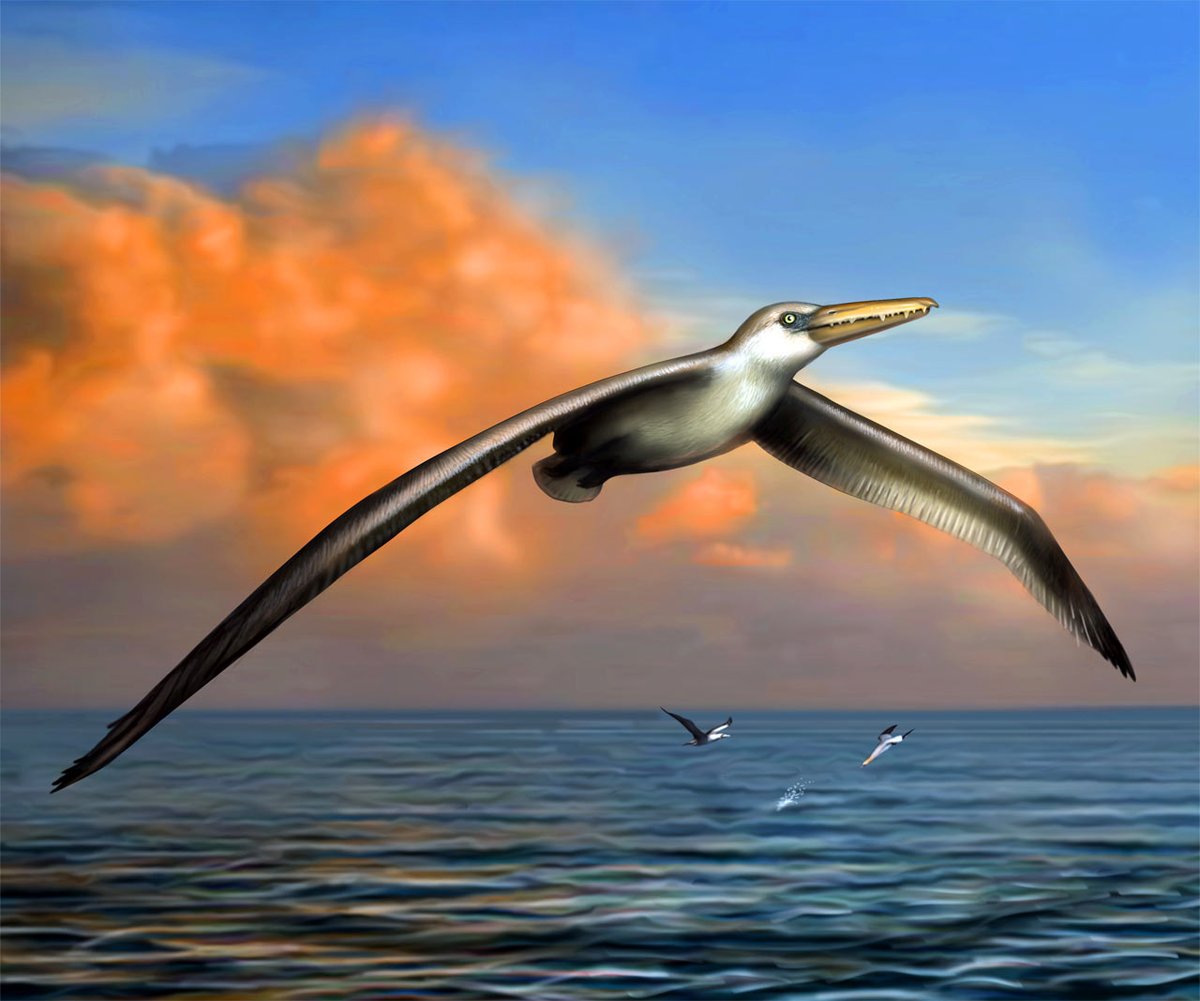
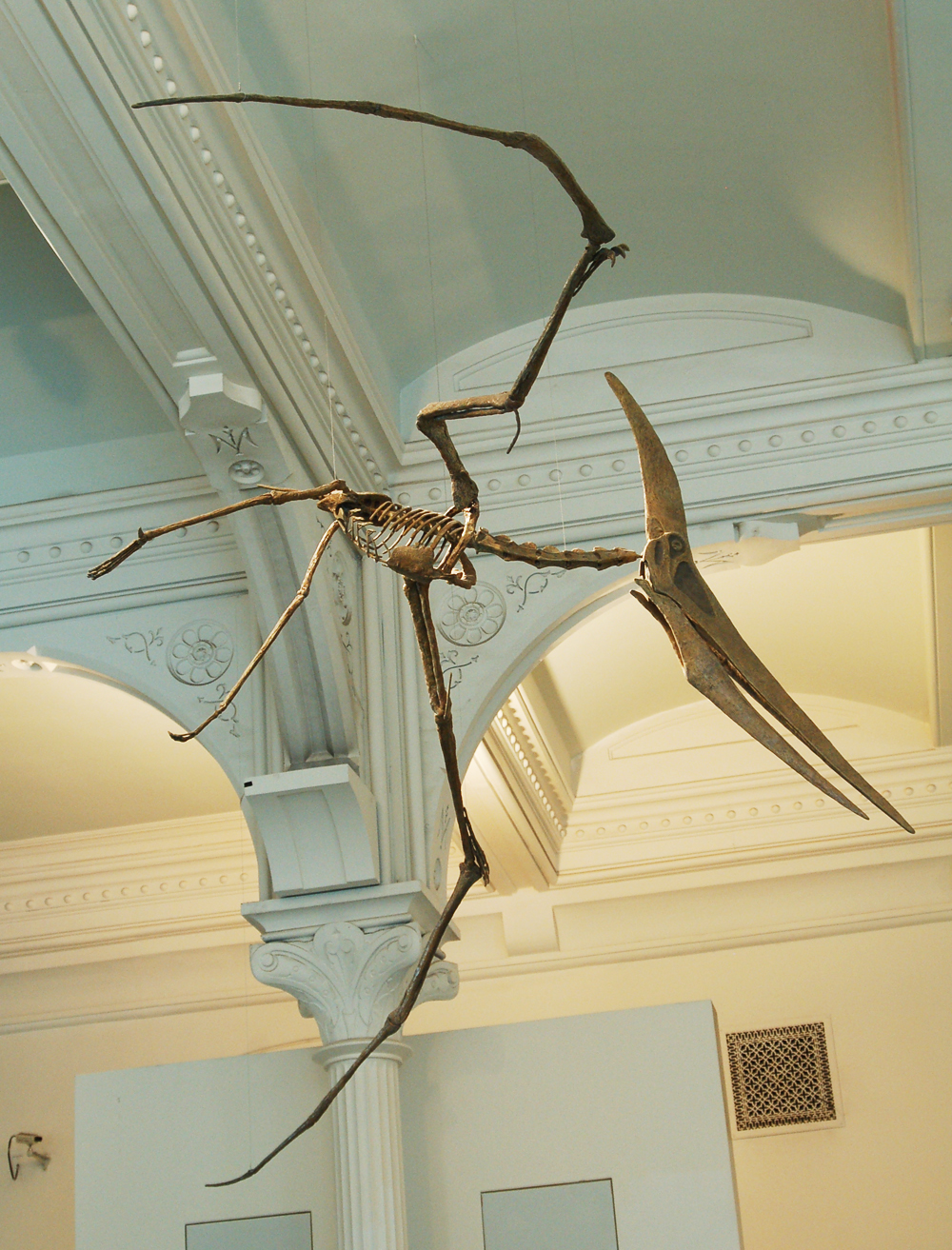
The physical anatomy of Pteranodon was a marvel of evolutionary engineering, characterized by extreme adaptations for a life spent largely on the wing. The most striking feature of Pteranodon was its enormous wingspan, which in adult males could reach up to 7 meters, or roughly 23 feet, making it one of the largest flying animals known to science, surpassed only by later azhdarchid pterosaurs. Unlike the wings of birds, which are supported by feathered arms, the wings of Pteranodon were formed by a complex membrane of skin, muscle, and other tissues stretching from the ankles to a dramatically elongated fourth finger. Its body was surprisingly small relative to its wings, and weight estimates have historically varied wildly, though modern biomechanical models suggest a living weight of roughly 20 to 50 kilograms. The skull of Pteranodon was highly distinctive, featuring a long, pointed, completely toothless beak and a prominent backward-projecting cranial crest. This crest exhibited profound sexual dimorphism. Adult males possessed massive, elongated crests that swept far back from the skull, while females had much smaller, rounded crests. Furthermore, females were significantly smaller in overall body size, with wingspans averaging around 3.8 meters, and possessed wider pelvic canals, an adaptation necessary for laying eggs. The bones of Pteranodon were incredibly lightweight, featuring hollow structures supported by internal struts, an anatomical trait that maximized strength while minimizing mass, much like the construction of modern aircraft.
The paleobiology of Pteranodon reveals a highly specialized marine predator perfectly adapted to its coastal environment. Fossil evidence, including fossilized fish bones and scales found within the stomach cavities of several exceptionally preserved specimens, definitively confirms that Pteranodon was a piscivore. For decades, scientists debated exactly how Pteranodon captured its prey. Early hypotheses suggested it skimmed the surface of the water with its lower jaw, similar to modern skimmer birds. However, biomechanical analyses have shown that the physical drag of skimming would have been too great for an animal of its size. Today, the consensus is that Pteranodon likely engaged in plunge-diving or surface-seizing, landing on the water to snatch fish just below the surface before taking off again. Taking flight from the water's surface would have required immense power. Pteranodon utilized a quadrupedal launch mechanism, using its heavily muscled forelimbs to vault itself into the air, a method far more efficient than the bipedal takeoff of birds. Once airborne, Pteranodon was a master of dynamic soaring. Much like the modern wandering albatross, it utilized the gradient of wind speeds over the ocean waves to travel vast distances with minimal flapping, conserving energy while searching for schools of fish. Studies of its bone histology indicate that Pteranodon grew rapidly, reaching adult size within a few years, after which its growth ceased, a pattern known as determinate growth.
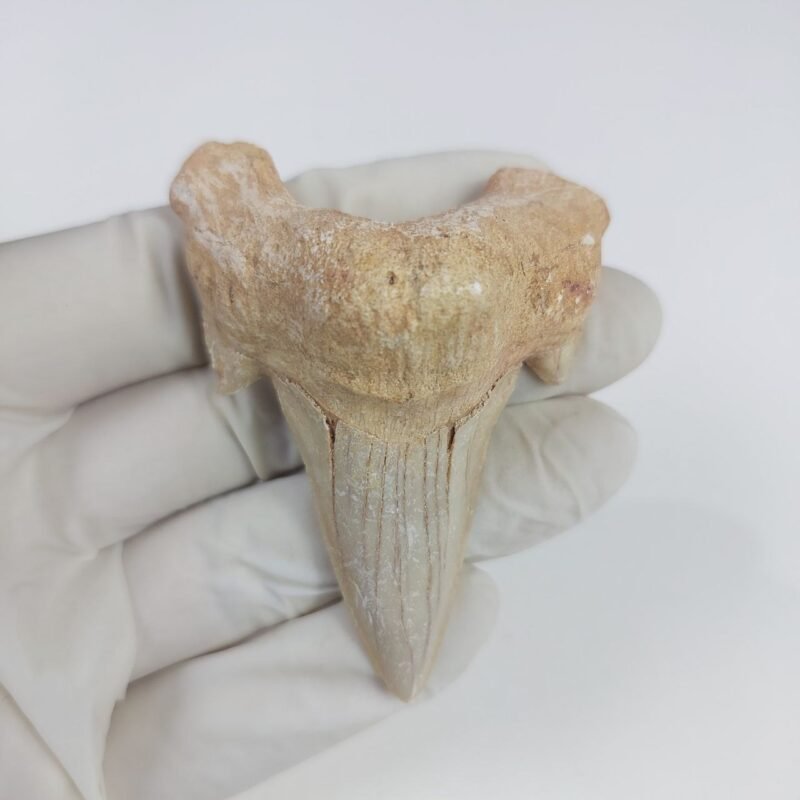
During the Late Cretaceous, the environment inhabited by Pteranodon was vastly different from the modern North American landscape. The continent was bisected by the Western Interior Seaway, a massive, shallow inland sea that stretched from the Arctic Ocean to the Gulf of Mexico. The climate was warm, subtropical, and highly productive, supporting a rich and diverse marine ecosystem. Pteranodon lived along the coastal margins and ventured far out over the open waters of this seaway. The waters below were teeming with life, providing an abundant food source of schooling fish such as the prehistoric herring-like Xiphactinus, which itself could grow to massive sizes. However, the seaway was also fraught with danger. Pteranodon shared its habitat with apex marine predators, including massive mosasaurs like Tylosaurus, fast-swimming plesiosaurs, and large predatory sharks such as Cretoxyrhina. While Pteranodon was an apex aerial predator, it was vulnerable when resting on the water's surface. Fossil evidence confirms this perilous existence; several Pteranodon bones have been discovered bearing the embedded teeth of Cretoxyrhina, and one famous specimen was found preserved within the stomach contents of a marine reptile, indicating that these magnificent flyers occasionally fell victim to the monsters of the deep. In the air, Pteranodon shared the skies with the toothed diving bird Hesperornis and the smaller, tern-like flying bird Ichthyornis, occupying a distinct ecological niche as a wide-ranging, soaring macro-predator.
The discovery history of Pteranodon is deeply intertwined with the early, tumultuous days of American paleontology. The first fragmentary fossils of this giant flying reptile were discovered in 1870 by the legendary paleontologist Othniel Charles Marsh during an expedition to the Smoky Hill Chalk member of the Niobrara Formation in western Kansas. At the time, all known pterosaurs, which had primarily been found in Europe, possessed teeth. Marsh initially assigned these new, massive wing bones to the genus Pterodactylus. However, in 1876, Marsh's team discovered the first nearly complete skull of the animal. To Marsh's astonishment, the skull lacked teeth entirely. Recognizing the significance of this unique adaptation, Marsh erected a new genus, Pteranodon, which translates from Greek as wing without tooth. The specific epithet longiceps means long head. The discovery of Pteranodon occurred during the infamous Bone Wars, a period of intense and often bitter rivalry between Marsh and his contemporary, Edward Drinker Cope. Cope had also discovered pterosaur fossils in the same region and attempted to name them Ornithochirus, but Marsh's publication of Pteranodon took precedence. Since those initial discoveries, the Niobrara Formation has yielded over a thousand Pteranodon specimens, making it one of the best-represented pterosaurs in the fossil record and a cornerstone of our understanding of pterosaur anatomy.
In the broader context of evolutionary significance, Pteranodon occupies a crucial position in the pterosaur family tree. It belongs to the suborder Pterodactyloidea, the group of advanced, short-tailed pterosaurs that dominated the skies during the later stages of the Mesozoic era. Within this suborder, Pteranodon is part of the clade Ornithocheiroidea, a lineage of predominantly marine pterosaurs known for their impressive wingspans and soaring capabilities. The complete loss of teeth in Pteranodon represents a fascinating example of convergent evolution with modern birds. Just as birds lost their teeth to reduce weight in the skull and improve flight efficiency, Pteranodon evolved a lightweight, keratinous beak to achieve the same biomechanical advantage. While pterosaurs left no living descendants, having gone completely extinct during the Cretaceous-Paleogene mass extinction event 66 million years ago, studying Pteranodon allows scientists to understand the absolute biomechanical limits of biological flight. By comparing the wing loading, aspect ratio, and soaring techniques of Pteranodon to modern pelagic birds like albatrosses and frigatebirds, researchers can extrapolate the evolutionary pressures that shape the anatomy of large-bodied flying vertebrates across different branches of the tree of life.
Despite the abundance of fossil material, Pteranodon remains the subject of several ongoing scientific debates. One of the most enduring controversies involves its taxonomy. For decades, numerous species of Pteranodon were named based on slight variations in crest shape and body size. However, modern paleontologists, led by researchers such as Christopher Bennett, have extensively revised the genus, arguing that most of these variations are actually the result of sexual dimorphism, ontogeny, and geological crushing. Today, most scientists recognize only two valid species from the Niobrara Formation: Pteranodon longiceps, which features a backward-pointing crest, and Pteranodon sternbergi, which possesses an upright, bulbous crest. Some researchers argue that P. sternbergi is distinct enough to warrant its own genus, Geosternbergia, though this remains a point of contention. Another major debate centers on the exact weight and flight capabilities of the animal. While early estimates suggested Pteranodon was incredibly light, perhaps weighing as little as 15 kilograms, modern volumetric models argue for a heavier, more muscular animal capable of powerful active flapping flight rather than relying solely on passive gliding.
The fossil record of Pteranodon is exceptionally rich, particularly when compared to the generally sparse and fragmentary nature of pterosaur remains globally. The vast majority of Pteranodon fossils have been recovered from the Smoky Hill Chalk member of the Niobrara Formation in Kansas, with additional specimens found in the overlying Pierre Shale in Wyoming and South Dakota. These geological formations represent the muddy bottom of the Western Interior Seaway. When a Pteranodon died at sea, its body would sink into the anoxic depths, where it was rapidly buried by soft calcareous ooze. This unique depositional environment prevented scavenging and decay, allowing for the preservation of delicate, hollow bones that would have otherwise been destroyed. To date, over 1,200 specimens of Pteranodon have been cataloged, ranging from isolated wing phalanges to nearly complete, articulated skeletons with perfectly preserved skulls. While the bones are often flattened and crushed in two dimensions due to the immense pressure of the overlying rock, the sheer volume of specimens provides an unprecedented statistical database for studying population dynamics, growth rates, and morphological variation in a Mesozoic vertebrate.
The cultural impact of Pteranodon is immense, as it is arguably the most famous flying reptile in the public consciousness. Its striking silhouette, featuring the long crest and massive wings, has become the universal shorthand for pterosaurs in popular media. Pteranodon skeletons are dramatic centerpieces in natural history museums worldwide, inspiring awe and curiosity in millions of visitors. It has been featured prominently in countless books, documentaries, and blockbuster films, though it is frequently and incorrectly referred to as a pterodactyl or mistakenly classified as a dinosaur. Despite these common popular culture inaccuracies, Pteranodon serves as a vital educational tool. It introduces the public to the concept of convergent evolution, the reality of extinct marine ecosystems, and the incredible diversity of life that existed alongside the dinosaurs, cementing its legacy as one of the most important and beloved creatures of the prehistoric world.
Classification
Time Period
Discovery
Location
Kansas, USA
Formation
Niobrara Formation
Frequently Asked Questions
What is Pteranodon?
Pteranodon longiceps was a massive, iconic pterosaur that soared over the Western Interior Seaway of North America during the Late Cretaceous period, approximately 86 to 84.5 million years ago. It was not a dinosaur, but rather a highly specialized member of a distinct order of flying reptiles known...
When did Pteranodon live?
Pteranodon lived during the cretaceous period of the mesozoic era approximately 86-84.5 million years ago.
Where was Pteranodon discovered?
Fossils of Pteranodon were discovered in Kansas, USA in the Niobrara Formation.
What did Pteranodon eat?
Pteranodon was a piscivore. It lived in marine coastal habitats.
What type of fossil is Pteranodon?
Pteranodon is preserved as a body fossil. The preservation quality is good.
Related Specimens
From the mesozoic era · body fossils