Attenborosaurus
Attenborosaurus conybeari
Image: Image sourced via web search (Fair use / Educational)
About Attenborosaurus
Attenborosaurus conybeari represents a fascinating and historically significant genus of marine reptile that swam in the shallow, warm seas covering much of what is now Europe during the Early Jurassic period, approximately 196 to 190 million years ago. As a basal member of the pliosaur lineage, this remarkable creature bridges a crucial anatomical gap in the evolutionary history of the Plesiosauria. Its existence provides paleontologists with invaluable insights into the early diversification of marine reptiles following the Triassic-Jurassic extinction event. The genus holds a unique place in paleontological lore not only for its transitional morphology but also for the tragic history of its holotype specimen and its eventual renaming in honor of the celebrated British broadcaster and naturalist, Sir David Attenborough.
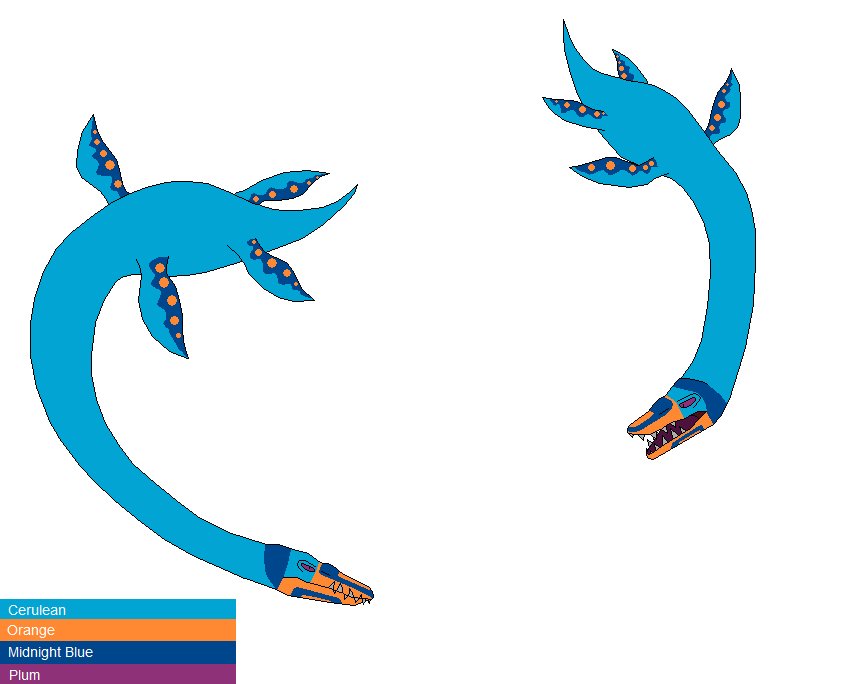
In terms of physical description, Attenborosaurus was a moderately sized marine reptile, reaching an estimated length of approximately 5 meters (roughly 16.5 feet) from the tip of its snout to the end of its tail, and likely weighing in the vicinity of 500 to 700 kilograms. Unlike the classic, later pliosaurs which are famous for their massive heads and short necks, Attenborosaurus possessed a relatively long neck and a moderately sized head, giving it an overall body plan that superficially resembled the classic plesiosaurs. However, its skull exhibited distinct pliosaurian characteristics, such as a broader snout and specific temporal fenestrae adaptations that allowed for powerful jaw muscles. The jaws were lined with numerous sharp, conical teeth perfectly adapted for piercing and holding slippery prey. Perhaps the most extraordinary physical feature of Attenborosaurus was known from the original holotype specimen, which preserved rare, exquisite impressions of the animal's skin. These impressions revealed a relatively smooth integument devoid of the heavy dermal armor seen in some other reptiles, but featuring a thin, membranous skin that likely aided in hydrodynamics. The body was barrel-shaped and robust, propelled by four large, hydrofoil-like flippers that were characteristic of the plesiosaurian clade. When compared to modern animals, its body plan has no direct analog, though its ecological niche and general size might be loosely compared to a large modern dolphin or a small killer whale, albeit with a completely different method of aquatic locomotion.
The paleobiology of Attenborosaurus paints a picture of a highly specialized, active marine predator. Its diet was primarily piscivorous, consisting largely of the abundant fish and cephalopods, such as belemnites and ammonites, that teemed in the Early Jurassic oceans. The sharp, interlocking teeth were not designed for chewing or shearing meat, but rather for trapping swift-moving prey, which would then be swallowed whole. Its hunting strategy likely involved a combination of visual acuity and ambush tactics, using its long neck to strike rapidly at schools of fish without moving its bulky body, thereby minimizing hydrodynamic disturbance. Locomotion in Attenborosaurus, as with other plesiosaurs, was achieved through a unique form of underwater flight. The four large flippers moved in complex, synchronized patterns, likely utilizing a combination of rowing and flying strokes that provided both lift and thrust. This four-flipper propulsion system made it a highly maneuverable swimmer, capable of sudden bursts of speed to capture evasive prey. Socially, it is difficult to infer the behavior of Attenborosaurus, though the lack of mass bonebeds suggests they may have been solitary hunters or lived in small, loose aggregations rather than large pods. Growth patterns inferred from related species suggest a relatively rapid initial growth phase, reaching sexual maturity within a few years, driven by a metabolism that was likely intermediate between the ectothermy of modern reptiles and the endothermy of modern marine mammals. Some researchers propose that these marine reptiles possessed a degree of regional endothermy, allowing them to maintain elevated body temperatures in the cooler waters of the open ocean.
The ecological context of the Sinemurian stage of the Early Jurassic was one of dynamic marine environments. The world was recovering from the end-Triassic mass extinction, and the breakup of the supercontinent Pangea was well underway, creating expansive, shallow epicontinental seas across much of what is now Western Europe. The climate was generally warm and equable, with high sea levels creating a vast archipelago environment. Attenborosaurus shared this vibrant marine ecosystem with a diverse array of other marine reptiles, most notably the dolphin-like ichthyosaurs, which were the dominant fast-pursuit predators of the time, and other early plesiosaurs. The food web was rich and complex, supported by abundant phytoplankton and zooplankton that fed massive populations of invertebrates and small fish. Attenborosaurus occupied a mid-to-high trophic level, acting as an apex or near-apex predator depending on the specific local ecosystem. While adult Attenborosaurus had few natural predators, juveniles would have been vulnerable to larger marine reptiles, including giant ichthyosaurs like Temnodontosaurus, and perhaps early, larger pliosaurs. The presence of Attenborosaurus in these waters indicates a highly productive environment capable of supporting diverse lineages of large, air-breathing marine predators, each partitioning the available resources through specialized anatomical adaptations and feeding strategies.
The discovery history of Attenborosaurus is one of the most dramatic and poignant in the annals of paleontology. The original, remarkably complete holotype specimen was discovered in the late 19th century in the fossil-rich Blue Lias formations of Dorset, England, a region famously known as the Jurassic Coast. It was initially described and named Plesiosaurus conybeari by the geologist William Johnson Sollas in 1881, honoring the Reverend William Conybeare, a pioneer in the study of marine reptiles. This magnificent specimen, which included the incredibly rare skin impressions, was housed in the Bristol City Museum and Art Gallery. Tragically, during the height of the Second World War in 1940, the museum was struck by incendiary bombs during the Bristol Blitz. The resulting fire completely destroyed the holotype of Plesiosaurus conybeari, resulting in an incalculable loss to the scientific community. For decades, the species was known only from historical photographs, detailed illustrations made by Sollas, and a few plaster casts that had been distributed to other institutions prior to the war. In 1993, the prominent American paleontologist Robert Bakker re-examined the surviving data and casts. Recognizing that the animal possessed features distinct from the genus Plesiosaurus, specifically its pliosaur-like skull paired with a plesiosaur-like neck, Bakker erected a new genus for the species. He named it Attenborosaurus, a fitting tribute to Sir David Attenborough, whose television documentaries had inspired generations of biologists and paleontologists, and who himself had a deep fascination with the fossils of the British Isles.
The evolutionary significance of Attenborosaurus cannot be overstated, as it occupies a critical transitional position in the phylogeny of the Plesiosauria. The order Plesiosauria is traditionally divided into two main morphological groups: the long-necked, small-headed plesiosauromorphs, and the short-necked, large-headed pliosauromorphs. For many years, it was assumed that these two body plans represented two distinct, deeply separated evolutionary lineages. However, Attenborosaurus challenges this simplistic dichotomy. Despite its long neck and superficially plesiosauromorph body, detailed cladistic analyses of its skull morphology, particularly the structure of the palate and the temporal fenestrae, place it firmly at the base of the Pliosauroidea clade. This indicates that the earliest pliosaurs actually possessed long necks, and that the classic, short-necked pliosaur body plan evolved later, likely as an adaptation for hunting larger prey. Attenborosaurus thus serves as a perfect transitional fossil, demonstrating that the evolution of marine reptiles was highly modular, with different parts of the body evolving at different rates. It helps paleontologists map the complex evolutionary pathways that led to the massive, apex predators of the Late Jurassic and Cretaceous, such as Liopleurodon and Kronosaurus, proving that these later giants evolved from smaller, long-necked ancestors that darted after small fish in the Early Jurassic seas.
Despite its clear importance, Attenborosaurus has been the subject of ongoing scientific debates and taxonomic revisions. The primary controversy revolves around its exact placement within the early plesiosaur family tree. While most modern phylogenetic analyses agree with Bakker's assessment that it is a basal pliosauroid, some researchers have argued that its mix of features could place it outside the Pliosauroidea-Plesiosauroidea split altogether, representing an even more primitive stem-plesiosaurian condition. The loss of the original holotype makes these debates particularly challenging to resolve, as modern paleontologists cannot subject the actual bones to high-resolution CT scanning or microscopic analysis. Researchers must rely on the surviving casts and Sollas's 19th-century descriptions, which, while excellent for their time, lack the detail required by modern cladistics. Additionally, there is debate regarding the interpretation of the destroyed skin impressions. Some scientists argue that the smooth skin indicates a highly streamlined animal capable of sustained high-speed cruising, while others suggest the skin may have had microscopic texturing not captured in the casts, which could have played a role in drag reduction similar to the dermal denticles of modern sharks.
The fossil record of Attenborosaurus is inherently limited and heavily defined by the tragic loss of its primary specimen. Geographically, the fossils are restricted to the marine deposits of the United Kingdom, specifically the Charmouth Mudstone Formation in Dorset. This area is a UNESCO World Heritage site renowned for its exceptional preservation of Early Jurassic marine life. Today, the known fossil record of Attenborosaurus consists primarily of the surviving plaster casts of the destroyed holotype, which are held in institutions like the Natural History Museum in London. Additionally, a few fragmentary remains and isolated bones found in the same geological horizons have been tentatively referred to the genus, though none match the completeness of the lost Bristol specimen. The preservation quality of the original find was exceptional, capturing not just an articulated skeleton but also the delicate soft tissue outlines that are almost never preserved in marine environments. This rarity highlights the exceptional taphonomic conditions of the Early Jurassic mudstones, where rapid burial in anoxic sediment prevented scavenging and bacterial decay.
The cultural impact of Attenborosaurus is uniquely tied to its namesake, Sir David Attenborough. The naming of the genus brought significant public attention to this otherwise obscure Early Jurassic reptile, highlighting the intersection between scientific taxonomy and popular science communication. It serves as a prominent example of how paleontologists honor individuals who have made massive contributions to the public understanding of the natural world. Casts of Attenborosaurus are displayed in several museums, often accompanied by the dramatic story of the original specimen's destruction during the Blitz, which adds a layer of historical intrigue to the paleontological exhibit. This narrative of discovery, loss, and rediscovery makes Attenborosaurus a powerful educational tool, teaching the public not only about prehistoric marine ecosystems and evolutionary biology, but also about the fragility of the fossil record and the importance of museum collections in preserving our planet's deep history.
Classification
Time Period
Discovery
Location
Dorset, England
Formation
Charmouth Mudstone Formation (Blue Lias)
Frequently Asked Questions
What is Attenborosaurus?
Attenborosaurus conybeari represents a fascinating and historically significant genus of marine reptile that swam in the shallow, warm seas covering much of what is now Europe during the Early Jurassic period, approximately 196 to 190 million years ago. As a basal member of the pliosaur lineage, thi...
When did Attenborosaurus live?
Attenborosaurus lived during the jurassic period of the mesozoic era approximately 196-190 million years ago.
Where was Attenborosaurus discovered?
Fossils of Attenborosaurus were discovered in Dorset, England in the Charmouth Mudstone Formation (Blue Lias).
What did Attenborosaurus eat?
Attenborosaurus was a carnivore. It lived in marine habitats.
What type of fossil is Attenborosaurus?
Attenborosaurus is preserved as a body fossil. The preservation quality is exceptional.
Related Specimens
From the mesozoic era · body fossils