Eoraptor
Eoraptor lunensis
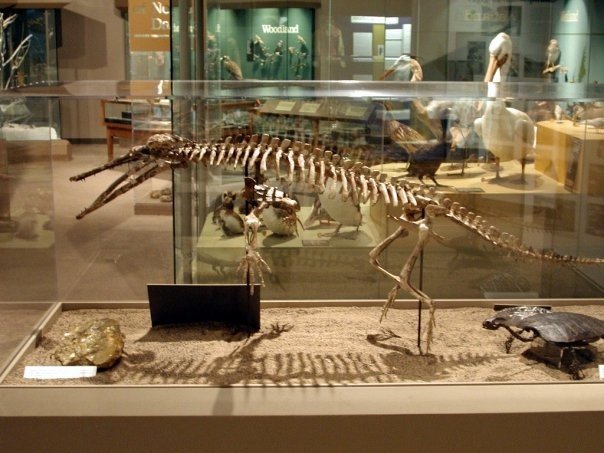
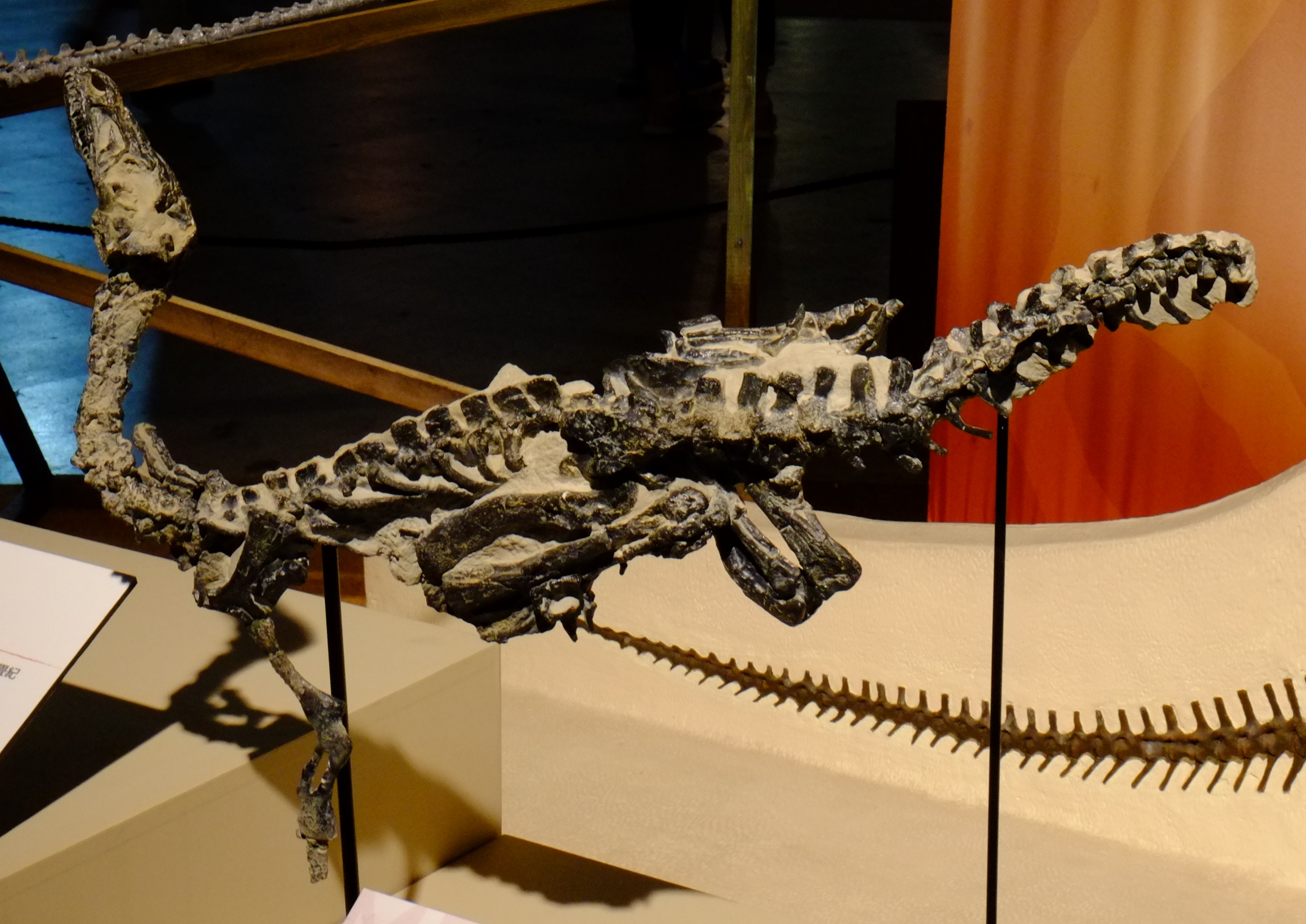
Image: File:Eoraptor fossil.jpg - Wikimedia Commons (CC BY-SA)
About Eoraptor
Eoraptor lunensis, translating from Latin and Greek as the dawn plunderer from the Valley of the Moon, represents one of the earliest and most primitive dinosaurs known to science, offering an unparalleled glimpse into the evolutionary origins of the Dinosauria clade. Living during the Late Triassic period, specifically during the Carnian stage approximately 231 to 228 million years ago, this remarkable creature roamed the ancient landscapes of what is now the Valle de la Luna in the San Juan Province of Argentina. Its discovery has fundamentally shaped our understanding of early dinosaur evolution, serving as a critical anatomical baseline from which the immense diversity of later Mesozoic dinosaurs radiated. By studying Eoraptor, paleontologists have been able to reconstruct the ancestral morphotype of all dinosaurs, revealing a small, agile, and adaptable survivor that laid the groundwork for the colossal sauropods and fearsome theropods that would eventually dominate the planet.
Physically, Eoraptor was a lightly built, bipedal animal that measured approximately one meter, or 3.3 feet, in total length from the tip of its snout to the end of its long, balancing tail. It stood about thirty centimeters tall at the hips and weighed an estimated ten kilograms, or roughly twenty-two pounds, making it comparable in size and weight to a modern medium-sized dog like a whippet, though its body plan was entirely different. The anatomy of Eoraptor was a mosaic of primitive traits that lacked the extreme specializations seen in later dinosaur lineages. Its skull was relatively small, measuring about twelve centimeters in length, and was lightly constructed with multiple fenestrae, or openings, that reduced the weight of the head while providing attachment points for jaw muscles. The neck was short and moderately robust, leading to a slender, aerodynamic torso. Eoraptor possessed long, muscular hind limbs that were highly adapted for swift, digitigrade running, meaning it walked on its toes much like modern birds. The tibia and fibula of the lower leg were significantly longer than the femur, a classic anatomical hallmark of a fast-running cursorial animal. Its forelimbs were roughly half the length of its hind limbs, indicating that it was an obligate biped, though the arms were far from useless. The hands of Eoraptor featured five digits, a primitive condition, but only the first three fingers were fully functional and equipped with sharp, curved claws used for grasping and manipulating food. The fourth and fifth digits were highly reduced and lacked claws, hinting at the evolutionary trend that would eventually lead to the three-fingered hands of later theropods.
The paleobiology of Eoraptor paints a picture of a highly adaptable and opportunistic survivor, characterized most notably by its unique and revealing dentition. Unlike later dinosaurs that were strictly hypercarnivorous or obligate herbivores, Eoraptor possessed heterodont dentition, meaning it had different types of teeth in its jaws. The teeth in the premaxilla at the front of the upper jaw, as well as those in the anterior portion of the lower jaw, were sharp, recurved, and serrated, perfectly adapted for slicing through meat and capturing small prey. However, the teeth situated further back in the maxilla and the posterior lower jaw were distinctly leaf-shaped and lacked the pronounced serrations of a dedicated predator, bearing a striking resemblance to the teeth of early herbivorous dinosaurs. This dental morphology strongly suggests that Eoraptor was an omnivore, utilizing a generalized feeding strategy that allowed it to consume a varied diet of small reptiles, early mammals, insects, and soft plant matter. This dietary flexibility was likely a key factor in the early success of dinosaurs, allowing them to exploit multiple ecological niches in the competitive Triassic environment. Biomechanical studies of its jaw indicate a relatively weak bite force compared to later predators, further supporting a diet of small, easily subdued prey and vegetation. Behaviorally, its large orbits suggest it had excellent vision, which would have been crucial for both hunting elusive insects and avoiding larger predators. Bone histology studies conducted on the fossilized remains of Eoraptor and its close relatives indicate that these early dinosaurs grew at a faster rate than the contemporary pseudosuchians, or crocodile-line archosaurs, though they had not yet achieved the rapid, bird-like growth rates seen in later, more derived dinosaurs.
The ecological context in which Eoraptor lived was vastly different from the modern world, situated in the ancient supercontinent of Pangea during the Carnian stage of the Late Triassic. The Ischigualasto Formation, where Eoraptor was discovered, represents a dynamic, volcanically active rift basin that experienced a highly seasonal, monsoonal climate. During this time, the region was characterized by extensive river systems, lush riparian forests dominated by towering conifers, seed ferns like Dicroidium, and dense underbrush composed of horsetails and true ferns. This environment was part of the broader Carnian Pluvial Episode, a period of increased global rainfall and humidity that spurred a major diversification of plant and animal life. In this vibrant ecosystem, Eoraptor was a relatively minor player, occupying a low to mid-level position in the food web. The landscape was dominated not by dinosaurs, but by a diverse array of other archosaurs and synapsids. Eoraptor shared its habitat with massive, apex-predator rauisuchians like Saurosuchus, which could grow up to seven meters in length and would have easily preyed upon small dinosaurs. The herbivorous niches were largely filled by heavily built rhynchosaurs, such as Hyperodapedon, and large dicynodonts like Ischigualastia. Eoraptor also coexisted with other early dinosaurs, including the larger, predatory Herrerasaurus and the small, omnivorous Panphagia. In this highly competitive ecological theater, Eoraptor relied on its speed, agility, and generalized diet to survive, scurrying through the underbrush to avoid the massive predators that ruled the Triassic floodplains.
The discovery of Eoraptor is a landmark event in the history of paleontology, fundamentally altering the scientific understanding of early dinosaur evolution. The first fossil of Eoraptor was discovered in 1991 during a joint expedition to the Ischigualasto Formation in the San Juan Province of Argentina, an area colloquially known as the Valle de la Luna, or Valley of the Moon, due to its stark, otherworldly, and highly eroded badlands topography. The expedition was led by the renowned American paleontologist Paul Sereno of the University of Chicago, in collaboration with Argentine researchers including Ricardo Martinez. It was Martinez who actually spotted the initial fossil—a nearly complete, exquisitely preserved skull gleaming from a rock nodule. Recognizing the immense scientific value of the find, the team carefully excavated the surrounding matrix, eventually uncovering a nearly complete and articulated skeleton. The discovery was formally announced and described in the journal Nature in 1993 by Paul Sereno, Catherine Forster, Raymond Rogers, and Alfredo Monetta. They named the type species Eoraptor lunensis, combining the Greek word eos, meaning dawn, and the Latin word raptor, meaning plunderer, with the specific epithet lunensis honoring the Valley of the Moon where it was found. The holotype specimen, designated PVSJ 512, remains one of the most complete and best-preserved early dinosaur skeletons ever discovered, providing an unprecedented wealth of anatomical data that continues to be studied by paleontologists around the world.
The evolutionary significance of Eoraptor cannot be overstated, as it sits at the very base of the dinosaur family tree, serving as a crucial transitional figure that bridges the gap between non-dinosaurian dinosauromorphs and the true dinosaurs. Because its anatomy is so primitive and unspecialized, Eoraptor exhibits a suite of basal characteristics that are thought to closely mirror the hypothetical common ancestor of all dinosaurs. It possesses the classic saurischian, or lizard-hipped, pelvic structure, where the pubis bone points forward, a trait it shares with both early theropods and early sauropodomorphs. However, it lacks the highly derived features that define those later groups. For instance, it does not possess the sliding joint in the lower jaw that characterizes true theropods, nor does it have the elongated neck or spatulate teeth of dedicated sauropodomorphs. By studying Eoraptor, scientists have been able to deduce that the first dinosaurs were likely small, bipedal, and omnivorous, and that the massive sizes and extreme dietary specializations of later dinosaurs evolved independently in different lineages over tens of millions of years. Eoraptor acts as an anatomical Rosetta Stone, allowing researchers to polarize evolutionary traits and determine which physical characteristics are ancestral to the entire dinosaur clade and which are derived adaptations specific to certain branches.
Despite its importance, or perhaps because of it, the exact taxonomic placement of Eoraptor has been the subject of intense scientific debate and shifting consensus over the past three decades. When it was first described in 1993, Paul Sereno and his colleagues classified Eoraptor as a basal theropod, placing it at the very root of the lineage that would eventually lead to Tyrannosaurus rex and modern birds. This classification was based on certain features of its hands and skull. However, as more early dinosaur fossils were discovered and phylogenetic analytical methods improved, this position was challenged. In 2011, a comprehensive study led by Ricardo Martinez and colleagues re-examined Eoraptor in the light of newly discovered basal dinosaurs like Eodromaeus. Their cladistic analysis concluded that Eoraptor was not a theropod at all, but rather a basal sauropodomorph, placing it on the evolutionary line that would lead to the giant, long-necked, herbivorous sauropods like Brachiosaurus and Apatosaurus. This reclassification was supported by the presence of enlarged nares and specific features of its leaf-shaped teeth that are characteristic of early sauropodomorphs. While the consensus currently leans toward the sauropodomorph classification, the debate highlights the incredible morphological similarity among the earliest dinosaurs. At the dawn of their evolution, the lineages that would become the theropods and the sauropodomorphs had barely diverged, making the classification of transitional forms like Eoraptor highly sensitive to even minor changes in anatomical interpretation.
The fossil record of Eoraptor is highly restricted geographically, which is typical for many terrestrial vertebrates of the Triassic period. To date, fossils of Eoraptor lunensis have only been recovered from the Ischigualasto Formation in Argentina. The holotype specimen, PVSJ 512, remains the definitive and most complete representative of the species, though a few other fragmentary specimens and isolated bones from the same formation have been tentatively referred to the genus. The preservation quality of the holotype is extraordinary; the skeleton was found fully articulated and three-dimensionally preserved within a calcareous concretion, which protected the fragile bones from crushing and distortion over 230 million years of geological time. This level of preservation is relatively rare in the Ischigualasto basin, where many fossils are found disarticulated or heavily weathered. The fact that Eoraptor is known from such a restricted geographic area and from so few specimens suggests that early dinosaurs were not yet the dominant, globally distributed animals they would become in the Jurassic and Cretaceous periods. Instead, they were a relatively rare component of their local ecosystems, overshadowed by the much more abundant and diverse synapsids and pseudosuchians that ruled the Triassic world.
The cultural impact of Eoraptor has been significant, particularly within the realm of science education and museum exhibitions. As one of the earliest known dinosaurs, it frequently features in popular science books, documentaries, and articles discussing the origins of the dinosaur lineage. Casts of the Eoraptor holotype are prominently displayed in major natural history museums around the world, including the Field Museum of Natural History in Chicago and the Bernardino Rivadavia Natural Sciences Argentine Museum in Buenos Aires. These exhibits use Eoraptor to illustrate the concept of evolutionary radiation, showing the public how a small, unassuming, dog-sized omnivore possessed the evolutionary potential to give rise to the largest land animals in Earth's history. By serving as the archetypal first dinosaur in the public imagination, Eoraptor plays a vital educational role, helping to demystify the evolutionary process and providing a tangible, fossilized link to the very dawn of the Mesozoic era.
Classification
Time Period
Discovery
Location
Valle de la Luna, San Juan Province, Argentina
Formation
Ischigualasto Formation
Frequently Asked Questions
What is Eoraptor?
Eoraptor lunensis, translating from Latin and Greek as the dawn plunderer from the Valley of the Moon, represents one of the earliest and most primitive dinosaurs known to science, offering an unparalleled glimpse into the evolutionary origins of the Dinosauria clade. Living during the Late Triassic...
When did Eoraptor live?
Eoraptor lived during the triassic period of the mesozoic era approximately 231-228 million years ago.
Where was Eoraptor discovered?
Fossils of Eoraptor were discovered in Valle de la Luna, San Juan Province, Argentina in the Ischigualasto Formation.
What did Eoraptor eat?
Eoraptor was a omnivore. It lived in terrestrial habitats.
What type of fossil is Eoraptor?
Eoraptor is preserved as a body fossil. The preservation quality is excellent.
Related Specimens
From the mesozoic era · body fossils