Parasaurolophus
Parasaurolophus walkeri
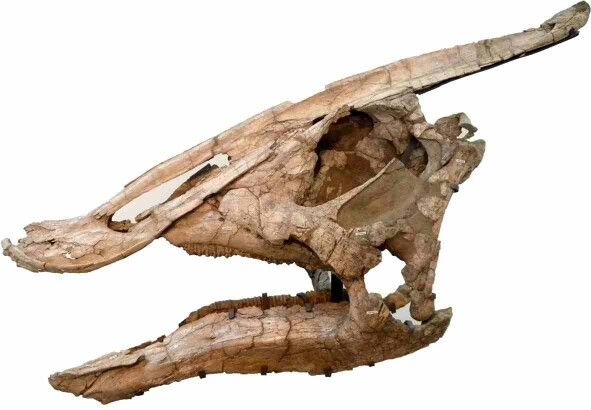
Image: Category:Parasaurolophus walkeri fossils - Wikimedia Commons (CC BY-SA)
About Parasaurolophus
Parasaurolophus walkeri is one of the most instantly recognizable and scientifically significant dinosaurs of the Late Cretaceous period, celebrated primarily for the spectacular, elongated tubular crest that sweeps backward from the roof of its skull. Existing approximately 76.5 to 73 million years ago during the Mesozoic era, this magnificent creature was a prominent member of the Hadrosauridae family, a highly successful group of herbivorous dinosaurs commonly referred to as duck-billed dinosaurs. Inhabiting the lush, subtropical coastal floodplains of Laramidia, an ancient island continent that comprised what is now the western portion of North America, Parasaurolophus represents a pinnacle of ornithischian evolution. Its remarkable cranial anatomy has provided paleontologists with unprecedented insights into the sensory capabilities, social structures, and complex communication methods of non-avian dinosaurs, cementing its status as a cornerstone species in the study of prehistoric life.
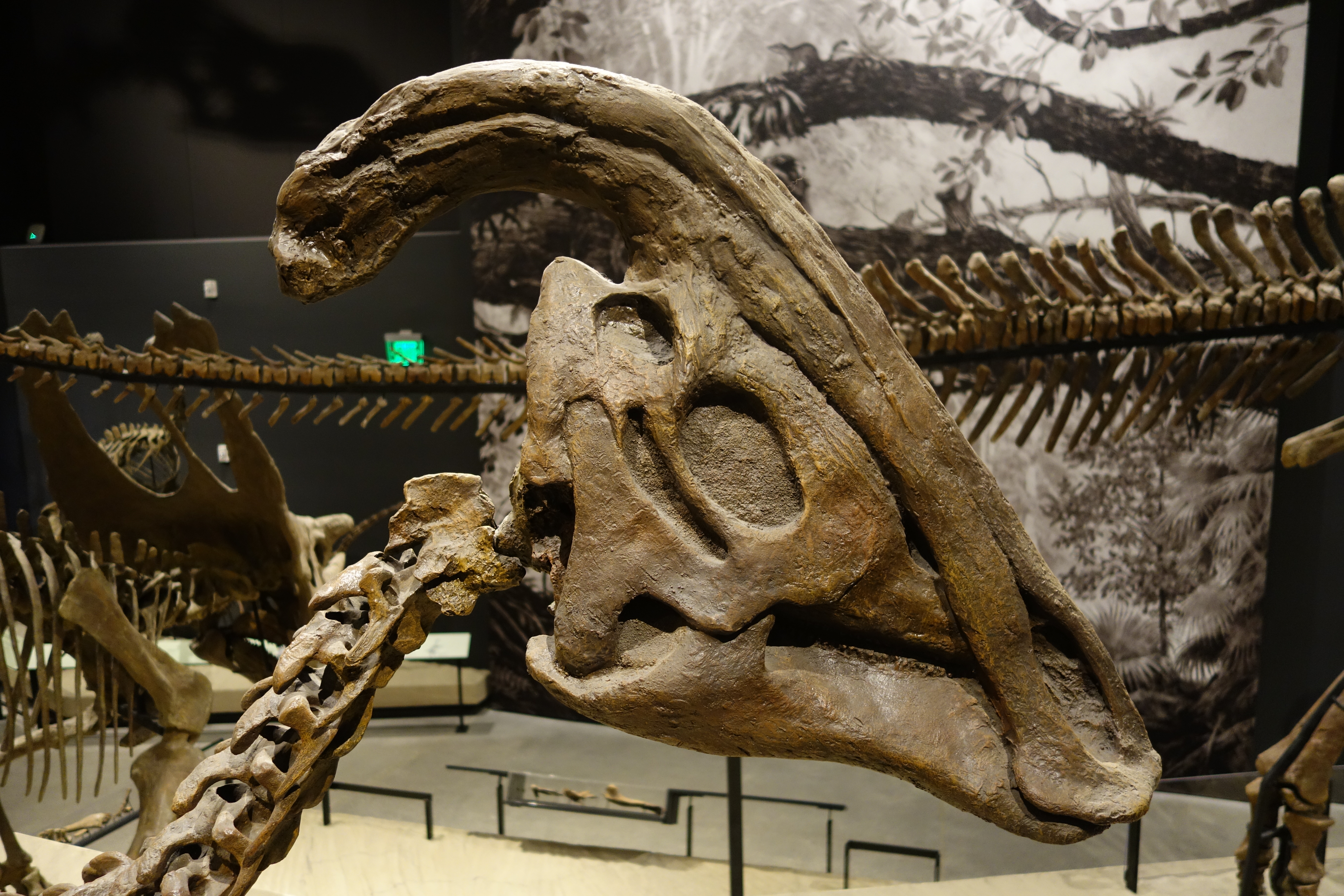
In terms of physical description, Parasaurolophus walkeri was a massive and imposing animal, measuring up to 1000 centimeters, or roughly 10 meters, in total body length, and weighing an estimated two and a half to three metric tons. The most striking and defining anatomical feature of this dinosaur is undoubtedly its cranial crest, a hollow, bony tube that extended posteriorly from the back of the skull. Unlike the solid crests of some other dinosaurs, the crest of Parasaurolophus was formed by the extreme elongation of the premaxilla and nasal bones, containing a complex series of looping internal nasal passages that ran the entire length of the structure before returning to the skull base. The postcranial skeleton of Parasaurolophus was robust and well-adapted to its environment, featuring a deep, narrow torso supported by a strong pelvic girdle. Its forelimbs were relatively short but heavily built, ending in hoof-like structures on the central digits, which indicates they were weight-bearing. The hindlimbs were significantly longer and more powerfully muscled, terminating in three large, weight-bearing toes. A network of ossified tendons stiffened the neural spines of the dorsal and caudal vertebrae, keeping the back and the heavy, muscular tail relatively rigid. This stiffened tail likely acted as a dynamic counterbalance to the heavy front section of the body and the massive head. Skin impressions recovered from related hadrosaurids, and fragmentary patches associated with Parasaurolophus itself, reveal a hide covered in small, non-overlapping, pebble-like tubercular scales, lacking any evidence of feathers or osteoderms. Compared to modern animals, its overall body plan has no direct analog, though its ecological role as a large, bulk-feeding herbivore is somewhat comparable to modern mammalian megafauna such as elephants or rhinoceroses, albeit with a completely different method of locomotion and food processing.
The paleobiology of Parasaurolophus walkeri reveals a highly specialized and adaptable herbivore equipped with sophisticated mechanisms for processing plant material. Its diet consisted entirely of terrestrial vegetation, which it cropped using a broad, toothless, keratinous beak situated at the front of its snout. Behind this beak, the jaws were packed with a complex dental battery containing hundreds of tightly interlocking teeth arranged in vertical columns. As the grinding surface wore down, new teeth continuously erupted from below to replace them, ensuring a constantly sharp and effective chewing surface. Parasaurolophus utilized a unique chewing mechanism known as pleurokinesis, where the upper jaw bones would flex outward slightly as the lower jaw was brought up and engaged, creating a highly efficient shearing and grinding action capable of breaking down tough, fibrous plant matter such as conifer needles, twigs, and ferns. In terms of locomotion, Parasaurolophus was a facultative biped. It spent the majority of its time foraging on all fours, browsing on low-lying vegetation, but it possessed the biomechanical capacity to rear up and walk or run on its powerful hind legs. This bipedal capability would have been crucial for reaching higher foliage, navigating dense underbrush, or making a rapid escape from apex predators. Behavioral inferences drawn from bonebed discoveries of related hadrosaurs strongly suggest that Parasaurolophus was a highly social animal that lived in large herds. The famous cranial crest played a central role in this social behavior. The hollow internal chambers of the crest acted as a sophisticated resonating chamber, allowing the animal to produce loud, low-frequency, foghorn-like vocalizations. These sounds would have been instrumental for intra-species communication, enabling individuals to coordinate herd movements, signal alarm, or attract mates across vast distances. Growth patterns studied through bone histology indicate that Parasaurolophus grew rapidly, reaching adult size in a matter of years rather than decades. The crest itself was an ontogenetic feature; juveniles possessed only small, rounded bumps on their skulls, with the massive tubular structure developing rapidly as the animal approached sexual maturity, further supporting its role in visual display and sexual dimorphism.
The ecological context in which Parasaurolophus walkeri thrived was a dynamic and biologically rich environment. During the Campanian stage of the Late Cretaceous, the North American continent was bisected by the Western Interior Seaway, creating the western landmass known as Laramidia. The Dinosaur Park Formation in modern-day Alberta, Canada, where Parasaurolophus fossils are found, represents a low-lying coastal plain characterized by meandering river systems, expansive floodplains, and estuarine swamps. The climate was warm, temperate to subtropical, and largely frost-free, supporting dense, lush vegetation. The flora of this ecosystem was diverse, dominated by large canopy-forming conifers such as redwoods and cypresses, while the understory was a thick carpet of ferns, cycads, and an increasing variety of early angiosperms, or flowering plants. Parasaurolophus shared this vibrant habitat with a staggering array of other dinosaur species. It co-existed alongside other hadrosaurids like the helmet-crested Corythosaurus and the flat-headed Gryposaurus, though differences in beak shape and feeding height suggest they partitioned the resources to avoid direct competition. The environment was also home to heavily armored ankylosaurs, dome-headed pachycephalosaurs, and large herds of horned ceratopsians such as Centrosaurus and Chasmosaurus. As a primary consumer, Parasaurolophus occupied a critical position in the middle of the food web, converting massive amounts of plant biomass into animal protein. Consequently, it was a prime target for the apex predators of its day, specifically large tyrannosaurids like Gorgosaurus and Daspletosaurus. To survive in an ecosystem populated by such formidable carnivores, Parasaurolophus relied on the safety of the herd, its acute senses of hearing and vision, and its ability to communicate danger rapidly through the acoustic properties of its crest.
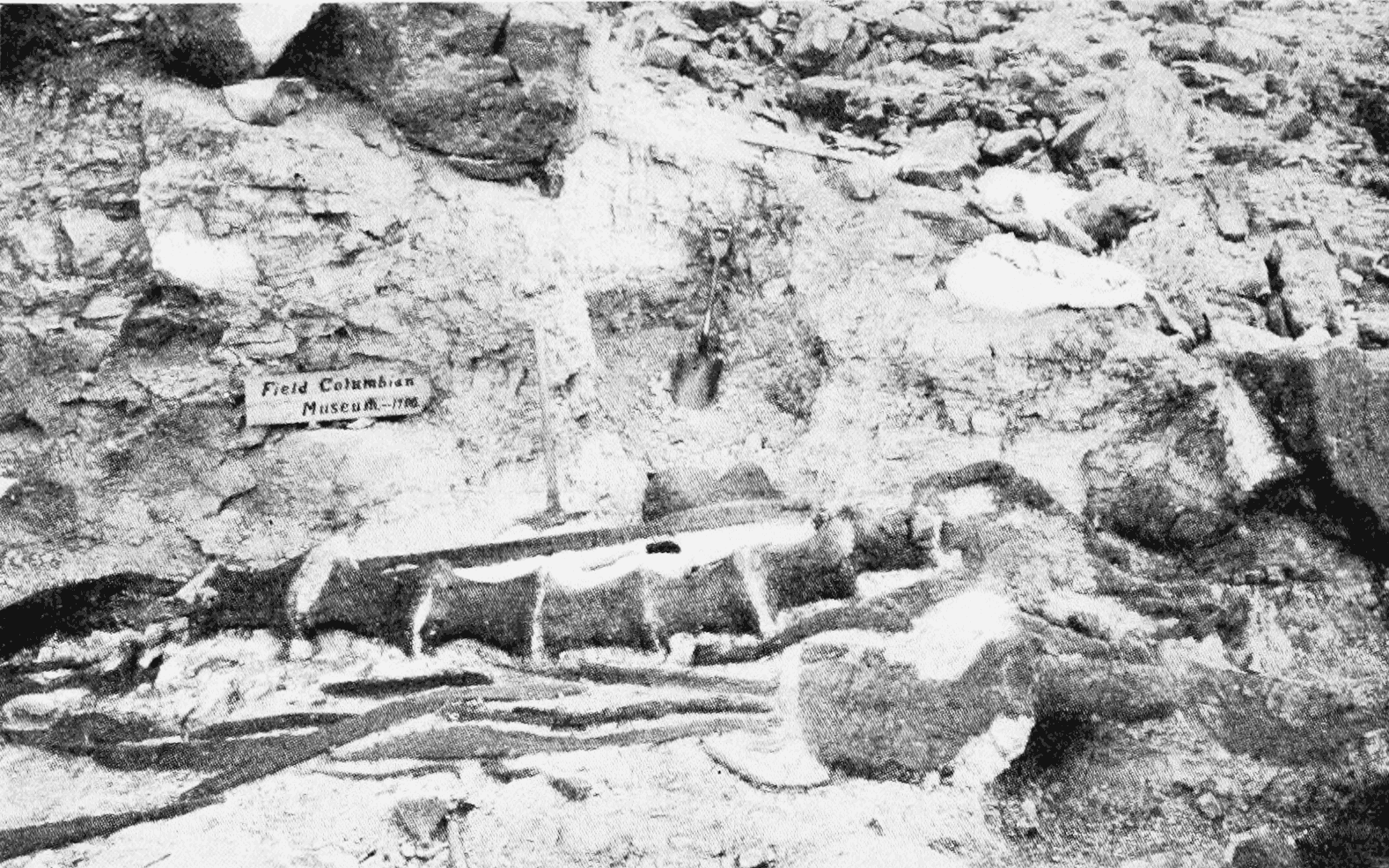
The discovery history of Parasaurolophus walkeri is a fascinating chapter in the annals of North American paleontology. The first remains of this remarkable dinosaur were discovered in 1920 by a field expedition from the University of Toronto, led by the renowned fossil hunter Levi Sternberg. The team was excavating in the badlands along the Red Deer River in Alberta, Canada, an area that would later become world-famous as Dinosaur Provincial Park. The specimen they uncovered was exceptionally well-preserved, consisting of a nearly complete skull with the magnificent crest intact, along with a significant portion of the articulated postcranial skeleton. This holotype specimen, cataloged as ROM 768, was transported back to the Royal Ontario Museum in Toronto for preparation and study. In 1922, the eminent Canadian paleontologist William Parks officially described and named the new species Parasaurolophus walkeri. The genus name, meaning near crested lizard, was chosen to reflect its perceived, though later disproven, close relationship to another crested dinosaur, Saurolophus. The specific epithet, walkeri, was given in honor of Sir Byron Edmund Walker, a prominent Canadian banker and Chairman of the Board of Trustees of the Royal Ontario Museum, who had generously provided financial support for the fossil-hunting expeditions. Since this initial discovery, the holotype has remained one of the most important and iconic dinosaur specimens in the world. Subsequent decades saw additional, though often fragmentary, discoveries of Parasaurolophus in other parts of North America, expanding our understanding of its geographic range and anatomical variations, but the original Alberta specimen remains the gold standard for the species.
The evolutionary significance of Parasaurolophus walkeri cannot be overstated, as it occupies a highly specialized branch on the dinosaur family tree. Taxonomically, it belongs to the order Ornithischia, the suborder Ornithopoda, and the family Hadrosauridae. Within the hadrosaurs, it is a prominent member of the subfamily Lambeosaurinae, a clade distinguished by their elaborate, hollow cranial crests. Parasaurolophus represents an extreme evolutionary divergence within this group. While other lambeosaurines like Corythosaurus and Lambeosaurus evolved tall, helmet-like or hatchet-shaped crests, the lineage leading to Parasaurolophus opted for a dramatic posterior elongation. This morphological extreme provides a textbook example of evolutionary radiation and niche partitioning, demonstrating how a single foundational body plan can be modified by natural selection to serve highly specific sensory and display functions. The intricate internal structure of the crest, with its elongated nasal passages, shows a clear evolutionary trajectory toward enhanced olfactory and acoustic capabilities. Furthermore, the discovery of closely related genera, such as the Asian lambeosaurine Charonosaurus, which possessed a very similar, albeit partially known, tubular crest, suggests that the ancestors of Parasaurolophus may have migrated across the Bering land bridge connecting Asia and North America during the Late Cretaceous. Studying Parasaurolophus helps evolutionary biologists map the complex biogeography of the Mesozoic era and understand how these magnificent herbivores adapted to the shifting climates and changing flora of their isolated island continents.
Scientific debates surrounding Parasaurolophus have been vigorous and enduring, particularly concerning the exact function of its bizarre cranial crest. In the early to mid-twentieth century, a variety of hypotheses were proposed. Some researchers suggested the hollow tube acted as a snorkel, allowing the animal to breathe while submerged in swamps, a theory that was definitively debunked when it was shown that the crest had no opening at the end. Others posited that it housed enlarged olfactory glands to enhance the sense of smell, or that it served as a foliage deflector to protect the eyes while running through dense forests. However, modern paleontological consensus, heavily supported by the pioneering work of David Weishampel in the 1980s, asserts that the primary functions were acoustic communication and visual display. By creating physical and digital models of the internal nasal passages, scientists demonstrated that the crest could produce low-frequency sounds capable of traveling great distances. Taxonomy has also been a subject of debate. While Parasaurolophus walkeri is the type species from Alberta, two other species, Parasaurolophus tubicen and Parasaurolophus cyrtocristatus, were later discovered in New Mexico and Utah. Researchers have debated whether these represent distinct species, sexual dimorphs, or different growth stages of a single species. Recent revisions and more rigorous cladistic analyses generally support their status as distinct, albeit closely related, species separated by geography and slight temporal gaps, though the exact phylogenetic relationships within the genus remain an active area of paleontological inquiry.
The fossil record of Parasaurolophus walkeri is somewhat paradoxical; while the animal is globally famous, its physical remains are surprisingly rare compared to other contemporary hadrosaurs. In the Dinosaur Park Formation of Alberta, where the holotype was discovered, remains of Parasaurolophus account for only a tiny fraction of the total dinosaur fossils recovered, vastly outnumbered by herds of Corythosaurus and Centrosaurus. This rarity suggests that Parasaurolophus may have preferred drier, more upland habitats further from the rivers where fossilization typically occurs, only occasionally wandering into the lowland floodplains. Despite the scarcity of individuals, the preservation quality of the known specimens is often exceptional. The holotype skull at the Royal Ontario Museum is remarkably undistorted, preserving the delicate, paper-thin bones of the internal nasal passages. In addition to the Canadian discoveries, related species of Parasaurolophus have been unearthed in the Kirtland Formation of New Mexico and the Kaiparowits Formation of Utah. These southern sites have yielded crucial juvenile specimens and partial skulls that have allowed paleontologists to study the ontogenetic development of the crest. The geographic distribution of these fossils across the western interior of North America indicates that while Parasaurolophus may not have been the most abundant dinosaur in any single location, the genus as a whole was highly successful and widely distributed across the diverse ecosystems of Laramidia.
The cultural impact of Parasaurolophus walkeri is immense, making it one of the few dinosaurs instantly recognizable to the general public. Its striking, otherworldly silhouette has made it a staple of paleoart, children's books, and museum exhibits worldwide. The original holotype specimen remains a centerpiece of the dinosaur galleries at the Royal Ontario Museum, drawing countless visitors and inspiring future generations of scientists. In popular culture, Parasaurolophus achieved global superstardom through its appearances in blockbuster films, most notably the Jurassic Park franchise, where its distinctive shape and imagined vocalizations helped bring the ancient world to life for millions of viewers. Beyond entertainment, Parasaurolophus holds significant educational importance. It is frequently used in classrooms and documentaries as a prime example of how scientists use biomechanics, comparative anatomy, and computer modeling to deduce the behavior and biology of extinct animals. The ability to simulate the actual sounds this dinosaur may have made provides a rare and tangible acoustic connection to the deep past, bridging the gap between fossilized bone and a living, breathing creature, and ensuring that Parasaurolophus remains a beloved and vital ambassador for the science of paleontology.
Classification
Time Period
Discovery
Location
Alberta, Canada
Formation
Dinosaur Park Formation
Frequently Asked Questions
What is Parasaurolophus?
Parasaurolophus walkeri is one of the most instantly recognizable and scientifically significant dinosaurs of the Late Cretaceous period, celebrated primarily for the spectacular, elongated tubular crest that sweeps backward from the roof of its skull. Existing approximately 76.5 to 73 million years...
When did Parasaurolophus live?
Parasaurolophus lived during the cretaceous period of the mesozoic era approximately 76.5-73 million years ago.
Where was Parasaurolophus discovered?
Fossils of Parasaurolophus were discovered in Alberta, Canada in the Dinosaur Park Formation.
What did Parasaurolophus eat?
Parasaurolophus was a herbivore. It lived in terrestrial habitats.
What type of fossil is Parasaurolophus?
Parasaurolophus is preserved as a permineralized fossil. The preservation quality is excellent.
Related Specimens
From the mesozoic era · permineralized fossils