Exogyra
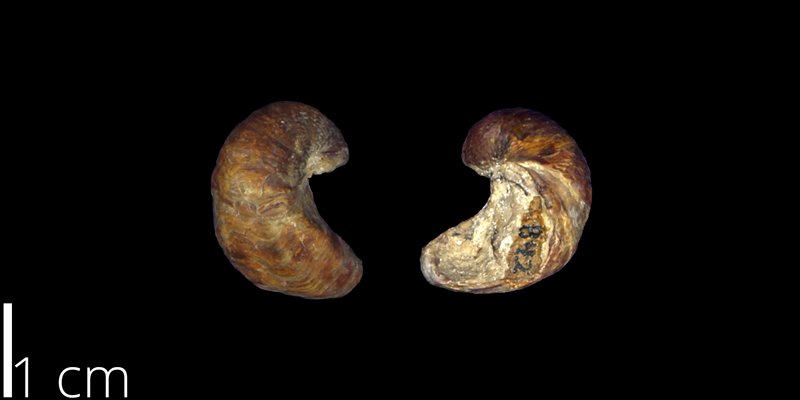
Exogyra arietina
Image: Image sourced via web search (Fair use / Educational)
About Exogyra
Exogyra is an extinct genus of marine bivalve mollusks, commonly known as oysters, that thrived in the warm, shallow seas of the Cretaceous Period. As one of the most abundant and widespread invertebrate fossils from this era, Exogyra serves as a crucial index fossil, allowing paleontologists and geologists to accurately date rock layers across the globe. Its distinctive, coiled shell morphology makes it easily recognizable and a subject of both scientific study and amateur fossil collecting, providing a tangible link to the vibrant marine ecosystems that existed during the age of dinosaurs.
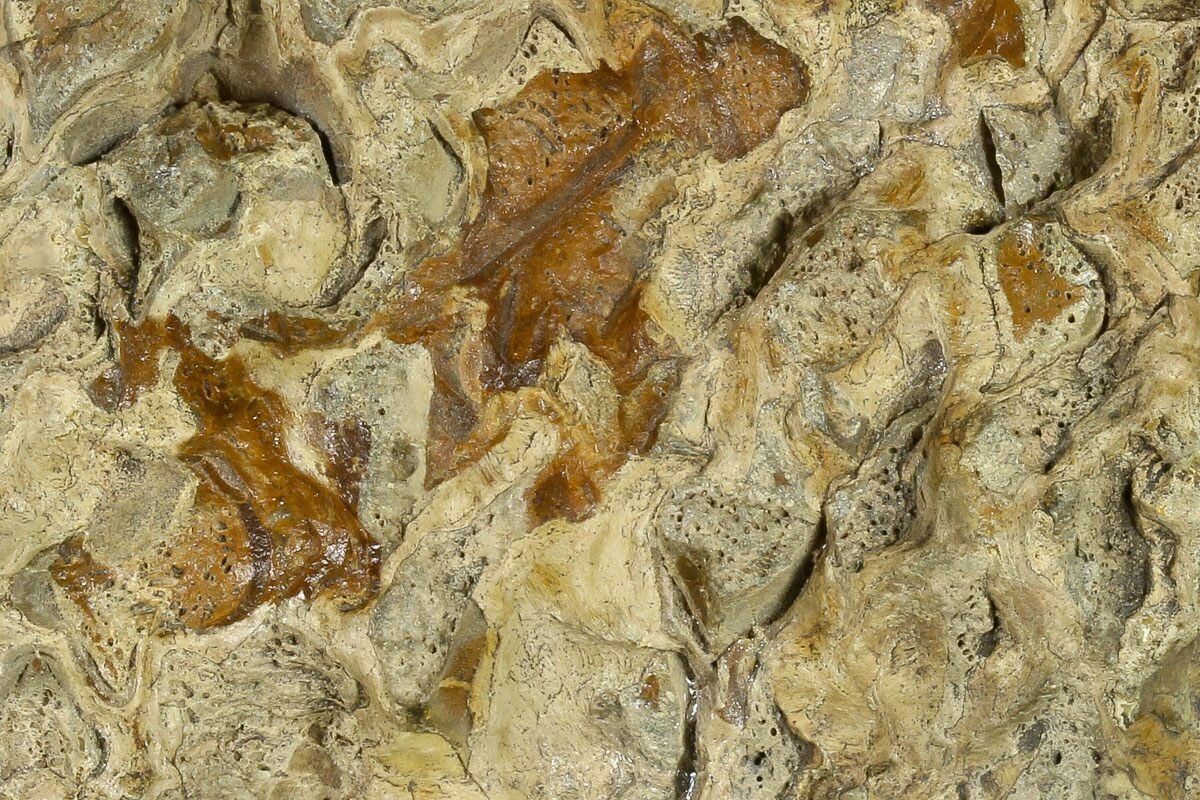
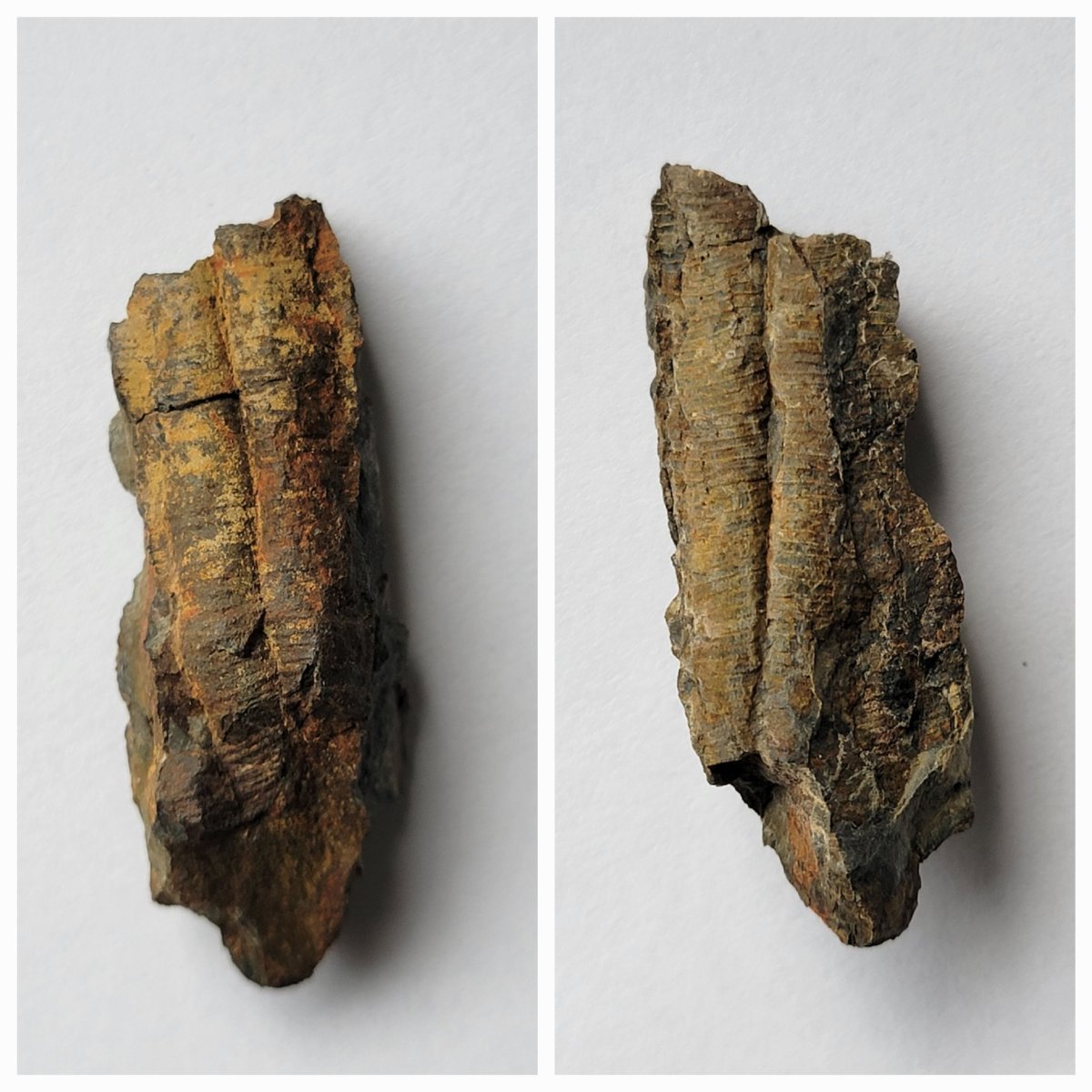
Exogyra, particularly the species Exogyra arietina, possessed a highly distinctive and robust shell that is key to its identification. The shell is inequivalve, meaning the two valves (or shells) are dissimilar in size and shape. The left valve, which was the larger and lower one, was deeply convex and typically cemented to a hard substrate on the seafloor, such as rocks, other shells, or even the shells of ammonites. This valve exhibits a prominent, tightly coiled umbo (the beak-like protuberance at the hinge) that spirals, giving the fossil its common name, the 'Ram's Horn Oyster.' This coiling is a defining characteristic of the genus. The right valve was much smaller, flatter, and acted as a lid or operculum. The exterior of the larger left valve was often adorned with strong, radial ribs or costae, while the smaller right valve was smoother. Depending on the species, an adult Exogyra could range in size from a few centimeters to over 15 centimeters in diameter. The shell itself was composed of thick layers of calcite, making it very durable and highly susceptible to excellent preservation in the fossil record. Its robust construction was an adaptation to high-energy, shallow marine environments where it would have been subject to wave action and predation.
As a sessile, or stationary, filter-feeder, Exogyra's life was centered on extracting nutrients from the water column. It would have lived cemented to the seafloor, using its gills to create a water current that flowed into its shell cavity. This current brought in plankton, algae, and suspended organic detritus, which were then trapped in mucus on the gills and transported to the mouth for consumption. This feeding strategy is identical to that of modern oysters and other bivalves. Its growth patterns are often visible as concentric lines on the shell's exterior, indicating periodic, perhaps seasonal, additions of new shell material. Like modern oysters, Exogyra likely grew relatively quickly, reaching maturity within a few years. They were gregarious organisms, often forming dense beds or biostromes on the seafloor. These oyster reefs would have created complex, three-dimensional habitats, providing shelter and attachment points for a myriad of other marine organisms, much like modern oyster reefs do today. This community-building role made them a keystone component of their ecosystem, fundamentally shaping the local marine environment.
Exogyra lived during the Cretaceous Period, a time when Earth's climate was significantly warmer than today, with no permanent polar ice caps and high sea levels. This resulted in the formation of vast, shallow epicontinental seas that covered large portions of the continents, including the Western Interior Seaway in North America and the Tethys Ocean. It was in these warm, subtropical to tropical waters that Exogyra flourished. These seas teemed with life. Exogyra shared its habitat with a diverse array of organisms, including other bivalves like Inoceramus, gastropods, sea urchins (echinoids), and coiled cephalopods known as ammonites. The reefs they formed provided a crucial habitat for smaller fish and invertebrates. In the waters above, large marine reptiles such as mosasaurs and plesiosaurs were the apex predators, while various species of sharks patrolled the reefs. Exogyra, being a stationary, shelled organism, was a primary food source for durophagous (shell-crushing) predators. Fossil evidence, including drill holes from predatory snails and crushed shells, indicates that Exogyra was an important link in the food web, transferring energy from primary producers (plankton) to higher-level consumers like crabs, fish, and marine reptiles.
The genus Exogyra was first described by the English naturalist Thomas Say in 1820. Say was a pioneering American naturalist and is often considered the father of American entomology and conchology. He identified and named numerous species from specimens collected during expeditions in North America. The specific species Exogyra arietina was named by the German paleontologist Ferdinand Roemer in 1849, based on fossils he studied from the Cretaceous deposits of Texas. The species name 'arietina' is derived from the Latin 'aries,' meaning 'ram,' a direct reference to the shell's distinctive ram's horn-like coil. Because Exogyra fossils are so common and widespread, particularly in the Cretaceous rocks of the Gulf Coastal Plain and the Western Interior of North America, countless specimens have been collected over the past two centuries. There isn't a single 'type specimen' as famous as a vertebrate fossil like 'Sue,' but key collections are held in major institutions like the Smithsonian National Museum of Natural History and the Yale Peabody Museum, which house extensive invertebrate paleontology collections from the American Cretaceous.
Exogyra belongs to the family Gryphaeidae, a group of extinct oysters known for their coiled or twisted shells. This family is distinct from the Ostreidae, which includes true oysters like the modern genus Crassostrea. The evolutionary history of the Gryphaeidae showcases a fascinating trend in shell morphology. Early forms were less coiled, but over time, many lineages developed the pronounced spiral shape seen in Exogyra. This coiling is thought to be an evolutionary adaptation related to stability on soft substrates or a way to lift the feeding aperture away from the sediment-laden seafloor. The success and proliferation of Exogyra during the Cretaceous highlight a period of significant diversification among bivalves. The genus itself contains numerous species, each adapted to slightly different environmental conditions, which is why they are so valuable as index fossils. The extinction of Exogyra, along with the ammonites and non-avian dinosaurs, at the end of the Cretaceous marks the K-Pg mass extinction event, a profound turning point in Earth's history that paved the way for the rise of mammals and the evolution of modern marine ecosystems.
While the general biology of Exogyra is well-understood by analogy with modern oysters, some scientific debates persist. The precise functional advantage of the extreme coiling in some species, like E. arietina, is still a subject of discussion among paleontologists. Hypotheses range from hydrodynamic stability in high-energy currents to a defense mechanism against predators, or a way to optimize feeding efficiency by orienting the shell opening into the current. Furthermore, the exact taxonomic classification and the relationships between the numerous described species of Exogyra are periodically revised as new specimens are found and new analytical techniques are applied. Some species previously assigned to Exogyra have been reclassified into other genera, and the fine-scale evolutionary relationships within the Gryphaeidae family are a topic of ongoing research. These studies often rely on minute details of the shell's hinge structure and muscle scars, which can be difficult to interpret but are crucial for accurate classification.
Fossils of Exogyra are exceptionally common and are found in Cretaceous marine sedimentary rocks worldwide. They are particularly abundant in North America, with famous fossil sites located throughout Texas, Arkansas, Kansas, and the Gulf Coastal states. They are also found in Europe, North Africa, and the Middle East. The fossils are almost always the original calcite shells, often preserved with remarkable detail, a testament to their robust construction. It is common to find entire beds of these fossils, representing ancient oyster reefs that were buried and preserved in situ. The preservation quality is typically good to excellent, with the intricate details of the shell's ornamentation and growth lines often perfectly intact. Because they are so numerous and easily identifiable, Exogyra fossils are a staple of amateur fossil collecting and are frequently used in introductory geology and paleontology courses as a classic example of an invertebrate fossil and an index fossil.
Due to their abundance and distinctive shape, Exogyra fossils have a notable cultural presence, especially in regions where they are commonly found. In Texas, they are so common that they are often referred to simply as 'fossil oysters' and are a familiar sight to anyone who has walked a creek bed in the central part of the state. Many regional museums, such as the Texas Memorial Museum in Austin and the Fort Worth Museum of Science and History, feature prominent displays of Exogyra and the Cretaceous marine ecosystems they inhabited. They serve an important educational role, providing a hands-on tool for teaching concepts like geologic time, ancient environments, and the process of fossilization. While not as glamorous as a Tyrannosaurus rex, the humble 'Ram's Horn Oyster' offers a direct and accessible connection to the deep past, allowing the public to hold a piece of a 100-million-year-old world in their hands.
Classification
Time Period
Discovery
Location
North America (specifically Texas, USA)
Formation
Walnut Formation, Goodland Limestone, Kiamichi Formation (and many other Cretaceous marine formations)
Frequently Asked Questions
What is Exogyra?
Exogyra is an extinct genus of marine bivalve mollusks, commonly known as oysters, that thrived in the warm, shallow seas of the Cretaceous Period. As one of the most abundant and widespread invertebrate fossils from this era, Exogyra serves as a crucial index fossil, allowing paleontologists and ge...
When did Exogyra live?
Exogyra lived during the cretaceous period of the mesozoic era approximately 130-66 million years ago.
Where was Exogyra discovered?
Fossils of Exogyra were discovered in North America (specifically Texas, USA) in the Walnut Formation, Goodland Limestone, Kiamichi Formation (and many other Cretaceous marine formations).
What did Exogyra eat?
Exogyra was a filter-feeder. It lived in marine, reef, shallow sea habitats.
What type of fossil is Exogyra?
Exogyra is preserved as a body fossil. The preservation quality is excellent.
Related Specimens
From the mesozoic era · body fossils