Psittacosaurus
Psittacosaurus mongoliensis
Image: Image sourced via web search (Fair use / Educational)
About Psittacosaurus
Psittacosaurus, whose name means 'parrot lizard,' was a small, bipedal herbivorous dinosaur that roamed across Asia during the Early Cretaceous period, approximately 126 to 101 million years ago. It is one of the most completely known dinosaur genera, represented by hundreds of fossil specimens, making it a cornerstone for understanding dinosaur biology, evolution, and behavior. Its unique combination of a parrot-like beak and primitive ceratopsian features provides a crucial window into the origins of later horned dinosaurs like Triceratops.
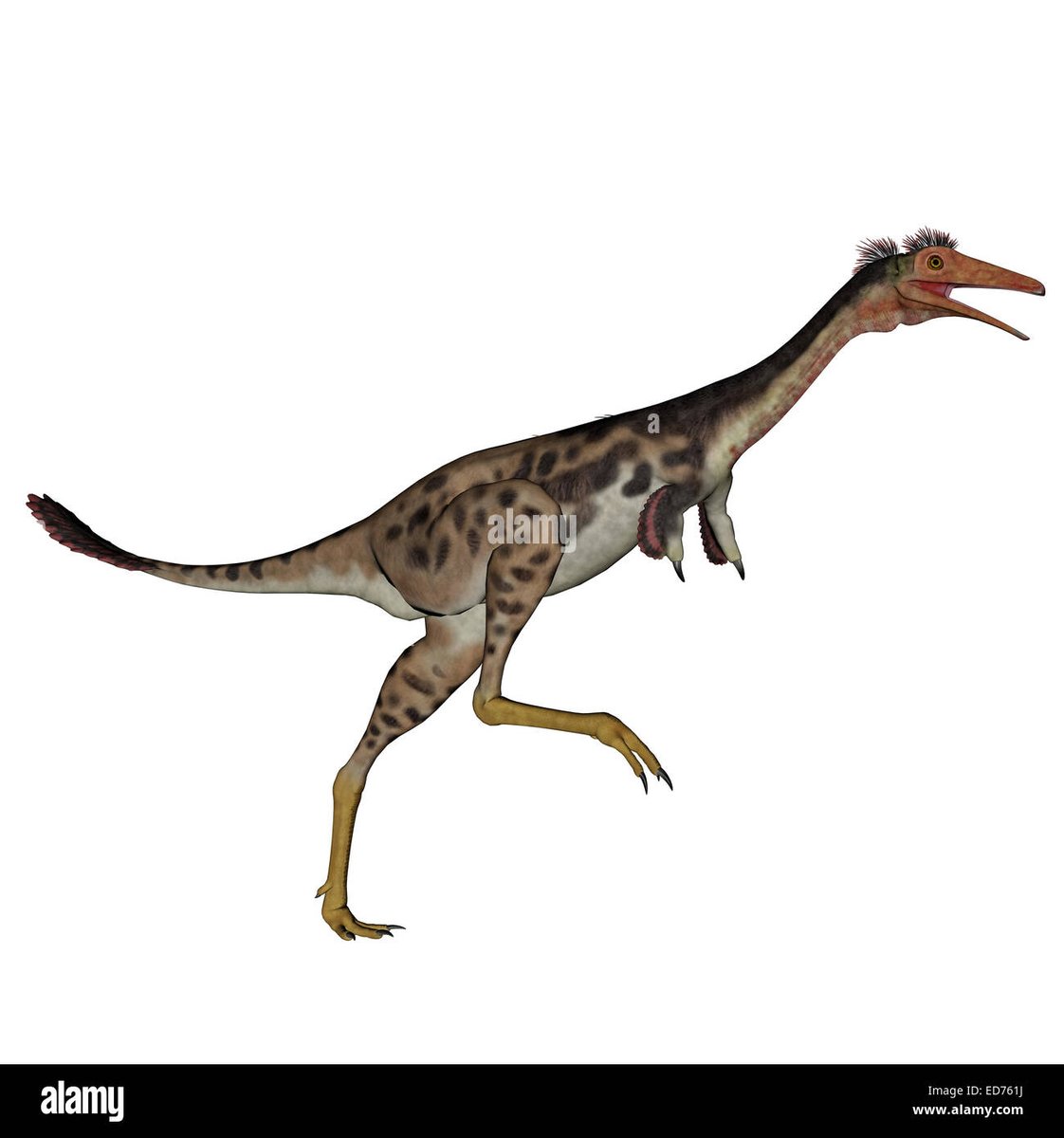
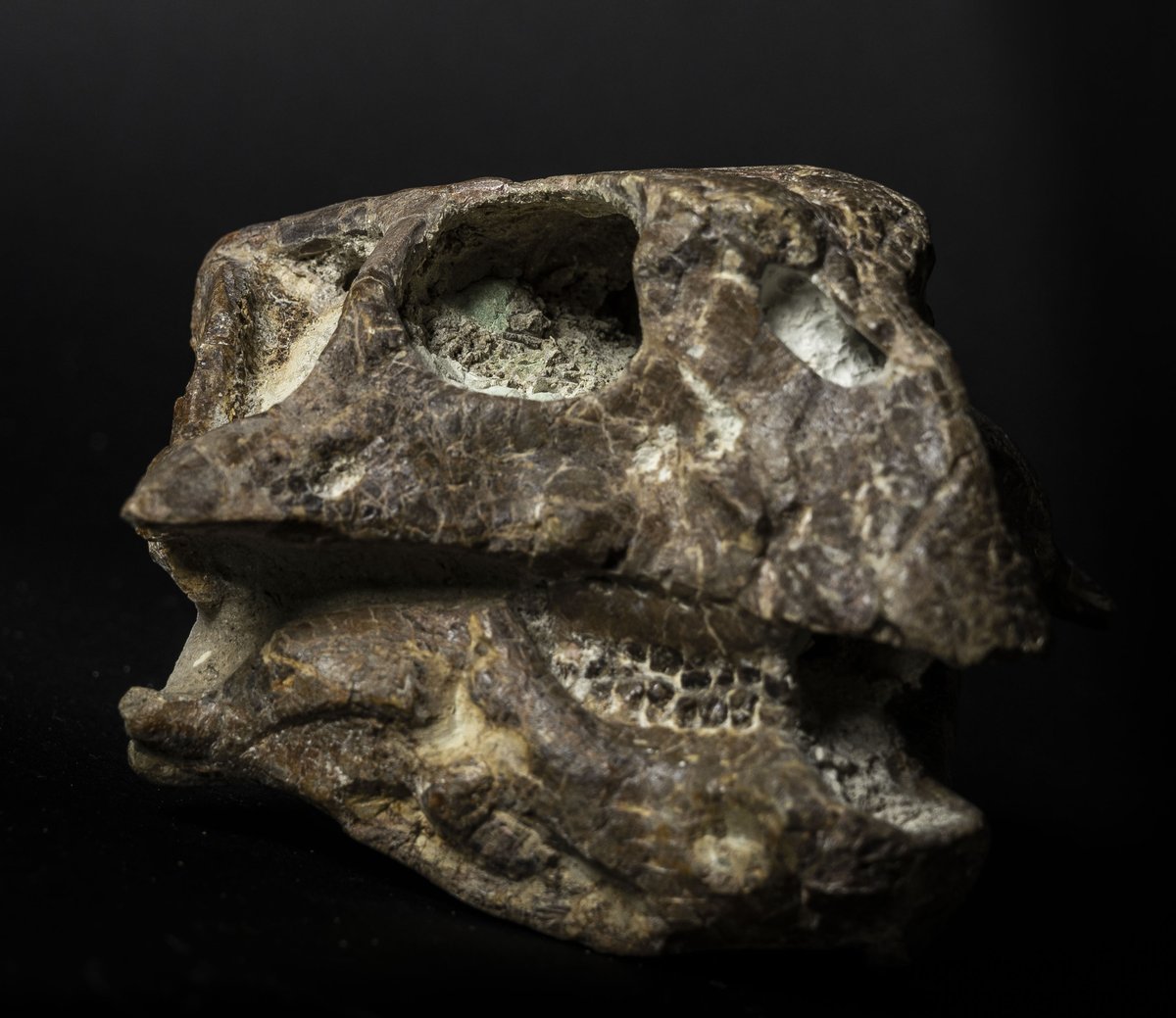
Psittacosaurus was a relatively small dinosaur, with adults of the most common species, Psittacosaurus mongoliensis, reaching an average length of about 2 meters (6.5 feet) and standing roughly 1 meter tall at the hips. Weight estimates vary, but a typical adult likely weighed around 20 kilograms (44 pounds), comparable in size to a modern-day large dog like a German Shepherd. Its most distinctive feature was its skull, which was short, deep, and equipped with a powerful, toothless beak, or rostrum, at the front of its upper jaw, strongly resembling that of a modern parrot. Behind this beak, it possessed shearing cheek teeth adapted for slicing tough plant material. A prominent feature of the skull was the presence of large jugal bones, or cheekbones, which flared outwards, giving its head a wide appearance. Some species, like P. sibiricus, had multiple horn-like protuberances on these bones. The rest of its skeleton was gracile. It had relatively long hind limbs and shorter forelimbs with four-fingered hands, indicating a primarily bipedal stance. Exceptionally preserved fossils have revealed soft tissue details, including scaly skin and, most remarkably, a fan of long, hollow, bristle-like quills running down the top of its tail. These structures were not feathers but are considered a unique integumentary feature among dinosaurs, possibly used for display.
Psittacosaurus was a specialized herbivore, using its sharp beak to crop vegetation and its self-sharpening cheek teeth to process it. The powerful jaw muscles, anchored to its flared cheekbones, would have provided a strong bite for dealing with fibrous plants like cycads, ferns, and conifers, which were abundant in its environment. Gastroliths, or stomach stones, have been found in the abdominal cavities of some specimens, suggesting they were swallowed to aid in the grinding of tough plant matter in the gizzard, a strategy used by many modern birds and crocodiles. Its primary mode of locomotion was bipedal, as evidenced by its long hindlimbs and shorter forelimbs. However, analysis of its limb proportions throughout its life cycle suggests a fascinating change in posture. Hatchlings and very young juveniles may have been quadrupedal, transitioning to a bipedal stance as they matured and their hindlimbs grew disproportionately longer. The discovery of a fossilized adult Psittacosaurus with 34 articulated juveniles huddled around it provides strong evidence for parental care and social behavior, suggesting these dinosaurs may have lived in family groups or herds. Growth studies based on bone histology indicate that Psittacosaurus grew relatively quickly, reaching adult size in about 8 to 10 years.
The world of Psittacosaurus during the Early Cretaceous was a dynamic and diverse ecosystem, particularly in the regions of modern-day China and Mongolia where its fossils are most abundant. It inhabited well-watered, forested environments with a temperate climate, characterized by distinct wet and dry seasons. These forests were dominated by conifers, ginkgoes, cycads, and ferns. Psittacosaurus shared this habitat with a remarkable array of other organisms, famously preserved in the Jehol Biota of China's Yixian and Jiufotang Formations. This ecosystem included other dinosaurs such as the small feathered theropods Sinosauropteryx and Caudipteryx, the dromaeosaur Sinornithosaurus, and the larger tyrannosauroid Dilong. As a small herbivore, Psittacosaurus would have occupied a low position in the food web, likely forming a primary food source for these predators. Fossil evidence of a Repenomamus, a badger-sized mammal, with the remains of a juvenile Psittacosaurus in its stomach provides direct proof of this predator-prey relationship. The environment also included various pterosaurs, early birds like Confuciusornis, lizards, turtles, and mammals, creating a complex and vibrant terrestrial community.
The discovery history of Psittacosaurus began in 1922 during the third American Museum of Natural History expedition to the Gobi Desert of Mongolia. Led by Roy Chapman Andrews, the expedition's chief paleontologist, Walter W. Granger, discovered the first fossils. The official description and naming were carried out by paleontologist Henry Fairfield Osborn in 1923. He named the type species Psittacosaurus mongoliensis, referencing the parrot-like beak ('psittakos' is Greek for parrot) and its discovery location. This initial find, the holotype specimen AMNH 6254, consisted of a skull and a partial skeleton. Since then, an extraordinary number of specimens—over 400 individuals—have been unearthed, primarily in Mongolia, China, and Russia, with possible remains found in Thailand. One of the most significant specimens is a remarkably preserved fossil from the Yixian Formation in China, which not only includes the complete skeleton but also extensive skin impressions, pigmentation patterns revealed through melanin analysis, and the unique tail quills. Another famous fossil, often cited as evidence for parental care, is the specimen from the Lujiatun beds showing an adult surrounded by 34 juveniles, likely its own offspring.
Psittacosaurus holds a pivotal position in the evolutionary history of dinosaurs. It is one of the earliest and most basal members of the Ceratopsia, the group of 'horned dinosaurs' that later evolved into giants like Protoceratops and the iconic Triceratops. While Psittacosaurus lacked the elaborate horns and neck frill of its later relatives, it possessed the key foundational traits of the group: the rostral bone forming the upper beak and the flared jugal (cheek) bones. Its anatomy provides a clear snapshot of an early stage in ceratopsian evolution, before the development of the large frills and quadrupedal posture that characterized later forms. The transition from a small, bipedal ancestor like Psittacosaurus to the massive, quadrupedal ceratopsids of the Late Cretaceous is a classic example of an evolutionary radiation. Furthermore, the discovery of bristle-like structures on its tail has fueled discussions about the evolution of integumentary structures in dinosaurs, suggesting that complex skin appendages were more widespread across different dinosaur lineages than previously thought and were not exclusive to the theropod line that led to birds.
Despite the wealth of fossil material, Psittacosaurus is not without its scientific debates. One major area of discussion has been the exact number of valid species. Over a dozen species have been named over the years, but subsequent analyses by paleontologists like Paul Sereno have suggested that many of these may be synonyms of P. mongoliensis or represent different growth stages. Today, around 9 to 11 species are generally considered valid, though the status of some remains contentious. The function of the prominent tail quills is another topic of debate. While display is the most widely accepted hypothesis, their exact purpose—whether for species recognition, courtship rituals, or defense—remains unknown. Additionally, recent studies using advanced imaging techniques on exceptionally preserved fossils have allowed scientists to reconstruct the color patterns of Psittacosaurus, suggesting a form of countershading camouflage. This interpretation, while groundbreaking, continues to be refined as new analytical methods are developed and applied to the fossil evidence.
The fossil record of Psittacosaurus is one of the most extensive for any non-avian dinosaur genus. Hundreds of complete or partial skeletons, representing individuals from hatchlings to fully grown adults, have been recovered. The majority of these fossils originate from the Early Cretaceous deposits of China, particularly the world-renowned Jehol Biota lagerstätten, including the Yixian and Jiufotang Formations in Liaoning Province. These sites are famous for their exceptional preservation, often capturing soft tissues like skin, quills, and even melanosomes (pigment-containing organelles). Other significant finds have been made in Mongolia, Russia (Siberia), and possibly Thailand. This abundance of well-preserved material from a wide range of ontogenetic stages has made Psittacosaurus a model organism for studying dinosaur growth, biomechanics, and paleobiology, providing a level of detail that is exceptionally rare in the fossil record. The sheer number of specimens allows for robust statistical analysis of its anatomy and population structure.
Due to its unique appearance and its status as an ancestor to the more famous Triceratops, Psittacosaurus has a notable presence in popular culture and museum exhibits. It is frequently depicted in dinosaur books, documentaries, and educational materials to illustrate the diversity of herbivorous dinosaurs and the early evolution of ceratopsians. Major museums around the world, including the American Museum of Natural History in New York and the Institute of Vertebrate Paleontology and Paleoanthropology in Beijing, feature impressive skeletons of Psittacosaurus. The scientifically-backed reconstruction of its coloration and tail quills has made it a subject of fascination, offering the public one of the most vivid and detailed glimpses into the life appearance of a dinosaur.
Classification
Time Period
Discovery
Location
Mongolia
Formation
Yixian Formation, Jiufotang Formation (and others)
Frequently Asked Questions
What is Psittacosaurus?
Psittacosaurus, whose name means 'parrot lizard,' was a small, bipedal herbivorous dinosaur that roamed across Asia during the Early Cretaceous period, approximately 126 to 101 million years ago. It is one of the most completely known dinosaur genera, represented by hundreds of fossil specimens, mak...
When did Psittacosaurus live?
Psittacosaurus lived during the cretaceous period of the mesozoic era approximately 126-101 million years ago.
Where was Psittacosaurus discovered?
Fossils of Psittacosaurus were discovered in Mongolia in the Yixian Formation, Jiufotang Formation (and others).
What did Psittacosaurus eat?
Psittacosaurus was a herbivore. It lived in terrestrial habitats.
What type of fossil is Psittacosaurus?
Psittacosaurus is preserved as a body fossil. The preservation quality is exceptional.
Related Specimens
From the mesozoic era · body fossils
/7725c8fee486.jpg)