Flexicalymene
Flexicalymene meeki
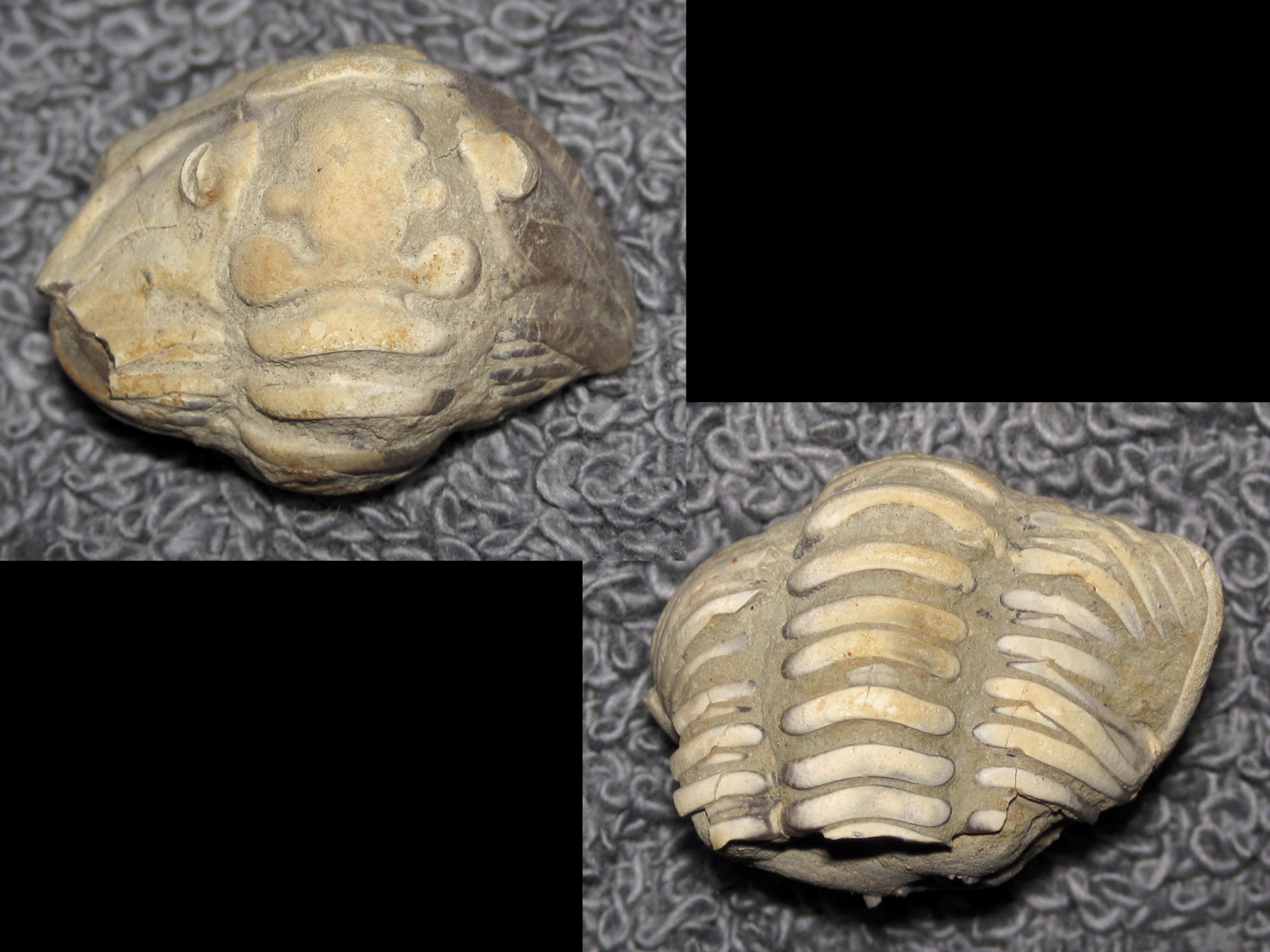
Image: Category:Flexicalymene meeki fossils - Wikimedia Commons (CC BY-SA)
About Flexicalymene
Flexicalymene meeki is an extinct species of trilobite, a highly successful group of early marine arthropods that flourished during the Late Ordovician Period, approximately 450 to 445 million years ago. As the official state fossil of Ohio, it represents one of the most recognizable and commonly collected fossils in North America, particularly within the exceptionally rich strata of the Cincinnati Arch region. This small, bottom-dwelling creature provides a critical window into the biodiversity and ecological dynamics of the shallow, subtropical seas that once covered the continental interior, making it a cornerstone for understanding Paleozoic marine life.
The physical anatomy of Flexicalymene meeki is a classic example of the trilobite body plan, which is defined by its division into three longitudinal lobes: a central, raised axial lobe flanked by two pleural lobes, from which the name "tri-lobite" is derived. Adult specimens typically reached lengths between 2.5 and 5 centimeters (approximately 1 to 2 inches), with an estimated weight of only a few grams. The dorsal exoskeleton, composed of calcite reinforced with chitin, was divided into three primary sections. The cephalon, or head shield, was semicircular and bore prominent features, including a bulbous central region called the glabella, which housed the stomach. The glabella of Flexicalymene is distinctive for its granular or pustulose texture and its three pairs of deep lateral furrows. On either side of the glabella were the fixed cheeks (fixigenae) and free cheeks (librigenae), the latter of which would detach during molting. Flexicalymene possessed small, crescent-shaped schizochroal eyes, composed of multiple, relatively large, individually set lenses, providing a wide field of view to detect movement from predators or potential food sources. The thorax, the middle section of the body, was composed of 13 articulating segments, granting the animal significant flexibility. This flexibility was crucial for its most famous behavior: volvation. The final section, the pygidium or tail shield, was small, rounded, and composed of several fused segments. Ventrally, the animal possessed a pair of jointed appendages for each thoracic segment, which were biramous, meaning they had two branches—one for walking (telopodite) and one bearing gills for respiration (exite). These soft parts are rarely preserved, but their structure is inferred from exceptionally preserved related species.
The life and behavior of Flexicalymene meeki have been extensively inferred from its morphology and the geological context of its fossils. As a benthic, or bottom-dwelling, organism, it was an active detritivore, systematically processing the soft sediment of the seafloor. It likely used its numerous appendages to stir up mud and silt, filtering out organic particles, microorganisms, and decaying matter for sustenance. This feeding strategy, known as deposit feeding, was a common and vital ecological role in Ordovician marine ecosystems. Locomotion was achieved through the coordinated movement of its walking legs, allowing it to crawl across the substrate. Trace fossils, such as the trackways known as Cruziana and resting burrows called Rusophycus, attributed to similar trilobites, suggest that Flexicalymene was capable of both surface crawling and shallow burrowing, likely to search for food or to seek refuge from predators. The most well-documented behavior is volvation, the ability to enroll into a tight, nearly spherical ball. This defensive posture, analogous to that of modern pill bugs or armadillos, was made possible by the flexible thoracic segments and the precise fit of the cephalon against the pygidium. Enrolling protected its vulnerable ventral side, including its soft appendages and gills, from the jaws of predators like the formidable cephalopod nautiloids that patrolled these ancient seas. The extraordinary number of Flexicalymene fossils found in an enrolled state provides powerful evidence that this was a common and effective survival tactic. Growth occurred through ecdysis, or molting, where the trilobite would shed its exoskeleton to accommodate its increasing size. Disarticulated fossil remains, particularly the easily shed librigenae, are common finds and serve as evidence of this regular life process.
During the Late Ordovician, specifically the Katian age, the region now encompassing Ohio, Indiana, and Kentucky was situated in the Southern Hemisphere, submerged beneath a shallow, warm, subtropical epeiric sea. The global climate was generally warmer than today, but this period was also marked by the onset of a major glaciation event centered on the supercontinent of Gondwana. This led to fluctuating sea levels, which are recorded in the alternating layers of limestone and shale that characterize the Cincinnatian Series. Flexicalymene meeki thrived in this dynamic, well-oxygenated, and nutrient-rich environment. It was a key component of a remarkably diverse benthic community. The seafloor was carpeted with vast colonies of bryozoans (moss animals), crinoids (sea lilies), and various species of brachiopods, such as Platystrophia and Rafinesquina, which formed extensive shell beds. Flexicalymene shared its habitat with numerous other trilobite species, including the larger Isotelus maximus, as well as gastropods, bivalves, and ostracods. In the water column above, graptolites drifted, while predatory nautiloids, such as Cameroceras, represented the apex predators of the ecosystem. As a detritivore, Flexicalymene occupied a crucial position near the base of the food web, recycling nutrients by consuming organic waste and, in turn, serving as a food source for larger invertebrates and early jawless fish. Its immense population numbers suggest it was a foundational species in the benthic ecology of the Cincinnatian sea.
The discovery and scientific description of Flexicalymene meeki are rooted in the early paleontological exploration of the American Midwest. The fossil-rich layers of the Cincinnati region attracted naturalists and geologists from the mid-19th century onward. The species was formally named by Fielding Bradford Meek in 1873, a prominent paleontologist associated with the Smithsonian Institution and various state geological surveys. However, the trilobite had been recognized earlier under a different name. In 1842, the pioneering American paleontologist John Locke initially described specimens of this trilobite as Calymene senaria. For decades, North American specimens were conflated with this European species. It was Meek, along with A. H. Worthen, who conducted detailed comparative studies and recognized that the Cincinnatian form was a distinct species, which he named Calymene meeki in an 1873 publication of the Geological Survey of Ohio. The genus name was later revised to Flexicalymene by Shirley in 1936, who noted key differences in the cephalic structure compared to the type species of Calymene. The specific epithet "meeki" honors Meek himself, a common practice in taxonomy. Countless specimens have been collected since, with key collections housed at institutions like the Cincinnati Museum Center, the Orton Geological Museum at The Ohio State University, and the National Museum of Natural History, providing a robust basis for over a century of scientific study.
In the grand tapestry of life, Flexicalymene meeki belongs to the phylum Arthropoda, the most diverse animal phylum, which also includes modern insects, crustaceans, and arachnids. Within this phylum, it is a member of the extinct class Trilobita, a group that first appeared in the Early Cambrian and survived for over 270 million years before vanishing in the Permian-Triassic mass extinction. Flexicalymene is classified within the order Phacopida and the family Calymenidae, a group characterized by their distinctive glabella shape and well-developed capacity for volvation. Trilobites like Flexicalymene represent an early and highly successful evolutionary experiment in arthropod design, showcasing a sophisticated segmented body, jointed appendages, and complex sensory systems, including some of the earliest known compound eyes. While trilobites have no direct living descendants, their closest modern relatives are the chelicerates, a group that includes horseshoe crabs, sea spiders, and arachnids. The shared characteristics, such as a chitinous exoskeleton and jointed limbs, highlight their common ancestry. The study of Flexicalymene and its relatives provides invaluable data on the pace and pattern of the Cambrian Explosion and the subsequent Ordovician Radiation, a period of dramatic diversification in marine life. Its well-preserved morphology allows paleontologists to trace the evolution of key arthropod features and understand how these ancient creatures interacted with their environment long before the rise of vertebrates.
Despite being a well-studied fossil, Flexicalymene meeki is not without its share of scientific debate, primarily concerning its precise taxonomic classification. For many years, the distinction between the genera Flexicalymene and Gravicalymene was a subject of contention among paleontologists. Some researchers argued that the subtle differences in the preglabellar field and the overall convexity of the cephalon were not sufficient to warrant separate generic status, suggesting they might represent variations within a single, more broadly defined genus. However, detailed morphometric analyses have largely solidified the distinction, with Flexicalymene now widely accepted as a valid genus. Another area of ongoing research involves the interpretation of its life habits. While its role as a detritivore is well-established, the extent of its burrowing behavior and whether it may have occasionally engaged in predatory or scavenging activities on larger carcasses remains an open question, answerable only through the rare discovery of trace fossils directly associated with a body fossil. Revisions in Cincinnatian stratigraphy also continue to refine our understanding of the precise temporal range and environmental preferences of F. meeki, allowing for more detailed paleoecological reconstructions.
The fossil record of Flexicalymene meeki is nothing short of extraordinary, making it a paleontological icon. Its remains are found in astonishing abundance throughout the rock layers of the Cincinnatian Series, particularly in the Kope, Fairview, and Waynesville Formations. These formations are exposed in road cuts, creek beds, and quarries across southwestern Ohio, northern Kentucky, and southeastern Indiana. The sheer number of specimens collected is estimated to be in the millions, ranging from complete, articulated individuals to disarticulated molts and fragments. The quality of preservation is often exceptional, with the fine-grained shales and mudstones of the Cincinnatian capturing intricate details of the exoskeleton's surface texture. The prevalence of enrolled specimens is a hallmark of these fossil beds, providing a frozen-in-time snapshot of the trilobite's defensive behavior. Famous fossil-collecting sites, such as Caesar Creek State Park in Ohio and various localities around the city of Cincinnati, have yielded countless high-quality specimens that are now housed in museums and private collections worldwide. This abundance makes Flexicalymene meeki an important index fossil for the Katian stage of the Late Ordovician, helping geologists to accurately date and correlate rock layers across the region.
The cultural impact of Flexicalymene meeki extends far beyond scientific circles, largely due to its status as a common and easily recognizable fossil. In 1985, it was officially designated the state fossil of Ohio, cementing its place in regional identity and public education. It is often the first fossil that amateur collectors and schoolchildren find, serving as a gateway to the science of paleontology and a tangible connection to Earth's deep past. Specimens of Flexicalymene are prominently displayed in major museums, including the Cincinnati Museum Center and the Cleveland Museum of Natural History, where they are used to educate the public about ancient life and the unique geological heritage of the Ohio Valley. Its classic trilobite shape has made it a popular subject in books, educational materials, and even jewelry, making it one of the few invertebrate fossils to achieve a degree of popular recognition.
Classification
Time Period
Discovery
Location
Cincinnati Arch region (Ohio, Indiana, Kentucky), USA
Formation
Cincinnatian Series (e.g., Kope Formation, Waynesville Formation)
Frequently Asked Questions
What is Flexicalymene?
Flexicalymene meeki is an extinct species of trilobite, a highly successful group of early marine arthropods that flourished during the Late Ordovician Period, approximately 450 to 445 million years ago. As the official state fossil of Ohio, it represents one of the most recognizable and commonly co...
When did Flexicalymene live?
Flexicalymene lived during the ordovician period of the paleozoic era approximately 450-445 million years ago.
Where was Flexicalymene discovered?
Fossils of Flexicalymene were discovered in Cincinnati Arch region (Ohio, Indiana, Kentucky), USA in the Cincinnatian Series (e.g., Kope Formation, Waynesville Formation).
What did Flexicalymene eat?
Flexicalymene was a detritivore. It lived in marine habitats.
What type of fossil is Flexicalymene?
Flexicalymene is preserved as a mold, cast, body fossil. The preservation quality is good.
Related Specimens
From the paleozoic era · mold, cast, body fossils