Neuropteris
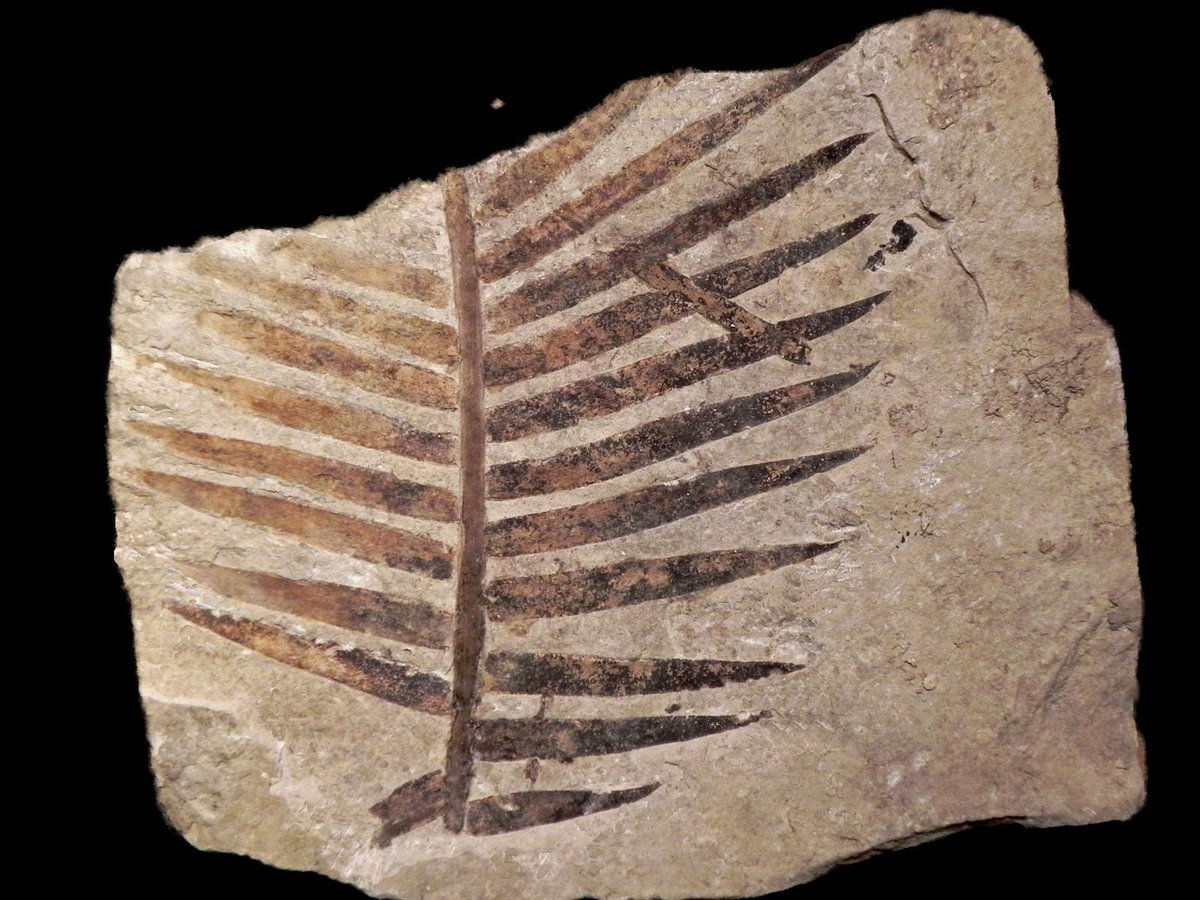
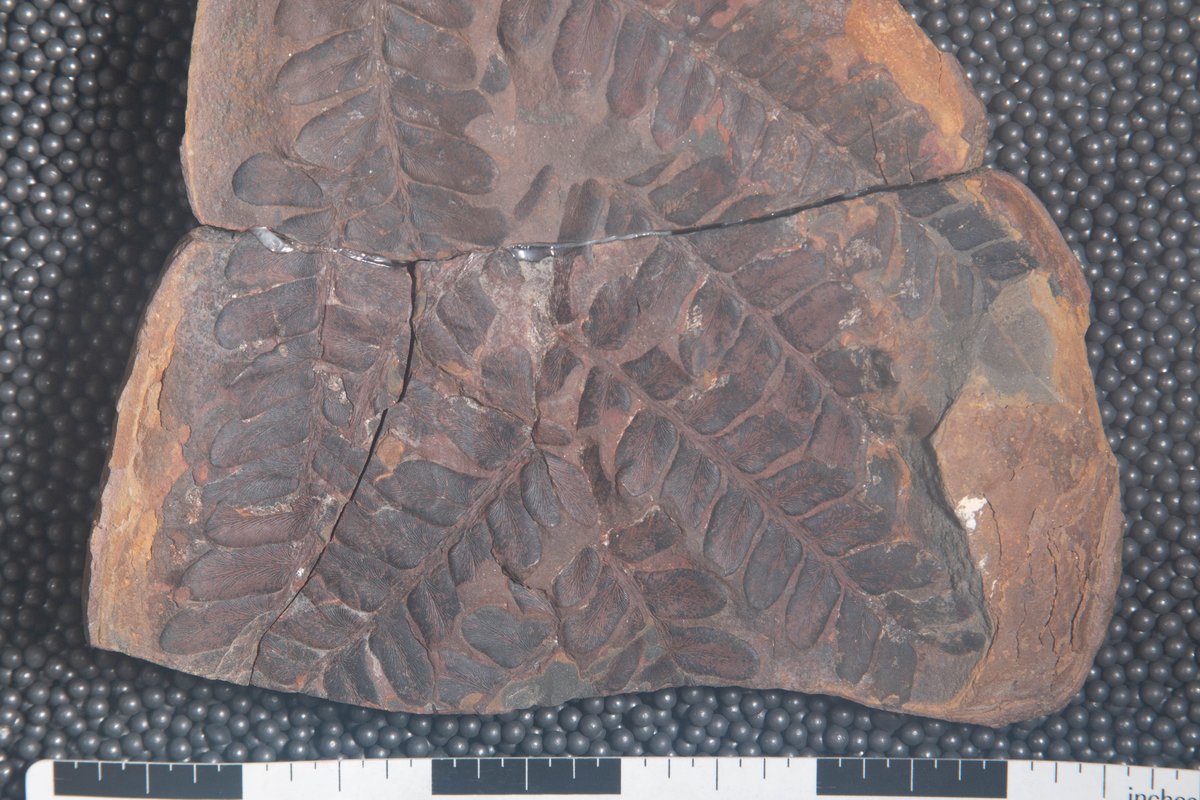
Neuropteris ovata
Image: Image sourced via web search (Fair use / Educational)
About Neuropteris
Neuropteris is a significant genus of extinct seed ferns that flourished during the Carboniferous Period, approximately 320 to 300 million years ago. As a key component of the vast coal swamp forests that dominated the Paleozoic Era, its fossilized remains are abundant and provide critical insights into the structure and function of these ancient ecosystems. Although its fronds resemble those of modern ferns, Neuropteris was not a true fern but a member of the Medullosales, an order of seed plants (pteridosperms) that reproduced via seeds rather than spores, representing a pivotal evolutionary step in plant history.
Neuropteris was a diverse genus, with species ranging from sprawling shrubs to small trees, potentially reaching heights of up to 10 meters. The most recognizable feature is its large, complex fronds, which could exceed a meter in length. These fronds were pinnately compound, meaning they were divided multiple times into smaller leaflets. The primary stalk, or rachis, branched to form secondary pinnae, which in turn bore the ultimate leaflets, known as pinnules. In the well-known species Neuropteris ovata, these pinnules are characteristically ovate or tongue-shaped, with a distinct midvein from which finer, dichotomously branching veins arise and curve towards the margin without interconnecting. The pinnules attached to the stem via a single point at their cordate (heart-shaped) base, a key diagnostic feature. Unlike true ferns, which have sporangia on their fronds, Neuropteris bore its seeds on specialized structures. The seeds, often found fossilized separately and given names like Trigonocarpus, were relatively large and complex, possessing a multi-layered seed coat (integument) that provided protection. The trunks of the parent plants, known as Medullosa, were also unique, featuring a complex internal structure of multiple vascular bundles (a polystelic arrangement) embedded in parenchymal tissue, all covered by a mantle of adventitious roots. This anatomy suggests a plant that was robust and well-adapted to its swampy environment.
The paleobiology of Neuropteris reveals a highly successful photosynthetic organism adapted to the warm, humid, and oxygen-rich conditions of the Carboniferous coal swamps. As a primary producer, it harnessed sunlight to create energy, forming the base of the food web in these lush ecosystems. Its large, spreading fronds with numerous pinnules were optimized for light capture in the dense, multi-layered forest canopy. The plant's growth form, likely as an understory tree or a large, scrambling shrub, allowed it to compete for light with other dominant flora like the giant lycopsids (e.g., Lepidodendron) and calamites. Reproduction via seeds was a significant advantage over spore-bearing plants. Seeds provided the embryo with a protective coat and a nutrient supply (endosperm), allowing it to remain dormant until conditions were favorable for germination. This strategy facilitated dispersal and increased the chances of successful establishment in the periodically disturbed floodplain environments. While direct evidence of herbivory is found on some Neuropteris fossils in the form of bite marks, the tough, fibrous nature of the pinnules may have deterred many of the large arthropods, such as Arthropleura, that roamed the forest floor. Its metabolism was likely adapted to high atmospheric CO2 and oxygen levels, contributing to rapid growth and the massive biomass accumulation that would eventually form the world's great coal seams.
Neuropteris lived in a world vastly different from our own. During the Carboniferous, the supercontinent of Pangea was assembling, and vast equatorial regions were covered by extensive, low-lying coastal plains and wetlands. The climate was hot and humid with no significant seasonality, creating ideal conditions for the proliferation of dense, swampy forests. These coal swamps were a vibrant, multi-tiered ecosystem. The canopy was dominated by towering lycopsid trees like Lepidodendron and Sigillaria, which could reach over 30 meters in height. Beneath them, a mid-story layer was occupied by tree ferns, calamites (giant horsetails), and seed ferns like Neuropteris. The forest floor was a damp carpet of decaying plant matter, smaller ferns, and fungi. This environment teemed with life. Giant arthropods, including the meter-long millipede Arthropleura and dragonfly-like insects such as Meganeura with wingspans of over 70 centimeters, thrived in the oxygen-rich atmosphere. Early tetrapods, including large amphibians and the first amniotes (reptile ancestors), inhabited the waterways and forest floor, creating a complex food web. Neuropteris, as a foundational plant species, provided food and shelter for this diverse fauna and played a critical role in the carbon cycle, sequestering enormous amounts of carbon that, upon burial and compression, became the coal deposits that fueled the Industrial Revolution millions of years later.
The discovery and study of Neuropteris are intrinsically linked to the history of geology and paleontology in 19th-century Europe. The genus was first formally described by the French botanist Adolphe-Théodore Brongniart in his seminal 1822 work, "Sur la classification et la distribution des végétaux fossiles." Brongniart, often called the 'father of paleobotany,' recognized these distinctive fossil fronds from the coal mines of France and established the genus based on their unique venation pattern—the nerve-like appearance of the veins giving it the name Neuropteris (from Greek 'neuron' for nerve and 'pteris' for fern). His contemporary, Kaspar Maria von Sternberg, also described similar fossils from Bohemia. Early research was driven by the economic importance of coal mining, as geologists and miners used these 'index fossils' to identify and correlate different coal seams across Europe. For decades, Neuropteris was known only from its detached fronds, leading to its initial classification as a true fern. It was not until the late 19th and early 20th centuries that paleobotanists like Daniel Oliver, Francis Wall Oliver, and Dukinfield Henry Scott pieced together the evidence connecting the fronds of Neuropteris, the stems of Medullosa, and the seeds of Trigonocarpus, revealing the true nature of the plant as a pteridosperm, or seed fern. No single 'type specimen' holds the fame of an animal fossil like 'Sue,' but countless high-quality specimens reside in major natural history museums in London, Paris, Berlin, and Washington D.C.
Neuropteris holds immense evolutionary significance as a prime example of the pteridosperms, a group that marks a crucial transition in plant evolution. The development of the seed was one of the most important innovations in the history of life on land, freeing plants from their dependence on water for reproduction. Spore-bearing plants like ferns and lycopsids require a film of water for fertilization to occur, restricting them to moist habitats. Seed plants, by contrast, package the female gamete and embryo within a protective ovule, which is fertilized by pollen—a process that does not require external water. This adaptation allowed plants to conquer drier terrestrial environments and ultimately diversify into the dominant flora we see today (gymnosperms and angiosperms). Neuropteris and its relatives in the Medullosales represent one of the earliest and most successful radiations of seed-bearing plants. They demonstrate that the seed habit evolved independently in several plant lineages. While the Medullosales themselves went extinct during the Permian-Triassic mass extinction event, they are part of the broader evolutionary story that led to the rise of modern gymnosperms like conifers and cycads, showcasing a key stage in the assembly of the modern plant body plan and reproductive strategies.
Despite being studied for two centuries, Neuropteris still presents scientific debates. A primary area of ongoing research is the precise reconstruction of the whole plant. Because different parts of the plant (fronds, stems, roots, seeds) are typically found as isolated fossils (form taxa), assembling the complete organism is a complex puzzle. The exact relationship between specific species of Neuropteris fronds and specific species of Medullosa stems or Trigonocarpus seeds is often a matter of inference and debate, though some direct attachments have been found. Furthermore, the sheer diversity of Neuropteris-like foliage has led to taxonomic challenges, with some researchers arguing for a revision of the genus and the reclassification of certain species. The ecological role and growth habits are also discussed; while a small tree or shrub is the consensus for many species, some may have had a more vine-like or scrambling habit, using other plants for support to reach the light. New analytical techniques, such as cuticle analysis and biomechanical modeling, are now being used to refine our understanding of their physiology and structure, offering new insights into how these ancient plants functioned in the Carboniferous world.
The fossil record of Neuropteris is exceptionally rich and widespread. Its remains are among the most common plant fossils found in the Upper Carboniferous (Pennsylvanian) coal-bearing strata of Euramerica—the continental landmass that included modern-day North America and Europe. Famous fossil sites include the coalfields of the United Kingdom (especially Wales and Northern England), the Saar-Lorraine Basin in France and Germany, the Appalachian Basin in the eastern United States (particularly in Pennsylvania, Ohio, and West Virginia), and the Mazon Creek lagerstätte in Illinois. At Mazon Creek, fossils are often preserved in exceptional detail within siderite (iron carbonate) nodules, which provide a three-dimensional view of the plant's structure. The fossils are almost always impressions or compressions, where the plant material was flattened, leaving a carbonaceous film on the surface of shale or sandstone. The abundance of Neuropteris fossils makes it an excellent index fossil, helping geologists date and correlate rock layers from the Carboniferous Period across vast distances. Its prevalence in the fossil record is a direct testament to its ecological dominance in the ancient coal swamps.
Due to its abundance and classic 'fern-like' appearance, Neuropteris has a notable cultural and educational impact. It is often one of the first and most recognizable plant fossils that amateur collectors and students encounter. Its beautifully preserved fronds are staples in museum displays worldwide that depict Carboniferous coal forests, visually representing the lush, alien world that existed long before the dinosaurs. For example, the Field Museum in Chicago and the Smithsonian National Museum of Natural History feature detailed dioramas of these ancient swamps where Neuropteris is prominently displayed. It serves as a powerful educational tool to explain key concepts in Earth's history, including continental drift, ancient climates, the evolution of plants, and the biological origin of fossil fuels. While it lacks the blockbuster appeal of a Tyrannosaurus rex, Neuropteris is a silent giant of paleontology, a fundamental piece of the puzzle in understanding the deep history of our planet's ecosystems.
Classification
Time Period
Discovery
Location
Europe (specifically, coal-bearing regions of Great Britain, France, Belgium, and Germany)
Formation
Coal Measures (e.g., Westphalian and Stephanian stages of the Silesian)
Frequently Asked Questions
What is Neuropteris?
Neuropteris is a significant genus of extinct seed ferns that flourished during the Carboniferous Period, approximately 320 to 300 million years ago. As a key component of the vast coal swamp forests that dominated the Paleozoic Era, its fossilized remains are abundant and provide critical insights ...
When did Neuropteris live?
Neuropteris lived during the carboniferous period of the paleozoic era approximately 320-300 million years ago.
Where was Neuropteris discovered?
Fossils of Neuropteris were discovered in Europe (specifically, coal-bearing regions of Great Britain, France, Belgium, and Germany) in the Coal Measures (e.g., Westphalian and Stephanian stages of the Silesian).
What did Neuropteris eat?
Neuropteris was a photosynthetic. It lived in terrestrial (specifically, lowland coal swamps and floodplains) habitats.
What type of fossil is Neuropteris?
Neuropteris is preserved as a impression fossil. The preservation quality is good.
Related Specimens
From the paleozoic era · impression fossils