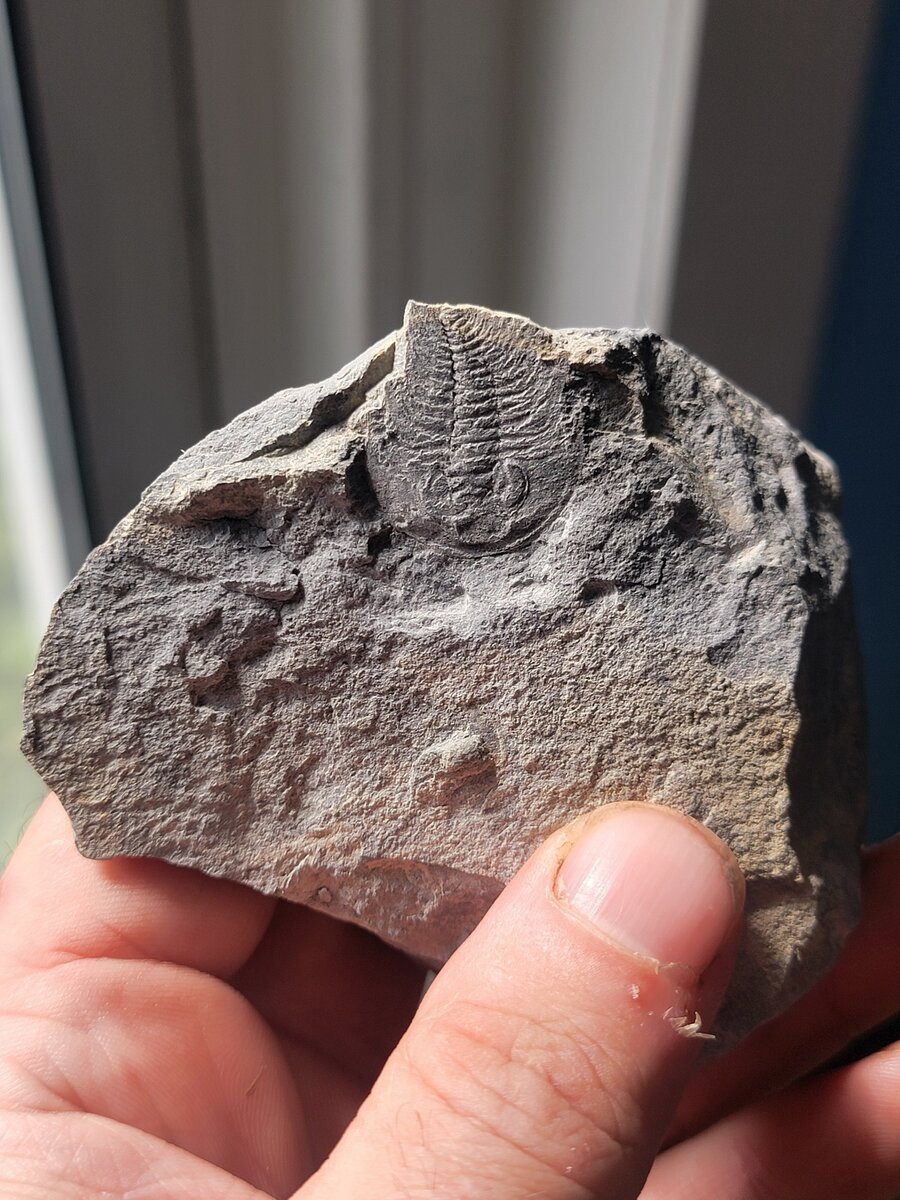
Olenellus
Olenellus thompsoni
Image: Image sourced via web search (Fair use / Educational)
About Olenellus
Olenellus thompsoni represents one of the most iconic and scientifically significant marine arthropods of the early Paleozoic era, specifically thriving during the early Cambrian period approximately 521 to 510 million years ago. As a foundational member of the class Trilobita, this organism provides a critical window into the rapid diversification of complex, multicellular life known as the Cambrian Explosion. Found predominantly in the shallow, warm epicontinental seas that once covered the ancient paleocontinent of Laurentia—which corresponds to modern-day North America—Olenellus thompsoni serves as a crucial index fossil for paleontologists and geologists. Its presence in sedimentary rock layers is so reliable that it defines the Olenellus Zone, a biostratigraphic marker used to date early Cambrian formations across the globe. The significance of Olenellus thompsoni extends far beyond its utility in dating rocks; it offers profound insights into the early evolution of arthropod anatomy, the development of complex visual systems, and the establishment of early marine benthic ecosystems. By studying this ancient invertebrate, scientists can reconstruct the evolutionary pathways that led to the staggering diversity of arthropods, which remain the most successful and abundant phylum of animals on Earth today.
In terms of physical anatomy, Olenellus thompsoni possessed a flattened, heavily calcified exoskeleton typical of early trilobites, with an average body length ranging from five to ten centimeters, though some exceptional specimens suggest slightly larger maximums. To put this in perspective, an average adult Olenellus was roughly the size of a modern human palm or a large contemporary marine isopod. The exoskeleton was divided into three distinct longitudinal lobes—a central axial lobe flanked by two pleural lobes—which gives the class Trilobita its name. The cephalon, or head shield, was particularly distinctive, characterized by a broad, semicircular shape terminating in long, swept-back genal spines that likely provided both defense against predators and stabilization on the soft ocean floor. One of the most defining features of Olenellus thompsoni, and the Olenellina suborder as a whole, is the complete absence of dorsal facial sutures. In most later trilobites, these sutures acted as pre-programmed lines of weakness that split open to facilitate molting. Instead, Olenellus possessed a marginal suture located along the ventral edge of the cephalon. The visual system of Olenellus was highly advanced for its time, featuring large, crescent-shaped holochroal eyes composed of numerous tiny, tightly packed calcite lenses. These eyes provided a wide field of vision, crucial for detecting movement in the dimly lit benthic environment. The thorax consisted of fourteen to fifteen articulating segments, with the third segment often being macropleural, meaning it was significantly enlarged and extended into long trailing spines. The pygidium, or tail shield, was remarkably small (micropygous), consisting of only a few fused segments, which is considered a primitive trait among trilobites. While soft tissues are rarely preserved, exceptional fossil deposits suggest that Olenellus possessed biramous (two-branched) appendages beneath each thoracic segment, with one branch serving as a walking leg and the other functioning as a gill for respiration.
The paleobiology of Olenellus thompsoni paints a picture of a highly adapted benthic organism intimately tied to the seafloor. As a detritivore and possible opportunistic scavenger, Olenellus likely spent its life crawling over and shallowly burrowing into the soft, muddy substrates of the Cambrian oceans. Its biramous appendages were perfectly suited for this lifestyle; the sturdy inner walking legs (endopodites) allowed it to navigate the uneven sediment, while the outer filamentous branches (exopodites) not only facilitated respiration but may have also helped sweep organic detritus, microbial mats, and small soft-bodied organisms toward its ventrally located mouth. The lack of specialized crushing mouthparts suggests that Olenellus could not tackle hard-shelled prey, relying instead on softer, easily processed food sources. The metabolic rate of Olenellus was likely relatively low, consistent with modern cold-water benthic arthropods, though the warm, shallow waters of the Cambrian epicontinental seas may have supported a slightly more active lifestyle. Growth and development in Olenellus thompsoni occurred through a process of ecdysis, or molting, which was a complex and vulnerable undertaking. Because it lacked the dorsal facial sutures of later trilobites, Olenellus had to shed its exoskeleton by splitting the marginal suture beneath its head and crawling forward out of its old shell. This molting process left the animal temporarily soft and highly vulnerable to predation until its new exoskeleton could harden and calcify. Paleontologists have identified distinct growth stages in Olenellid trilobites, starting from a tiny, planktonic protaspis stage, progressing through a meraspis stage where thoracic segments were sequentially added, and finally reaching the holaspis stage, representing the adult form with a fixed number of segments. This complex life cycle suggests that Olenellus may have occupied different ecological niches at different stages of its development, perhaps starting as a pelagic drifter before settling into its adult benthic lifestyle.
During the early Cambrian period, the world inhabited by Olenellus thompsoni was vastly different from the Earth we know today. The global climate was generally warm and equitable, with no significant polar ice caps, leading to high sea levels that flooded the margins of the ancient continents. Olenellus lived primarily along the shallow, sunlit continental shelves of Laurentia, an ancient landmass situated near the equator. These epicontinental seas were vibrant, dynamic environments, representing the cradle of the Cambrian Explosion. The seafloor was often covered by extensive microbial mats, which stabilized the sediment and provided a foundational food source for a burgeoning community of benthic grazers and detritivores. Olenellus shared this habitat with a diverse array of newly evolved organisms, including early brachiopods, sponges, hyoliths, and various enigmatic soft-bodied creatures known from Burgess Shale-type deposits. In this early marine food web, Olenellus occupied a middle tier. While it was an effective consumer of detritus and microbial matter, it was also prey for the ocean's first apex predators. Formidable creatures like the anomalocaridids, which possessed large grasping appendages and circular, tooth-lined mouths, patrolled the water column above. The heavily calcified exoskeleton and prominent genal and macropleural spines of Olenellus were likely evolutionary responses to this unprecedented predation pressure, offering a degree of physical protection and making the trilobite difficult to swallow. The evolutionary arms race between early predators and armored prey like Olenellus was a driving force in the rapid diversification of marine life during this period.
The discovery and subsequent scientific description of Olenellus thompsoni represent a fascinating chapter in the history of North American paleontology. The species was first formally described in 1859 by the eminent American paleontologist James Hall, a towering figure in 19th-century geology who served as the State Paleontologist of New York. The type specimens were discovered in the Parker Slate formation near the town of Georgia, Vermont. The specific epithet, thompsoni, was chosen by Hall to honor Zadock Thompson, a prominent Vermont naturalist, historian, and professor who had made significant contributions to the state's natural history and who had originally brought the fossiliferous rocks of the region to the attention of the broader scientific community. Initially, Hall classified the organism under the genus Olenus, naming it Olenus thompsoni. However, as more complete specimens were uncovered and the distinct anatomical differences—such as the lack of facial sutures and the micropygous tail—became apparent, it was recognized that this trilobite belonged to an entirely new genus. The genus name Olenellus, meaning little Olenus, was subsequently established. In the late 19th and early 20th centuries, the renowned paleontologist Charles Doolittle Walcott, famous for his later discovery of the Burgess Shale, conducted extensive fieldwork on early Cambrian strata across North America. Walcott's meticulous studies of Olenellid trilobites, including Olenellus thompsoni, fundamentally shaped our understanding of early Cambrian biostratigraphy. He recognized that Olenellus was restricted to the earliest fossil-bearing rocks, using it to define the Lower Cambrian series in North America. The original type specimens studied by Hall and later by Walcott remain critical reference points and are housed in major institutional collections, including the American Museum of Natural History and the Smithsonian Institution.
The evolutionary significance of Olenellus thompsoni cannot be overstated, as it occupies a basal position near the very root of the trilobite family tree. As a member of the order Redlichiida, and specifically the suborder Olenellina, Olenellus exhibits a suite of primitive anatomical characteristics that provide vital clues about the origins of the class Trilobita and the broader evolution of arthropods. The most notable of these primitive traits is the absence of dorsal facial sutures. For decades, paleontologists debated whether this absence was a primitive condition (plesiomorphy) or a secondary loss (apomorphy). Modern phylogenetic analyses have overwhelmingly concluded that the lack of facial sutures in Olenellids is indeed the ancestral state for all trilobites. This indicates that Olenellus and its close relatives diverged from the main trilobite lineage before the evolutionary innovation of dorsal sutures, which later became a defining characteristic of almost all subsequent trilobite orders. Furthermore, the micropygous condition—possessing a tiny, poorly developed tail shield—and the large number of articulating thoracic segments are also considered ancestral traits, reflecting an early stage in arthropod tagmosis (the evolutionary process of fusing body segments into specialized functional regions). By studying Olenellus, scientists can reconstruct the hypothetical ancestor of all trilobites, which likely resembled a soft-bodied, multi-segmented worm-like creature that gradually evolved a calcified dorsal carapace. Olenellus thompsoni thus serves as a crucial transitional form, bridging the gap between the unmineralized arthropod ancestors of the Ediacaran or earliest Cambrian and the highly derived, diverse trilobite faunas that dominated the later Paleozoic oceans. Its lineage, however, was relatively short-lived; the entire suborder Olenellina went extinct at the end of the early Cambrian, leaving no direct descendants, making them a unique and isolated branch on the tree of life.
Throughout the history of its study, Olenellus thompsoni has been the subject of several significant scientific debates. The most prominent historical controversy revolved around its taxonomic placement and the nature of its molting mechanism. Early paleontologists struggled to classify Olenellids due to their lack of facial sutures, leading to intense debates over whether they should even be considered true trilobites. It was only through detailed comparative anatomy and the discovery of the ventral marginal suture that their status as basal trilobites was firmly established. More recently, debates have focused on the precise phylogenetic relationships within the suborder Olenellina and their connection to the closely related suborder Redlichiina. Some researchers argue that Olenellids and Redlichiids share a direct common ancestor, while others propose that Olenellids represent an even older, more basal offshoot. Additionally, there is ongoing discussion regarding the function of the macropleural third thoracic segment. While traditionally viewed as a defensive structure, some biomechanical studies suggest it may have played a role in stabilizing the animal in strong benthic currents or perhaps served a function during mating or molting. The exact causes of the sudden extinction of Olenellus and all other Olenellids at the end of the early Cambrian also remain a topic of active investigation, with hypotheses ranging from rapid environmental changes and oceanic anoxia to increased competition from newly evolving trilobite groups.
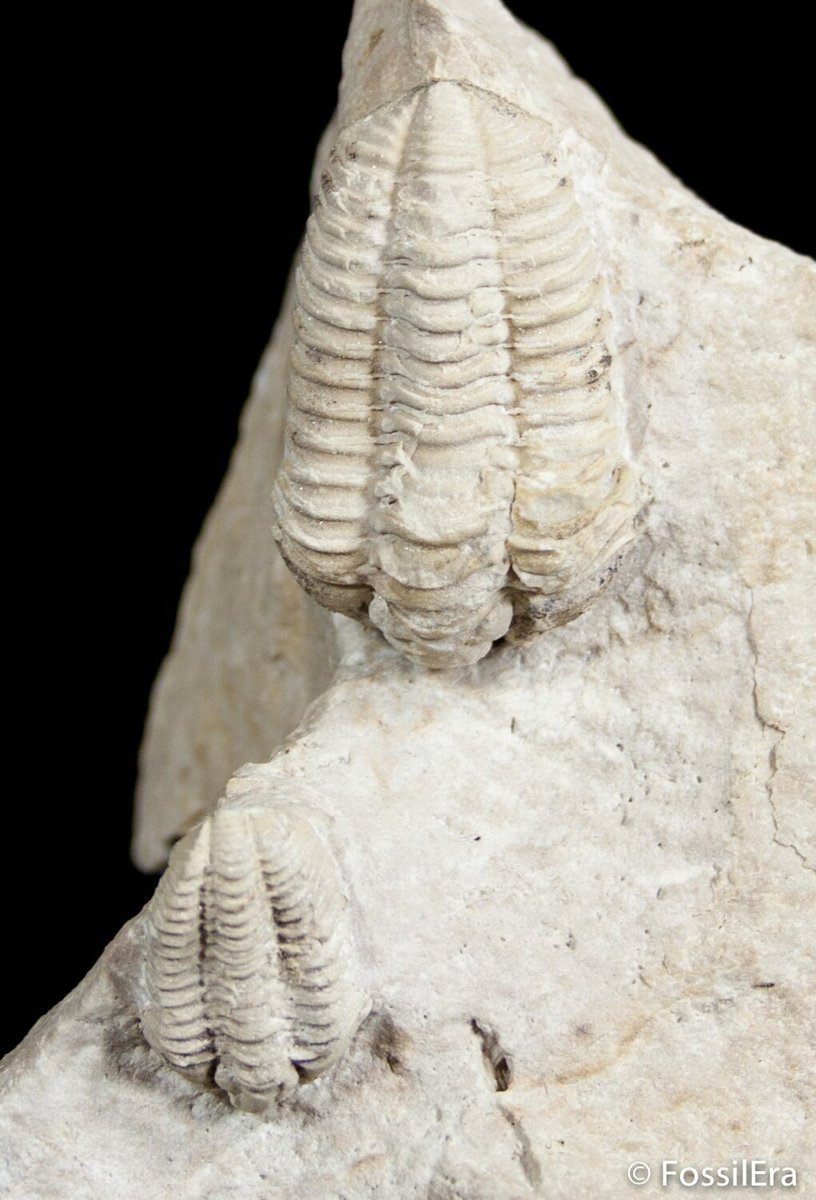
The fossil record of Olenellus thompsoni is robust but geographically restricted, reflecting its status as an endemic species of the ancient paleocontinent of Laurentia. Fossils are predominantly found in specific geological formations in North America, most notably the Parker Slate of Vermont, where the type specimens were discovered, as well as the Kinzers Formation in Pennsylvania and the Pioche Shale in Nevada. Because trilobites grew by molting, the vast majority of Olenellus fossils do not represent dead animals, but rather discarded exoskeletons. Consequently, the preservation quality varies significantly. Complete, fully articulated specimens of Olenellus thompsoni are relatively rare and highly prized by paleontologists and collectors alike. More commonly, the fossil record yields disarticulated fragments—isolated cephalons, individual thoracic segments, and broken genal spines—scattered across bedding planes. Despite this fragmentation, the heavily calcified nature of the Olenellus carapace ensures that these pieces are often well-preserved, retaining intricate details of the exoskeleton's surface ornamentation, such as fine terrace lines and the delicate structures of the holochroal eyes. The abundance of these fragments in early Cambrian strata makes Olenellus an exceptional index fossil. When geologists encounter Olenellus remains in a rock layer, they can confidently date that stratum to the early Cambrian, specifically the Olenellus Zone, facilitating the correlation of rock formations across vast distances of the North American continent.
While perhaps not as universally recognized by the general public as dinosaurs like Tyrannosaurus rex, Olenellus thompsoni holds a place of deep respect and fascination within the scientific community and among amateur fossil enthusiasts. Its distinctive, wide-headed appearance makes it instantly recognizable and a favorite subject for paleoart depicting the Cambrian Explosion. Exceptional specimens of Olenellus are prominently displayed in major natural history museums worldwide, including the Smithsonian National Museum of Natural History, where they serve as tangible, educational ambassadors for the dawn of complex animal life. Furthermore, the historical importance of its discovery in Vermont has cemented its status in regional scientific heritage, highlighting the crucial role that early American paleontological expeditions played in unraveling the deep history of our planet.
Classification
Time Period
Discovery
Location
United States (Vermont)
Formation
Parker Slate
Frequently Asked Questions
What is Olenellus?
Olenellus thompsoni represents one of the most iconic and scientifically significant marine arthropods of the early Paleozoic era, specifically thriving during the early Cambrian period approximately 521 to 510 million years ago. As a foundational member of the class Trilobita, this organism provide...
When did Olenellus live?
Olenellus lived during the cambrian period of the paleozoic era approximately 521-510 million years ago.
Where was Olenellus discovered?
Fossils of Olenellus were discovered in United States (Vermont) in the Parker Slate.
What did Olenellus eat?
Olenellus was a detritivore. It lived in marine habitats.
What type of fossil is Olenellus?
Olenellus is preserved as a body fossil. The preservation quality is good.
Related Specimens
From the paleozoic era · body fossils
-slab/453736fb9032.jpg)