Gallimimus
Gallimimus bullatus
Image: Image sourced via web search (Fair use / Educational)
About Gallimimus
Gallimimus bullatus, meaning "chicken mimic," is one of the most recognizable and well-represented ornithomimid dinosaurs of the Late Cretaceous period. Roaming the floodplains of what is now the Gobi Desert in Mongolia approximately 70 to 66 million years ago, this remarkable theropod represents a pinnacle of cursorial adaptation among non-avian dinosaurs. Its significance in paleontology is profound, as the abundance of exceptionally preserved specimens spanning multiple growth stages has provided unprecedented insights into the ontogeny, biomechanics, and paleoecology of ornithomimosaurs. As the largest known member of the family Ornithomimidae, Gallimimus serves as a crucial reference point for understanding the evolutionary trajectory of ostrich-like dinosaurs during the twilight of the Mesozoic era.
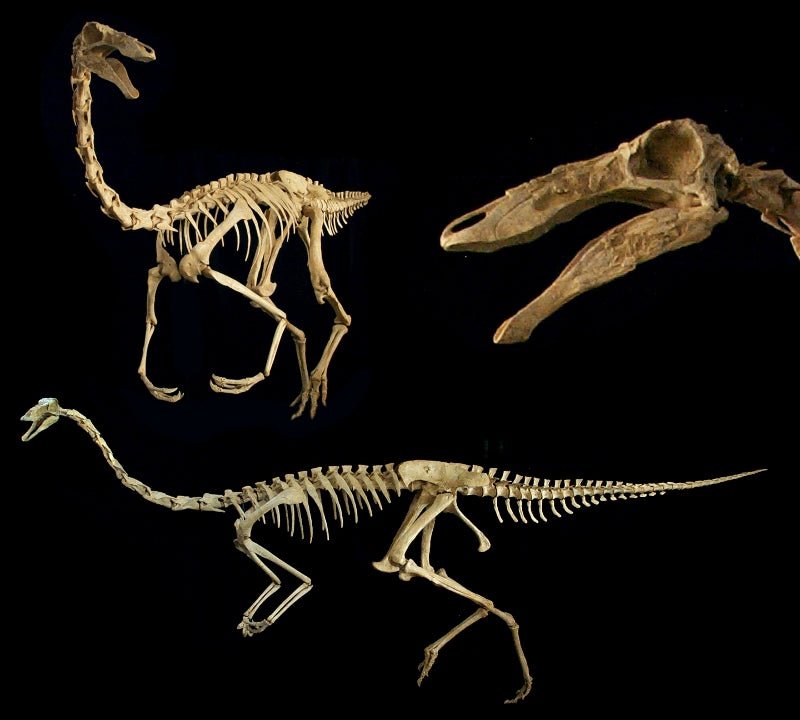
In terms of physical description, Gallimimus bullatus was an impressively large animal, far exceeding the dimensions of the modern birds it superficially resembled. Adult individuals reached lengths of approximately 6 meters (nearly 20 feet) from the tip of the snout to the end of the tail, standing roughly 2 meters tall at the hip. Weight estimates for fully grown adults range from 400 to 450 kilograms, making it comparable in mass to a modern horse, albeit distributed across a highly specialized bipedal frame. The anatomy of Gallimimus was characterized by a small, elongated head perched atop a long, flexible neck, a robust, barrel-shaped torso, and a long, stiffened tail that acted as a dynamic counterbalance during high-speed locomotion. Its skull was remarkably bird-like, featuring large, laterally positioned eye sockets that housed sclerotic rings, indicating excellent vision optimized for detecting predators and foraging in open environments. The snout ended in a broad, toothless, keratinous beak, with the lower jaw exhibiting a distinctive scoop-like shape. The forelimbs of Gallimimus were relatively short compared to its hindlimbs but were nonetheless well-developed, ending in three-fingered hands equipped with moderately curved claws. These arms were not built for grasping heavy prey but were likely used for manipulating vegetation, scratching the ground, or perhaps display. The hindlimbs, however, were the defining feature of its anatomy. The femur was shorter than the tibia, and the metatarsals were elongated and tightly appressed in an arctometatarsalian condition, a classic hallmark of extreme cursorial adaptation. This skeletal configuration is strikingly similar to that of modern ratites like the ostrich and emu, suggesting a highly efficient, energy-saving stride. Although direct fossil evidence of integument in Gallimimus is currently lacking, phylogenetic bracketing and discoveries of feathered relatives like Ornithomimus strongly imply that Gallimimus was covered in a coat of pennaceous feathers, likely possessing wing-like structures on its forelimbs that may have been used for display, thermoregulation, or stabilizing the animal during rapid turns.
The paleobiology of Gallimimus has been a subject of intense study, particularly regarding its diet, locomotion, and social behavior. As a toothless theropod, its dietary preferences have long been debated, but the current consensus points toward an omnivorous lifestyle. The broad, spatulate beak of Gallimimus was well-suited for cropping vegetation, snapping up small vertebrates, and foraging for insects. Some researchers have suggested that the delicate, comb-like structures observed in the beak of related ornithomimids might indicate a filter-feeding capability, allowing them to strain small organisms from shallow water, though this hypothesis remains controversial for Gallimimus itself. Locomotion was undoubtedly the primary defense mechanism for this animal. Biomechanical analyses of its hindlimbs suggest that Gallimimus was capable of reaching speeds of up to 50 to 60 kilometers per hour, making it one of the fastest dinosaurs of its ecosystem. The elongated distal limb segments and the shock-absorbing arctometatarsalian foot would have allowed it to maintain high speeds over considerable distances, easily outpacing large, bulky predators. Socially, there is compelling evidence to suggest that Gallimimus was a gregarious animal. Bonebeds containing the remains of multiple individuals of varying ages have been discovered, strongly implying that they lived and moved in flocks or herds. This herding behavior would have provided a significant evolutionary advantage, offering multiple sets of eyes to watch for predators and increasing the overall survival rate of the group. Furthermore, the extensive fossil record of Gallimimus has allowed paleontologists to study its growth patterns in detail. Histological analysis of bone cross-sections reveals that Gallimimus grew rapidly during its early years, reaching skeletal maturity in less than a decade. This fast growth rate is consistent with an elevated, endothermic metabolism, further supporting the image of an active, bird-like animal rather than a sluggish reptile.
The ecological context in which Gallimimus thrived was the vibrant and dynamic environment of the Nemegt Formation during the Maastrichtian stage of the Late Cretaceous. Unlike the harsh, arid conditions that characterize the Gobi Desert today, the Nemegt environment was a lush, well-watered landscape dominated by meandering rivers, extensive floodplains, shallow lakes, and dense gallery forests. The climate was temperate to subtropical, experiencing distinct seasonal variations in rainfall. In this rich ecosystem, Gallimimus occupied a mid-level position in the food web, acting as an abundant primary and secondary consumer. It shared its habitat with a diverse array of spectacular dinosaurs. Towering above the canopy were massive titanosaurian sauropods like Nemegtosaurus and Opisthocoelicaudia, while the understory was browsed by large hadrosaurs such as Saurolophus and the peculiar, scythe-clawed therizinosaurids. The apex predator of this realm was Tarbosaurus bataar, a massive tyrannosaurid closely related to Tyrannosaurus rex. Tarbosaurus was undoubtedly the primary threat to Gallimimus, and the evolutionary arms race between these two species likely drove the extreme cursorial adaptations seen in the ornithomimid. To survive in a landscape patrolled by such formidable carnivores, Gallimimus relied entirely on its keen senses and blistering speed. Additionally, it coexisted with other bizarre theropods, including the gigantic, hump-backed Deinocheirus, a distant relative that had evolved along a radically different, slower-moving, and more heavily built path. The presence of multiple types of ornithomimosaurs and related forms in the Nemegt Formation suggests a highly partitioned ecosystem where different species exploited specific ecological niches to minimize direct competition.
The discovery history of Gallimimus is intimately tied to one of the most successful and pioneering paleontological endeavors of the 20th century: the Polish-Mongolian Paleontological Expeditions. Between 1963 and 1971, teams of scientists led by the eminent Polish paleontologist Zofia Kielan-Jaworowska ventured into the remote and unforgiving terrain of the Gobi Desert. In 1964, during an expedition to the Nemegt Basin in southern Mongolia, the team uncovered the first remains of what would become a spectacularly well-represented new dinosaur. The sheer number of specimens recovered was staggering, including multiple articulated skeletons, isolated skulls, and postcranial material representing individuals ranging from juveniles barely a meter long to massive, fully grown adults. The holotype specimen, designated IGM 100/11, is a beautifully preserved, nearly complete skeleton of an adult individual. The formal description and naming of the species were published in 1972 by paleontologists Halszka Osmólska, Ewa Roniewicz, and Rinchen Barsbold. They coined the name Gallimimus bullatus, derived from the Latin "gallus" (chicken) and "mimus" (mimic), referencing the bird-like proportions of its neck and vertebrae. The specific epithet "bullatus" refers to a distinctive, bulbous swelling found on the parasphenoid bone at the base of the skull, a feature resembling the bulla (a type of amulet) worn by Roman youths. This discovery was a watershed moment in dinosaur paleontology, as the exceptional completeness of the material provided the first truly comprehensive look at the anatomy of an ornithomimid, resolving numerous long-standing questions about their skeletal structure and evolutionary relationships.
In terms of evolutionary significance, Gallimimus holds a crucial position within the clade Ornithomimosauria, a specialized group of coelurosaurian theropods that diverged from their carnivorous ancestors to adopt a predominantly herbivorous or omnivorous lifestyle. As a derived member of the family Ornithomimidae, Gallimimus represents the culmination of a long evolutionary trend toward cursoriality and beak development. Its lineage can be traced back to earlier, more primitive forms like Pelecanimimus from the Early Cretaceous of Spain, which still retained numerous small teeth. By the time Gallimimus appeared in the Late Cretaceous, the transition to a completely edentulous (toothless) beak was complete. The evolutionary trajectory of Gallimimus provides a textbook example of convergent evolution, wherein entirely distinct lineages independently evolve similar traits in response to similar environmental pressures. The striking morphological parallels between Gallimimus and modern ratite birds—such as the long neck, small head, toothless beak, and highly modified, elongated hindlimbs—demonstrate how natural selection shaped both groups for high-speed terrestrial locomotion and opportunistic foraging in open environments. Furthermore, as a non-avian theropod closely related to the ancestors of modern birds, Gallimimus offers vital clues about the sequence of character acquisition in avian evolution. The presence of avian-like respiratory structures, inferred from pneumaticity in its vertebrae, and the likely presence of complex feathers highlight the deep evolutionary roots of traits once thought to be exclusive to modern birds.
Despite the wealth of fossil material, Gallimimus remains the subject of several ongoing scientific debates. The most prominent controversy centers around its specific dietary habits. While general omnivory is widely accepted, the exact mechanics of its feeding remain contested. In 2001, researchers proposed that the delicate ridges preserved inside the beak of a related ornithomimid indicated a filter-feeding lifestyle, akin to modern flamingos or ducks. They extrapolated this to Gallimimus, suggesting it strained small invertebrates from the lakes and streams of the Nemegt environment. However, subsequent biomechanical studies and re-evaluations of the cranial anatomy have challenged this view, arguing that the beak structure was more robust and better suited for cropping tough terrestrial vegetation or capturing small prey. Another area of debate involves the extent and function of its plumage. While phylogenetic bracketing strongly supports the presence of feathers, the exact arrangement—particularly whether adult Gallimimus possessed large, pennaceous wing feathers like its relative Ornithomimus—remains unconfirmed by direct fossil evidence. The function of such wings in a flightless animal is debated, with hypotheses ranging from sexual display and species recognition to brooding eggs or aiding in maneuverability during high-speed running.
The fossil record of Gallimimus is exceptionally rich, making it one of the best-known theropod dinosaurs in the world. Fossils are exclusively found in the Nemegt Formation of the Gobi Desert in Mongolia. To date, dozens of specimens have been recovered, representing nearly every stage of the animal's life history, from small juveniles to massive adults. The preservation quality of these fossils is often exceptional, a hallmark of the Nemegt Formation's depositional environment, where rapid burial by river sediments protected the bones from scavenging and weathering. Many specimens are found fully articulated and in three dimensions, providing an undistorted view of the animal's skeletal geometry. The skull, often the most fragile and rarely preserved part of a dinosaur, is known from multiple intact examples in Gallimimus, allowing for detailed endocranial studies and CT scanning. Famous fossil sites within the Nemegt Basin, such as Tsagaan Khushu and Bugin Tsav, continue to yield important ornithomimid material, ensuring that the fossil record of Gallimimus will continue to grow and provide new data for future generations of paleontologists.
The cultural impact of Gallimimus is disproportionately large compared to many other dinosaurs, almost entirely due to its prominent appearance in the 1993 blockbuster film Jurassic Park. The iconic scene featuring a stampeding flock of Gallimimus fleeing from a Tyrannosaurus rex introduced the concept of fast, bird-like, herd-dwelling dinosaurs to the general public, fundamentally shifting popular perception away from the outdated image of slow, tail-dragging reptiles. This cinematic moment cemented Gallimimus in popular culture, leading to its inclusion in numerous documentaries, video games, and toy lines. In the educational sphere, Gallimimus is a staple in museum exhibits worldwide. Spectacular mounted skeletons, often posed in dynamic, running stances, can be seen in institutions such as the American Museum of Natural History in New York and the Polish Academy of Sciences in Warsaw. These displays serve as powerful educational tools, illustrating concepts of biomechanics, convergent evolution, and the dynamic nature of Mesozoic ecosystems, ensuring that the "chicken mimic" continues to captivate and educate the public.
Classification
Time Period
Discovery
Location
Mongolia
Formation
Nemegt Formation
Frequently Asked Questions
What is Gallimimus?
Gallimimus bullatus, meaning "chicken mimic," is one of the most recognizable and well-represented ornithomimid dinosaurs of the Late Cretaceous period. Roaming the floodplains of what is now the Gobi Desert in Mongolia approximately 70 to 66 million years ago, this remarkable theropod represents a ...
When did Gallimimus live?
Gallimimus lived during the cretaceous period of the mesozoic era approximately 70-66 million years ago.
Where was Gallimimus discovered?
Fossils of Gallimimus were discovered in Mongolia in the Nemegt Formation.
What did Gallimimus eat?
Gallimimus was a omnivore. It lived in terrestrial habitats.
What type of fossil is Gallimimus?
Gallimimus is preserved as a body fossil. The preservation quality is excellent.
Related Specimens
From the mesozoic era · body fossils