Hyneria
Hyneria lindae
Image: Image sourced via web search (Fair use / Educational)
About Hyneria
Hyneria lindae was a colossal predatory lobe-finned fish that patrolled the freshwater river systems of the Late Devonian Period, approximately 365 to 360 million years ago. As one of the largest and most formidable carnivores of its time, Hyneria represents a pinnacle of aquatic predatory evolution just before the first tetrapods began to venture onto land. Its discovery in the Catskill Formation of Pennsylvania has provided invaluable insights into the complex ecosystems of the Devonian, a critical juncture in vertebrate history often called the 'Age of Fishes'.
Hyneria was a truly massive fish, with conservative estimates placing its total body length between 2.5 and 3.7 meters (approximately 8 to 12 feet), and some less substantiated claims suggesting lengths up to 5 meters. Its weight would have been substantial, likely several hundred kilograms, rivaling that of a modern great white shark. Its body was torpedo-shaped, powerful, and muscular, built for ambush predation. The skull was heavily ossified and robust, measuring over 35 centimeters in length, and possessed a formidable armament. The jaws were lined with numerous sharp, conical teeth, some of which were fang-like and could reach over 5 centimeters in length, designed for piercing and gripping large prey. One of its most distinctive features was its sensory system. The skull roof and lower jaws were perforated by a network of large canals that housed a highly developed lateral line system, allowing it to detect pressure waves and vibrations in the water with exceptional acuity. This would have been crucial for hunting in the often murky, sediment-rich waters of its riverine habitat. Like other sarcopterygians, its fins were fleshy and lobe-like, supported by a bony internal skeleton, a key pre-adaptation for the evolution of terrestrial limbs. Its pectoral and pelvic fins were particularly robust, suggesting they could have been used for maneuvering in complex, shallow-water environments or even for propping its massive body on the riverbed while waiting for prey.
As an apex predator, Hyneria's paleobiology was centered around hunting. Its powerful build, large size, and formidable dentition indicate it was an ambush predator, likely lurking in the deeper channels or among submerged debris of its freshwater environment. The advanced sensory canals covering its head would have allowed it to hunt effectively in low-light or turbid conditions, detecting the subtle movements of unsuspecting prey. Its diet would have consisted of virtually any animal it could overpower, including other large fish like the armored placoderms and acanthodians that shared its habitat, as well as early, large-bodied amphibians such as Hynerpeton and Densignathus. There is compelling evidence that Hyneria was capable of tackling very large prey; some paleontologists have suggested it may have even preyed upon the early tetrapod Tiktaalik, although direct fossil evidence of this interaction is lacking. Its powerful, lobe-like fins were not suited for sustained high-speed pursuit but were ideal for generating explosive bursts of speed over short distances to surprise its victims. The robust nature of these fins might also suggest a capacity for 'bottom-walking' or navigating through shallow, cluttered waterways, expanding its hunting grounds. Growth patterns, inferred from bone histology of related species, suggest it grew relatively quickly to reach its formidable size, a common strategy for apex predators to minimize their own vulnerability during juvenile stages.
The world of the Late Devonian was a dynamic and transformative period. The supercontinent of Euramerica, which included what is now North America and Europe, was situated near the equator, resulting in a warm, subtropical climate. The landscape was characterized by extensive, meandering river systems, deltas, and floodplains, which were being colonized by the first true forests of primitive trees like Archaeopteris. These newly evolved forests shed vast quantities of organic matter into the water, creating nutrient-rich but often oxygen-poor and murky aquatic ecosystems. It was within these freshwater systems, specifically the rivers and streams that formed the Catskill Delta in present-day Pennsylvania, that Hyneria thrived. It sat at the very top of the local food web. Its prey included a diverse array of aquatic life: the heavily armored placoderms such as Bothriolepis, primitive sharks like Ctenacanthus, and fellow lobe-finned fishes. Crucially, its habitat was also the cradle of tetrapod evolution, and it shared the water with early four-limbed vertebrates like Hynerpeton. Hyneria was likely a significant predator of these early tetrapods, potentially exerting strong selective pressure that may have favored more terrestrial adaptations as a means of escaping this formidable aquatic hunter. The relationship between Hyneria and its contemporaries paints a picture of a complex, dangerous, and evolutionarily vibrant freshwater ecosystem.
The discovery of Hyneria is a story of patience and persistence. The first fragmentary fossils, including parts of the skull and teeth, were unearthed in 1968 by Keith Stewart Thomson from road cuts along Route 120 near the town of Hyner, Pennsylvania. These road cuts exposed the red sandstone and shale layers of the Catskill Formation. Thomson recognized the significance of the find, naming the genus Hyneria after the nearby town and the species H. lindae in honor of his wife. However, for nearly three decades, our understanding of this giant was based on these incomplete remains. The true scale and nature of Hyneria were only revealed in 1993 when a dedicated amateur fossil collector named John 'Smokey' Johnson discovered a trove of much more complete specimens at the same locality. Johnson's meticulous work over many years yielded a wealth of material, including large portions of the skull, jaws, shoulder girdle, and fins. This new material, studied by paleontologists Edward 'Ted' Daeschler and Neil Shubin of the Academy of Natural Sciences in Philadelphia, allowed for the first accurate reconstruction of the animal, revealing its immense size and confirming its status as a top predator of the Devonian period. The specimens recovered by Johnson remain the most important and complete known fossils of Hyneria.
Hyneria's position in the tree of life places it within the Sarcopterygii, or lobe-finned fishes, a group of profound evolutionary importance as it contains the ancestors of all tetrapods, including humans. Specifically, Hyneria belongs to the family Tristichopteridae, a group of large, predatory freshwater lobe-fins that were widespread during the Middle and Late Devonian. While tristichopterids like Hyneria were highly successful in their aquatic environments, they represent a side branch of the lobe-fin family tree and are not direct ancestors of tetrapods. The lineage leading to tetrapods passed through other groups like the elpistostegalians, which include the famous transitional fossil Tiktaalik. Nevertheless, studying Hyneria provides a vital comparative context for understanding the world in which our own distant ancestors took their first steps. It showcases the diversity and ecological dominance that lobe-finned fishes achieved before the rise of tetrapods. The powerful, bone-supported fins of Hyneria, while not as limb-like as those of Tiktaalik, perfectly illustrate the anatomical toolkit that was being modified and repurposed within the broader sarcopterygian group, ultimately leading to the evolution of legs for walking on land. Hyneria is a spectacular example of a highly specialized aquatic predator from the very group that would eventually give rise to all terrestrial vertebrates.
While the general understanding of Hyneria as a large apex predator is well-established, some scientific debates continue. The precise maximum size of the animal remains a topic of discussion. While most reconstructions are based on the 2.5 to 3.7-meter specimens, anecdotal finds of even larger, more fragmentary bones have led to speculation of individuals reaching 5 meters, though this is not yet supported by articulated fossil evidence. Another area of ongoing research is its exact hunting behavior. While ambush predation is the consensus, the degree to which it may have used its powerful fins to maneuver in very shallow water or even briefly beach itself to catch stranded prey is a more speculative but intriguing possibility. Its relationship with early tetrapods is also a subject of intense interest. While it is almost certain that Hyneria preyed on them, the extent to which this predation pressure directly drove the evolution of terrestrialism in tetrapods is a complex ecological question that requires more fossil evidence, such as bite marks on tetrapod bones, to fully resolve. As new analytical techniques are applied to existing fossils, our understanding of its sensory capabilities and metabolism may also be refined.
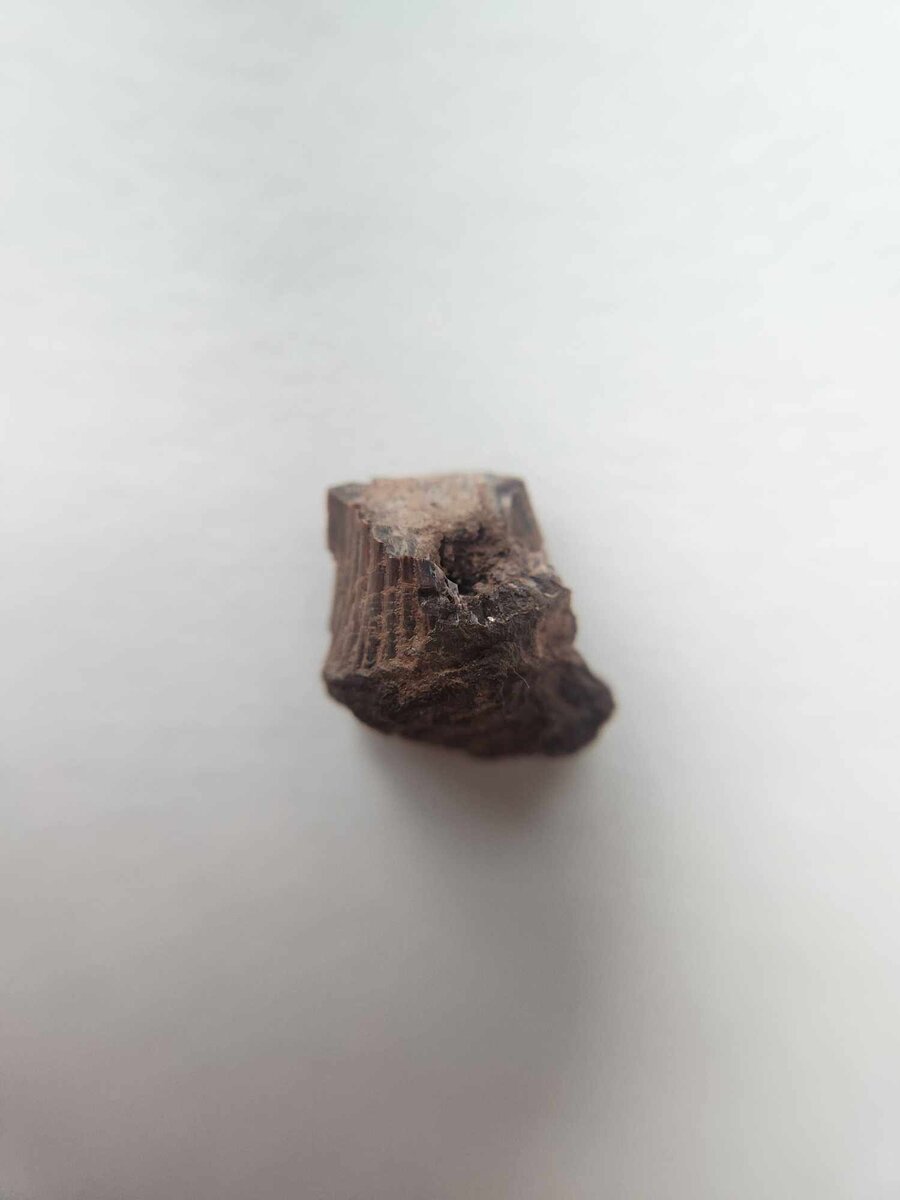
The fossil record of Hyneria is geographically restricted, with all confirmed specimens originating from the Late Devonian Catskill Formation in north-central Pennsylvania, USA. This geological formation represents an ancient, vast delta system that drained into a shallow sea. The fossils are typically found as disarticulated but well-preserved bones within the red sandstone and mudstone layers that were once river channels and floodplains. The preservation quality is generally good, with the dense, robust bones of the skull, jaws, and shoulder girdle being the most commonly recovered elements. More delicate structures like fin rays are rarer. The Red Hill fossil site, where most of the significant discoveries were made, has yielded dozens of individual specimens, making it the primary source of information on this animal. While not a common fossil in the grand scheme, the concentration of remains at this specific locality has provided a remarkable window into the anatomy and life of this Devonian giant. The work at Red Hill continues to be a key site for understanding the transition from fish to tetrapods.
Despite its scientific importance, Hyneria remained relatively obscure to the general public for many years. Its profile was significantly raised in 2005 when it was featured as a primary antagonist in the influential BBC documentary series 'Walking with Monsters'. The program depicted it as a monstrous, powerful predator capable of launching itself from the water to attack the early amphibian Hynerpeton on land, a dramatic portrayal that cemented its image in popular culture as a 'monster fish' of the Devonian. This appearance has made it a popular subject in books, websites, and video games about prehistoric life. Several museums hold significant Hyneria fossils, with the most notable displays and research collections housed at the Academy of Natural Sciences of Drexel University in Philadelphia, where the key specimens discovered in 1993 are curated and studied. Its immense size and predatory nature make it a compelling subject for exhibits on the 'Age of Fishes' and the evolution of vertebrates.
Classification
Time Period
Discovery
Location
Pennsylvania, USA
Formation
Catskill Formation
Frequently Asked Questions
What is Hyneria?
Hyneria lindae was a colossal predatory lobe-finned fish that patrolled the freshwater river systems of the Late Devonian Period, approximately 365 to 360 million years ago. As one of the largest and most formidable carnivores of its time, Hyneria represents a pinnacle of aquatic predatory evolution...
When did Hyneria live?
Hyneria lived during the devonian period of the paleozoic era approximately 365-360 million years ago.
Where was Hyneria discovered?
Fossils of Hyneria were discovered in Pennsylvania, USA in the Catskill Formation.
What did Hyneria eat?
Hyneria was a carnivore. It lived in freshwater habitats.
What type of fossil is Hyneria?
Hyneria is preserved as a body fossil. The preservation quality is good.
Related Specimens
From the paleozoic era · body fossils