Toxodon
Toxodon platensis
Image: Image sourced via web search (Fair use / Educational)
About Toxodon
Toxodon was a large, herbivorous mammal and one of the most iconic members of South America's extinct megafauna, living from the late Pliocene to the end of the Pleistocene. As a prominent representative of the endemic order Notoungulata, its unique evolutionary history and eventual extinction following the Great American Biotic Interchange make it a crucial subject for understanding mammalian evolution and paleoecology in the Americas. Its fossils, first studied by Charles Darwin, provided early, compelling evidence for the concept of extinction and the existence of vast, vanished ecosystems.
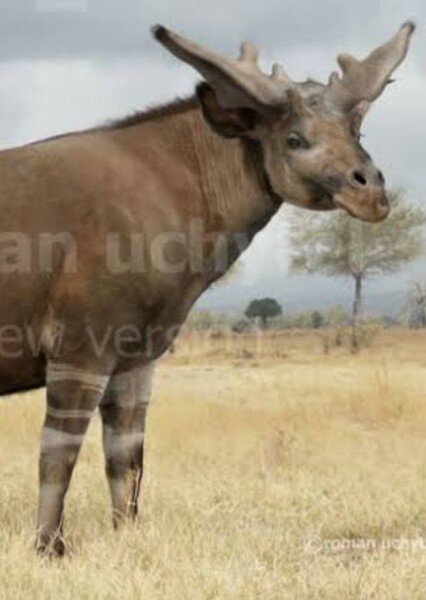
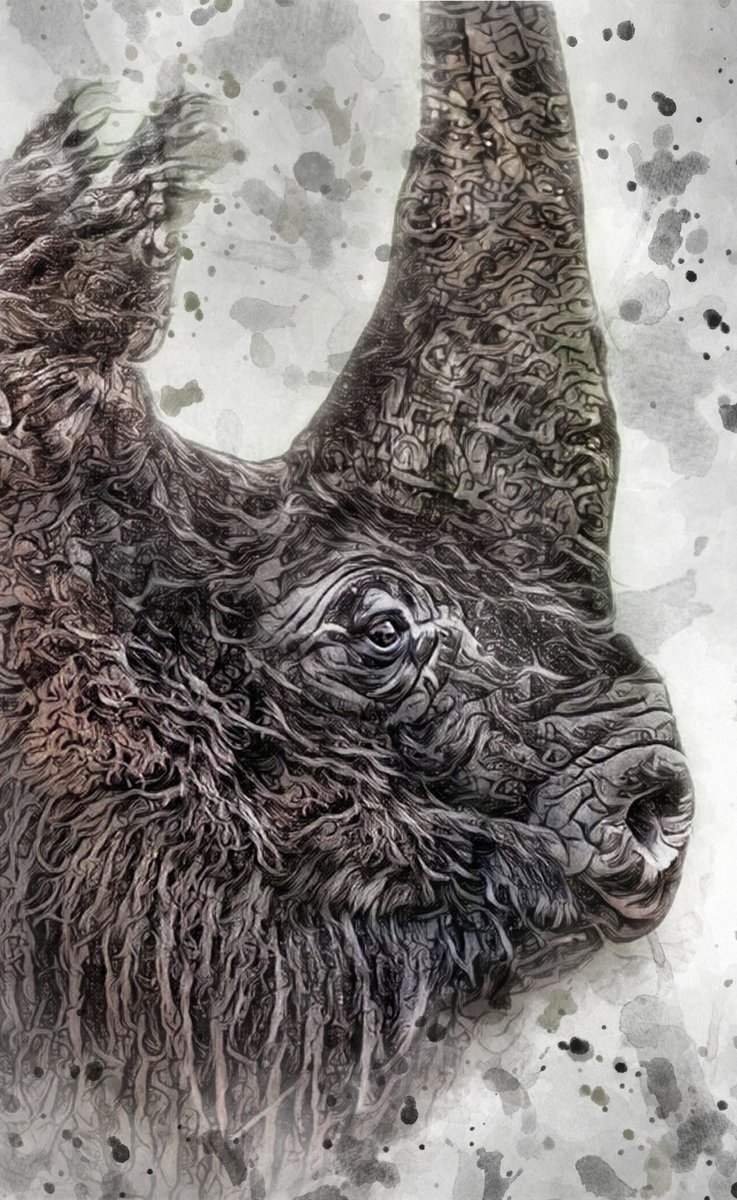
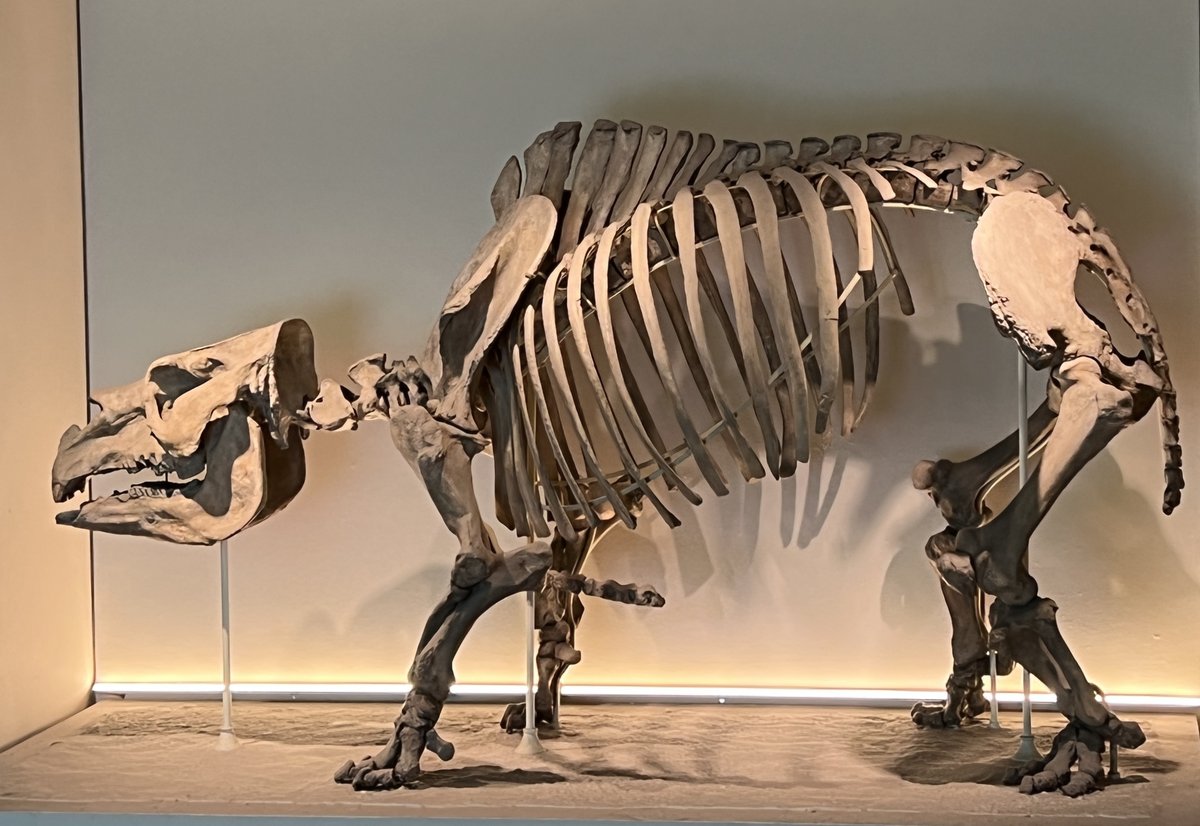
Toxodon was a robustly built animal, comparable in size to a modern black rhinoceros or a large hippopotamus. It stood approximately 1.5 meters (4.9 feet) tall at the shoulder and measured around 2.7 meters (8.9 feet) in length, with weight estimates ranging from 1,000 to 1,500 kilograms (2,200 to 3,300 pounds). Its most distinctive feature was its massive, hippo-like head, which was short and wide with high-set eyes and nostrils, suggesting a semi-aquatic lifestyle, though this is debated. The skeleton was graviportal, meaning it was adapted to support immense weight, with short, stout limbs resembling those of an elephant or rhino. The feet were plantigrade, with three functional toes on each foot. Its dentition was highly specialized, featuring large, ever-growing incisors that curved outwards, similar to those of rodents, which were likely used for shearing tough vegetation. The molars were high-crowned (hypsodont), an adaptation for grinding abrasive grasses and other coarse plant matter, indicating a diet of a mixed feeder or grazer. The vertebral column was strong, and the placement of the neural spines on the thoracic vertebrae suggests a powerful neck and shoulder musculature, possibly supporting its heavy head during foraging.
The paleobiology of Toxodon reveals a successful herbivore well-adapted to the Cenozoic landscapes of South America. Isotopic analysis of its tooth enamel indicates a diet that included a significant amount of C4 grasses, typical of open savanna environments, but also C3 plants found in more wooded or mixed habitats. This suggests Toxodon was a versatile mixed feeder, capable of both grazing on grasslands and browsing on leaves and shrubs, allowing it to thrive across various ecosystems. The high placement of its eyes and nostrils on its skull led early paleontologists, including its discoverer Richard Owen, to propose a semi-aquatic, hippo-like existence. However, subsequent studies of its limb proportions and inner ear morphology suggest it was primarily a terrestrial animal, more akin to a rhinoceros in its locomotion and habitat preference. The structure of its inner ear's semicircular canals indicates it was not particularly agile but was capable of steady, powerful movement across open plains. There is little direct evidence for social behavior, but the abundance of fossils in some localities could imply that they lived in small groups or herds, similar to many large herbivores today, which would have offered protection against predators. Its large size and hypsodont teeth were key adaptations for processing low-nutrient, high-fiber vegetation, a common strategy for megaherbivores.
During the Pliocene and Pleistocene, Toxodon inhabited the vast pampas and open woodlands of South America. This was a time of significant climatic fluctuation, with alternating glacial and interglacial periods shaping the landscape into a mosaic of grasslands, savannas, and gallery forests. Toxodon shared this dynamic environment with a diverse array of other megafauna. Fellow native South American herbivores included giant ground sloths like Megatherium, armored glyptodonts such as Glyptodon, and the bizarre, camel-like Macrauchenia. Following the full establishment of the Isthmus of Panama around 2.7 million years ago, the Great American Biotic Interchange introduced new competitors and predators from North America. Toxodon would have faced predation from formidable carnivores like the saber-toothed cat Smilodon populator, the giant short-faced bear Arctotherium, and large canids like Protocyon. As a large-bodied herbivore, Toxodon occupied a crucial position in the food web, acting as a primary consumer that shaped plant communities through its grazing and browsing activities. Its eventual extinction at the end of the Pleistocene coincided with the disappearance of most of the continent's megafauna, likely due to a combination of rapid climate change and the arrival of early human hunters.
The discovery and study of Toxodon are intrinsically linked to the historic voyage of HMS Beagle and the work of Charles Darwin. In 1833, while exploring the coastal regions of present-day Uruguay and Argentina, Darwin unearthed several remarkable fossils. Among them, near the Sarandí stream in Uruguay, he found a nearly complete skull of a large, unknown mammal. He purchased this skull for a small sum from a local farmer. He later collected more remains, including teeth and limb bones, from the cliffs of Bahía Blanca in Argentina. Unsure of the creature's identity but recognizing its significance, Darwin shipped these specimens back to England for expert analysis. The task fell to the eminent anatomist Richard Owen, who, in 1837, formally described and named the animal Toxodon platensis. The name derives from the Greek words for 'bow' and 'tooth' (Toxon, odon), referring to the distinctly curved shape of its molar teeth. The specific name 'platensis' refers to the Río de la Plata region where the first fossils were found. Darwin's discovery of Toxodon and other extinct South American mammals profoundly influenced his thinking, providing tangible evidence of a world inhabited by creatures that no longer existed, a key observation that would later support his theory of evolution by natural selection.
Toxodon is a prime example of the unique evolutionary path taken by mammals in South America during its long period of geographic isolation. It belongs to the order Notoungulata, one of several orders of hoofed mammals (ungulates) that evolved exclusively on the island continent. These 'South American native ungulates' (SANUs) diversified into a wide array of forms, filling ecological niches occupied by other mammalian groups on different continents. Toxodon represents the pinnacle of the Toxodontidae family, showcasing adaptations for large-bodied herbivory that convergently evolved with perissodactyls (like rhinos) and artiodactyls (like hippos) in the Northern Hemisphere. Collagen protein sequencing from Toxodon fossils, published in a landmark 2015 study by Welker et al., definitively resolved the long-standing mystery of its phylogenetic placement. The molecular data demonstrated that notoungulates, including Toxodon, are part of the superorder Laurasiatheria and form a sister group to the Perissodactyla (odd-toed ungulates like horses, rhinos, and tapirs). This discovery was revolutionary, confirming a deep evolutionary connection between the endemic fauna of South America and the ungulates of other continents, and providing a powerful example of how molecular paleontology can solve questions that morphology alone could not.
Despite recent advances, several scientific debates surrounding Toxodon persist. The most prominent and long-running controversy concerns its lifestyle: was it a terrestrial grazer like a rhinoceros, or a semi-aquatic animal like a hippopotamus? The high position of its eyes, ears, and nostrils on the skull strongly suggests an adaptation for keeping sensory organs above water while submerged, a classic hippo-like trait. However, isotopic studies of its diet do not show a strong reliance on aquatic plants, and biomechanical analyses of its skeleton point towards a fully terrestrial, weight-bearing posture. The current consensus leans towards a primarily terrestrial existence, perhaps frequenting riverbanks and floodplains without being truly amphibious. Another area of discussion involves the precise cause of its extinction. While the combination of climate change at the end of the last Ice Age and the arrival of Paleo-Indian hunters is widely accepted as the primary driver, the relative importance of each factor is still debated. Some evidence, such as fossil remains found with projectile points, directly implicates human hunting in their demise.
The fossil record of Toxodon is extensive and geographically widespread, making it one of the best-known extinct South American mammals. Its remains are particularly abundant in Pleistocene-era deposits across the Pampean region of Argentina, Uruguay, and southern Brazil, as well as in Bolivia and Paraguay. Famous fossil sites include the Luján and Ensenada Formations in Argentina, which have yielded numerous well-preserved skeletons. Fossils are common enough that they were frequently encountered by early settlers and naturalists in the 19th century. The quality of preservation is generally good, with many complete or near-complete skulls and postcranial skeletons known to science. This abundance of material has allowed for detailed studies of its anatomy, growth patterns (ontogeny), and individual variation. The sheer number of specimens has made Toxodon a cornerstone for biostratigraphic dating of late Cenozoic terrestrial deposits in South America.
Toxodon holds a significant place in the public imagination as a symbol of South America's lost world of megafauna. Its strange, composite appearance—part rhino, part hippo, part rodent—has made it a popular subject in books, documentaries, and museum exhibits worldwide. Major natural history museums, including the Natural History Museum in London (which houses Darwin's original specimens), the American Museum of Natural History in New York, and the La Plata Museum in Argentina, feature impressive skeletal mounts and life-sized reconstructions of Toxodon. Its appearance in documentaries like 'Walking with Beasts' introduced it to a global audience, cementing its status as one of the most recognizable prehistoric mammals outside of the more famous Ice Age fauna of the Northern Hemisphere. Its story serves as a powerful educational tool for teaching concepts of evolution, extinction, and the profound impact of geological and climatic change on life.
Classification
Time Period
Discovery
Location
Argentina
Formation
Luján Formation, Ensenada Formation, and others across the Pampean region
Frequently Asked Questions
What is Toxodon?
Toxodon was a large, herbivorous mammal and one of the most iconic members of South America's extinct megafauna, living from the late Pliocene to the end of the Pleistocene. As a prominent representative of the endemic order Notoungulata, its unique evolutionary history and eventual extinction follo...
When did Toxodon live?
Toxodon lived during the quaternary period of the cenozoic era approximately 3.6-0.012 million years ago.
Where was Toxodon discovered?
Fossils of Toxodon were discovered in Argentina in the Luján Formation, Ensenada Formation, and others across the Pampean region.
What did Toxodon eat?
Toxodon was a herbivore. It lived in terrestrial (grasslands, open woodlands) habitats.
What type of fossil is Toxodon?
Toxodon is preserved as a body fossil. The preservation quality is good.
Related Specimens
From the cenozoic era · body fossils