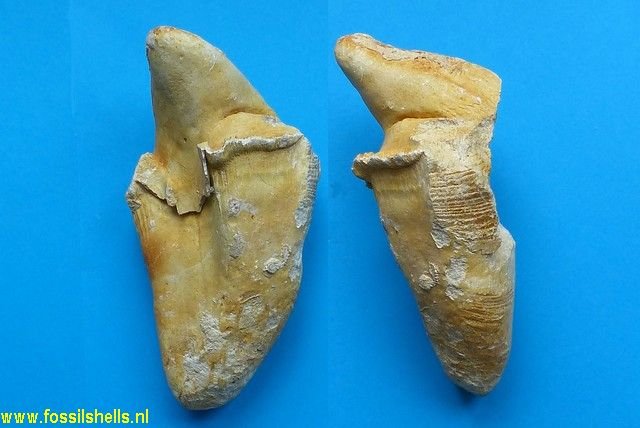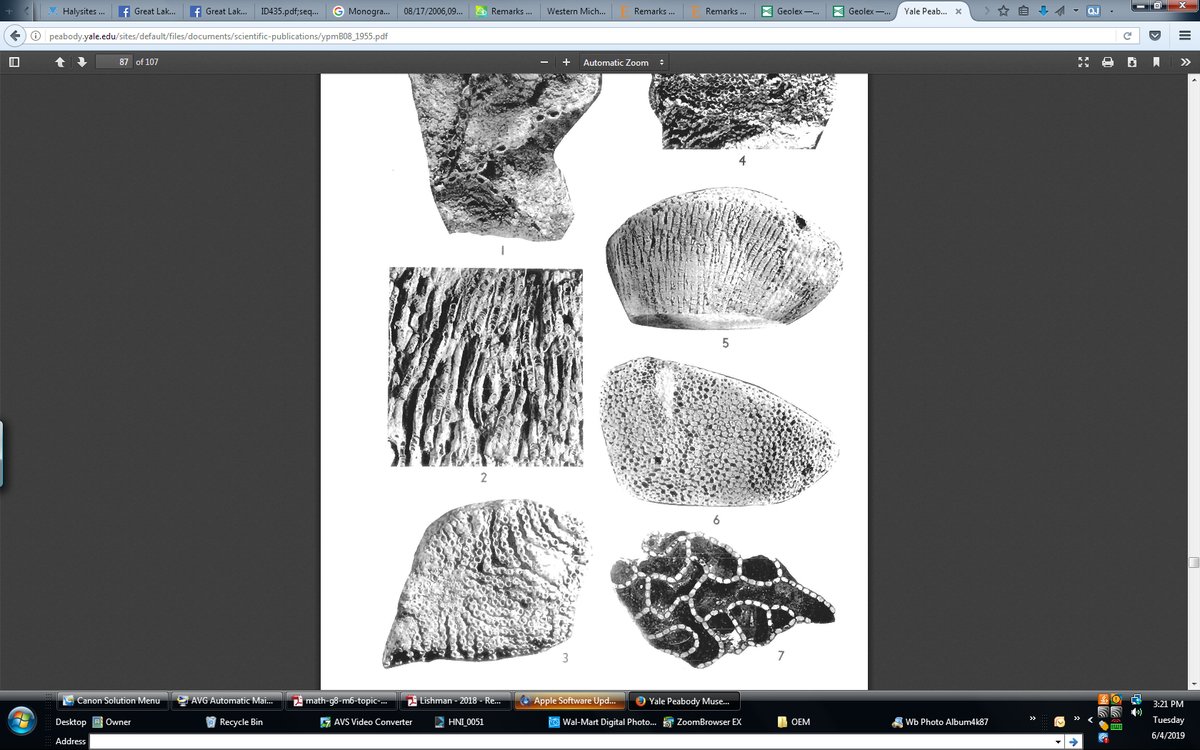
Halysites
Halysites catenularius
Image: Image sourced via web search (Fair use / Educational)
About Halysites
Halysites catenularius, commonly known as the chain coral, was a prominent reef-building organism that thrived during the Silurian period, approximately 444 to 419 million years ago. As a member of the extinct order Tabulata, this marine invertebrate played a crucial role in the construction of early Paleozoic reef ecosystems across the globe. Its distinctive skeletal structure, which resembles a delicate chain link fence when viewed in cross-section, has made it one of the most easily recognizable and widely studied index fossils of the Silurian era. The widespread distribution of Halysites catenularius provides invaluable insights into paleoclimatology, continental drift, and the evolutionary dynamics of early marine biomes.
The physical architecture of Halysites catenularius is both structurally fascinating and ecologically highly specialized. As a colonial organism, a single Halysites fossil represents not one animal, but a vast interconnected community of hundreds or thousands of individual polyps. The entire colony, known as a corallum, could grow to substantial sizes, often reaching between fifty and one hundred centimeters in diameter, though fragments are more commonly found. The most distinctive feature of this species is its growth habit. The individual calcareous tubes, called corallites, are elliptical or oval in cross-section and are joined edge-to-edge in single rows. These rows curve and intersect to form a network of loops or palisades, creating the iconic chain appearance. The empty spaces between these chains, termed lacunae, were likely filled with sediment or living tissue during the organism's lifetime. Internally, each corallite tube is partitioned by horizontal plates known as tabulae, which the growing polyp secreted to support itself as the colony expanded upward. Unlike the rugose corals that co-existed with them, Halysites and other tabulate corals completely lacked or had very poorly developed septa—the vertical internal radiating plates typical of many coral groups. The walls of the corallites were relatively thick and constructed of calcite, which contributed to their robust preservation potential. In life, the living tissue of the polyps would have formed a thin veneer over the uppermost surface of this calcareous skeleton, with small, tentacled polyps emerging from the calices to feed. When compared to modern scleractinian corals, Halysites lacked the complex internal septal structures, suggesting a different, perhaps simpler, polyp anatomy, though the overall colonial strategy for maximizing surface area and structural stability in turbulent reef environments was remarkably similar.
The paleobiology of Halysites catenularius reveals a highly successful adaptation to the shallow marine environments of the Silurian period. Like modern corals, Halysites was a benthic, sessile organism that relied on a suspension-feeding or filter-feeding lifestyle. The individual polyps, housed within their protective calcareous tubes, would have extended rings of tentacles into the surrounding water column to capture microscopic plankton, organic detritus, and small suspended particles. It is highly probable that these tentacles were equipped with nematocysts, or stinging cells, characteristic of all cnidarians, allowing them to immobilize tiny prey. The chain-like growth form of the colony was not merely an aesthetic quirk but a sophisticated biomechanical adaptation. By growing in interconnected palisades, the colony maximized its surface area for feeding and respiration while maintaining structural integrity against the hydrodynamic forces of wave action and ocean currents. The open lacunae between the chains allowed water to flow through the colony, reducing drag and facilitating the efficient exchange of nutrients and waste products. Growth occurred through asexual reproduction, specifically via a process called lateral budding, where new polyps would branch off from existing ones to extend the chain or form new intersecting loops. The horizontal tabulae within the corallites indicate episodic upward growth; as the colony was slowly buried by accumulating reef sediments or as the polyp grew, it would secrete a new floor beneath itself, abandoning the lower portion of the tube. A major question in the paleobiology of Halysites is whether they possessed symbiotic photosynthetic algae, akin to the zooxanthellae found in modern reef-building corals. While direct evidence of soft-tissue symbionts cannot be preserved, the rapid growth rates, massive colonial forms, and restriction to shallow, sunlit tropical waters strongly suggest that Halysites may have benefited from some form of photosymbiosis, which would have provided the extra metabolic energy required to secrete such extensive calcareous skeletons.
During the Silurian period, the world was a vastly different place, characterized by a warm, stable greenhouse climate and high global sea levels that flooded extensive continental shelves. These shallow, sun-drenched epicontinental seas provided the perfect incubator for the first truly massive, complex reef ecosystems in Earth's history. Halysites catenularius was a foundational architect of these environments. It did not build these reefs alone; it was part of a diverse consortium of reef-builders, most notably the stromatoporoids (a group of hyper-calcified sponges) and the solitary and colonial rugose corals. Together, these organisms constructed vast, wave-resistant structures that rivaled the scale of the modern Great Barrier Reef. In this bustling ecological theater, Halysites occupied a critical niche as a primary framework builder and a provider of microhabitats. The intricate, cavernous structures created by the chain coral colonies offered shelter and attachment surfaces for a myriad of other Silurian marine life. Brachiopods, crinoids, bryozoans, and early bivalves would have anchored themselves to the dead lower portions of the coral framework. Mobile invertebrates, such as trilobites, eurypterids (sea scorpions), and early gastropods, navigated the complex topography of the reef in search of food or refuge. The reefs also served as crucial hunting grounds for apex predators of the time, including large orthoconic nautiloids. The evolutionary success of Halysites was intimately tied to the health of these reef ecosystems. They thrived in clear, well-oxygenated, nutrient-rich waters with moderate to high energy, which kept the colonies free of suffocating silt. However, this specialization also made them vulnerable to environmental perturbations, such as changes in sea level, ocean chemistry, or an influx of terrigenous clastic sediments, which could easily bury and smother the benthic communities.
The discovery and scientific documentation of Halysites catenularius date back to the foundational years of modern paleontology and taxonomy. The species was first formally described by the pioneering Swedish botanist and zoologist Carl Linnaeus in 1767. Linnaeus, the father of modern binomial nomenclature, originally classified the organism under the genus Tubipora, naming it Tubipora catenularia, drawing a comparison to the modern organ-pipe corals due to the tubular nature of its corallites. The specific epithet catenularius is derived from the Latin word catena, meaning chain, a direct reference to its unmistakable morphology. It was not until 1828 that the German paleontologist Johann Fischer von Waldheim recognized the distinct evolutionary and structural differences between this fossil and modern corals, erecting the new genus Halysites to accommodate it. The early study of Halysites was heavily influenced by the abundant and exquisitely preserved fossils found on the Swedish island of Gotland in the Baltic Sea. The Silurian limestone formations of Gotland, which represent ancient tropical reefs, provided 18th and 19th-century naturalists with a treasure trove of specimens. These early discoveries were instrumental in helping geologists like Roderick Murchison define the Silurian system in the 1830s. Because Halysites catenularius was so widespread and easily identifiable, it quickly became a crucial tool for biostratigraphy. Geologists used the presence of chain corals to correlate the ages of rock layers across vast distances, from the British Isles to North America and Australia. Throughout the 19th and 20th centuries, as paleontological expeditions expanded globally, thousands of specimens were cataloged, refining our understanding of the genus's diversity and geographic range. Today, historical specimens of Halysites catenularius, including those studied by Linnaeus and later prominent paleontologists, are housed in major institutions such as the Swedish Museum of Natural History and the Natural History Museum in London, serving as vital type specimens for ongoing comparative research.
The evolutionary significance of Halysites catenularius lies in its representation of a major, albeit ultimately doomed, experiment in coral evolution. As a member of the subclass Tabulata, Halysites belongs to an entirely extinct lineage of anthozoan cnidarians that dominated Paleozoic oceans. The tabulate corals first appeared in the Early Ordovician period, but it was during the Silurian that they, along with the rugose corals, reached their zenith in terms of diversity and ecological dominance. Halysites represents a highly specialized branch of the tabulate family tree, the order Halysitida. The evolution of the chain-like growth form was a unique morphological innovation that allowed these corals to optimize their feeding efficiency and structural resilience without requiring the massive, solid skeletal structures seen in other reef builders like the favositids (honeycomb corals). By studying the evolutionary trajectory of Halysites, paleontologists can trace the adaptive radiation of marine invertebrates following the devastating Late Ordovician mass extinction. Halysites and its relatives rapidly filled the ecological voids left by the extinction, driving the recovery and subsequent flourishing of Silurian reef ecosystems. However, the evolutionary story of the chain corals is also one of vulnerability. The entire order Halysitida went extinct at the end of the Devonian period, during the Late Devonian mass extinction events. The exact causes of their demise are complex, likely involving a combination of global cooling, sea-level regression, and oceanic anoxia, which decimated the shallow-water reef ecosystems they depended upon. Unlike the rugose corals, which survived until the end-Permian extinction, the chain corals left no descendants. Modern reef-building corals, the Scleractinia, which evolved much later in the Triassic period, are not directly related to Halysites. Instead, they represent a separate evolutionary lineage that convergently evolved similar colonial, reef-building lifestyles, highlighting how similar environmental pressures can produce analogous ecological strategies across vast spans of geological time.
Despite centuries of study, Halysites catenularius remains the subject of several ongoing scientific debates and taxonomic revisions. One of the primary areas of contention involves the precise phylogenetic relationship of the Halysitida within the broader subclass Tabulata, and indeed, the relationship of Tabulata to other cnidarians. Because these organisms are entirely extinct and left no soft tissue behind, paleontologists must rely solely on skeletal morphology, which can be subject to convergent evolution. Some researchers have historically debated whether tabulate corals might be more closely related to modern octocorals (like sea fans and soft corals) rather than hexacorals (like stony corals and sea anemones), based on the symmetry of their corallites and the occasional presence of tiny, spine-like structures that some interpret as rudimentary septa. Another significant debate centers on the paleobiology of the chain corals, specifically the aforementioned hypothesis of photosymbiosis. While the circumstantial evidence—such as their presence in shallow, tropical facies and their rapid, massive growth—strongly points toward a symbiotic relationship with algae, isotopic analysis of their skeletons has yielded mixed results, leaving the question unresolved. Furthermore, species-level taxonomy within the genus Halysites is notoriously difficult. The morphological plasticity of coral colonies, which can change their growth shape in response to local environmental conditions like water turbulence and light availability, means that what were once named as distinct species might actually be ecomorphs of a single species like Halysites catenularius. Modern paleontologists are increasingly using advanced morphometric techniques and 3D micro-CT scanning to re-evaluate historical classifications, leading to the synonymization of many previously described species and a more streamlined understanding of chain coral diversity.
The fossil record of Halysites catenularius is exceptionally rich, globally distributed, and characterized by a high quality of preservation. Because their skeletons were composed of robust, massive calcite, they were highly resistant to the destructive forces of diagenesis and compaction that often obliterate more fragile fossils. Consequently, chain corals are common finds in Silurian marine sedimentary rocks worldwide. Significant and famous fossil sites include the Wenlock Edge in Shropshire, England, the Niagara Escarpment in North America (particularly in New York, Ontario, and Michigan), and the spectacular fossil reefs of the Gotland basin in Sweden. In these locations, Halysites fossils are often found in three-dimensional preservation, sometimes still in their original growth positions within ancient reef frameworks. The fossils typically preserve the intricate details of the corallites, the connecting walls, and the internal tabulae. In many cases, the original calcite has been replaced by silica through a process called silicification. When these silicified fossils are found in limestone matrices, paleontologists can use weak acid to dissolve the surrounding rock, revealing the delicate, three-dimensional chain structures in breathtaking, perfect detail. Thousands of specimens are housed in university and museum collections globally, providing an inexhaustible resource for studying Paleozoic marine biology.
Halysites catenularius has a surprising cultural impact for an extinct invertebrate. Due to its striking, geometric beauty and common occurrence, it is highly prized by amateur rockhounds and fossil collectors. When polished, the contrasting colors of the fossilized coral and the surrounding matrix create beautiful patterns, making chain coral a popular material for lapidary work, including cabochons and jewelry. In educational settings, Halysites is a staple of introductory geology and paleontology courses; its unique morphology makes it an ideal teaching tool for explaining concepts of index fossils, coloniality, and paleoecology. Major natural history museums around the world feature prominent displays of Silurian reef dioramas, where the distinctive, looping palisades of the chain coral are invariably showcased, capturing the public's imagination and serving as a tangible, beautiful link to Earth's deep, prehistoric past.
Classification
Time Period
Discovery
Location
Sweden
Formation
Gotland Limestone
Frequently Asked Questions
What is Halysites?
Halysites catenularius, commonly known as the chain coral, was a prominent reef-building organism that thrived during the Silurian period, approximately 444 to 419 million years ago. As a member of the extinct order Tabulata, this marine invertebrate played a crucial role in the construction of earl...
When did Halysites live?
Halysites lived during the silurian period of the paleozoic era approximately 444-419 million years ago.
Where was Halysites discovered?
Fossils of Halysites were discovered in Sweden in the Gotland Limestone.
What did Halysites eat?
Halysites was a filter-feeder. It lived in reef habitats.
What type of fossil is Halysites?
Halysites is preserved as a body fossil. The preservation quality is excellent.
Related Specimens
From the paleozoic era · body fossils
-bark/c858d48fc5cb.jpg)