Eldonia
Eldonia ludwigi
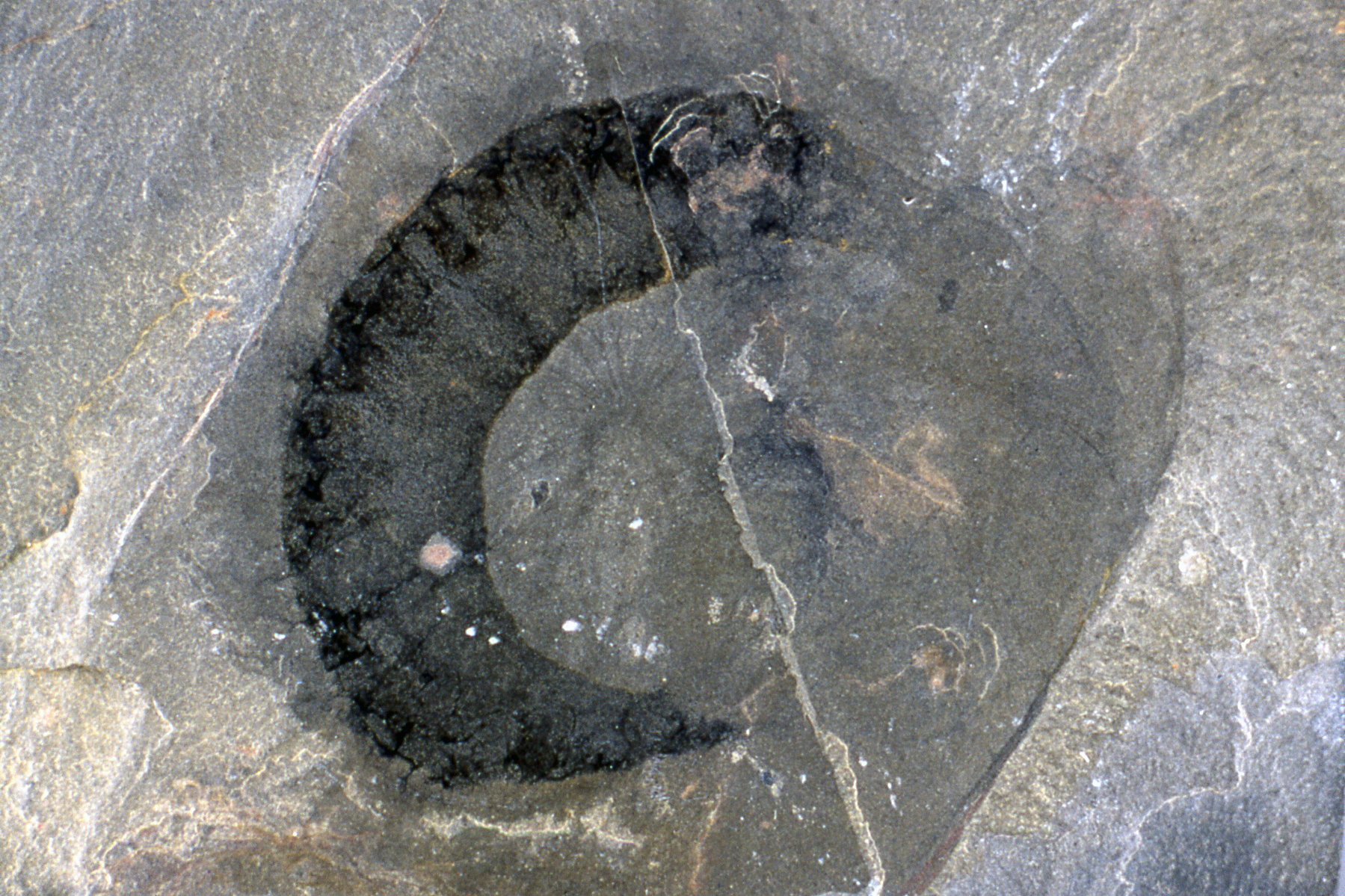
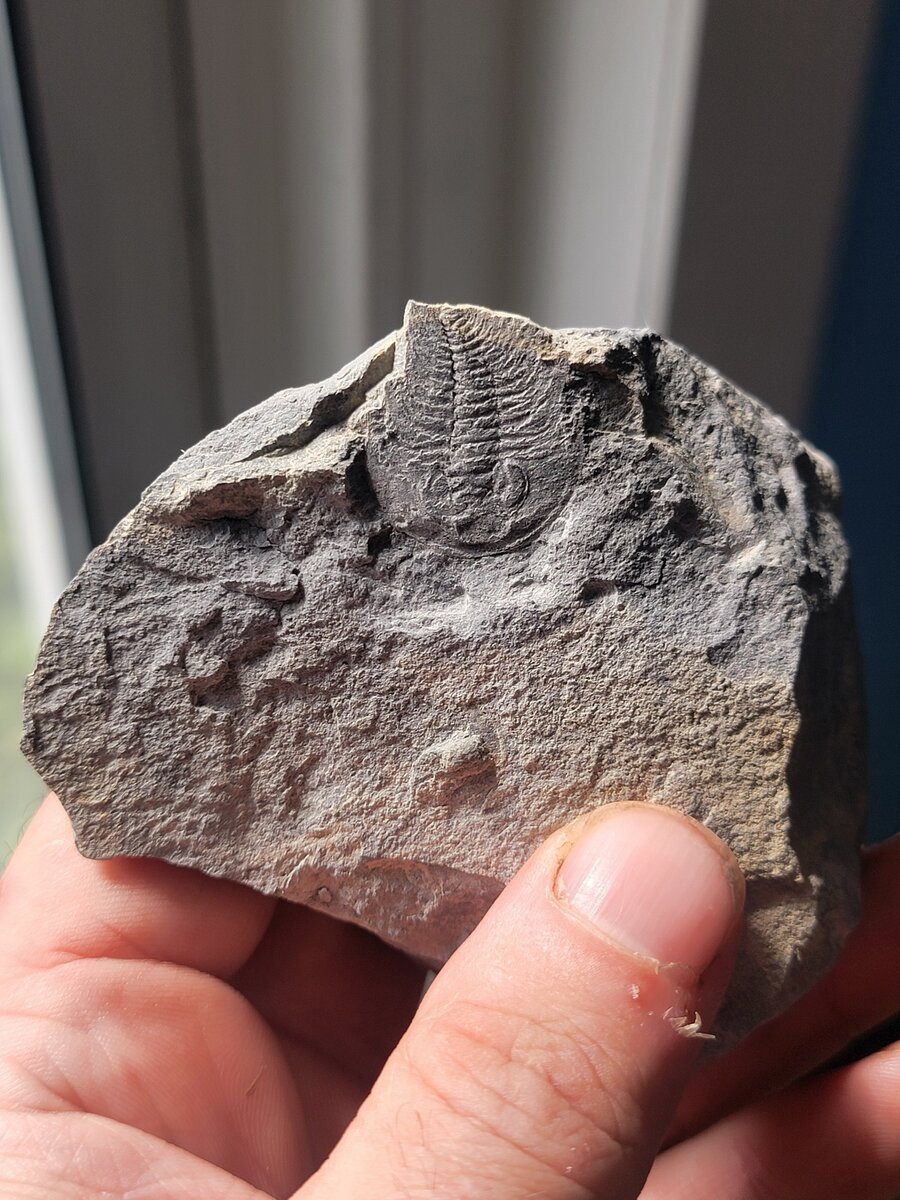
Image: File:Eldonia ludwigi, Burgess Shale.jpg - Wikimedia Commons (CC BY-SA)
About Eldonia
Eldonia ludwigi is a fascinating and somewhat enigmatic disc-shaped marine organism from the Middle Cambrian period, thriving approximately 505 million years ago during the Paleozoic era. Discovered in the world-renowned Burgess Shale of British Columbia, Canada, this soft-bodied creature represents a crucial puzzle piece in understanding the rapid diversification of life known as the Cambrian Explosion. Its unique morphology and controversial taxonomic placement have made it a subject of intense study, offering profound insights into the early evolutionary experimentation of marine ecosystems and the origins of major animal phyla.
The physical anatomy of Eldonia ludwigi is characterized by a flattened, flexible, disc-like body that typically measures between 5 and 15 centimeters in diameter, with an average specimen spanning roughly 10 centimeters. Because it lacked any biomineralized hard parts like shells or bones, its living weight would have been minimal, likely amounting to only a few grams and consisting predominantly of water, much like modern gelatinous zooplankton. The organism possessed a medusoid or umbrella-like shape, which initially led early researchers to compare it to modern jellyfish. However, its internal anatomy reveals a much more complex structure. The most prominent feature is a highly distinct, coiled, C-shaped internal gut tract that dominates the central portion of the disc. Radiating outward from this central digestive structure is a complex network of canals and structural fibers, giving the organism a distinctively ribbed or corrugated appearance along its bell. These radiating structures likely provided structural integrity to the flexible disc, allowing it to maintain its shape against water currents. Additionally, delicate tentacle-like structures are sometimes preserved near the oral region, suggesting a specialized apparatus for capturing food. While superficially resembling modern cnidarians or certain pelagic sea cucumbers, the unique combination of a rigid internal C-shaped gut and a radiating medusoid bell makes Eldonia anatomically distinct from any single modern animal group, highlighting the bizarre morphological experimentation of the Cambrian period.
In terms of paleobiology, Eldonia ludwigi is widely understood to have been a passive filter-feeder that utilized its unique anatomy to exploit the nutrient-rich waters of the Cambrian seas. Its diet consisted primarily of suspended organic particles, microscopic plankton, and detritus floating within the water column. The organism likely employed a pelagic lifestyle, floating or swimming gently in the open water rather than dwelling exclusively on the seafloor. Its disc-like shape would have been highly advantageous for maintaining buoyancy, acting as a parachute to slow its descent through the water column. By gently pulsing its flexible bell or simply drifting with the ocean currents, Eldonia could continuously pass water over its feeding apparatus. The tentacles or feeding appendages located near the mouth would have trapped microscopic prey and organic matter, which was then funneled into the prominent C-shaped gut for digestion. Growth patterns inferred from various fossil specimens of different sizes suggest that Eldonia grew radially, expanding the diameter of its disc and the complexity of its radiating canals as it matured. This continuous radial growth allowed it to increase its surface area, thereby improving both its buoyancy and its efficiency in capturing suspended food particles as it aged.
The ecological context of Eldonia ludwigi is deeply tied to the vibrant, dynamic environment of the Middle Cambrian Burgess Shale. During this period, the landmass that is now British Columbia was situated near the equator, submerged under a warm, shallow tropical sea. The specific habitat of the Burgess Shale organisms was located along the edge of a massive underwater limestone cliff known as the Cathedral Escarpment. This geological feature created a complex marine ecosystem characterized by nutrient upwellings that supported a massive abundance of life. Eldonia shared this bustling marine environment with a spectacular array of early animals, including the fearsome apex predator Anomalocaris, the armored slug-like Wiwaxia, the five-eyed Opabinia, and numerous species of trilobites and sponges. Within this complex Cambrian food web, Eldonia occupied the role of a primary consumer of plankton and suspended detritus. Because it lacked defensive armor, spines, or rapid swimming capabilities, Eldonia was likely a frequent prey item for the growing diversity of nektonic predators and scavengers that patrolled the water column and the seafloor. Its survival strategy likely relied on its sheer abundance and its ability to exploit the open water column, a niche that was only just beginning to be heavily populated by macroscopic animals during the Cambrian period.
The discovery history of Eldonia ludwigi is a cornerstone of early 20th-century paleontology, beginning with the legendary American paleontologist Charles Doolittle Walcott. Walcott first discovered the organism in 1911 during his pioneering excavations of the Burgess Shale on the slopes of Mount Field in British Columbia, Canada. The specific site, now famously known as the Walcott Quarry, yielded thousands of exceptionally preserved soft-bodied fossils. When Walcott first described Eldonia, the bizarre nature of the Cambrian fauna was not yet fully appreciated, and researchers typically attempted to force these ancient organisms into modern taxonomic categories. Consequently, Walcott initially misidentified Eldonia as a type of holothurian, or sea cucumber, interpreting its medusoid shape and internal structures through the lens of modern echinoderm anatomy. He named the genus Eldonia and the species ludwigi, establishing it as a significant component of the Burgess Shale biota. For decades, Walcott's initial classification remained largely unchallenged. It was not until the late 20th century, during the comprehensive re-evaluations of the Burgess Shale fauna led by paleontologists such as Harry Whittington, Simon Conway Morris, and Derek Briggs, that Eldonia was subjected to rigorous modern scrutiny. These later researchers recognized that the organism possessed features incompatible with true holothurians, sparking a renewed interest in its anatomy and leading to the designation of key specimens that are now housed in major institutions like the Smithsonian National Museum of Natural History.
The evolutionary significance of Eldonia ludwigi cannot be overstated, as it serves as a critical focal point for understanding the deep evolutionary roots of several major animal lineages. Its place in the tree of life has profound implications for the evolution of the Ambulacraria, a superphylum that includes both echinoderms, such as starfish and sea urchins, and hemichordates, such as acorn worms. Eldonia exhibits a mosaic of transitional features that bridge the gap between these distinct groups. The presence of the coiled gut and the radiating structural canals suggests early experimentation with the body plans that would eventually define these phyla. Currently, Eldonia is often grouped within an extinct clade known as the cambroernids. This group is widely considered by modern paleontologists to represent early stem-group echinoderms or stem-group hemichordates. By studying the anatomy of Eldonia, scientists can infer the morphological characteristics of the last common ancestor of these groups, providing a window into how complex traits like radial symmetry and specialized digestive tracts evolved from simpler, bilateral ancestors. Furthermore, Eldonia underscores the concept that the Cambrian Explosion was not just a rapid appearance of modern animal phyla, but a period of wild morphological experimentation where many unique body plans emerged, flourished briefly, and ultimately went extinct without leaving direct modern descendants.
Despite over a century of study, Eldonia ludwigi remains the subject of vigorous scientific debates, particularly regarding its taxonomy and its specific lifestyle. The most enduring controversy has been its taxonomic affinity. While the cambroernid hypothesis is currently popular, some researchers have argued that Eldonia might be more closely related to lophophorates, a group of filter-feeding animals that includes brachiopods and bryozoans, citing similarities in the feeding apparatus and gut structure. Others have maintained variations of Walcott's original echinoderm hypothesis, pointing to the radial symmetry of the disc. Beyond taxonomy, there has also been significant debate regarding its behavior and habitat. While the modern consensus strongly leans toward a pelagic, free-floating lifestyle, some paleontologists previously argued that Eldonia was a benthic organism that rested flat on the muddy seafloor, using its tentacles to gather detritus from the sediment. Recent revisions, supported by hydrodynamic modeling and the discovery of related species in other fossil deposits, have largely discredited the benthic hypothesis, demonstrating that the organism's delicate structures would have been easily fouled by seafloor mud, making a life in the clear water column far more plausible.
The fossil record of Eldonia and its close relatives is remarkably robust for a soft-bodied organism, providing a wealth of data for paleontological analysis. The preservation of Eldonia in the Burgess Shale is exceptional, occurring through a process known as Burgess Shale-type preservation, where the soft tissues of the organism were rapidly buried in fine mud in an anoxic environment, eventually fossilizing as highly detailed carbonaceous films on the shale bedding planes. Thousands of individual specimens of Eldonia ludwigi have been recovered from the Walcott Quarry and surrounding sites, making it one of the more abundant macroscopic organisms in the Burgess Shale ecosystem. Furthermore, the geographic distribution of the Eldonia genus is not limited to Canada. Closely related species, most notably Eldonia eumorpha, have been discovered in the slightly older Chengjiang biota of Yunnan Province, China. The presence of these organisms in geographically distant fossil sites indicates that Eldonia and its relatives were highly successful, globally distributed components of Cambrian marine ecosystems, further emphasizing their importance as index fossils for understanding the paleoecology of the era.
The cultural impact of Eldonia ludwigi extends beyond the confines of academic literature, playing a significant role in public education and the popularization of paleontology. As one of the classic, bizarre creatures of the Burgess Shale, Eldonia is frequently featured in museum exhibitions around the world, including prominent displays at the Royal Ontario Museum in Canada and the Smithsonian Institution in the United States. Its strange, jellyfish-like appearance and complex internal anatomy make it an excellent educational tool for teaching students and the general public about the concept of deep time, the reality of extinction, and the incredible diversity of the Cambrian Explosion. In popular science books and documentaries detailing the history of life on Earth, Eldonia is often highlighted as a prime example of the alien-like nature of early marine ecosystems, capturing the imagination of audiences and inspiring future generations of scientists to explore the ancient history of our planet.
Classification
Time Period
Discovery
Location
British Columbia, Canada
Formation
Burgess Shale
Frequently Asked Questions
What is Eldonia?
Eldonia ludwigi is a fascinating and somewhat enigmatic disc-shaped marine organism from the Middle Cambrian period, thriving approximately 505 million years ago during the Paleozoic era. Discovered in the world-renowned Burgess Shale of British Columbia, Canada, this soft-bodied creature represents...
When did Eldonia live?
Eldonia lived during the cambrian period of the paleozoic era approximately 505 million years ago.
Where was Eldonia discovered?
Fossils of Eldonia were discovered in British Columbia, Canada in the Burgess Shale.
What did Eldonia eat?
Eldonia was a filter-feeder. It lived in marine habitats.
What type of fossil is Eldonia?
Eldonia is preserved as a impression fossil. The preservation quality is exceptional.
Related Specimens
From the paleozoic era · impression fossils
/7725c8fee486.jpg)