Hatzegopteryx
Hatzegopteryx thambema
Image: Image sourced via web search (Fair use / Educational)
About Hatzegopteryx
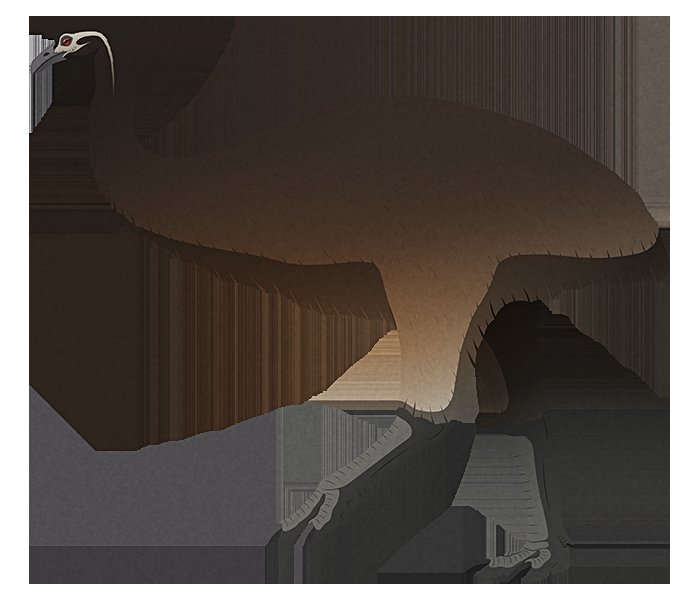
Hatzegopteryx thambema represents one of the most formidable and awe-inspiring creatures to have ever taken to the prehistoric skies, or indeed, to have stalked the ancient earth. Living during the Maastrichtian stage of the Late Cretaceous period, approximately 70 to 66 million years ago, this colossal azhdarchid pterosaur was the apex predator of its unique island ecosystem. Discovered in the Transylvanian basin of modern-day Romania, Hatzegopteryx stands as a testament to the bizarre and spectacular evolutionary pathways that life can take when isolated from mainland continental forces. Its significance in paleontology cannot be overstated, as it fundamentally challenges our understanding of pterosaur ecology, demonstrating that these flying reptiles were not merely coastal fish-eaters or delicate scavengers, but could evolve into dominant, terrestrial super-predators capable of hunting dinosaurs.
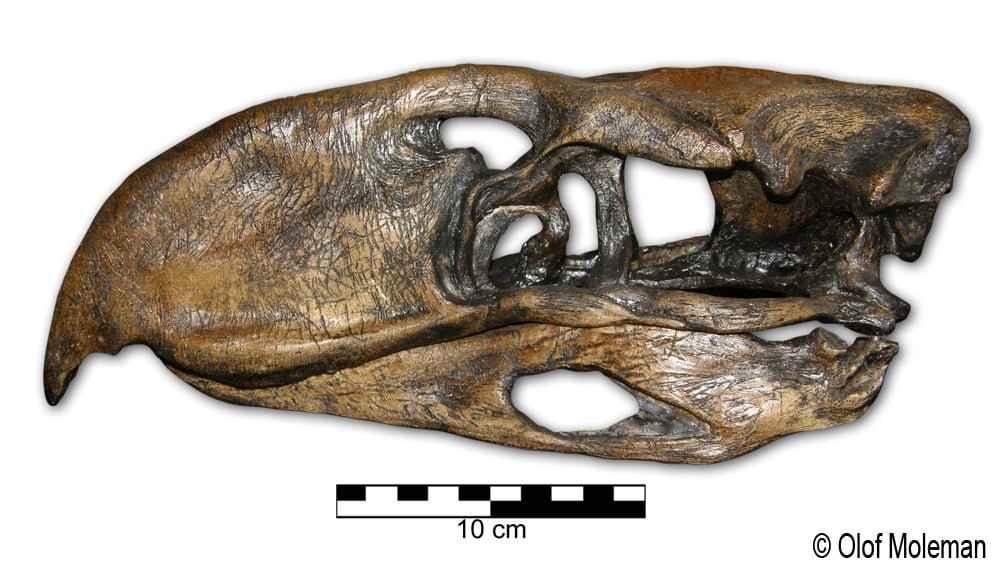
The physical dimensions and anatomical characteristics of Hatzegopteryx are nothing short of staggering, pushing the absolute biological limits of flight and terrestrial locomotion. Estimates of its wingspan place it among the largest flying animals in Earth's history, alongside its close relative Quetzalcoatlus, with a wingspan stretching between 10 to 12 meters (approximately 33 to 39 feet). To put this into perspective, a fully grown Hatzegopteryx would have been as tall as a modern giraffe when standing on the ground, reaching heights of over 5 meters. However, what truly distinguishes Hatzegopteryx from other giant azhdarchids is its incredible robustness. While most giant pterosaurs possessed elongated, relatively slender necks, Hatzegopteryx evolved a remarkably short, thick, and heavily muscled neck. The cervical vertebrae of this animal are exceptionally wide and feature thick walls of bone, a stark contrast to the paper-thin, pneumatized bones typical of most pterosaurs. This heavily reinforced neck supported a massive skull that is estimated to have been up to 3 meters (nearly 10 feet) in length, making it one of the largest skulls of any non-marine animal. The skull was broad and heavily built, equipped with a massive, toothless beak capable of delivering devastating, crushing blows. The internal structure of the skull bones reveals a complex network of spongy bone tissue, which provided immense structural strength while keeping the overall weight manageable for flight. Despite this robust build, weight estimates for Hatzegopteryx remain a subject of intense study, with most paleontologists suggesting a mass between 200 and 250 kilograms (440 to 550 pounds). This combination of immense size, a heavily reinforced skeleton, and a massive, powerful beak paints a picture of a creature that was built not just for soaring, but for brutal, physical confrontation and the overpowering of substantial prey.
The paleobiology of Hatzegopteryx reveals a fascinating departure from traditional views of pterosaur behavior, showcasing an animal perfectly adapted for terrestrial stalking and active predation. Unlike the classic image of pterosaurs swooping down to snatch fish from the ocean surface, Hatzegopteryx was a terrestrial carnivore, utilizing its massive size and powerful build to dominate the landscape. Its hunting strategy is believed to have been similar to that of modern marabou storks or ground hornbills, but scaled up to nightmarish proportions. Hatzegopteryx would have stalked through the scrublands and forests on all fours, using its long limbs to cover ground efficiently. When prey was located, it would use its incredibly strong, thick neck and massive beak to deliver rapid, crushing strikes. The robust nature of its cervical vertebrae indicates that it could withstand the immense biomechanical stresses of subduing struggling prey, which likely included dwarf dinosaurs, early mammals, and other terrestrial vertebrates. The biomechanics of its jaw suggest a bite force capable of crushing bone, allowing it to consume prey whole or tear it into manageable pieces. Regarding locomotion, while Hatzegopteryx was highly adapted for ground-based hunting, it retained the ability to fly. Launching a 250-kilogram animal into the air required a specialized quadrupedal launch mechanism, where the pterosaur would use its powerful forelimbs to vault itself into the sky. Once airborne, it likely utilized thermal updrafts to soar over its island domain, conserving energy while scanning for food or traveling between hunting grounds. The metabolism of such a massive, active creature would have been high, requiring a constant and substantial intake of calories. Growth patterns inferred from bone histology of related azhdarchids suggest rapid early growth, allowing juveniles to quickly reach a size where they were safe from most predators, before slowing down as they approached their colossal adult dimensions. Socially, it is unknown if they were solitary hunters or exhibited gregarious behavior, though the limited resources of an island environment might suggest a more solitary, territorial existence for fully grown adults.
The ecological context in which Hatzegopteryx thrived is one of the most fascinating aspects of its existence, centered around the ancient Hațeg Island. During the Late Cretaceous, much of Europe was an archipelago of tropical and subtropical islands scattered across the shallow Tethys Sea. Hațeg Island, located in what is now Romania, was roughly the size of modern Hispaniola. This isolation led to a phenomenon known as the island rule, where limited resources and the absence of large continental predators caused large animals to evolve into dwarf forms, while small animals often grew larger. Consequently, the dinosaurs of Hațeg Island, such as the titanosaur Magyarosaurus and the ornithopod Zalmoxes, were significantly smaller than their mainland relatives, often weighing no more than a modern horse or cow. In this unique ecosystem, the traditional roles of apex predators, typically filled by large theropod dinosaurs like tyrannosaurs or abelisaurids, were left vacant. Hatzegopteryx evolved to fill this exact ecological niche. As the undisputed apex predator of Hațeg Island, it sat at the very top of the food web. The dwarf dinosaurs provided a perfect food source for the giant pterosaur, being small enough to be hunted and consumed by an animal with a 3-meter skull. The climate of Hațeg Island was warm and humid, characterized by distinct wet and dry seasons, supporting a diverse flora of ferns, conifers, and early angiosperms. This environment provided varied habitats, from dense woodlands to open floodplains, all of which Hatzegopteryx could exploit. The relationship between the giant, robust pterosaur and the dwarf dinosaurs is a spectacular example of evolutionary opportunism, demonstrating how the absence of typical predators allows other lineages to adapt and conquer the top tier of an ecosystem.
The discovery history of Hatzegopteryx is a relatively recent and incredibly exciting chapter in paleontological research, shedding light on the hidden diversity of Late Cretaceous Europe. The first fossils were unearthed in the late 1990s in the Densuș-Ciula Formation of the Hațeg Basin in Transylvania, Romania. The discovery was made by a team led by prominent Romanian paleontologist Dan Grigorescu. Initially, the fragmentary nature of the massive bones caused considerable confusion. The sheer size and thickness of the bone fragments led some researchers to initially suspect they belonged to a large theropod dinosaur, as the idea of a pterosaur with such robust, thick-walled bones was unprecedented. However, detailed anatomical analysis, particularly of the internal bone structure which retained some characteristics of pterosaur pneumatization, eventually revealed their true identity. In 2002, the species was formally described and named Hatzegopteryx thambema by French paleontologist Eric Buffetaut, alongside Dan Grigorescu and Zoltan Csiki. The generic name, Hatzegopteryx, translates to Hațeg basin wing, honoring the region of its discovery. The specific name, thambema, is derived from the Greek word for monster or terror, a fitting moniker for such a formidable predator. The holotype specimen, designated FGGUB R 1083A, consists of the back of the skull and the damaged proximal part of the left humerus. Subsequent expeditions to the region have yielded additional material, including a massive, heavily built cervical vertebra that further confirmed the animal's unique, robust anatomy. While the fossil material remains fragmentary compared to some other pterosaurs, the distinctive features of these bones have been enough to secure Hatzegopteryx's place as one of the most important and revolutionary pterosaur discoveries of the 21st century.
In terms of evolutionary significance, Hatzegopteryx occupies a crucial position within the family Azhdarchidae, a group of advanced, toothless pterosaurs that dominated the Late Cretaceous skies. The evolution of azhdarchids is characterized by a trend towards gigantism, terrestrial locomotion, and increasingly elongated necks. Hatzegopteryx, however, represents a fascinating evolutionary divergence from this standard azhdarchid body plan. While it achieved the extreme gigantism characteristic of the family, its development of a short, heavily reinforced neck and a massively robust skull shows a specialized adaptation to a specific ecological niche—that of a terrestrial apex predator. This divergence tells us a great deal about the evolutionary plasticity of pterosaurs. It demonstrates that their anatomy was not rigidly constrained by the requirements of flight, but could be heavily modified by selective pressures, such as the unique insular environment of Hațeg Island. Hatzegopteryx proves that pterosaurs were capable of converging on the ecological roles typically held by large theropod dinosaurs. Furthermore, the existence of such a massive flying animal challenges our understanding of the biomechanical limits of flight. The adaptations required to launch a heavily built, 250-kilogram animal into the air push the boundaries of what is biologically possible, providing crucial data for biomechanists studying the evolution of vertebrate flight. As a member of the Azhdarchidae, Hatzegopteryx shares no direct modern descendants, as all pterosaurs perished in the Cretaceous-Paleogene extinction event 66 million years ago. However, studying its anatomy and ecology provides invaluable comparative data for understanding the evolutionary constraints and possibilities of modern giant birds, such as the marabou stork or the extinct terror birds, which evolved similar terrestrial stalking behaviors.
The scientific study of Hatzegopteryx has been accompanied by several ongoing debates and controversies, primarily stemming from the fragmentary nature of its fossil record. One of the most significant debates centers around its exact wingspan. Early estimates, based on comparisons with Quetzalcoatlus, suggested a wingspan of up to 12 meters or more. However, more recent analyses, taking into account its unusually robust build and potentially shorter neck, have led some researchers to propose slightly more conservative estimates of 10 to 11 meters. Another major area of contention is its flight capability. While most paleontologists agree that Hatzegopteryx could fly, a minority have questioned whether its massive, heavily reinforced skeleton might have rendered it secondarily flightless, similar to an ostrich. However, biomechanical modeling of the quadrupedal launch mechanism strongly supports its ability to take to the air, suggesting that its robust bones were an adaptation for terrestrial hunting rather than a loss of flight. The exact diet and hunting behavior also remain subjects of discussion, with researchers debating the maximum size of prey it could subdue and whether it relied more on scavenging or active predation, though the consensus heavily favors active predation given the biomechanics of its neck and jaw.
The fossil record of Hatzegopteryx is geographically restricted to the Late Cretaceous deposits of the Hațeg Basin in Transylvania, Romania, specifically within the Densuș-Ciula Formation. The preservation quality of these fossils is generally poor to fair, as is typical for pterosaur remains. Pterosaur bones, even those as robust as Hatzegopteryx's, are relatively fragile compared to dinosaur bones and are easily crushed or destroyed during the fossilization process. Consequently, the known specimens are highly fragmentary. The fossil record currently consists of a handful of key elements, most notably the holotype skull fragments (including the occipital region and parts of the palate), a proximal humerus, and a massive, nearly complete cervical vertebra. Additional fragmentary limb bones and jaw pieces have also been tentatively assigned to the genus. Despite the limited number of specimens, the sheer size and distinct morphology of these bones—particularly the thick-walled structure of the cervical vertebra and the massive proportions of the skull fragments—are sufficient to distinguish Hatzegopteryx from all other known azhdarchids. The primary fossil sites in the Hațeg Basin, such as Vălioara, continue to be actively explored by paleontologists, with the hope that more complete remains will eventually be discovered to provide a clearer picture of this magnificent animal's anatomy.
Despite its relatively recent discovery, Hatzegopteryx has made a significant impact on popular culture and public fascination with prehistoric life. Its terrifying proportions and role as a dinosaur-eating flying reptile have captured the imagination of the public. It featured prominently in the critically acclaimed documentary series Prehistoric Planet, where it was accurately depicted as a terrestrial stalker and apex predator of its island environment, bringing its unique paleobiology to a global audience. Replicas and skeletal reconstructions of Hatzegopteryx are displayed in major natural history museums, including the Grigore Antipa National Museum of Natural History in Bucharest, Romania. Educationally, it serves as a prime example of island gigantism and evolutionary adaptation, helping to dispel the outdated notion that all pterosaurs were fragile, fish-eating coastal dwellers.
Classification
Time Period
Discovery
Location
Transylvania, Romania
Formation
Densuș-Ciula Formation
Frequently Asked Questions
What is Hatzegopteryx?
Hatzegopteryx thambema represents one of the most formidable and awe-inspiring creatures to have ever taken to the prehistoric skies, or indeed, to have stalked the ancient earth. Living during the Maastrichtian stage of the Late Cretaceous period, approximately 70 to 66 million years ago, this colo...
When did Hatzegopteryx live?
Hatzegopteryx lived during the cretaceous period of the mesozoic era approximately 70-66 million years ago.
Where was Hatzegopteryx discovered?
Fossils of Hatzegopteryx were discovered in Transylvania, Romania in the Densuș-Ciula Formation.
What did Hatzegopteryx eat?
Hatzegopteryx was a carnivore. It lived in terrestrial habitats.
What type of fossil is Hatzegopteryx?
Hatzegopteryx is preserved as a body fossil. The preservation quality is poor.
Related Specimens
From the mesozoic era · body fossils