Homo naledi
Image: Image sourced via web search (Fair use / Educational)
About Homo naledi
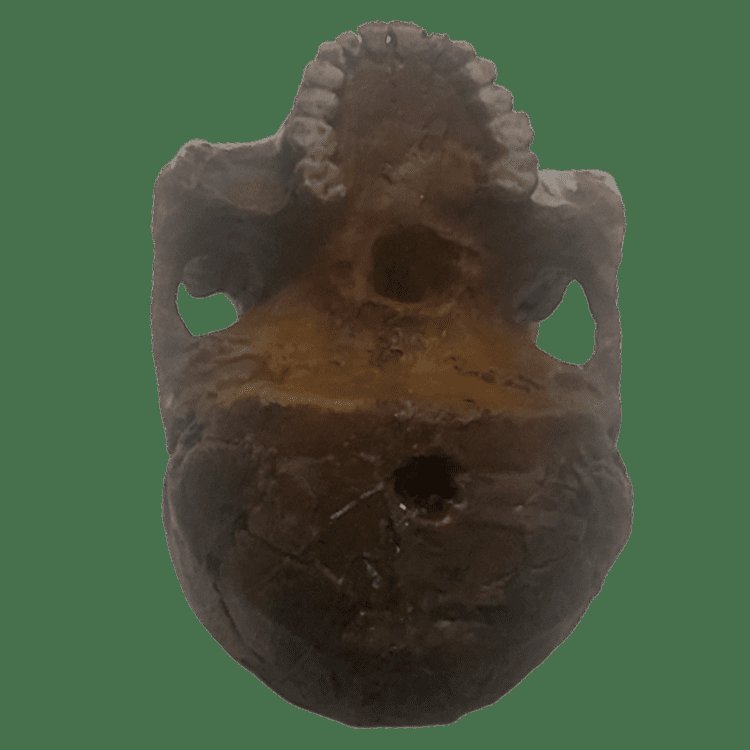
Homo naledi is an extinct species of hominin that lived in Southern Africa during the Middle Pleistocene, approximately 335,000 to 236,000 years ago. Discovered in the Rising Star Cave system in South Africa, this remarkable hominin represents one of the most significant paleoanthropological discoveries of the twenty-first century. Its unique mosaic of primitive and derived traits has profoundly challenged our understanding of human evolution, demonstrating that multiple diverse lineages of the genus Homo coexisted much later in prehistory than previously anticipated. The discovery has forced scientists to re-evaluate the linear models of human progression and acknowledge a much more complex, branching evolutionary tree where different hominin species shared the African landscape. Homo naledi exhibited a fascinating and perplexing blend of anatomical features, combining traits reminiscent of early australopithecines with those characteristic of later Homo species. Adult individuals stood approximately 143.6 centimeters, or about four feet eight inches tall, and weighed an estimated 39.7 kilograms, making them relatively diminutive compared to modern humans but comparable in size to other small-bodied hominins. The skull of Homo naledi was notably small, with an endocranial volume ranging from 465 to 610 cubic centimeters, roughly equivalent to that of a modern gorilla or early Australopithecus. Yet the overall shape of the cranium, including the slender vault and lack of significant post-orbital constriction, closely mirrored that of early Homo species like Homo erectus. The dentition was relatively small and modern-looking, lacking the massive chewing muscles and large molars seen in robust australopithecines. The postcranial skeleton was equally mosaic. The shoulders, thorax, and pelvis retained primitive, ape-like configurations, suggesting a high degree of mobility suitable for climbing. The flared pelvis was particularly reminiscent of Australopithecus afarensis. However, the lower limbs and feet were remarkably human-like, featuring long legs and fully modern arches, indicating a strong adaptation for efficient bipedal striding. The hands were highly specialized, possessing long, strongly curved fingers indicative of climbing abilities, yet the wrist and thumb were morphologically modern, suggesting the capacity for precise manipulation and tool use. This unique combination of traits paints a picture of a hominin that was equally at home walking long distances across the savanna and navigating complex arboreal environments. The paleobiology of Homo naledi suggests a highly adaptable and versatile organism capable of exploiting a variety of ecological niches. The dental morphology, characterized by relatively small teeth and thin enamel compared to earlier hominins, indicates an omnivorous diet that likely included a mix of tough, abrasive foods and softer, more easily processed items. Micro-wear analysis on the teeth suggests a diet rich in grit, possibly from consuming roots, tubers, or foods covered in dust, which aligns with foraging in a dry, savanna environment. The locomotion of Homo naledi was clearly bipedal, as evidenced by the modern structure of the foot, ankle, and long legs, allowing for efficient walking and possibly endurance running. However, the primitive features of the shoulder and the highly curved fingers strongly imply that climbing remained a significant part of their behavioral repertoire, perhaps for foraging, escaping predators, or seeking refuge at night. Socially, the sheer concentration of individuals found in the Rising Star Cave suggests that Homo naledi lived in multi-generational groups. The presence of infants, juveniles, adults, and elderly individuals together implies a complex social structure with potential cooperative care and shared resources. Growth patterns, inferred from dental development, suggest a life history somewhat intermediate between the rapid maturation of apes and the prolonged childhood of modern humans. Metabolism estimates, based on body size and brain volume, indicate energetic requirements lower than those of modern humans but sufficient to sustain an active, foraging lifestyle in a challenging environment. During the Middle Pleistocene, approximately 300,000 years ago, the landscape of Southern Africa was a dynamic and fluctuating environment, characterized by shifting climates that alternated between wetter, more forested periods and drier, open savanna conditions. Homo naledi inhabited a region that was likely a mosaic of grasslands, woodlands, and gallery forests along river systems. This diverse habitat would have provided a wide array of resources but also presented numerous challenges. Homo naledi shared this environment with a rich megafauna, including large herbivores such as ancient elephants, rhinos, diverse antelope species, and equids. Predators were abundant and formidable, including large cats like lions and leopards, as well as hyenas and wild dogs. As a relatively small-bodied hominin, Homo naledi would have occupied a precarious position in the food web, acting as both a forager of plants and small animals and a potential prey item for large carnivores. The ability to climb trees, as suggested by their anatomy, would have been a crucial adaptation for predator avoidance in this dangerous landscape. Interestingly, Homo naledi lived at a time when other, more derived hominins, including early members of our own species, Homo sapiens, or our direct ancestors, were beginning to emerge across Africa. The coexistence of a small-brained, morphologically primitive species like Homo naledi alongside larger-brained hominins highlights the ecological complexity of the Middle Pleistocene and suggests that different hominin lineages could successfully partition the environment and resources, avoiding direct competition. The discovery of Homo naledi is one of the most captivating stories in modern paleontology. It began in September 2013 when recreational cavers Rick Hunter and Steven Tucker were exploring the Rising Star Cave system, located in the Cradle of Humankind World Heritage Site near Johannesburg, South Africa. Navigating through incredibly narrow and treacherous passages, including a twelve-meter vertical drop known as the Chute, they stumbled upon a hidden chamber, later named the Dinaledi Chamber, which was littered with fossilized bones. Recognizing the potential significance of the find, they contacted paleoanthropologist Lee Berger of the University of the Witwatersrand. Due to the extreme narrowness of the cave passages, Berger issued a global call for slender, highly skilled excavators, resulting in the assembly of a team of six female scientists, dubbed the Underground Astronauts. Over the course of two expeditions in 2013 and 2014, this team recovered an astonishing 1,550 fossil elements representing at least fifteen individuals of varying ages. In 2015, the species was formally named Homo naledi, with naledi meaning star in the local Sotho language, a nod to the Rising Star Cave. Subsequent explorations led to the discovery of a second chamber, the Lesedi Chamber, which yielded additional fossils, including a remarkably complete adult male skull affectionately named Neo. The sheer volume and exceptional preservation of the fossils make the Rising Star assemblage the largest single hominin fossil find on the African continent, fundamentally transforming the landscape of paleoanthropological research. The evolutionary significance of Homo naledi cannot be overstated, as it profoundly disrupts the traditional, linear narrative of human evolution. Prior to its discovery, the prevailing view was that hominin evolution proceeded in a relatively straightforward progression from small-brained, ape-like australopithecines to larger-brained, more modern Homo species. Homo naledi, however, presents a confounding mosaic of traits that defies easy categorization. Its small brain and primitive shoulders and pelvis are reminiscent of species that lived two to three million years ago, yet its modern hands, feet, and teeth align it closely with later Homo. When the fossils were first discovered, many scientists assumed they must be incredibly ancient, perhaps representing the very root of the genus Homo. However, when rigorous dating techniques, including uranium-series and electron spin resonance dating, finally established their age at between 335,000 and 236,000 years old, the scientific community was stunned. This late date means that Homo naledi, a species with a brain size comparable to a gorilla, was wandering the African landscape at the exact same time that the much larger-brained ancestors of modern humans were evolving. This revelation demonstrates that human evolution was not a single line of progression but rather a complex, branching bush with multiple diverse lineages coexisting and adapting to different niches. Homo naledi serves as a powerful reminder that morphological primitiveness does not necessarily equate to chronological antiquity, and it forces researchers to reconsider the evolutionary pathways that led to modern Homo sapiens. The discovery of Homo naledi has ignited intense and ongoing scientific debates, most notably regarding the circumstances of the fossil deposition. The Dinaledi Chamber is located deep underground, accessible only through a tortuous, pitch-black route that has never had a direct opening to the surface. The absence of other large animal bones, the lack of predator marks on the hominin fossils, and the geological evidence ruling out water transport have led Lee Berger and his team to propose a highly controversial hypothesis: that Homo naledi intentionally disposed of their dead in this remote chamber. This implies a level of complex, symbolic behavior and mortuary practice previously thought to be the exclusive domain of large-brained hominins like Neanderthals and modern humans. Many researchers remain deeply skeptical of this claim, arguing that a creature with a brain size of 500 cubic centimeters would be incapable of such sophisticated behavior, and they continue to search for alternative explanations, such as accidental entrapment or undiscovered geological processes. Additionally, recent claims by the discovery team suggesting that Homo naledi used fire to navigate the dark cave and even carved abstract symbols into the cave walls have met with fierce criticism and demands for more rigorous peer-reviewed evidence, ensuring that Homo naledi remains at the center of heated paleoanthropological discourse. The fossil record of Homo naledi is entirely restricted to the Rising Star Cave system in the Cradle of Humankind, South Africa. Despite this limited geographic range, the sheer abundance and quality of the fossils are unprecedented. To date, over 2,000 individual fossil elements have been recovered from the Dinaledi and Lesedi chambers, representing at least two dozen individuals ranging from neonates to elderly adults. The preservation quality is exceptional, with many bones remaining unmineralized and fragile, yet retaining exquisite morphological detail. The assemblage includes nearly every bone in the body, providing an incredibly comprehensive view of the species' anatomy. Notable specimens include the holotype, Dinaledi Hominin 1, which consists of a partial calvaria and maxilla, and the remarkably complete Neo skull from the Lesedi Chamber. The unique depositional environment of the cave, free from scavengers and destructive weathering, has allowed for the preservation of delicate elements like the tiny bones of the inner ear and complete hand and foot articulations, offering a rare and invaluable window into the physical reality of this enigmatic species. Homo naledi has captured the global public imagination like few other fossil discoveries. The dramatic story of the Underground Astronauts recovering bones from a claustrophobic cave was heavily featured in documentaries, magazines, and news outlets worldwide, making paleontology highly accessible and thrilling. The fossils are prominently displayed at the Maropeng Visitor Centre in South Africa, drawing thousands of tourists and students. The ongoing debates about their potential burial practices have sparked philosophical discussions about what it means to be human, consciousness, and the origins of symbolic thought. Educationally, Homo naledi has become a staple in biology and anthropology curricula, serving as a prime example of the non-linear, complex nature of human evolution and inspiring a new generation of scientists.
Classification
Time Period
Discovery
Location
South Africa
Formation
Rising Star Cave system
Frequently Asked Questions
What is Homo naledi?
Homo naledi is an extinct species of hominin that lived in Southern Africa during the Middle Pleistocene, approximately 335,000 to 236,000 years ago. Discovered in the Rising Star Cave system in South Africa, this remarkable hominin represents one of the most significant paleoanthropological discove...
When did Homo naledi live?
Homo naledi lived during the quaternary period of the cenozoic era approximately 0.335-0.236 million years ago.
Where was Homo naledi discovered?
Fossils of Homo naledi were discovered in South Africa in the Rising Star Cave system.
What did Homo naledi eat?
Homo naledi was a omnivore. It lived in terrestrial habitats.
What type of fossil is Homo naledi?
Homo naledi is preserved as a body fossil. The preservation quality is exceptional.
Related Specimens
From the cenozoic era · body fossils