Basilosaurus
Basilosaurus cetoides
Image: File:Basilosaurus cetoides.jpg - Wikimedia Commons (CC BY-SA)
About Basilosaurus
Basilosaurus cetoides represents one of the most remarkable and pivotal organisms in the history of mammalian evolution, serving as a colossal, fully aquatic apex predator during the Late Eocene epoch of the Paleogene period. Thriving approximately 41.3 to 33.9 million years ago, this magnificent creature navigated the warm, shallow marine environments that once covered the southeastern United States, leaving behind a rich fossil record in the Jackson Group formations of Alabama and Mississippi. As a transitional form in the archaeocete lineage, its existence provides an unparalleled window into the dramatic biological shift from land-dwelling artiodactyls to the majestic, obligate ocean-dwelling whales we recognize today, cementing its status as a cornerstone species in the study of vertebrate paleontology.
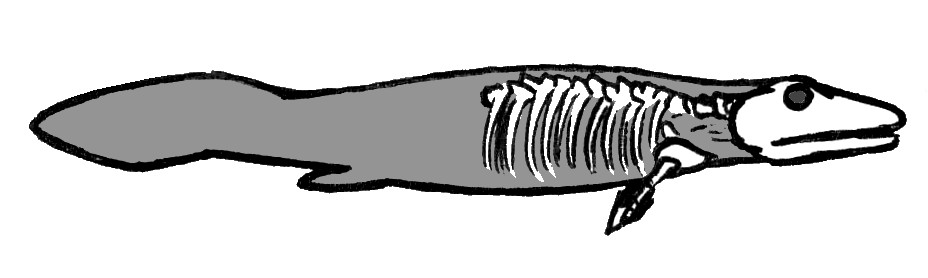
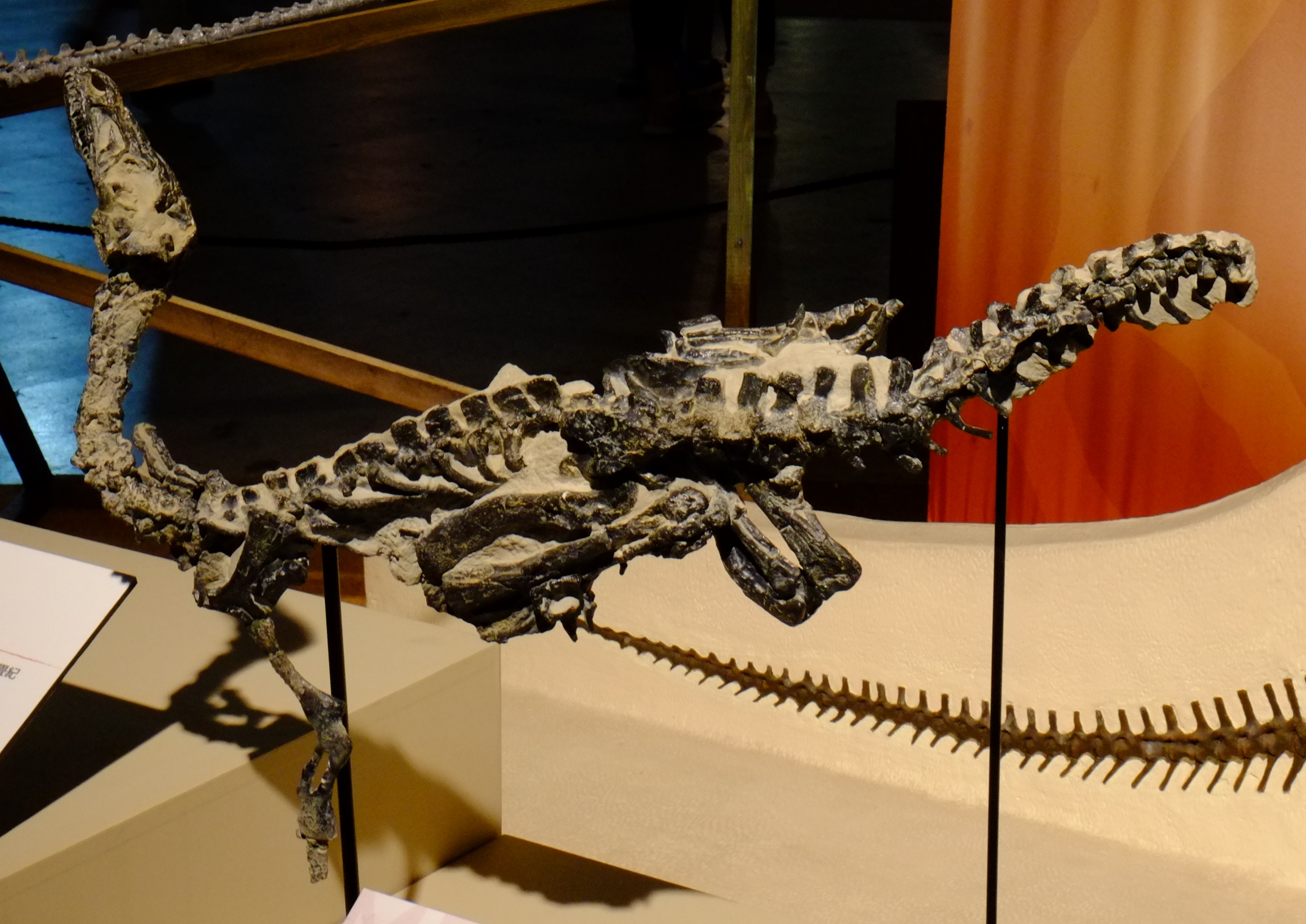
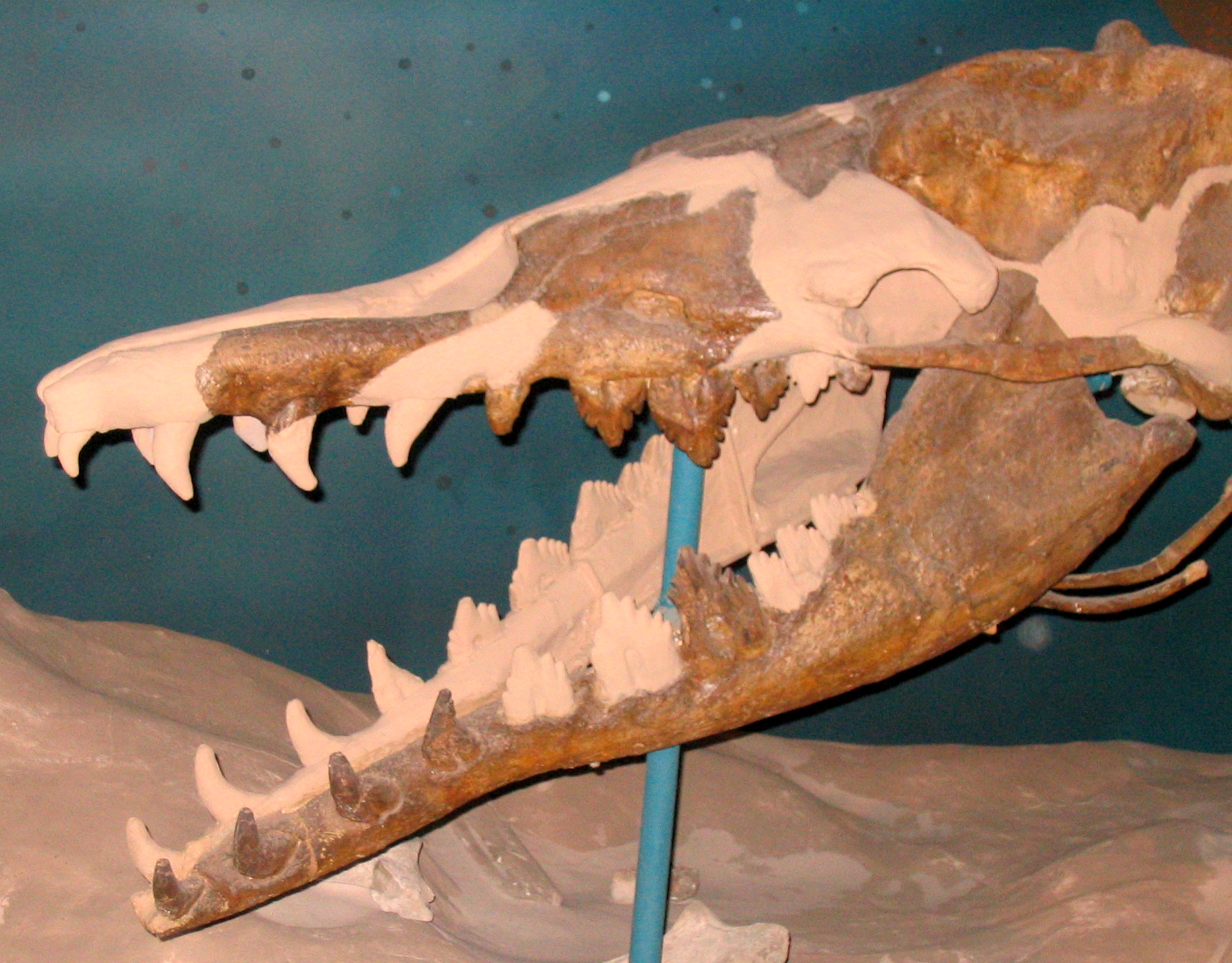
The physical anatomy of Basilosaurus cetoides was strikingly different from that of any modern cetacean, characterized primarily by an incredibly elongated, serpentine body plan that reached staggering lengths of up to 1800 centimeters, or roughly 60 feet. This immense size made it one of the largest known animals of the Eocene world, with estimated body masses ranging from 5 to 7 metric tons. Unlike the robust, teardrop-shaped bodies of extant whales, Basilosaurus possessed a remarkably slender, eel-like torso driven by an unprecedented elongation of its lumbar vertebrae. These vertebrae were not only numerous but individually lengthened and filled with dense bone tissue, a condition known as pachyostosis, which likely acted as ballast to help the animal maintain neutral buoyancy in shallow coastal waters. Its head was disproportionately small relative to its massive body, measuring about 1.5 meters in length, and housed a formidable array of differentiated teeth that betrayed its terrestrial ancestry. The anterior portion of the jaw featured sharp, conical incisors and canines designed for grasping slippery prey, while the posterior jaw was lined with large, triangular, heavily serrated cheek teeth perfectly adapted for shearing flesh and crushing bone. Perhaps the most fascinating anatomical quirk of Basilosaurus was the retention of small, vestigial hind limbs. Measuring a mere 60 centimeters in length, these diminutive legs were fully formed, complete with a femur, patella, tibia, fibula, and articulated toes. While entirely useless for terrestrial locomotion or significant aquatic propulsion, these limbs retained strong muscle attachments, suggesting they still served a functional purpose in the animal's life.
In terms of paleobiology, Basilosaurus cetoides was an apex carnivore with a highly specialized approach to hunting and feeding in the Eocene seas. Its formidable dentition and powerful jaw musculature indicate a diet consisting primarily of large marine organisms, including substantial bony fishes, early sharks, and notably, other smaller marine mammals. Fossil evidence, including bite marks on the skulls of juvenile Dorudon—a smaller, contemporary archaeocete whale—strongly suggests that Basilosaurus was an active predator of its cetacean relatives, utilizing a hunting strategy that involved devastating, bone-crushing bites to the head or vital organs of its prey. Biomechanical studies of its skull indicate an enormous bite force capable of shattering the dense bones of its victims. The locomotion of Basilosaurus has been a subject of intense biomechanical analysis, as its elongated body lacked the rigid, streamlined efficiency of modern whales. Instead of the stiff-bodied, tail-driven carangiform swimming seen in today's dolphins, Basilosaurus likely employed an anguilliform or distinctly undulating mode of swimming, moving its long body in vertical waves to propel itself through the water. This method of movement, combined with its dense bones, suggests it was not a rapid pursuit predator but rather an ambush hunter that patrolled the shallow water column. The function of its vestigial hind limbs has also intrigued paleobiologists; the prevailing consensus is that these small appendages functioned as claspers, used to guide and secure partners during the complex mating rituals of these massive, serpentine creatures in the buoyant marine environment. Growth patterns inferred from bone histology indicate a relatively slow maturation process, typical of large, long-lived marine mammals, with a life history strategy heavily invested in the survival of a small number of offspring.
The ecological context in which Basilosaurus cetoides thrived was defined by the unique climatic and geographic conditions of the Late Eocene epoch, a time when the Earth was experiencing a gradual cooling trend but still maintained significantly warmer global temperatures than today. The southeastern United States, where the majority of Basilosaurus cetoides fossils have been discovered, was submerged under the shallow, tropical to subtropical waters of the Mississippi Embayment, a northern extension of the ancient Tethys Ocean. This warm, epicontinental sea provided an incredibly rich and productive marine ecosystem, teeming with a diverse array of life that formed a complex food web. As the undisputed apex predator of this environment, Basilosaurus occupied the very top of the trophic pyramid, exerting significant top-down control on the populations of its prey. It shared its habitat with a wide variety of marine organisms, including giant sea turtles, early sirenians (sea cows), numerous species of cartilaginous and bony fishes, and other archaeocete whales like the aforementioned Dorudon and the smaller Zygorhiza. The shallow nature of this marine environment was perfectly suited to the dense bone structure of Basilosaurus, allowing it to maneuver effectively among the coastal shelves and submerged coastal forests that characterized the Gulf Coast during the Paleogene. The eventual extinction of Basilosaurus and its close relatives at the Eocene-Oligocene boundary is closely tied to dramatic ecological shifts, including significant global cooling, the lowering of sea levels, and the restructuring of marine ecosystems, which ultimately favored the evolution of the more metabolically efficient and deeply diving neocetes.
The discovery history of Basilosaurus cetoides is one of the most colorful and historically significant narratives in the annals of American paleontology. The first documented fossils of this massive creature were unearthed in the early 1830s in the fossil-rich marl deposits of Louisiana and Alabama, where local residents frequently encountered massive, strange vertebrae weathering out of the earth. These bones were so common and robust that they were occasionally used as foundation stones for houses or even as andirons in fireplaces. In 1834, the American anatomist Richard Harlan formally described the remains. Misinterpreting the massive, elongated vertebrae as belonging to a gigantic marine reptile, Harlan named the creature Basilosaurus, which translates to king lizard. It was not until 1839, when the eminent British anatomist Sir Richard Owen examined the fossils, including the distinctly mammalian double-rooted teeth, that the scientific community realized the animal was actually a prehistoric whale. Owen attempted to rename the creature Zeuglodon cetoides, meaning yoke tooth, to reflect its true mammalian nature, but under the strict rules of taxonomic priority, Harlan's original genus name of Basilosaurus had to be retained, forever cementing the whale with a reptilian moniker. The creature's fame took a bizarre turn in 1845 when a fossil collector named Albert Koch assembled a 114-foot-long composite skeleton using the bones of multiple Basilosaurus individuals and exhibited it in New York and Europe under the name Hydrarchos sillimanii, claiming it was a monstrous sea serpent. This sensationalized hoax was eventually debunked by scientists, but it played a major role in bringing the spectacular fossils of the American South to the attention of the global public.
From an evolutionary standpoint, Basilosaurus cetoides holds a position of paramount significance in our understanding of how terrestrial mammals transitioned into obligate marine organisms. Belonging to the extinct suborder Archaeoceti, Basilosaurus represents a crucial intermediate stage in the cetacean family tree, situated temporally and morphologically between the amphibious, four-legged whales of the Early to Middle Eocene, such as Ambulocetus and Rodhocetus, and the fully modern whales (Neoceti) that emerged in the Oligocene. While Basilosaurus was fully aquatic and incapable of surviving on land, it retained several primitive features that clearly link it to its terrestrial artiodactyl ancestors, most notably its differentiated dentition and the presence of external hind limbs. However, it also exhibited advanced adaptations for marine life, such as the complete detachment of the pelvic girdle from the vertebral column, which allowed for greater flexibility of the spine during aquatic locomotion, and the migration of the nasal openings toward the top of the skull, a precursor to the modern blowhole. Despite these transitional features, paleontologists generally agree that the basilosaurids represent a specialized, evolutionary dead-end rather than the direct ancestors of modern toothed whales (Odontoceti) and baleen whales (Mysticeti). Instead, modern whales are thought to have evolved from a closely related, smaller, and more conventionally proportioned group of archaeocetes, likely similar to the dorudontines. Nevertheless, Basilosaurus remains a spectacular showcase of evolutionary experimentation, illustrating the diverse morphological pathways that early whales explored as they conquered the world's oceans.
Scientific debates surrounding Basilosaurus cetoides have persisted for decades, driven by its highly unusual anatomy and the challenges of interpreting the behavior of an animal with no direct modern analog. One of the most enduring controversies has centered on its exact mode of locomotion. While early reconstructions often depicted Basilosaurus swimming with a serpentine, side-to-side motion similar to a snake or an eel, modern biomechanical analyses of its vertebral articulations suggest that its spine was restricted in lateral movement but highly flexible in the dorsoventral (up-and-down) plane. This indicates that it swam using vertical undulations, a uniquely mammalian adaptation that bridges the gap between the terrestrial galloping of its ancestors and the powerful tail-fluke propulsion of modern whales. Another area of active debate involves the precise function of its vestigial hind limbs. While the copulatory clasper hypothesis is widely accepted due to the limbs' specific muscle attachments and limited range of motion, some researchers have proposed alternative, albeit less popular, theories, such as their use in scratching parasites or even a complete lack of function, representing a mere evolutionary hangover. Furthermore, the taxonomic relationships within the family Basilosauridae are frequently revised as new fossil discoveries are made, with ongoing discussions regarding the exact phylogenetic boundaries between Basilosaurus, its close relative Cynthiacetus, and the various species of dorudontines that shared its Eocene habitat.
The fossil record of Basilosaurus cetoides is exceptionally robust, particularly when compared to many other prehistoric marine mammals, offering paleontologists a wealth of material for detailed study. The vast majority of these fossils are concentrated in the southeastern United States, specifically within the Jackson Group, a geological formation spanning the Late Eocene. The states of Alabama and Mississippi have yielded the most complete and numerous specimens, with the soft, chalky limestone and marl deposits providing an ideal environment for the preservation of massive bones. Thousands of individual bones, ranging from isolated teeth and vertebrae to nearly complete articulated skeletons, have been recovered from these sites over the past two centuries. The quality of preservation is often extraordinary, allowing researchers to study microscopic details of bone histology, tooth wear patterns, and even the delicate structures of the inner ear, which are crucial for understanding the animal's hearing capabilities in an aquatic environment. Famous fossil sites, such as those in Choctaw County, Alabama, and the areas surrounding the Yazoo Clay in Mississippi, continue to produce significant finds, ensuring that Basilosaurus remains one of the best-documented early whales in the global fossil record.
The cultural impact of Basilosaurus cetoides extends far beyond the confines of academic paleontology, capturing the imagination of the public and serving as a powerful educational tool. Recognizing its immense historical and scientific value, both Alabama and Mississippi have officially designated Basilosaurus cetoides as their state fossil, a testament to the creature's deep ties to the region's natural heritage. Spectacular mounted skeletons of this serpentine whale are prominent attractions in major natural history museums around the world, including the Smithsonian National Museum of Natural History in Washington, D.C., where they awe visitors with their dragon-like proportions. Furthermore, Basilosaurus has made numerous appearances in popular culture, most notably in acclaimed paleontology documentaries like the BBC's Walking with Beasts, which brought the creature to life through advanced computer-generated imagery, introducing millions of viewers to the fascinating, bizarre world of early whale evolution and solidifying its place as one of the most iconic prehistoric animals.
Classification
Time Period
Discovery
Location
Southeastern United States (Alabama, Mississippi)
Formation
Jackson Group
Frequently Asked Questions
What is Basilosaurus?
Basilosaurus cetoides represents one of the most remarkable and pivotal organisms in the history of mammalian evolution, serving as a colossal, fully aquatic apex predator during the Late Eocene epoch of the Paleogene period. Thriving approximately 41.3 to 33.9 million years ago, this magnificent cr...
When did Basilosaurus live?
Basilosaurus lived during the paleogene period of the cenozoic era approximately 41.3-33.9 million years ago.
Where was Basilosaurus discovered?
Fossils of Basilosaurus were discovered in Southeastern United States (Alabama, Mississippi) in the Jackson Group.
What did Basilosaurus eat?
Basilosaurus was a carnivore. It lived in marine habitats.
What type of fossil is Basilosaurus?
Basilosaurus is preserved as a body fossil. The preservation quality is good.
Related Specimens
From the cenozoic era · body fossils