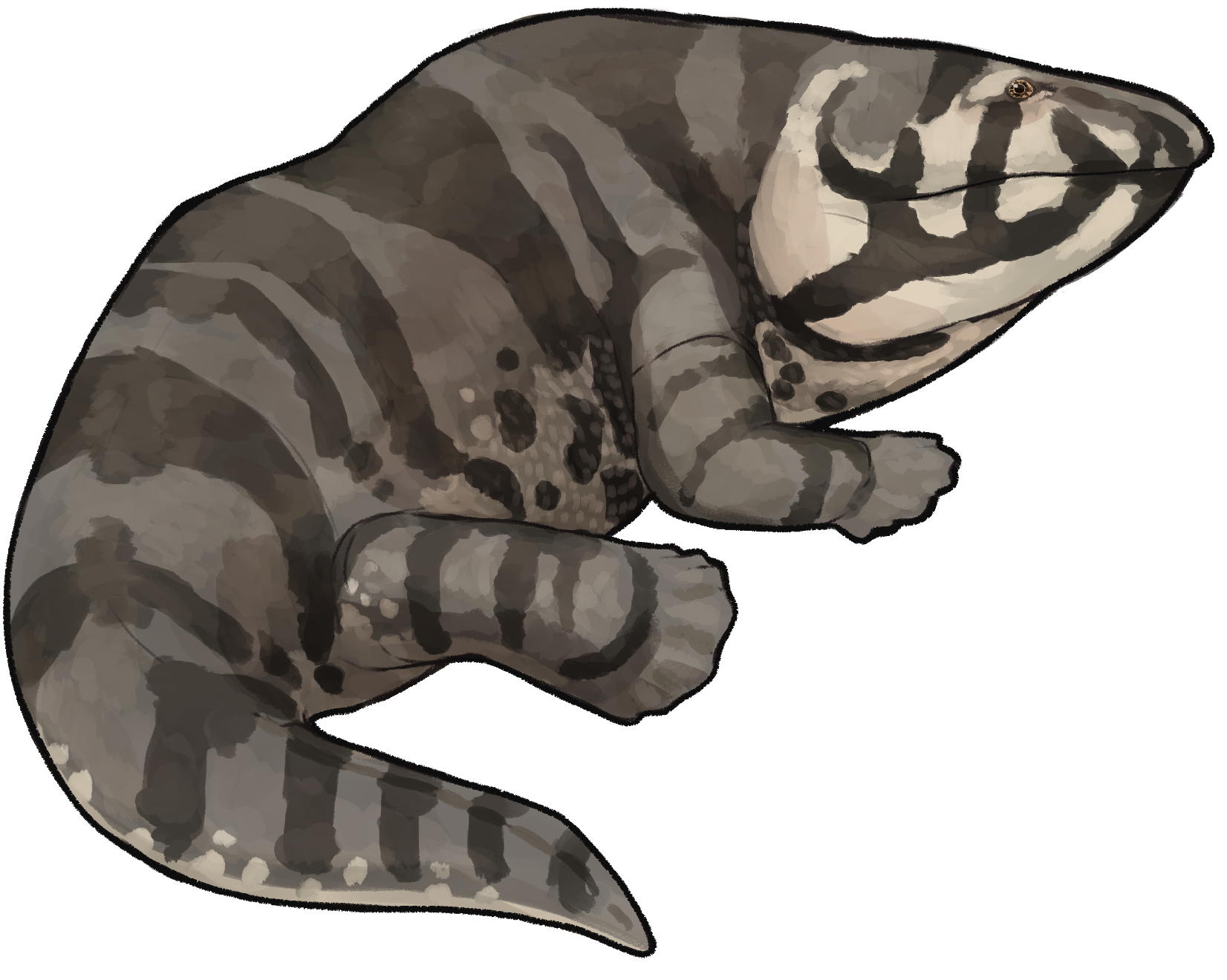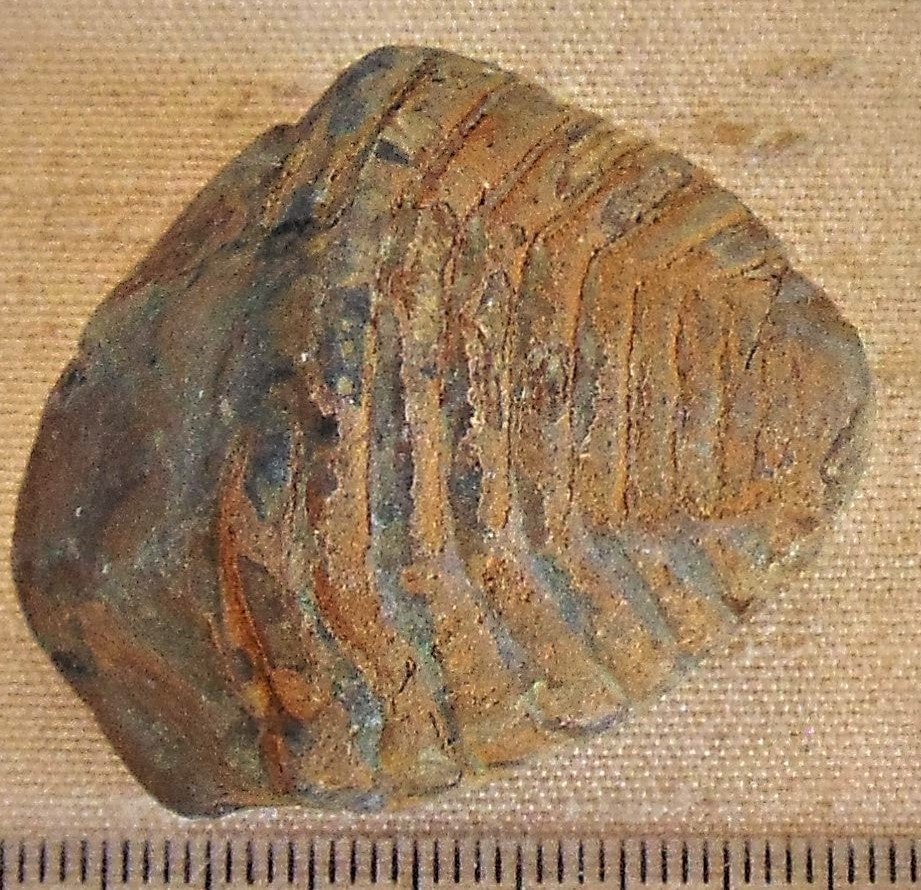
Helmetia
Helmetia expansa
Image: Image sourced via web search (Fair use / Educational)
About Helmetia
Helmetia expansa is a fascinating and enigmatic extinct arthropod that lived during the middle Cambrian period, approximately 508 to 505 million years ago. Discovered in the world-renowned Burgess Shale deposits of British Columbia, Canada, this organism represents a crucial piece of the puzzle in understanding the rapid diversification of life known as the Cambrian Explosion. As a member of the diverse early arthropod communities that dominated Paleozoic seas, Helmetia offers invaluable insights into the morphological experimentation that characterized the dawn of complex animal life. Its exceptionally preserved fossils, which capture the delicate outlines of its soft, non-mineralized exoskeleton and intricate appendages, have allowed paleontologists to reconstruct its anatomy and ecological role with remarkable precision. Although less famous than some of its Burgess Shale contemporaries like Anomalocaris or Opabinia, Helmetia expansa remains a subject of intense scientific interest due to its unique body plan and its evolutionary position near the base of the arthropod family tree, providing a window into the ancestral traits of one of the most successful animal phyla on Earth.
In terms of physical description, Helmetia expansa was a relatively large arthropod for its time, with adult specimens reaching estimated lengths of 10 to 20 centimeters. This size made it a prominent member of the benthic community, dwarfing many of the millimeter-scale organisms that shared its habitat. The most distinctive feature of Helmetia is its broad, flattened, and incredibly thin carapace, which gave the animal a shield-like appearance. The body was divided into three main regions: a wide, semi-circular cephalic shield (head), a thorax composed of multiple articulating segments, and a large, fused tail shield known as a pygidium. Unlike the heavily calcified exoskeletons of its distant relatives, the trilobites, the cuticle of Helmetia was entirely unmineralized, meaning it was likely flexible and leathery in life. This thin exoskeleton is often preserved as a dark, reflective film in the Burgess Shale. Beneath this protective dorsal shield, Helmetia possessed a series of paired, biramous (two-branched) appendages typical of early arthropods. These consisted of a walking leg branch (endopod) and a gill-bearing branch (exopod) used for respiration and possibly swimming. The head region featured a pair of slender antennae and a pair of large, likely compound eyes situated near the anterior margin, providing the animal with a wide field of vision to detect predators and locate food in the dim bottom waters. The overall flattened morphology suggests an animal highly adapted to resting on or gliding just above the soft mud of the seafloor.
The paleobiology of Helmetia expansa paints a picture of a specialized bottom-dweller adapted to the unique conditions of the Cambrian marine environment. Based on its flattened body plan and the structure of its appendages, paleontologists infer that Helmetia was primarily a benthic organism, spending the majority of its time navigating the soft, muddy substrates of the ocean floor. Its diet is generally thought to have consisted of detritus, organic matter, and perhaps small, soft-bodied organisms that it scavenged from the sediment. The biramous appendages would have worked in a coordinated, wave-like motion to propel the animal forward, while the gill branches simultaneously extracted oxygen from the surrounding water. The broad carapace may have acted as a hydrofoil, allowing Helmetia to swim short distances or glide efficiently over the mud with minimal energy expenditure. The large eyes suggest that vision played a critical role in its survival, likely aiding in the detection of the shadows cast by large, free-swimming predators. Growth in Helmetia, as in all arthropods, would have occurred through a series of molts (ecdysis), during which the animal shed its flexible exoskeleton to expand its body size. The metabolic rate of such an organism was likely relatively low compared to modern active predators, suited to a life of slow, methodical foraging in the nutrient-rich, but sometimes oxygen-poor, benthic zones of the Cambrian seas.
The ecological context of the middle Cambrian world in which Helmetia lived was drastically different from modern marine ecosystems, yet it laid the foundational structures for all subsequent marine food webs. The Burgess Shale environment was situated along a submerged carbonate reef escarpment near the equator, in a tropical marine basin. The climate was generally warm, with high sea levels flooding the continental margins to create expansive, shallow epicontinental seas. Helmetia shared its habitat with a bizarre and diverse array of creatures, including the apex predator Anomalocaris, the five-eyed Opabinia, the spiky armored worm Hallucigenia, and a multitude of sponges, brachiopods, and early chordates like Pikaia. In this complex ecosystem, Helmetia likely occupied the role of a primary consumer and detritivore, processing the organic rain that fell from the water column above. It would have been a crucial link in the food web, converting detritus into biomass that could then be consumed by larger predators. The constant threat of predation from large radiodonts and early arthropod carnivores likely drove the evolutionary development of Helmetia's broad, shield-like body, which may have made it difficult for predators to grasp or swallow whole. The environment was also prone to periodic underwater mudslides, which swept these benthic communities into deeper, anoxic waters, instantly burying them and preventing decay, thus preserving the delicate ecosystem dynamics in the fossil record.
The discovery history of Helmetia expansa is intimately tied to the legendary early 20th-century explorations of the Burgess Shale by the American paleontologist Charles Doolittle Walcott. Walcott, then the Secretary of the Smithsonian Institution, discovered the Burgess Shale fossil beds on the slopes of Mount Field in British Columbia in 1909. Over the next several years, he and his team quarried thousands of exquisitely preserved fossils from the site. Walcott formally described and named Helmetia expansa in 1918, drawing its generic name from the nearby Helmet Mountain, a prominent peak in the Canadian Rockies. The specific epithet 'expansa' refers to the broad, expanded nature of the animal's carapace. For decades, Walcott's original specimens housed at the Smithsonian remained the primary source of information on this rare arthropod. It wasn't until the latter half of the 20th century, during extensive reinvestigations of the Burgess Shale led by Harry Whittington and later by Desmond Collins of the Royal Ontario Museum (ROM), that additional specimens were uncovered. These later expeditions, utilizing more modern quarrying and preparation techniques, brought to light new material that allowed for a more detailed understanding of Helmetia's delicate appendages and internal anatomy, cementing its status as a key taxon in the study of Cambrian arthropod diversity.
The evolutionary significance of Helmetia expansa lies in its position within the complex and bushy base of the arthropod evolutionary tree. It is generally classified within the Artiopoda, a major clade of early arthropods that includes the famous trilobites as well as a variety of other soft-bodied forms. Specifically, Helmetia is often grouped with the concilitergans or the nektaspids, groups characterized by their non-mineralized exoskeletons and specific tagmosis (body segmentation) patterns. By studying Helmetia, paleontologists can trace the step-by-step acquisition of traits that define the arthropod phylum, such as jointed appendages, specialized head structures, and segmented bodies. Because it lacks the calcified shell of trilobites, Helmetia is considered to represent a more primitive or ancestral morphological state, demonstrating that the fundamental artiopodan body plan evolved before the advent of widespread biomineralization. Its anatomy helps bridge the morphological gap between the bizarre, lobopodian-like ancestors of arthropods and the highly derived, diverse arthropod groups that dominate the planet today. The exceptional preservation of its soft tissues provides a rare baseline for understanding the internal anatomy, nervous systems, and digestive tracts of these ancient pioneers of animal life.
Despite its importance, Helmetia expansa has been the subject of ongoing scientific debates, primarily concerning its exact taxonomic placement and the interpretation of its anatomical features. Because early arthropod phylogeny is notoriously difficult to resolve due to the mosaic combination of primitive and derived traits in Cambrian fossils, researchers have frequently debated whether Helmetia is more closely related to the trilobites, the nektaspids (like Naraoia), or if it represents a distinct, parallel lineage within the Artiopoda. Some recent cladistic analyses have placed the family Helmetiidae as a sister group to the trilobites, while others argue for a more basal position. Additionally, the exact function of its appendages has been debated; while generally accepted as a benthic crawler, some biomechanical studies suggest that its broad carapace and thin profile could have made it a capable swimmer, leading to disagreements over whether it was strictly benthic or nektobenthic. The interpretation of its delicate anterior appendages and mouthparts also remains a challenge, as these structures are rarely preserved in perfect three-dimensional relief, leaving its exact feeding mechanisms open to varying interpretations among Cambrian specialists.
The fossil record of Helmetia expansa is highly restricted, both geographically and stratigraphically, making it a rare prize for paleontologists. Fossils of this organism are exclusively known from the Burgess Shale formation in British Columbia, specifically from the Walcott Quarry and the Raymond Quarry on Fossil Ridge. Compared to the thousands of specimens of Marrella or Waptia found at these sites, Helmetia is considered quite rare, with only a few dozen high-quality specimens known to science. The preservation quality, however, is exceptional. The fossils are preserved as two-dimensional, highly compressed carbonaceous films on the shale bedding planes. Thanks to the unique taphonomic conditions of the Burgess Shale—where organisms were rapidly buried in fine mud in an oxygen-depleted environment—the fossils retain incredible details of the non-mineralized exoskeleton, the delicate gill branches, the gut trace, and sometimes even the musculature. This type of preservation, known as Burgess Shale-type preservation, is crucial because organisms like Helmetia, lacking hard parts, would have entirely vanished from the fossil record under normal geological conditions.
While Helmetia expansa may not have the widespread cultural name recognition of a Tyrannosaurus rex or even its Cambrian neighbor Anomalocaris, it holds a significant place in the cultural and educational impact of paleontology. It frequently appears in academic textbooks, museum dioramas, and documentaries focusing on the Cambrian Explosion as a prime example of the 'weird wonders' of early evolution. Notable specimens are proudly displayed in the Smithsonian National Museum of Natural History in Washington, D.C., and the Royal Ontario Museum in Toronto, where they serve to educate the public about the deep history of life on Earth. The sheer alien appearance of Helmetia, resembling a flattened, prehistoric horseshoe crab, captures the public imagination and helps convey the immense age of the Earth and the incredible diversity of forms that life has taken over hundreds of millions of years.
Classification
Time Period
Discovery
Location
British Columbia, Canada
Formation
Burgess Shale
Frequently Asked Questions
What is Helmetia?
Helmetia expansa is a fascinating and enigmatic extinct arthropod that lived during the middle Cambrian period, approximately 508 to 505 million years ago. Discovered in the world-renowned Burgess Shale deposits of British Columbia, Canada, this organism represents a crucial piece of the puzzle in u...
When did Helmetia live?
Helmetia lived during the cambrian period of the paleozoic era approximately 508-505 million years ago.
Where was Helmetia discovered?
Fossils of Helmetia were discovered in British Columbia, Canada in the Burgess Shale.
What did Helmetia eat?
Helmetia was a detritivore. It lived in marine habitats.
What type of fossil is Helmetia?
Helmetia is preserved as a body fossil. The preservation quality is exceptional.
Related Specimens
From the paleozoic era · body fossils
-tooth/7fb56d2cf543.png)