Gorgosaurus
Gorgosaurus libratus
Image: Image sourced via web search (Fair use / Educational)
About Gorgosaurus
Gorgosaurus libratus was a formidable bipedal predator belonging to the tyrannosaurid family, a group of dinosaurs that includes the famous Tyrannosaurus rex. It roamed the coastal floodplains of western North America during the Late Cretaceous Period, approximately 77 to 74 million years ago. As one of the best-represented tyrannosaurids in the fossil record, Gorgosaurus has provided paleontologists with invaluable insights into the anatomy, growth, and behavior of these apex predators.
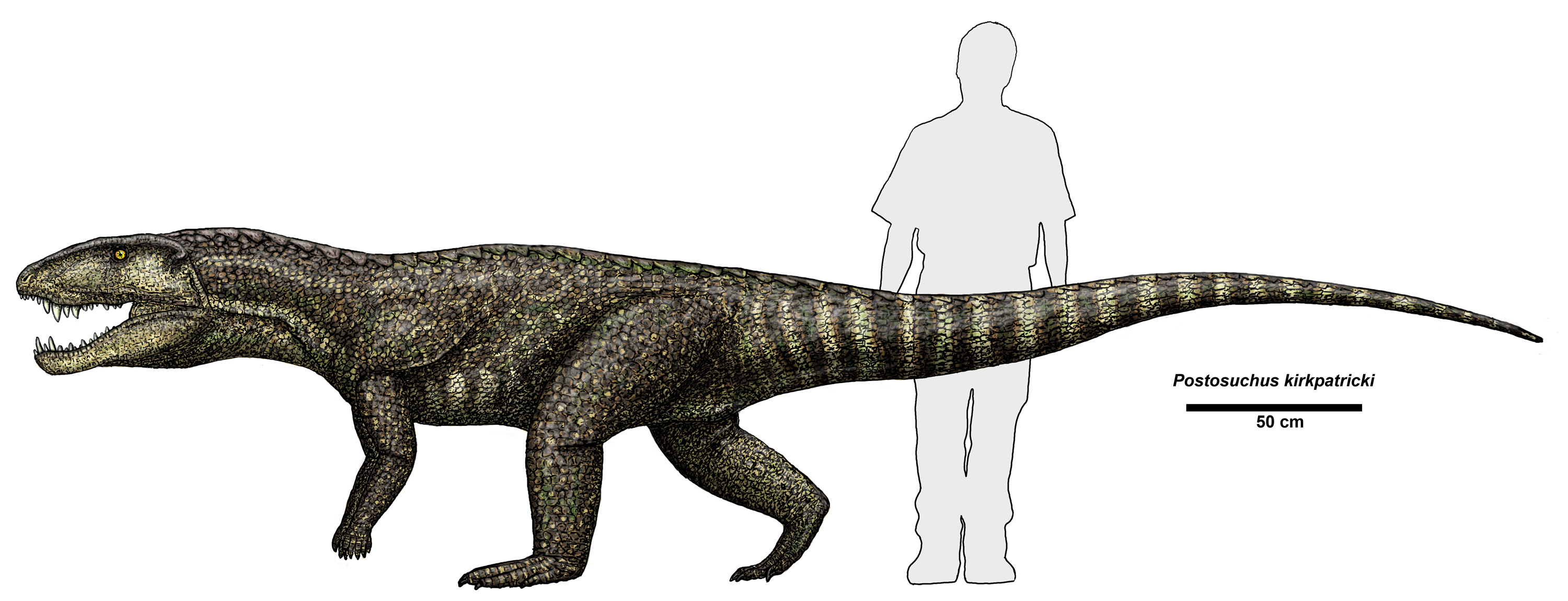
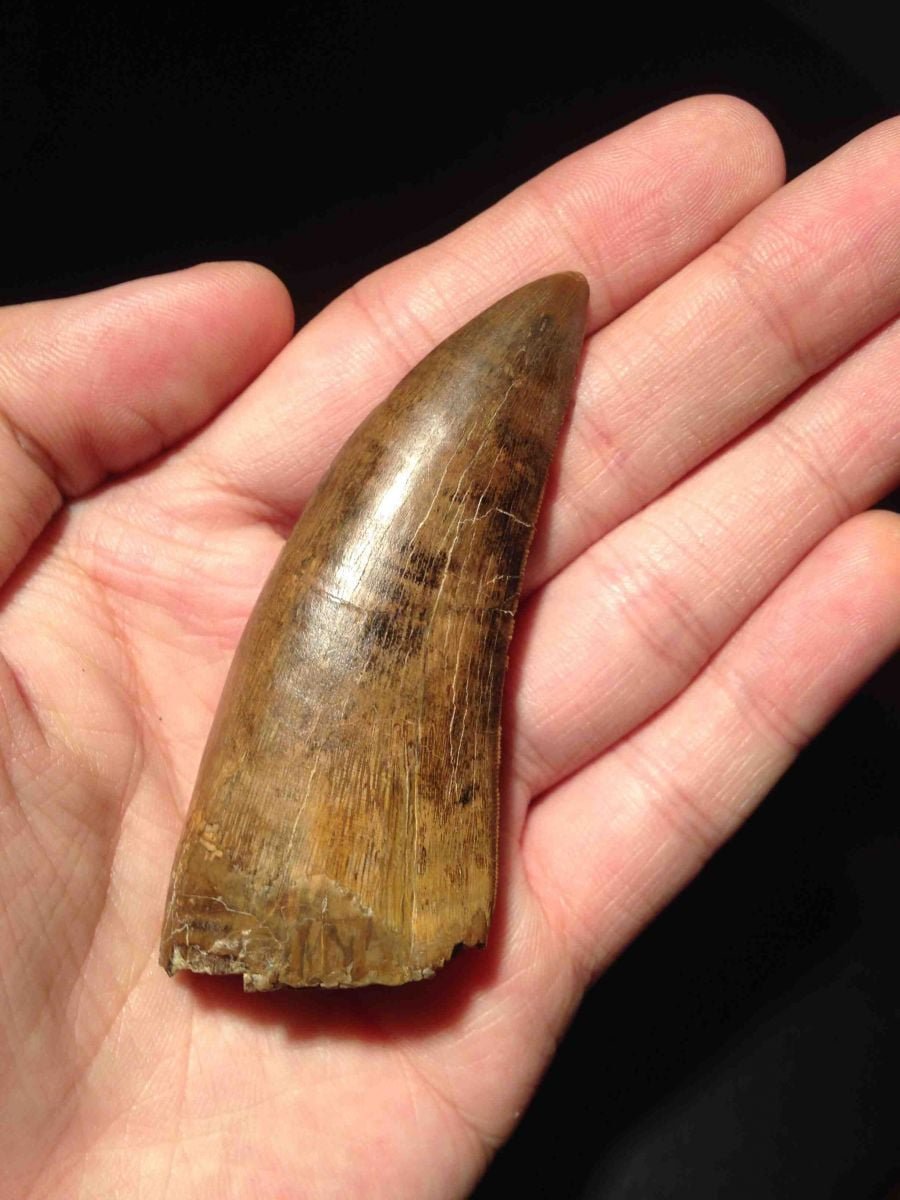
Gorgosaurus was a large theropod, though slightly more slender and smaller than its later, more massive relatives like Tyrannosaurus. An adult Gorgosaurus measured approximately 8 to 9 meters (26 to 30 feet) in length from snout to tail tip and stood about 3 meters (10 feet) tall at the hips. Weight estimates for a mature individual typically range from 2 to 2.5 metric tons (4,400 to 5,500 pounds), making it comparable in mass to a large white rhinoceros. Its skull, while large and robust, was proportionally lighter than that of Tyrannosaurus, featuring large openings called fenestrae that reduced weight without compromising structural integrity. The skull housed dozens of large, banana-shaped, serrated teeth designed for puncturing hide and crushing bone. Its forelimbs were famously diminutive, possessing only two functional digits, a characteristic trait of advanced tyrannosaurids. In stark contrast, its hind limbs were long, powerful, and muscular, indicating it was a fast and agile runner for its size. The long, heavy tail acted as a crucial counterbalance to its massive head and torso, allowing for dynamic movement and stability. Inferred soft tissue features, based on skin impressions from related tyrannosaurids, suggest a scaly hide, though the presence of juvenile feathers remains a possibility.
The paleobiology of Gorgosaurus is understood in remarkable detail thanks to the abundance of fossil evidence, including specimens at various life stages. As an apex predator, its diet consisted primarily of large herbivorous dinosaurs, such as hadrosaurs (duck-billed dinosaurs) like Lambeosaurus and ceratopsians (horned dinosaurs) like Centrosaurus. Evidence of bite marks on the bones of these herbivores directly confirms this predatory relationship. Its powerful jaws, capable of delivering a bone-shattering bite, allowed it to dispatch large prey efficiently. Locomotion studies based on its limb proportions suggest it was a swift predator, possibly capable of reaching speeds of up to 40-50 kilometers per hour (25-30 mph) in short bursts, making it well-suited for pursuing fleet-footed prey across open floodplains. Analysis of growth rings in its bones (histology) reveals a rapid growth spurt during its teenage years, a pattern similar to that seen in Tyrannosaurus. This rapid development meant it reached near-adult size in under a decade, a strategy that likely maximized its chances of survival and reproductive success. While direct evidence for social behavior is scarce, the discovery of multiple individuals in some bonebeds has led some paleontologists to speculate that Gorgosaurus may have hunted in packs or formed family groups, though this interpretation remains debated.
Gorgosaurus lived in a lush, subtropical coastal plain environment along the western margin of the Western Interior Seaway, an inland sea that divided North America in two during the Late Cretaceous. The climate was warm and humid, supporting a diverse and vibrant ecosystem. The landscape was dominated by vast floodplains, crisscrossed by rivers and dotted with forests of conifers, ferns, and flowering plants. Gorgosaurus occupied the top of the food web, a position it shared with another, more robustly built tyrannosaurid, Daspletosaurus. This co-existence has puzzled scientists, leading to theories of niche partitioning, where Gorgosaurus may have specialized in hunting faster, more gracile prey while Daspletosaurus targeted larger, more heavily armored herbivores. The ecosystem was teeming with life; besides its primary prey of hadrosaurs and ceratopsians, Gorgosaurus shared its habitat with armored ankylosaurs, dome-headed pachycephalosaurs, smaller theropods like dromaeosaurs (raptors), and a variety of crocodiles, turtles, and fish in the waterways. This rich biodiversity highlights the complex predator-prey dynamics and ecological pressures that shaped the evolution of tyrannosaurids.
The history of Gorgosaurus discovery begins in 1913, when Charles M. Sternberg, of the Geological Survey of Canada, unearthed a remarkably complete skeleton in the Red Deer River valley of Alberta, Canada. This specimen, now cataloged as CMN 2120, became the holotype for the new genus and species. Paleontologist Lawrence Lambe formally described and named it Gorgosaurus libratus in 1914. The genus name translates to "dreadful lizard," while the species name "libratus," meaning "balanced," was chosen by Lambe in reference to its bipedal posture. For several decades, Gorgosaurus was mistakenly synonymized with its close relative Albertosaurus, a decision made by William Diller Matthew and Barnum Brown in 1922. It wasn't until 1970 that paleontologist Dale Russell conducted a thorough review of tyrannosaurids and reinstated Gorgosaurus as a distinct and valid genus. Since its initial discovery, dozens of Gorgosaurus specimens have been recovered, primarily from Alberta's Dinosaur Park Formation, making it one of the most completely known tyrannosaurids and a cornerstone for understanding the group's biology.
In the grand tapestry of evolution, Gorgosaurus represents a highly successful and specialized branch of the tyrannosaurid family tree. It belongs to the subfamily Albertosaurinae, which is characterized by a more slender build and longer leg proportions compared to the more robust Tyrannosaurinae (which includes Tyrannosaurus and Tarbosaurus). This placement suggests a divergence in predatory strategies among tyrannosaurids, with albertosaurines like Gorgosaurus evolving as faster, more agile pursuit predators. Gorgosaurus provides a clear snapshot of tyrannosaurid evolution just before the emergence of the truly gigantic forms like T. rex. It possesses all the hallmark traits of an advanced tyrannosaurid—a massive skull, D-shaped teeth in cross-section, tiny two-fingered arms, and long running legs—but in a slightly less extreme form. Its well-preserved fossils, particularly the complete growth series from juvenile to adult, have been instrumental in demonstrating the dramatic physical changes (ontogeny) these animals underwent as they matured, offering crucial data on how dinosaurian predators grew and occupied different ecological niches throughout their lives.
Despite being well-studied, Gorgosaurus is still at the center of several scientific debates. The primary controversy for many years was its taxonomic relationship with Albertosaurus. While most paleontologists now accept them as separate genera based on subtle but consistent anatomical differences in the skull and feet, some still argue that the variations are not significant enough to warrant a generic separation. Another area of active discussion is the potential for niche partitioning between Gorgosaurus and the contemporary, more robust tyrannosaurid Daspletosaurus. Scientists debate whether they hunted different prey, occupied slightly different habitats within the same ecosystem, or if their ranges were mostly separate. The question of social behavior also remains contentious. While some fossil sites suggest group associations, it is difficult to distinguish between a social pack and a coincidental accumulation of carcasses at a single location, such as a predator trap or a dried-up waterhole. New analytical techniques and fossil discoveries continue to refine our understanding of these complex paleoecological questions.
The fossil record of Gorgosaurus is exceptionally rich and geographically concentrated. The vast majority of specimens have been unearthed from the Dinosaur Park Formation of Alberta, Canada, a geological unit renowned for its abundance and diversity of Late Cretaceous dinosaur fossils. More than 20 complete or nearly complete skeletons are known, in addition to numerous isolated bones. This wealth of material provides a comprehensive view of its anatomy and represents a full growth series, from young juveniles around 2 meters long to large, mature adults. The quality of preservation is often excellent, with many skeletons found articulated (bones still connected in their life positions) and showing fine anatomical detail. Famous fossil sites within the Dinosaur Park Formation have yielded some of the most important Gorgosaurus specimens, which are now housed in major museums across North America, including the Royal Tyrrell Museum of Palaeontology in Alberta and the Canadian Museum of Nature in Ottawa.
While not as globally famous as its cousin Tyrannosaurus rex, Gorgosaurus holds a significant place in popular culture and museum displays. It is frequently featured in dinosaur books, documentaries, and television shows, often depicted as a swift and lethal predator of the Cretaceous plains. Its impressive and complete skeletons are prized centerpieces in many museums, most notably at the Royal Tyrrell Museum of Palaeontology, the Canadian Museum of Nature, and The Children's Museum of Indianapolis, which displays a remarkable articulated specimen. These exhibits serve a vital educational role, captivating the public and providing a tangible link to the prehistoric world, illustrating the diversity and power of the great carnivorous dinosaurs that once ruled the planet.
Classification
Time Period
Discovery
Location
Alberta, Canada
Formation
Dinosaur Park Formation
Frequently Asked Questions
What is Gorgosaurus?
Gorgosaurus libratus was a formidable bipedal predator belonging to the tyrannosaurid family, a group of dinosaurs that includes the famous Tyrannosaurus rex. It roamed the coastal floodplains of western North America during the Late Cretaceous Period, approximately 77 to 74 million years ago. As on...
When did Gorgosaurus live?
Gorgosaurus lived during the cretaceous period of the mesozoic era approximately 77-74 million years ago.
Where was Gorgosaurus discovered?
Fossils of Gorgosaurus were discovered in Alberta, Canada in the Dinosaur Park Formation.
What did Gorgosaurus eat?
Gorgosaurus was a carnivore. It lived in terrestrial habitats.
What type of fossil is Gorgosaurus?
Gorgosaurus is preserved as a body fossil. The preservation quality is excellent.
Related Specimens
From the mesozoic era · body fossils